
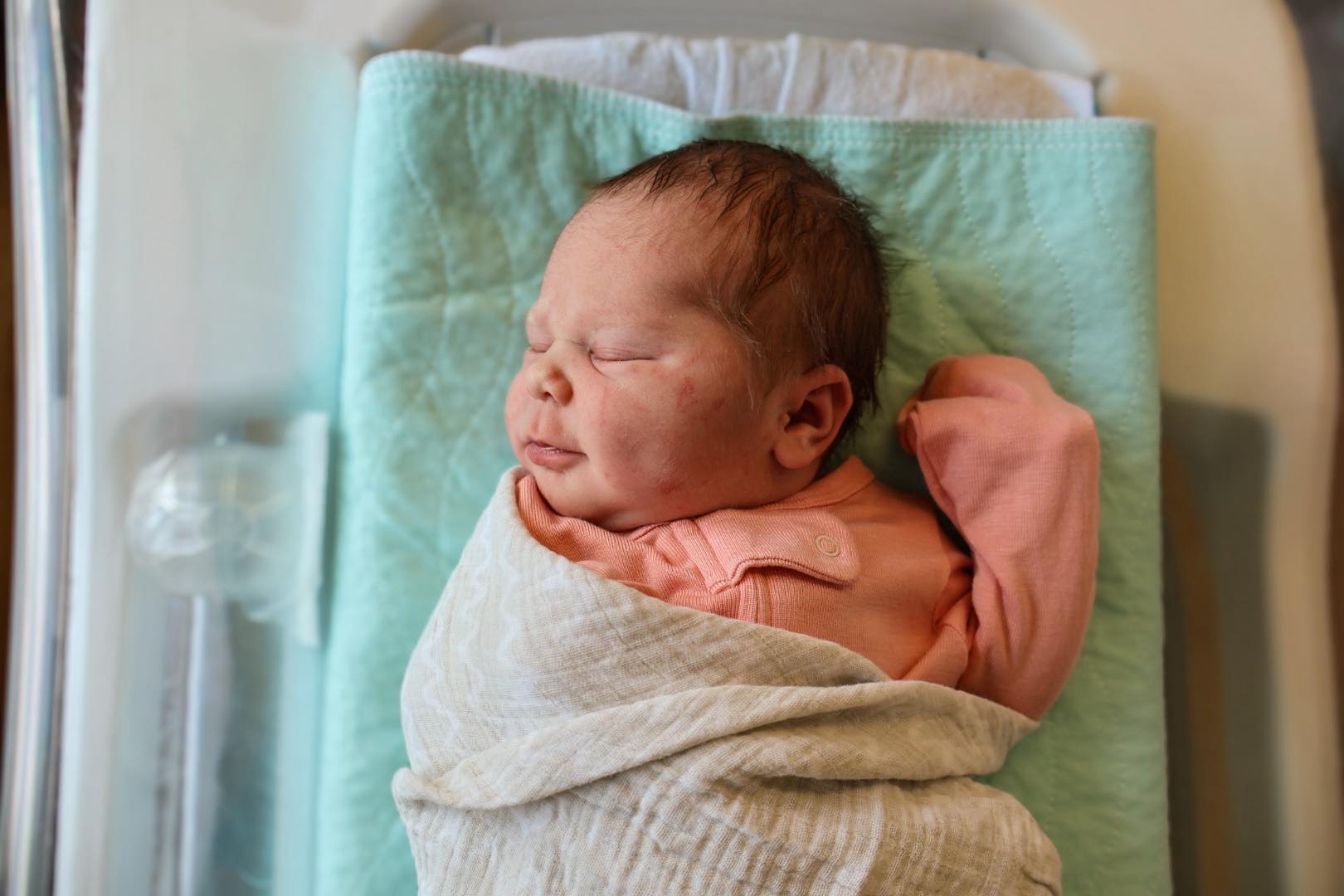
A family’s late-night drive to the hospital took an unexpected turn when their baby arrived far earlier than planned. What began as a high-risk pregnancy with moments of uncertainty ended in a story that captured both relief and humor.
Under the glow of the golden arches, a healthy newborn entered the world—earning a nickname as unusual as her birthplace. This is the story of how Matilda, now affectionately called “McTilly,” came into the world in a way her parents will never forget.
The High Risk Pregnancy and False Start
For Alyce Rotunda, pregnancy had never been simple. Living with type 1 diabetes meant her care was automatically considered high risk, requiring a hospital with specialized staff and facilities nearly an hour away. That distance alone added stress, knowing every contraction could potentially demand a race against time.
On August 8, she felt certain the moment had come. Contractions built steadily through the day, leading her and her husband Kevin to pack up and drive to a hospital in Kalamazoo. After hours of monitoring, however, they were told it was not active labor. Sent home in the middle of the night, they carried with them both relief and frustration. Relief that nothing was wrong just yet, and frustration that the uncertainty left them waiting for the real signs to appear.

The following day underscored how unpredictable labor can be. As Alyce turned another year older, she described feeling “absolutely miserable,” enduring irregular but painful contractions along with nausea and a migraine. The experience was difficult not just physically but emotionally. With three young children already at home, she tried to balance monitoring her body’s signals while caring for them, unsure whether she would be rushing back to the hospital within hours or waiting days longer.
By late evening, her contractions grew stronger. Using a timer to track them, she saw the intervals closing in. At 2 a.m. on August 11, the pattern could no longer be ignored. Contractions were arriving six minutes apart—enough to convince both her and Kevin that this time, the hospital trip was necessary. They called Alyce’s mother to stay with their children and quickly prepared to leave again, hopeful that this would be the final trip before meeting their baby.
From Highway Rush to McDonald’s Delivery
By 2 a.m. on August 11, contractions were six minutes apart, so Alyce and Kevin headed for the hospital. On a deserted stretch of highway, Kevin pushed the speed to protect his wife and baby. “He later told me at one point he was going 100 mph on a stretch of highway where there was nothing around,” Alyce told People.
They called 911 and initially planned to meet first responders at a Speedway gas station, but the location was bright and busy. They opted for a quieter McDonald’s down the road instead. With the dispatcher still on the line, Kevin parked and moved to support Alyce as she stepped out of the van.
The delivery was immediate. “I reached down to feel what was happening and her head was fully out. I just remember yelling, ‘Kevin catch her right now!’” she said. “I didn’t even have to push — she honestly just fell out into Kevin’s arms.” Matilda was born at 2:57 a.m. under the golden arches.

Relief, Recovery, and Health Outcomes
The moment the baby cried, both parents knew she was stable. “We had a huge sigh of relief when she came out and immediately started crying. She was breathing and alert, so I was at peace,” Alyce told People.
Emergency medical services arrived within minutes and transferred Alyce and her newborn to the hospital for evaluation. “About five minutes later, an ambulance arrived at the McDonald’s, and Alyce and her newborn were taken to the hospital to be checked out,” per People.
Both were cleared without issues. “Neither Matilda or I had any complications from the whole experience, which is just the biggest blessing considering how things have played out for me in the past,” Alyce said to People.
This delivery also moved differently than her previous births. “This was my first birth that wasn’t induced, so we had no concept of just how quickly a natural labor would take for me,” she told People.
The Nickname That Stuck
When the family gathered at the hospital to welcome Matilda, the unusual circumstances of her arrival became the centerpiece of every conversation. It was Alyce’s brother-in-law who first playfully suggested calling her “McTilly,” combining the original name “Tilly” with the fast-food chain where she was born. What began as a joke quickly caught on within the family circle.
The lighthearted nickname carried meaning beyond humor. After the tension of a high-speed drive and a sudden delivery, the name offered a sense of levity, turning a stressful episode into a story the family could smile about. It also provided a way for her siblings to bond with their new sister, giving them a playful way to introduce her to friends and relatives.

The story soon spread beyond the hospital room. Relatives shared the nickname with neighbors and friends, and it began to take hold on social media as well. The local McDonald’s restaurant joined in, posting a message welcoming the baby into their “McFamily.” That recognition sealed “McTilly” as more than just a passing joke—it became part of Matilda’s story from the start.
For Alyce and Kevin, the nickname reflects gratitude. Instead of associating the birth with fear or chaos, they now link it to a moment of relief and unexpected joy. While Matilda will grow up with her given name, the affectionate nickname will always be a reminder of the night she arrived under the golden arches.
What Families Can Learn From “McTilly’s” Birth
Unexpected deliveries outside the hospital are rare, but Matilda’s story shows they can happen even when parents do their best to plan ahead. Rather than treating it as a one-off anecdote, there are valuable lessons families can take away—especially those navigating high-risk pregnancies or living far from specialized hospitals.
- Plan for distance and risk: If your designated hospital is far or you are high risk, prepare a simple contingency plan. Pack a go bag, map alternate safe pull-over locations, and keep phones charged. In Alyce’s case, the appropriate facility was about 45 minutes away, which increased time pressure.
- Know the go time: Track contractions and watch for clear thresholds to leave. ACOG advises heading in when contractions are stronger, closer together, and regular, and to seek care immediately for heavy bleeding, decreased fetal movement, or when your water breaks. Use a timer rather than guessing.
- Call 911 early if birth feels imminent: Dispatchers can guide you and send paramedics. This is especially important if you are far from the hospital or stuck in transit. Alyce and Kevin called 911 en route, which ensured help was on the way.
- If delivery starts before help arrives, use simple steps: Create a clean surface, support the head and body as the baby emerges, dry the baby, place baby skin-to-skin on the birthing parent, and keep both warm. Do not cut the cord unless trained and equipped. Wait for paramedics.
- Position matters: If an uncontrollable urge to push begins outside the hospital, a semi-reclined or supported position is safer than squatting on hard surfaces. Avoid active pushing until the baby is nearly out to reduce tearing risk.
- After the birth, prioritize warmth and monitoring: Keep the newborn dry and covered, encourage chest-to-chest contact, and be ready for the placenta to deliver on its own. Get to the hospital promptly to evaluate bleeding or infection risk.
- Diabetes specific prep: If you have type 1 or type 2 diabetes, keep glucose monitoring supplies in your go bag and coordinate closely with your care team throughout pregnancy. Good preconception and prenatal glycemic management lowers complications.
- Document key details: Note the time of birth and any issues during delivery. This helps EMS and hospital staff.
- Assign family roles in advance: Line up childcare or a contact who can step in quickly, as Alyce did when she called her mother before leaving for the hospital.
- Keep perspective: Unplanned out-of-hospital births are uncommon, accounting for about 1.5 percent of U.S. births, yet simple, calm steps can keep parent and baby safe until professionals arrive.
A Consciousness-Driven Reflection
Matilda’s birth is more than a remarkable story—it is a reminder of how life rarely unfolds according to plan. In moments of uncertainty, when control slips from our hands, something deeper calls us to trust the process. For Alyce and Kevin, what began as panic transformed into presence. Their focus shifted from fear to the miracle unfolding right in front of them.
Stories like this highlight an often-overlooked truth: the environment does not define the sacredness of an experience. Whether under hospital lights or a set of golden arches, the arrival of a new life carries the same weight. What matters most is connection—the cry of a child, the relief of parents, the shared breath in the aftermath.
On a larger scale, this story invites reflection on how we meet life’s unplanned turns. Do we resist, or do we stay open to what comes next? Gratitude does not erase difficulty, but it can transform how we carry it. The Rotunda family’s joy in embracing the nickname “McTilly” shows how humor and love can turn chaos into a cherished memory.
Ultimately, this birth underlines the value of presence and acceptance. Life may place us in unexpected places, yet within those spaces, profound meaning can be found if we are willing to recognize it.
Featured Image from Alyce Rotunda on Facebook
