
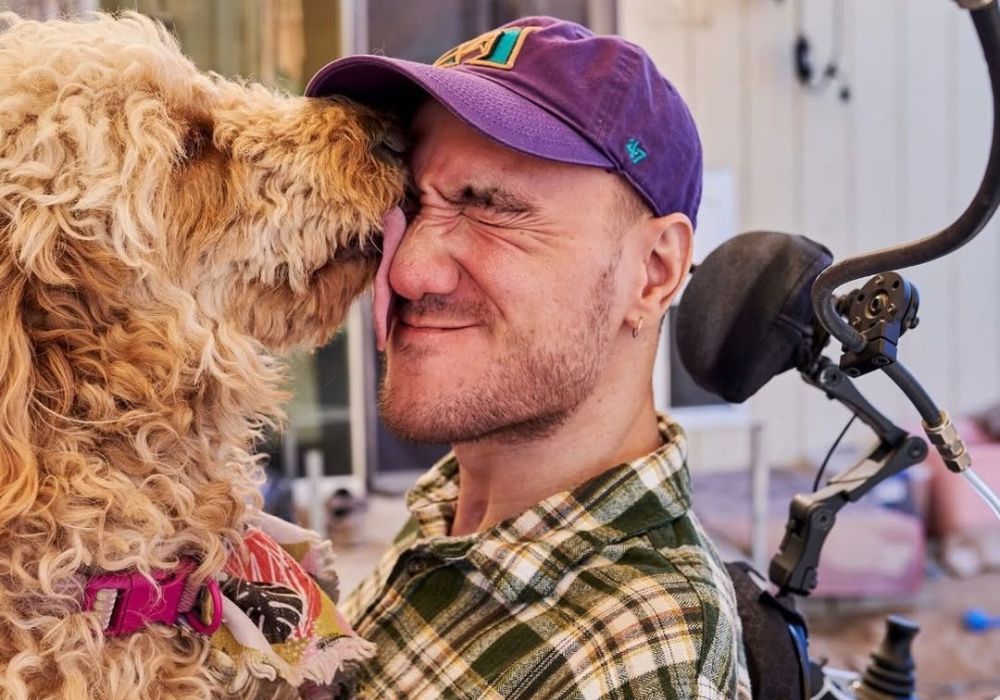
In January 2024, Noland Arbaugh made history by becoming the first person to receive a Neuralink brain implant. The device, developed by Elon Musk’s neurotechnology company, allows Noland to control a computer using only his thoughts—an incredible achievement for someone who has been paralyzed since a diving accident in 2016.
For Noland, the decision to undergo the procedure was about more than just being part of a groundbreaking experiment. It was a chance to regain some independence and re-engage with a life that had drastically changed after his injury. While Neuralink has often been in the headlines because of Musk’s involvement, it’s the life-changing potential of this technology that truly matters.
Noland Arbaugh’s Life After Paralysis

In June 2016, Noland Arbaugh’s life was turned upside down. At 22 years old, he was a student enjoying a summer break working at a camp in New York when a diving accident left him paralyzed. What started as a fun day of swimming quickly became a nightmare when a sudden impact during a dive caused severe spinal cord damage. The result was a complete loss of movement and sensation below his shoulders, leaving Noland with quadriplegia.
Before the accident, Noland had a full life. He was active in sports, a musician, and someone who enjoyed the outdoors. But in an instant, everything changed. For years, he struggled with the harsh reality of being dependent on others for even the most basic tasks—showering, eating, and communicating. As he put it, he had to learn how to rely on others for everything, losing not only his physical independence but also a sense of privacy.
The emotional toll of this lifestyle was immense, but Noland’s resilience and positive outlook kept him going. He adapted to the new reality, but the sense of isolation and frustration was always there. Despite the challenges, Noland remained hopeful that medical breakthroughs might one day help people like him regain some degree of independence.
His journey toward that breakthrough began when he learned about Neuralink and its efforts to develop a brain-computer interface that could restore motor function in individuals with paralysis. It was a game-changing possibility, and for Noland, it seemed like a chance to take control of his future once again.
Enter Neuralink: A Bold Decision to Participate
When Noland first heard about Neuralink and its groundbreaking technology, it was like a spark of hope. Neuralink, founded by Elon Musk, had developed a brain-computer interface (BCI) that could potentially allow individuals with paralysis to control computers and other devices using only their thoughts. The device works by detecting neural signals in the brain and translating them into digital commands, bypassing the damaged spinal cord.
Despite knowing the risks involved—brain surgery, potential complications, and the uncertainty of how the technology would work—Noland didn’t hesitate. He understood that participating in the Neuralink trial could lead to life-changing benefits, not just for him, but for others with similar conditions.
“I knew the risks, but I also knew that if I didn’t take part, someone else would,” Noland shared. “If it worked, I could regain some independence. If something went wrong, at least they would learn from it, and it could help others in the future.”
His decision was driven by a desire to take control of his life again. It wasn’t about being part of a high-profile experiment; it was about the possibility of rediscovering the activities he once loved, like playing video games and controlling a computer with his mind. Noland’s willingness to embrace the unknown was not just an act of bravery, but also a testament to his determination to regain what he lost, no matter the odds.
The Science Behind Neuralink
At its core, Neuralink’s technology is designed to create a direct link between the brain and digital devices, bypassing the barriers created by spinal cord injuries like Noland’s. The brain-computer interface (BCI) implanted into Noland’s brain consists of a small chip—roughly the size of a coin—that is surgically placed under the skull. This chip is connected to 64 fine threads, each with multiple electrodes that detect electrical signals generated by neurons in the brain.
When Noland thinks about moving a hand or finger, his brain still sends electrical signals to his spinal cord, even though the messages don’t actually reach his limbs. The Neuralink device picks up these signals and translates them into digital commands, like moving a cursor on a computer screen. Essentially, the device allows his thoughts to bypass the damaged spinal cord and interact with a computer or other technology.
The process may sound complex, but the key takeaway is this: Neuralink doesn’t rely on physical movement to function. It picks up on the brain’s electrical signals—the very thoughts Noland has when he tries to move—and translates them into actions. This is what has allowed him to control a computer, play video games, and even browse the internet—all with his mind.
Neuralink’s technology is still in the early stages, but its potential is immense. While Noland’s device is still limited, the company’s long-term goal is to allow users to do everything from controlling prosthetics to potentially restoring full motor function to those with spinal cord injuries.
Noland’s Second Chance with Neuralink
Redefining the boundaries of human capability requires pioneers.
— Neuralink (@neuralink) May 16, 2024
If you have quadriplegia and want to explore new ways of controlling your computer, we invite you to participate in our clinical trial. pic.twitter.com/svqfAkVV1M
For Noland Arbaugh, the impact of Neuralink has been nothing short of transformative. After years of relying on others for almost every aspect of his daily life, he is now able to regain some control over his environment—thanks to the power of his mind. While the device may not yet offer complete independence, the improvements Noland has experienced are profound.
When the device was first activated, Noland was able to control a computer cursor simply by thinking about moving his fingers. At first, he was cautious and unsure of what to expect, but as he saw the cursor respond to his brain signals, he realized that the technology had incredible potential. “Honestly, I didn’t know what to expect,” Noland explained. “But when I saw my neurons firing on the screen, I realized this was real. I could control a computer with just my thoughts.”
This seemingly small act—moving a cursor—marked the beginning of Noland’s journey back to independence. Over time, he has gained the ability to use the implant for more complex tasks, such as playing video games. A lifelong gamer, Noland was devastated when his injury took away his ability to enjoy one of his favorite pastimes. Now, he’s back to beating his friends at video games—a feat he describes as “crazy” and almost “impossible” before Neuralink.
“It’s amazing,” he said. “I used to have to let go of games because I couldn’t play anymore. Now, I’m playing with my friends again, and it feels like a part of me is back.”
In addition to gaming, the Neuralink implant has made everyday tasks much more manageable for Noland. He can now send texts, check social media, and surf the web—activities that were once time-consuming and difficult. What once took minutes or even hours with mouth-operated devices can now be done in seconds. This shift has brought an unexpected but welcome social resurgence for Noland, reconnecting him with friends, family, and the world.
Neuralink’s Growing Pains and Progress
While Neuralink has undoubtedly changed Noland’s life in remarkable ways, it’s important to recognize that the technology is still in its early stages and comes with its own set of challenges. For all the advancements and possibilities, there are limitations that Noland and others in similar situations must contend with.
One of the major challenges is the potential for privacy concerns. Because Neuralink works by monitoring brain activity and translating those signals into digital commands, there are growing concerns about what could happen if someone were to hack the system or gain unauthorized access to the data. As Noland himself mentioned, “Once you’ve got access to stuff inside your head, there really is no other barrier to personal privacy left.” While the device does not currently monitor what Noland is thinking in a detailed sense, future versions could potentially raise significant privacy issues as the technology develops further.
Additionally, the physical challenges of having a device implanted in the brain are not insignificant. Early in Noland’s journey, he experienced an issue where the threads from the device began to retract slightly, which affected its functionality. For a period, Noland lost the ability to control his computer as seamlessly as he had before. “That was really upsetting,” Noland admitted. “I didn’t know if I’d ever be able to use Neuralink again.” Thankfully, the team at Neuralink was able to address the issue by adjusting the software, but this episode highlights the potential for technical limitations in the current version of the device.
Beyond these concerns, there is also the reality that the technology is still being tested and refined. Neuralink is exploring ways to make the device smaller, more durable, and capable of performing more complex functions, but there’s still a long road ahead before it becomes a truly seamless solution for people like Noland.
Despite these challenges, Noland remains hopeful. “We’re only scratching the surface of what this can do,” he said. “The tech is not perfect yet, but it’s already helping. And it will only get better.”
What’s Next for Noland and Neuralink
As Noland continues to experience the benefits of Neuralink, the future holds even greater promise. One of his main hopes is that future advancements will allow him to control more than just a computer. “I’m hoping to one day control a robotic arm or a wheelchair,” he shared. Such a development would provide Noland with a new level of freedom and mobility.
Beyond his own needs, Noland sees the potential for Neuralink to help others with disabilities as well. He envisions the technology helping those who are blind or deaf, or enabling control over devices like humanoid robots to assist with daily tasks. The possibilities seem endless, and he is excited for what lies ahead. “It’s not just about getting people like me back to where we were—it’s about improving quality of life for so many others.”
Though the technology is still evolving, Noland remains optimistic about the path forward. He believes that while there are challenges ahead, the potential of Neuralink to transform lives is undeniable. “It’s a huge step forward, and I can’t wait to see what’s next.”
The Beginning of a New Life
@elonmusk Put me in coach pic.twitter.com/FvoRO3c1wN
— Noland Arbaugh (@ModdedQuad) December 27, 2024
Noland Arbaugh’s story is a testament to the transformative power of technology. The Neuralink implant has given him back a level of independence that seemed impossible after his injury, enabling him to control a computer, play video games, and reconnect with his friends and family in meaningful ways. While the technology is still in its early stages, Noland’s experience highlights its incredible potential to improve the lives of people with disabilities.
As Neuralink continues to evolve, the possibilities for people like Noland—and others facing similar challenges—are limitless. Whether it’s controlling a robotic arm, enhancing communication, or restoring mobility, the future of brain-computer interfaces promises to open new doors for independence and self-expression.
Though there are still hurdles to overcome, Noland remains hopeful about the path ahead. “This technology is not perfect yet, but it’s already helping,” he said. “It’s a huge step forward, and I can’t wait to see what’s next.”
For Noland, the journey with Neuralink is just beginning, and the impact it has already had on his life serves as a powerful reminder of how innovation can change the course of a person’s future.
Featured Image Source: Noland Arbaugh on Instagram
