
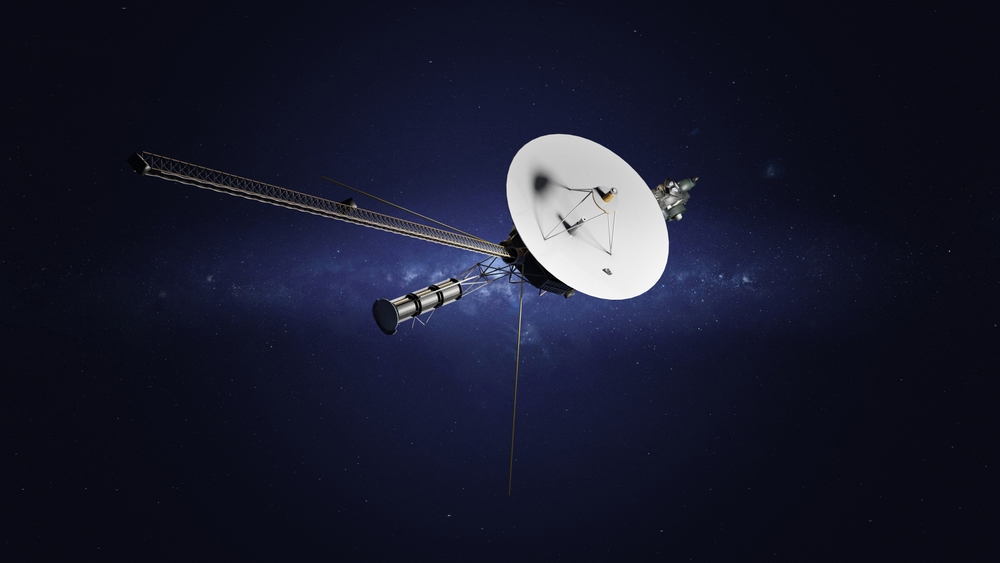
More than four decades ago, NASA launched Voyager 1 on a mission to explore the outer planets. No one could have predicted that the spacecraft would still be operational nearly 50 years later, let alone continuing to transmit valuable data from the distant reaches of interstellar space. As of 2025, Voyager 1 sits more than 15 billion miles from Earth, making it the most distant human-made object in existence. But as with any aging traveler, the journey hasn’t been without mechanical challenges.
Recently, Voyager 1 faced a mission-ending crisis: its backup thrusters, vital for keeping the spacecraft properly oriented toward Earth, had begun to clog with residue. If they failed completely, communication would be lost—just as Earth’s only capable antenna was scheduled to undergo a long-term upgrade. With time running out, NASA engineers performed what many now call a miracle: they successfully restarted the spacecraft’s long-dormant primary thrusters, silent for over 20 years.
How a Flipped Switch Nearly Ended the Mission
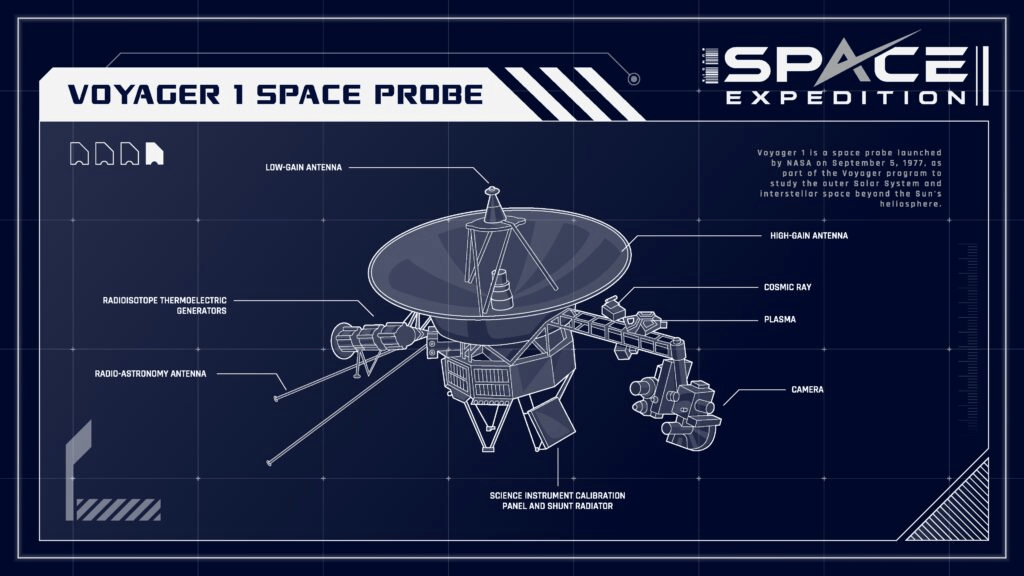
The crux of Voyager 1’s navigation challenge centered on its ability to keep its antenna precisely pointed at Earth. This is no small feat when dealing with the distances involved; even a minor misalignment can sever the tenuous radio connection. Since 2004, the spacecraft had relied on its backup roll thrusters after the primary ones failed due to heater circuit issues. These heaters are critical—they warm the hydrazine fuel, allowing the thrusters to fire correctly.
Over time, the backup thrusters started to fail too. Engineers noticed they were clogging with residual propellant, and with the Deep Space Station 43 in Canberra set to go offline for upgrades, the timing could not have been worse. Without the ability to send commands, the spacecraft would drift off-course and effectively fall silent.
After revisiting old wiring diagrams and telemetry, one of the engineers proposed that the problem wasn’t the heaters themselves but a switch that had been flipped incorrectly during an earlier disturbance. The hypothesis was simple yet profound: if the switch could be reset remotely, perhaps the heaters and primary thrusters would come back to life.
A Delicate Operation Across Deep Space
Sending commands to Voyager 1 isn’t like fixing your computer over Zoom. It takes 23 hours for a signal to travel one way. On March 19, 2025, the team sent a carefully timed sequence of commands. If the heaters didn’t activate, firing the thrusters could destabilize the spacecraft, potentially destroying it. The stakes were enormous.
After a tense 46-hour round-trip communication delay, the data streamed in. The heaters were functioning again, and the thrusters had responded. For a system thought to be irreversibly broken, it was nothing short of astounding. The mission, once on the brink of termination, had been given a new lease on life.
This success meant Voyager 1 could once again maintain its orientation, continuing to send scientific data back to Earth. It was a massive relief, not just for the mission engineers but for the global community following Voyager’s incredible journey. The spacecraft had proven yet again that its voyage was far from over.
Why Voyager 1 Still Matters
Voyager 1 isn’t just a relic; it’s a scientific powerhouse. Since it crossed into interstellar space in 2012, it has been measuring cosmic rays, magnetic fields, and plasma densities—data that cannot be gathered from within our solar system. The information it sends home expands our understanding of the universe’s edge and the heliosphere that shields our solar system.
Even as its instruments gradually power down due to dwindling energy reserves, Voyager 1 continues to deliver insights that no other spacecraft can. It operates in a region where no probe has gone before, and every bit of data it sends back is a first in human history. The revived thrusters now ensure that we can continue receiving this data for a bit longer.
For scientists and engineers alike, Voyager 1 represents a triumph of both ingenuity and endurance. That a spacecraft built in the 1970s still operates today speaks to the foresight of its designers and the resilience of its mission team. In a world that often moves at lightning speed, Voyager reminds us of the enduring value of patience and precision.
The Human Side of a Technical Feat
Behind this engineering marvel is a team of people who have dedicated decades of their lives to ensuring the success of a spacecraft traveling through the unknown. Todd Barber, Voyager’s propulsion lead, described the moment data came through as “glorious” and “a miracle save.” Such words speak volumes about the emotional investment tied to the mission.
The fix was more than just technical troubleshooting; it was a reminder of the problem-solving spirit that defines exploration. The team’s ability to decipher a 20-year-old electrical anomaly and send the right command across billions of miles exemplifies the kind of quiet heroism often overlooked in space science.
Moreover, these missions provide inspiration for future generations of scientists and explorers. Knowing that a team can maintain and revive a spacecraft over half a century old from such a distance is both humbling and motivating. It suggests that no problem is too distant or too complex to solve with creativity and perseverance.
Cosmic Lessons in Longevity and Resilience
Voyager 1’s continued journey is a poetic metaphor for endurance. Despite aging systems, resource limitations, and the challenges of deep space, it presses on—a lone traveler braving the void. Its story underscores not just technological achievement, but also the importance of vision and long-term commitment.
The mission also teaches us that even backup systems require backups and that maintenance in space can take the form of long-term planning and strategic innovation. From engineering to communication protocols, Voyager 1 is a case study in how to keep complex systems alive far beyond their expected lifespan.

For the public, it’s a captivating narrative. In an age when headlines often focus on the new and shiny, Voyager 1’s quiet perseverance offers a different kind of inspiration. It tells us that there’s value in what endures and that sometimes the most extraordinary journeys are the slowest and steadiest ones.
