
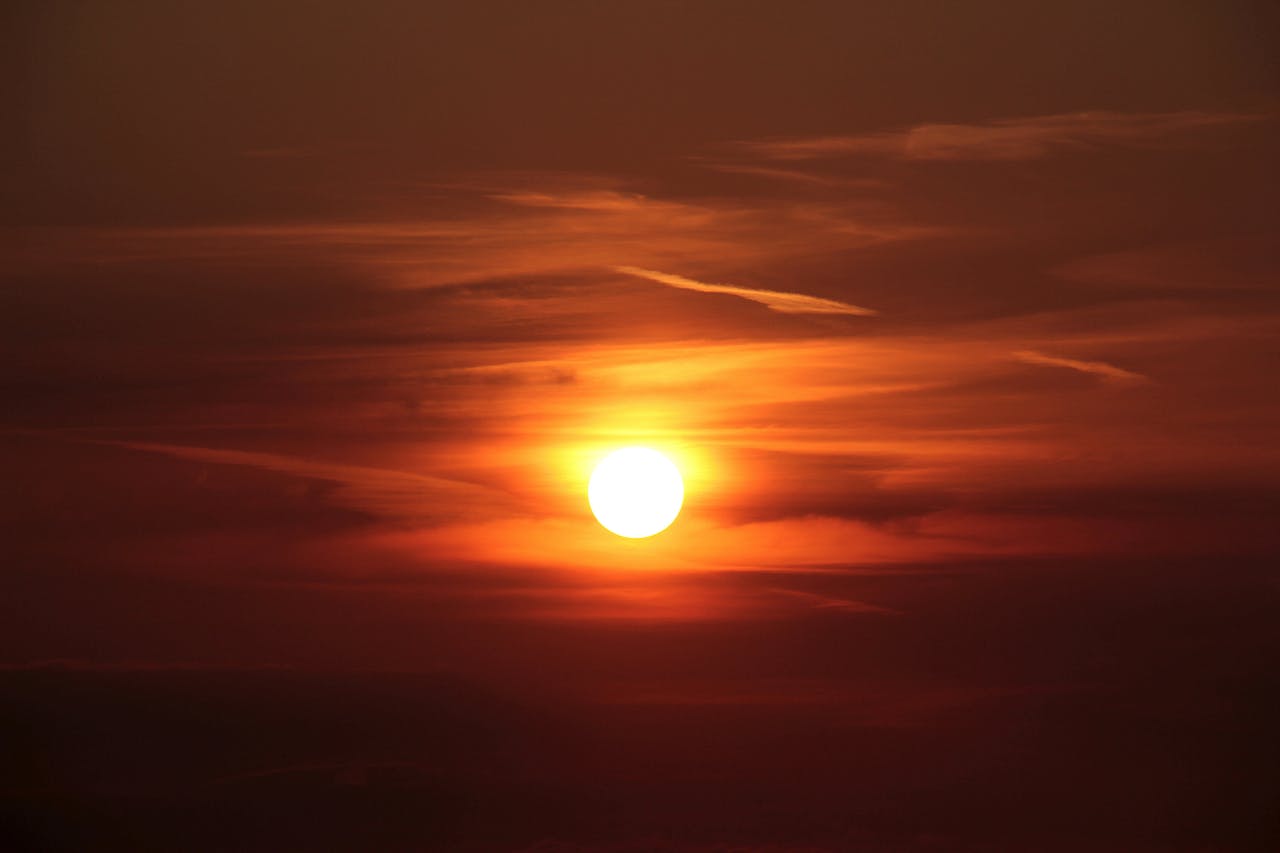
The Sun has always been our constant, providing the energy that sustains life and sets the rhythm of days, seasons, and climates. But recently, NASA scientists revealed something unexpected: the Sun appears to be “waking up” in ways they cannot fully explain. This surprising burst of activity isn’t just about science—it’s a reminder of how much of our universe remains mysterious, and how deeply our lives are tied to the forces of space. The rhythms of the Sun are not just astronomical curiosities. They are patterns that ripple through our atmosphere, our technologies, and even our health.
Traditionally, the Sun follows a cycle lasting around 11 years, moving between calm phases and bursts of activity. But what NASA is now observing doesn’t fit the usual script. With unpredictable sunspots, increased magnetic turbulence, and solar flares showing up more often than expected, scientists are both fascinated and cautious. If the Sun truly is entering an unusual phase, the implications could stretch from the safety of astronauts in orbit to the stability of power grids here on Earth. More importantly, it invites us to ask a question that blends science and humanity: what happens when our greatest source of life begins to change in ways we don’t fully understand?

What Does It Mean for the Sun to ‘Wake Up’?
The Sun’s activity has long been measured through solar cycles, with each cycle offering periods of high and low energy. During solar maximum, sunspots multiply, solar flares erupt more frequently, and vast clouds of charged particles called coronal mass ejections (CMEs) are hurled into space. In solar minimum, things quiet down significantly. This back-and-forth rhythm is so familiar that scientists can usually predict the general shape of each cycle. What makes the current behavior puzzling is that the Sun seems to be ramping up energy in ways that don’t match predictions.
NASA’s researchers have observed more intense flares, stronger magnetic disturbances, and clusters of sunspots that don’t follow expected timelines. This surge is why they refer to the Sun as “waking up.” Yet despite their advanced models, scientists admit that the reasons behind this surge are still elusive. Could it be part of a longer, more complex cycle? Or is it evidence of new processes inside the Sun that remain beyond our understanding? These are the questions driving current research.
Some researchers suggest that we might be witnessing a shift in the Sun’s magnetic field dynamics, which govern much of its activity. Others think the anomaly could point to influences we have yet to measure, perhaps linked to deeper layers of solar plasma. What is clear is that while the Sun has been studied for centuries, it still holds secrets that remind us of how vast and unpredictable nature can be.

How Solar Activity Affects Earth
When the Sun flares with intensity, Earth feels the impact. These bursts of energy send waves of charged particles across space, colliding with Earth’s magnetic field and atmosphere. The most visible effect of this interaction is the aurora—the glowing curtains of green, pink, and purple light that dance across polar skies. For thousands of years, these lights have inspired myths, legends, and awe. But their beauty hides the reality that solar storms carry immense power.
Beyond the skies, solar activity can disrupt satellites, which form the backbone of GPS navigation, communication networks, and weather tracking. A strong geomagnetic storm can make GPS signals unreliable, cause radio blackouts, and interfere with aviation systems. For businesses and governments, even minor disruptions can cause significant financial losses. In severe cases, surges induced in power grids can trigger blackouts, as seen in Quebec in 1989, when millions of people were plunged into darkness in seconds.
Scientists often refer back to the Carrington Event of 1859 as the ultimate warning of what the Sun can do. Telegraph systems at the time sparked and caught fire, and auroras were visible as far south as the Caribbean. If a storm of that magnitude hit today, experts believe it could cripple internet infrastructure, disable satellites, and cause cascading effects across the global economy. The possibility of such an event is why NASA and other space agencies are watching this unusual uptick in solar activity so closely.

Could Solar Storms Impact Human Health?
The Sun doesn’t just affect technology; it may also touch the rhythms of the human body. Research has suggested that geomagnetic disturbances could have subtle but noticeable effects on health. For example, shifts in geomagnetic fields have been linked to changes in cardiovascular function. Some studies indicate that heart rate variability and blood pressure may fluctuate during intense solar storms, particularly among individuals with pre-existing heart conditions. While the mechanisms aren’t fully understood, it’s thought that the body’s own bioelectrical systems may be sensitive to external changes.
Sleep patterns can also be affected. Melatonin, the hormone that regulates sleep cycles, may be disrupted by geomagnetic activity. People living at higher latitudes, where auroras are more visible, often report restlessness or unusual sleep disturbances during solar storms. This has led scientists to question whether cosmic activity influences circadian rhythms in ways we are only beginning to grasp.
Mental health has also come under scrutiny in solar research. Some investigations have found correlations between solar activity and increased reports of mood disorders or anxiety, though results remain mixed and far from conclusive. These studies raise the possibility that our mental and emotional balance may be more connected to cosmic rhythms than we currently appreciate. While more evidence is needed, the idea that the Sun’s fluctuations might ripple into our biology is both humbling and intriguing.

Why NASA Is Concerned
For NASA, the stakes are higher than just curiosity. Satellites that orbit Earth are vulnerable to bursts of solar radiation, which can damage electronics or shorten their lifespan. This presents risks not only for communications and navigation but also for national security, as many defense systems rely on satellites. The unpredictability of the Sun’s recent behavior complicates efforts to protect this vital infrastructure.
Astronauts are even more at risk. Unlike those of us on Earth, astronauts in orbit do not have the same level of protection from the planet’s atmosphere and magnetic field. Solar radiation can increase their cancer risk, cause radiation sickness, and impair sensitive equipment aboard spacecraft. Looking forward to missions to Mars or other deep-space destinations, the challenge grows even more serious. Shielding spacecraft from unpredictable solar storms will require advanced technologies that are still in development.
NASA’s forecasting systems are usually reliable, but the unusual surge in activity makes it harder to predict when and how solar storms will hit. This uncertainty complicates mission planning, satellite launches, and international collaborations in space. It’s a reminder that even with cutting-edge science, we are still subject to the whims of the star that powers all life on Earth.
Natural Ways to Protect Yourself During High Solar Activity
While most solar storms won’t pose a direct health threat to individuals, it doesn’t hurt to give your body extra support when space weather grows turbulent. A good starting point is cardiovascular resilience. Eating foods high in antioxidants, such as blueberries, spinach, and nuts, can help protect blood vessels from oxidative stress. These foods not only strengthen the heart but also support overall energy and immunity.
Many people find that grounding practices—like walking barefoot in grass or spending time in nature—help them feel steadier during times of electromagnetic disruption. Though scientific validation is still limited, such practices connect us to Earth’s natural fields, offering a sense of stability. Similarly, practicing good sleep hygiene by limiting screen use before bed, keeping your bedroom dark, and maintaining a consistent routine can counteract potential disruptions to melatonin.
Stress management remains one of the most powerful tools for resilience. Techniques like yoga, meditation, tai chi, or even mindful breathing exercises strengthen the nervous system and reduce the body’s vulnerability to external stressors. Combined with regular hydration, moderate exercise, and balanced nutrition, these practices create a foundation of health that can help you weather not only earthly challenges but cosmic ones as well.
Looking to the Skies With Curiosity
The Sun’s unpredictable awakening is both a scientific puzzle and a poetic reminder of our fragile place in the cosmos. On one hand, it underscores the risks we face in a world dependent on technology that is vulnerable to forces beyond our control. On the other, it stirs awe at the mysteries that remain unsolved, even about the star we see every single day. For NASA and other scientists, the goal is to decode these changes and prepare us for the possibilities. For the rest of us, the lesson may be simpler: live with greater awareness of our connection to nature and the universe.
When we pay attention to the Sun’s rhythms, we’re reminded that life is not only about what we build on Earth but also about the cosmic patterns that shape our reality. Supporting our health, nurturing resilience, and embracing practices that keep us grounded are small but meaningful ways to honor that connection. As the Sun “wakes up,” perhaps it’s also inviting us to wake up to our own interdependence with the natural world.
