
In an era when headlines about the environment often bring despair, a rare story of collaboration and hope has emerged from Latin America. Mexico, Guatemala, and Belize have announced a groundbreaking trinational pact to safeguard one of the planet’s most biodiverse and culturally rich landscapes: the Great Mayan Jungle. This historic initiative will create a massive 14-million-acre reserve that stretches across all three countries, effectively making it the second-largest rainforest conservation project in the Americas after the Amazon. For environmentalists, Indigenous communities, and anyone concerned about the climate crisis, this is more than just a political agreement it is a bold experiment in shared responsibility for the future of Earth’s natural heritage.
The new protected area, formally known as the Great Mayan Jungle Biocultural Corridor, aims to preserve not only ecosystems teeming with life but also centuries of history and culture that remain deeply intertwined with the land. Home to over 7,000 species, including endangered icons like jaguars, scarlet macaws, and tapirs, the corridor will act as a living sanctuary for biodiversity. Yet it’s not just about the animals. The jungle holds archaeological sites, sacred lands, and the living traditions of Maya and Afro-descendant communities, who have long been custodians of this lush territory. In a time when deforestation, wildfires, and unchecked development are chipping away at Earth’s last wild places, the decision by these three governments to act together is a rare and vital step forward.
A Living Treasure at the Heart of the Americas
The Great Mayan Jungle is often described as one of Earth’s lungs, and with good reason. Its vast canopy of green helps regulate global rainfall patterns, absorb carbon, and cool the planet in ways that benefit us all. Beyond the ecological functions, this region embodies a deep interconnection between nature and culture. The ruins of temples and pyramids dotting the forest floor remind us of a civilization that flourished for centuries in harmony with its environment. Today, as modern development encroaches, this balance is under threat.
Protecting the jungle means more than fencing off land. It means safeguarding a unique biocultural legacy where people and nature have always coexisted. The reserve spans 50 separate conservation areas: 12 in Mexico, 27 in Guatemala, and 11 in Belize, forming an unbroken chain of protection.

Within this corridor, species diversity rivals that of the Amazon itself. Jaguars, often called the spirits of the jungle, prowl the shadows while rare birds like the quetzal trace arcs of color overhead. Each tree, river, and cave contributes to an ecological mosaic that has been centuries in the making.
Leaders across the region have framed this as both an ecological necessity and a cultural duty. “We are not only protecting an ecosystem, but also honoring the legacy of the civilization that once flourished in these territories,” said Belize’s Prime Minister Johnny Briceño. This dual mission conserving biodiversity while celebrating cultural heritage sets the Great Mayan Jungle initiative apart from other conservation projects.
Borders That Unite Instead of Divide
It’s rare to see three sovereign nations come together so seamlessly to protect a shared resource. Too often, borders slice through natural landscapes, complicating conservation efforts. The Great Mayan Jungle Biocultural Corridor challenges that norm, demonstrating that cooperation can transcend politics. By linking protected zones across Mexico, Guatemala, and Belize, the corridor allows for uninterrupted wildlife movement, healthier ecosystems, and joint strategies against common threats.
This alliance is also symbolic. At a time when geopolitical divisions dominate global headlines, here are three nations choosing to unite over their shared future. Mexican President Claudia Sheinbaum called the agreement “historic” and “beautiful,” while Guatemalan President Bernardo Arévalo emphasized that the project is as much about unity as it is about ecology. The corridor reminds us that forests don’t recognize political lines what happens to the jungle in one country inevitably impacts its neighbors.
The partnership goes beyond symbolism. Shared databases on species, joint training for forest management, and collaborative fire-prevention systems are planned. This collective approach is especially crucial given the scale of challenges facing the reserve. Illegal logging, organized crime, and climate change do not stop at national boundaries, so solutions cannot either.
The Shadow of the Maya Train

Amid the applause, one topic continues to stir controversy: Mexico’s Maya Train project. Designed to connect tourist hubs with rural archaeological sites, the train has already cut through sensitive ecosystems in the Yucatán Peninsula. Critics argue that it threatens the very environment the new reserve seeks to protect. Millions of trees have been felled, cave systems that supply drinking water have been disrupted, and Indigenous groups have raised alarms about the long-term cultural and ecological costs.
Sheinbaum and her administration have floated the idea of extending the train into Guatemala and Belize. While this could bring economic development to remote areas, Guatemalan President Arévalo has drawn a hard line: no trains through protected areas. “I’ve made it very clear at all times that the Maya Train will not pass through any protected area,” he said. His position reflects a growing global awareness that development and conservation must not be seen as mutually exclusive but that one cannot come at the cost of the other.
The tension between grand infrastructure projects and environmental preservation highlights a central question: can economic growth be achieved without sacrificing fragile ecosystems? The future of the Great Mayan Jungle will depend in part on how governments answer that challenge.
Crime, Deforestation, and the Fight for Control

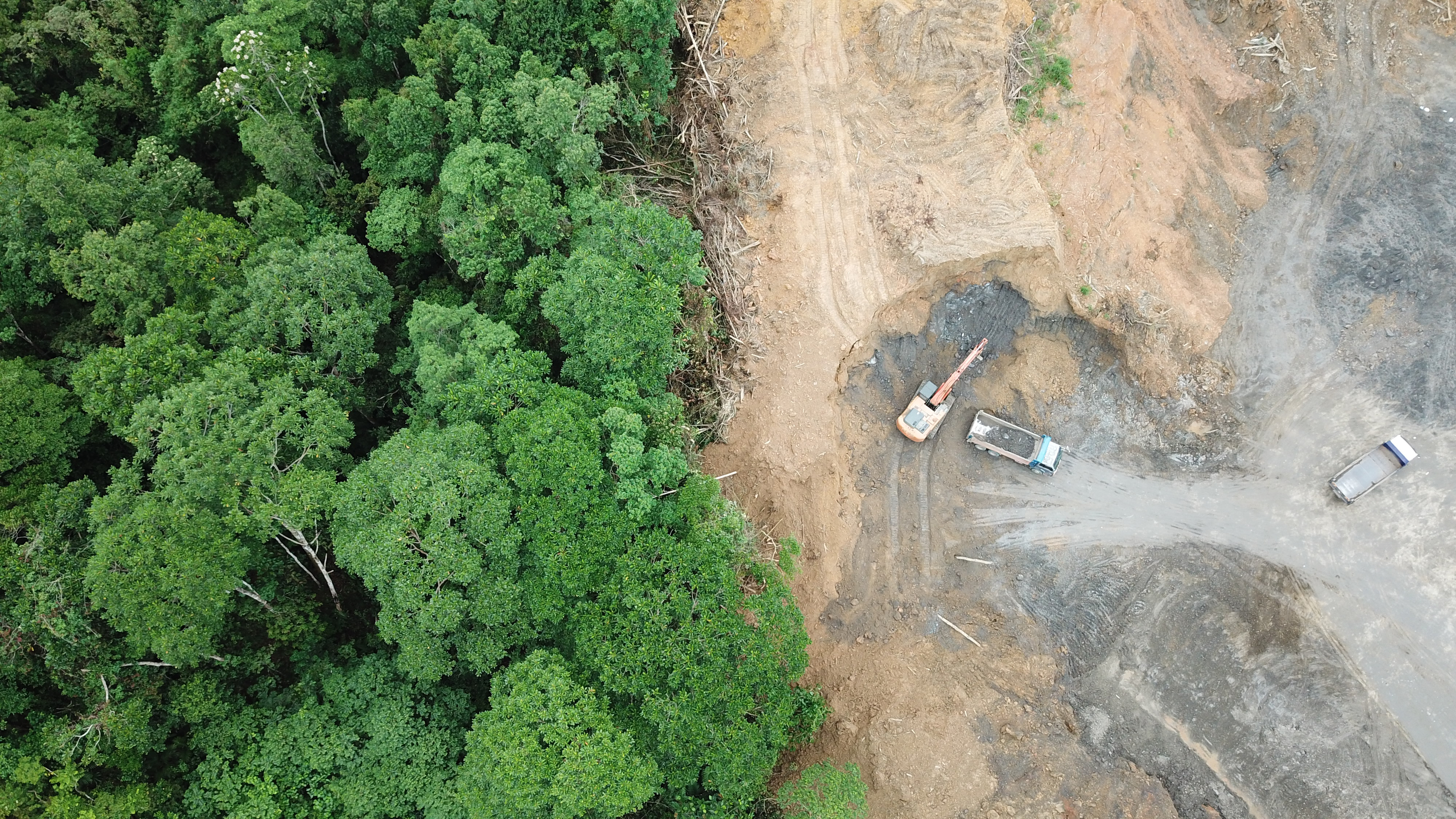
The threats facing the jungle are not abstract. Along the Mexico-Guatemala border, clandestine landing strips for drug trafficking planes are hidden under the canopy. Illegal miners and loggers carve paths into the forest, while smugglers move migrants across treacherous terrain. These activities not only endanger the environment but also destabilize local communities.
Guatemala’s Environment Minister Patricia Orantes has stressed that the issue is as much about sovereignty and security as it is about conservation. “The first thing is that the security forces begin to have a presence, because the region has been abandoned and left to organized crime,” she said. Mexico’s Environment Secretary Alicia Bárcena echoed this, pointing out that the military and police must be part of any lasting solution.
Yet experts caution that security alone is not enough. History shows that militarization without community engagement often breeds resentment and resistance. Programs like Mexico’s “Planting Life,” which pays landowners to cultivate trees, represent attempts to create alternatives to illegal industries. Still, critics warn that poorly designed initiatives risk backfiring at one point, the program inadvertently incentivized deforestation. True protection of the reserve requires building trust, offering viable livelihoods, and engaging communities as partners rather than obstacles.
People as Protectors, Not Opponents

One of the most promising aspects of the trinational corridor is its explicit recognition of Indigenous and local communities as guardians of the forest. For centuries, Maya communities have practiced forms of sustainable agriculture and forest management that modern conservationists are only beginning to appreciate. By formally including these voices in the governance of the reserve, the corridor acknowledges that conservation cannot succeed without those who live closest to the land.
Indigenous advisory councils will play a role in reviewing potential projects within the corridor, ensuring that economic development does not jeopardize ecological stability. This shift from top-down decision-making to community-driven stewardship could make the difference between another symbolic gesture and a genuine model of resilience.
Eco-tourism, small-scale agroforestry, and cultural preservation initiatives are all being explored as ways to provide livelihoods while keeping forests intact. By integrating traditional knowledge with scientific expertise, the reserve has a chance to become not just a protected zone but a thriving model of sustainable development.
What This Means for the Planet

The creation of the Great Mayan Jungle Biocultural Corridor resonates far beyond Latin America. Tropical forests are disappearing at alarming rates worldwide, and the Amazon’s continued destruction has left scientists warning of a potential ecological tipping point. In this context, protecting the Mayan jungle isn’t just a regional concern; it’s a global necessity. These forests store carbon, regulate rainfall, and sustain life in ways that ripple across continents.
Environmental groups like Selvame have praised the corridor as a “monumental step for conservation” but stress that vigilance is essential. Without robust enforcement and long-term funding, the project risks becoming little more than symbolic. Already, discussions are underway to secure international financial support and build a governance roadmap that can withstand political changes in each country.
The stakes are high. If successful, the trinational alliance could inspire other cross-border conservation projects around the globe, showing that cooperation can overcome fragmentation in the fight against climate change.
A Lush but Fragile Legacy
The Great Mayan Jungle Biocultural Corridor is being hailed as a triumph of cooperation, vision, and hope. Yet its success will depend on whether promises turn into action. Protecting 14 million acres of rainforest from illegal activities, economic pressures, and the ever-present threat of climate change is no small task.
What makes this initiative extraordinary is not just its scale, but its philosophy. It envisions conservation as a living partnership between nations, between people and forests, between history and the future. The Mayan civilization once thrived here, leaving behind temples, stories, and lessons about coexistence. Whether today’s governments and communities can follow in their footsteps remains to be seen.
The world will be watching. In the lush green expanse of the Mayan jungle lies a question with planetary consequences: can modern humanity preserve what ancient civilizations sustained for centuries? The answer will determine not just the fate of jaguars and quetzals, but the future of our collective relationship with the wild places that keep our planet alive.
