
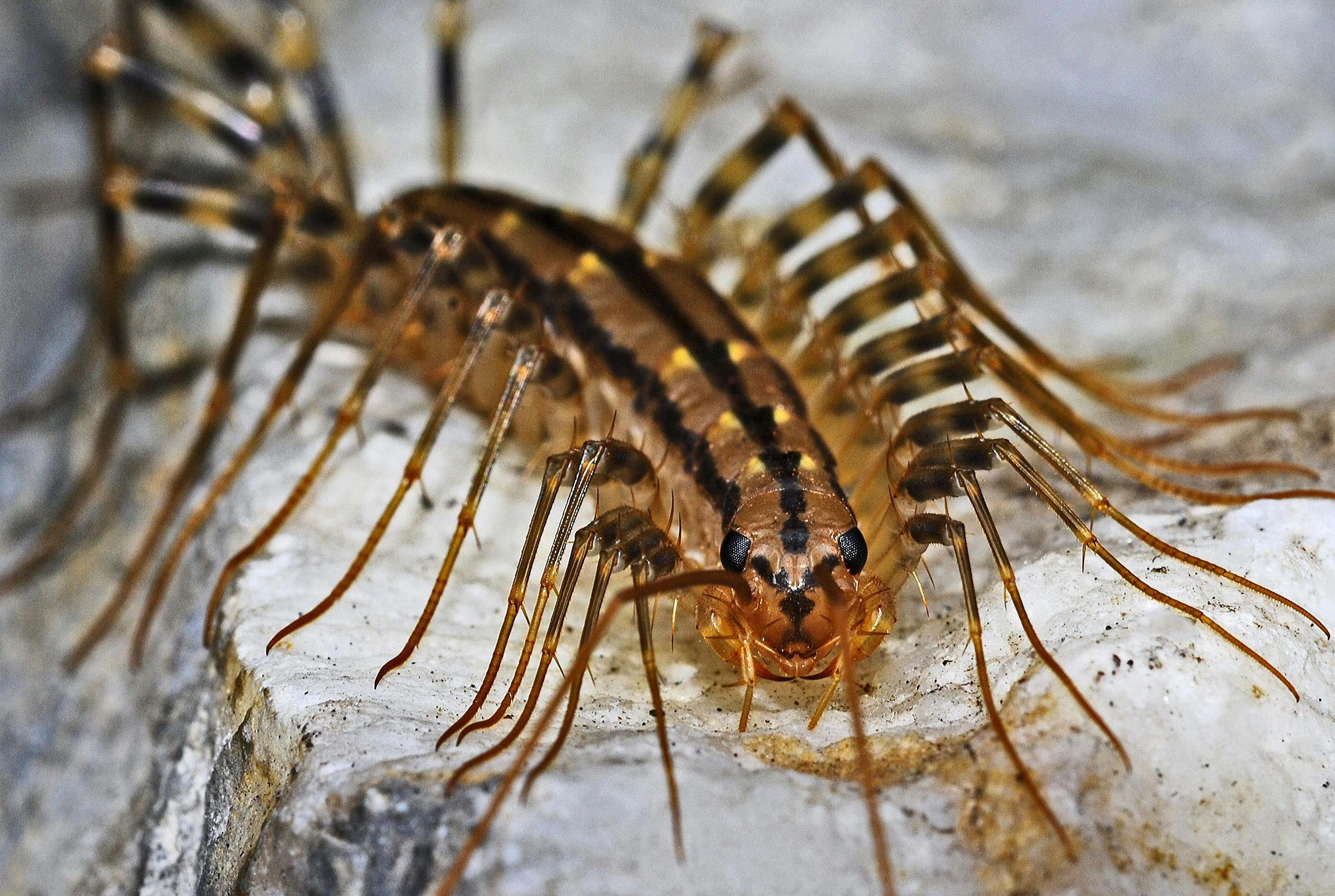
When something sprints across your floor with more legs than can be counted, the first reaction probably isn’t compassion. Most people don’t pause to appreciate the biology of a house centipede—they just want it gone.
But what if that creepy crawler about to be crushed might actually be doing a favor?
This uninvited guest may look like it belongs in a horror movie, but its purpose might surprise you. Lurking in bathrooms, scuttling across basement walls, and hiding in the quiet corners of a home, the house centipede has a job. And it’s one that might just earn it a pass the next time it makes a dash across the floor.
Stick around—it might never be viewed the same way again.
What Is a House Centipede?
If you’ve ever seen a lightning-fast blur with way too many legs zipping across your bathroom floor, congratulations—you’ve met Scutigera coleoptrata, more commonly known as the house centipede. Despite its alien-like appearance and horror-movie speed, this insect is a surprisingly fascinating member of your household ecosystem.
House centipedes are slender, multi-legged arthropods that typically measure about 1 to 2 inches long, but their legs make them seem much larger (and more terrifying). Each adult sports 15 pairs of long, delicate legs, splaying out like a fan as they move with shocking agility. Their yellow-gray bodies are marked with dark stripes, and their long, feathery antennae twitch constantly, picking up signals from their environment—kind of like nature’s own bug-detecting radar.
Unlike their cousins, the millipedes (who are more into decomposing leaf litter and being generally chill), house centipedes are predators. Built for the hunt, they have specialized front legs called forcipules, which act like venom-tipped pincers. But don’t worry—those pincers are aimed at their insect prey, not you.
Friend, Not Foe: The Centipede’s Role

House centipedes are carnivorous hunters, and their preferred menu reads like a list of the bugs you’d actually like to get rid of. We’re talking cockroaches, termites, spiders, silverfish, ants, moths, flies—the usual suspects that cause damage, carry germs, or simply creep you out. Instead of you having to spray toxic chemicals or set out sticky traps, the house centipede does the dirty work for free and without any fuss.
They hunt with ninja-like precision. With their venomous forcipules, they paralyze prey quickly, then use their many legs to wrap and trap them like living lassos. It’s brutal… but efficient. Even better? They don’t leave behind webs, droppings, or chewed-up furniture. They come, they hunt, they vanish.
Think of them as silent assassins in your home’s underworld—eliminating pests while you sleep, asking for nothing in return except a little moisture and a quiet corner.
Where and Why They Show Up

These nocturnal nomads are drawn to places that are dark, damp, and warm. Think basements, bathrooms, under kitchen sinks, in the corners of closets, or even inside potted plants. Essentially, they’re moisture-seekers. If an area feels like a day spa for bugs, you can bet a centipede will want in.
But here’s the real kicker: house centipedes don’t come alone. Well, they do—but only because they’re following the trail of something else. Their presence often signals a buffet of other bugs hiding in your home. Roaches, silverfish, flies, spiders—where there’s prey, the centipede will stay.
So if you’re seeing them regularly, it’s not just a one-bug problem—it could be a sign of a deeper infestation you didn’t even know was happening. In a weird way, that centipede sprinting across your tile floor is sounding the alarm: “You’ve got company.”
And while they love the indoors when it’s chilly or wet, house centipedes also hang out in the wild. Under logs, rocks, and damp piles of leaves, they thrive in nature just as easily as they do in your bathroom. But once inside, if the environment suits them (read: warm, moist, and prey-filled), they might just decide to move in for good.
Common Myths vs. Facts

Let’s be real—house centipedes aren’t exactly enjoying a popularity contest. Their PR problem comes down to their looks and lightning-fast speed, which trigger an automatic “NOPE” response in most of us. But a lot of what we think we know about these bugs is either exaggerated or just flat-out wrong. Time to bust some myths.
Myth 1: They’re venomous and dangerous to humans.
Fact: Technically, yes, house centipedes do have venom—but it’s for insects, not humans. Their bite is rare and generally harmless. If you do happen to get nipped (which is unlikely), it might feel like a mild bee sting. Annoying? Maybe. Dangerous? Not even close.
Myth 2: They carry diseases or contaminate your home.
Fact: House centipedes don’t carry or transmit disease. They don’t infest your food. They don’t crawl over your toothbrush at night (we promise). They’re surprisingly clean compared to, say, the cockroach population they’re helping you control.
Myth 3: They damage your furniture, clothes, or walls.
Fact: Unlike moths, ants, or rodents, house centipedes have no interest in your sofa, your cereal, or your socks. They’re hunters, not chewers. Their mission? Bugs. That’s it.
Myth 4: If you see one, there must be a hundred.
Fact: Not necessarily. Seeing one centipede doesn’t mean your house is being overrun. In fact, you’re probably only seeing it because it’s on the move, hunting. That said, regular sightings could point to a bigger pest problem that they’re trying to fix.
Myth 5: They’re useless and need to be killed.
Fact: Actually, they’re doing a better job than your store-bought traps. House centipedes control some of the most persistent and problematic pests—and they do it naturally. No chemicals, no smell, no cleanup.
How to Gently Deter Them (Without Killing)

Good news: you can encourage these little leggy lodgers to leave, nicely. Here’s how to send them packing—no shoe, no guilt required.
1. Dry Things Out
House centipedes love humidity like plants love sunshine. Bathrooms, basements, laundry rooms—if it’s damp, it’s prime real estate.
What to do:
- Run a dehumidifier in musty areas
- Fix leaky pipes and faucets
- Use fans for better airflow
- Wipe up puddles and condensation (check under sinks and around tubs)
2. Cut Off the Buffet
No prey = no predator. House centipedes are only crashing at your place because you’ve unknowingly been hosting an all-you-can-eat insect buffet.
What to do:
- Clean up crumbs and food waste
- Seal up trash cans and take garbage out regularly
- Eliminate other pests like roaches, ants, and spiders
- Sweep away cobwebs and vacuum regularly
3. Seal the Welcome Gates
Centipedes don’t walk through your front door—they sneak in through cracks, crevices, and holes you didn’t even know existed.
What to do:
- Inspect and seal cracks in walls, floors, and foundations
- Use weather stripping on doors and windows
- Patch holes around pipes and vents
- Repair torn window screens
4. Use Nature’s Repellents
If you’re into natural living (and we know you are), you’ll love this. You can send centipedes packing with ingredients you probably already have.
What to try:
- Spray peppermint, citrus, or tea tree essential oils (diluted in water) around baseboards and damp areas
- Sprinkle baking soda in corners to absorb moisture
- Use sticky traps in high-traffic bug zones
- Diatomaceous earth (a natural, pet-safe powder) can be applied along cracks—it’s like walking on glass for bugs
5. Catch and Release
If you’re brave enough, you can relocate your little buddy outside.
How:
- Trap it gently with a cup and a stiff piece of paper or cardboard
- Release it in a garden or shady area away from your home
- Reward yourself with a cookie (or three)
When to Worry (a Little)

So you’ve seen a centipede. Maybe even two. No need to sound the alarms just yet. In fact, the occasional sighting is usually a good sign—they’re doing pest control patrol. But when do a few too many legs crossing your floor start to signal something more serious?
Here’s how to tell when your centipede situation is drifting from “helpful guest” to “unwanted infestation.”
- You’re Seeing Them Frequently
If house centipedes are making regular appearances—like they’re paying rent—it could mean your home has a deeper pest problem. They only stick around if there’s enough food, and that food? Roaches, silverfish, spiders, and other bugs you really don’t want around either.
- You’re Spotting Them in Broad Daylight
These creatures are nocturnal and notoriously shy. If they’re popping out during the day, it might mean the population is growing and the hideouts are getting crowded. Translation: too many bugs, not enough dark corners.
- You’re Finding Them in Unexpected Places
Seeing a centipede in the basement? Normal. In the shower drain? Sure. On your pillow? Okay, now we’re talking about a problem. If they’re venturing into high-traffic areas, it could mean their normal haunts are overcrowded—or that the pest buffet has expanded across your home.
- Other Pest Activity Is On the Rise
Centipedes are pest detectives in disguise. If you’ve noticed more spiders, roaches, ants, or other creepy crawlies lately, it makes sense that the centipedes have moved in too. Unfortunately, that means you’re hosting more than one kind of bug.
If you’re seeing centipedes often and suspect you’ve got a larger pest infestation, it’s time to bring in the experts. A good pest control service will not only deal with the centipedes but also target the root problem—those bugs they’re chasing.
Look for eco-friendly pest services if you want to keep things in line with your healthy, chemical-conscious lifestyle. Many offer non-toxic solutions that are safe for kids, pets, and, yes, even the helpful insects you might want to keep around.
Still Creepy, But No Longer the Enemy

Let’s be honest—house centipedes aren’t about to win any beauty contests. They move like a glitch in the matrix and pop up when you least expect it. But once you look past the legs (so many legs), what you’ll find is a surprisingly helpful houseguest.
These misunderstood creatures are nature’s pest control team, quietly eliminating the bugs that cause real problems—roaches, termites, moths, and more—without damaging your home or health. They’re not after your food, your clothes, or your peace of mind. In fact, they’re trying to restore it.
Sure, not everyone wants to share their home with a creepy-crawly vigilante. But maybe, just maybe, it’s time to stop seeing them as villains and start viewing them as unlikely allies. And if you still prefer a centipede-free home, now you know how to nudge them out gently—no harm done, no toxins sprayed, no karmic debts created.
The next time one scuttles past, resist the urge to flatten it. Instead, take a breath, grab a cup (or your courage), and consider letting this leggy little bugger live to scurry another day. Sometimes, the best defense against nature… is more nature.
