
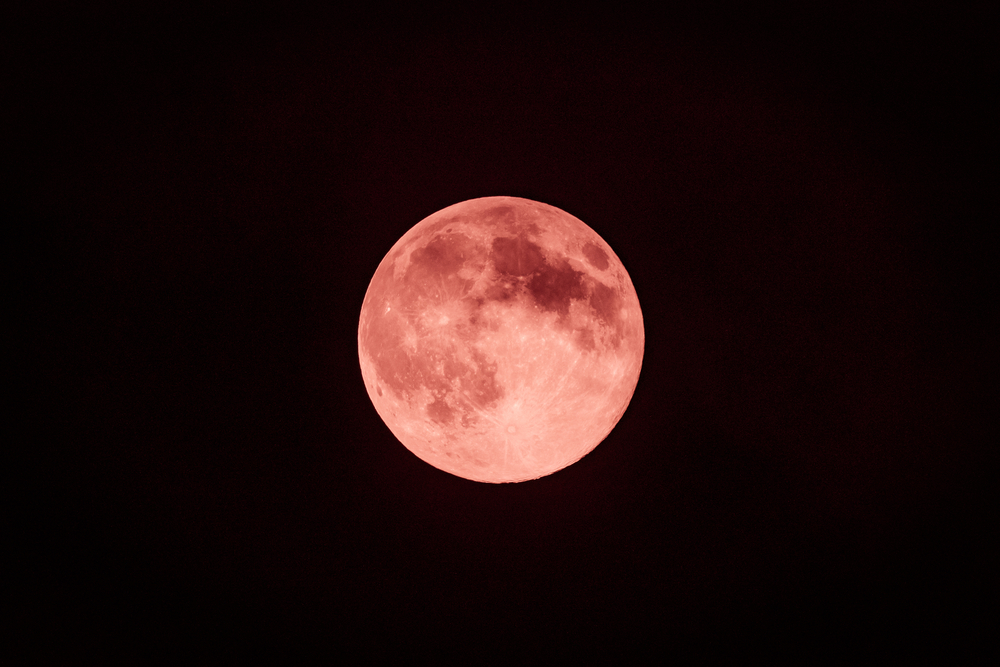
On the night of June 10, the full Strawberry Moon will rise in the southeastern sky—and it’s expected to be one of the most visually striking full moons in years. While the name might sound like a seasonal marketing gimmick, it actually has deep roots in agricultural tradition and a clear astronomical explanation. This year, the moon’s path will be lower than usual, making it appear larger and more colorful than what most people are used to seeing.
But there’s more to this event than just taking a nice photo. The Strawberry Moon is a good example of how much is happening in the sky that we rarely pay attention to. Understanding why this particular moon looks different—and how to actually see it well—can turn a quick glance into a moment of clarity about how nature works.
What Is the Strawberry Moon?

The “Strawberry Moon” is the traditional name for the full moon that occurs in June. While the name might suggest a reddish or pink hue, it actually has nothing to do with the moon’s color. The term comes from the Algonquian tribes of North America, who named it in connection with the brief wild strawberry harvesting season that occurs around this time. It’s one of many culturally significant names for the full moon used by different Indigenous and agrarian communities. For example, other names for the June full moon include the Blooming Moon, Green Corn Moon, and Hatching Moon—all of which reflect seasonal changes in plant life, agriculture, or animal behavior.
From a scientific standpoint, a full moon happens when the moon is positioned on the opposite side of Earth from the sun, allowing its face to be fully illuminated from our perspective. This makes the full moon the most visually striking phase in the lunar cycle. When the Strawberry Moon rises, especially just after sunset, it often takes on a golden or orange hue.
This isn’t unique to June—it’s a result of atmospheric scattering, the same effect that makes sunrises and sunsets look red or orange. As moonlight travels through the thicker layer of Earth’s atmosphere near the horizon, shorter blue wavelengths are scattered away, leaving behind the warmer tones.
What makes this year’s Strawberry Moon especially noticeable is its position in the sky. It will rise unusually low on the horizon, making it appear larger than normal to the naked eye. This is due to the “moon illusion,” a psychological effect where objects near the horizon seem bigger than when they’re overhead, even though their actual size doesn’t change. In 2025, this effect will be even more pronounced because the full moon happens close to the summer solstice, when the sun’s path is highest in the sky and the moon’s is lowest. This low trajectory is enhanced by the tilt in the moon’s orbit and the gravitational pull of the sun, which alters the moon’s path over time. According to astronomers at EarthSky.org, this year’s Strawberry Moon will be one of the lowest in decades.
When and Where to See the Strawberry Moon

This year’s Strawberry Moon will officially reach its full phase during the early hours of June 11 at 3:44 a.m. EDT (or 07:44 GMT) for those in New York. But for most casual skywatchers, the best time to catch the moon in all its visual glory will be on the evening of June 10, just as it begins to rise in the southeastern sky around sunset. This is when the moon will appear largest and most colorful, thanks to a combination of its position low on the horizon and the warm hues created by Earth’s atmosphere. The exact time of moonrise will vary depending on your location, so it’s worth checking a reliable source like TimeandDate.com to get your local forecast.
One of the standout features of this year’s event is how low the moon will sit in the sky. This isn’t just a minor detail—it plays a key role in how people perceive the moon’s size and brightness. Because the full moon occurs so close to the summer solstice, its path across the night sky is much lower than usual. That means the moon will hug the horizon longer than it typically does, which is ideal for both casual observers and photographers.
When the moon is close to the horizon, it looks much larger than when it is overhead. This isn’t an optical change in size—it’s a cognitive one known as the moon illusion, where our brains interpret the moon as bigger simply because it’s juxtaposed with familiar terrestrial features like buildings or trees.
If you’re planning to observe or photograph the event, your best bet is to find a spot with a clear view of the southeastern horizon—ideally a high vantage point away from urban light pollution. Since the full moon will appear just after sunset, you won’t have to stay up late to enjoy it. A smartphone camera can capture it decently under the right conditions, but if you have access to a DSLR or mirrorless camera with a telephoto lens, you’ll get much more detail and color. And even without any equipment, just stepping outside and watching the moon rise can be a memorable experience, especially knowing you’re witnessing a relatively rare alignment in the lunar orbit that makes this Strawberry Moon one of the lowest—and most striking—of recent decades.
Why This Year’s Strawberry Moon Is Unusually Low

The Strawberry Moon’s unusually low appearance in the sky this year isn’t a random event—it’s tied to predictable movements in both the Earth’s and moon’s orbits. The moon doesn’t travel in a perfect circle around Earth; its orbit is tilted by about five degrees compared to Earth’s path around the sun (the ecliptic). This tilt means the moon doesn’t always rise and set in the exact same places from month to month. When a full moon occurs near the summer solstice—like it does this June—that tilt causes the moon to follow an especially shallow arc across the sky. From our viewpoint in the Northern Hemisphere, that means the moon hugs the horizon instead of rising high overhead. It’s not something you notice on a typical night, but during specific full moons like this one, the difference is obvious.
This year’s alignment is especially dramatic. According to EarthSky.org, the 2025 Strawberry Moon will be one of the lowest-riding full moons in decades. That’s because multiple astronomical factors are lining up at once. Not only does the full moon occur just days before the summer solstice—the point when the sun is highest in the sky—but the moon’s orbital path is currently in a phase that further lowers its trajectory.

This has to do with a long-term wobble in the moon’s orbit called the lunar standstill, which operates on an 18.6-year cycle. During certain periods of that cycle, the moon reaches more extreme northern and southern positions in the sky. Right now, we’re heading toward a major lunar standstill in 2025, so the moon’s low full moon path is more exaggerated than usual. It’s a rare combination that makes this year’s Strawberry Moon stand out not just for its name, but for how and where it shows up in the sky.
The moon’s low position doesn’t just affect its path—it also affects how we perceive it. When the moon rises low on the horizon, it’s viewed through a thicker layer of Earth’s atmosphere, which scatters shorter wavelengths of light and allows warmer tones like orange and red to dominate. This is why the Strawberry Moon often looks golden or even reddish, especially right after moonrise. Combine that with the “moon illusion”—a psychological trick where our brains interpret the moon as being larger when it’s near familiar landmarks like trees or buildings—and you get a full moon that not only feels closer and more intense, but also appears visually larger than normal. Even though its size and brightness are physically unchanged, the way we experience it becomes amplified simply because of its position in the sky.
Essential Insights for Enjoying the Strawberry Moon

You don’t need a telescope or special equipment to enjoy the Strawberry Moon. The event is visible to the naked eye, and in many ways, that’s the best way to experience it. The key to a good viewing experience is timing and location.
- Best viewing time: Aim to be outside around sunset on June 10, just as the moon starts to rise in the southeastern sky, for the best size, color, and low positioning.
- Ideal location: Choose a spot with an unobstructed view of the southeastern horizon—rooftops or parks work well in cities, and rural areas or lakefronts are ideal for minimal light pollution.
- Photography tips: Use a camera with manual settings (shutter speed and ISO). A zoom lens is helpful, but smartphones can also work if stabilized. Capture the moon just above the horizon for its full size and golden tones.
- Experience without a camera: Even without photographing, just 10-15 minutes of watching during moonrise offers a unique and rewarding visual experience.
- Weather considerations: Check the forecast for cloud cover or haze. If conditions aren’t ideal on June 10, try later that evening or the next morning, as the moon will still appear nearly full.
Final thought: Watching the Strawberry Moon is an easy way to reconnect with nature without needing to dive into astronomical details.
A Moment Under the Moon

You don’t need to be an astronomer to care about when the next full moon rises. Events like the Strawberry Moon are simple but powerful reminders that nature follows rhythms—some that repeat every few weeks, others that unfold over decades. This year’s Strawberry Moon isn’t just visually striking; it’s also part of a larger, predictable cycle that connects us to the natural world in ways we often overlook. Knowing why the moon looks lower or more colorful this time around doesn’t require technical knowledge—just awareness. And that awareness is increasingly rare in a culture that’s focused on speed, screens, and short-term thinking.
Paying attention to the night sky, even occasionally, can shift perspective in a useful way. It reinforces that not everything is on demand. The moon doesn’t wait. If you miss it this time, you’ll have to wait for the next one—but each full moon is slightly different, depending on its timing, angle, and position. That’s what makes events like this worth watching. You don’t have to treat them as magical or profound to recognize that they offer a kind of real-time science you can experience without effort. No lab, no subscription, no login—just a clear view of the sky.
So if the sky’s clear on June 10, step outside for a few minutes. Watch the moon rise. Know that what you’re seeing isn’t random—it’s the result of orbital physics, gravity, and cycles that have repeated for thousands of years. That’s not mystical. It’s just nature doing what it’s always done. And paying attention, even briefly, is one way to stay grounded in something bigger than your daily to-do list.
