
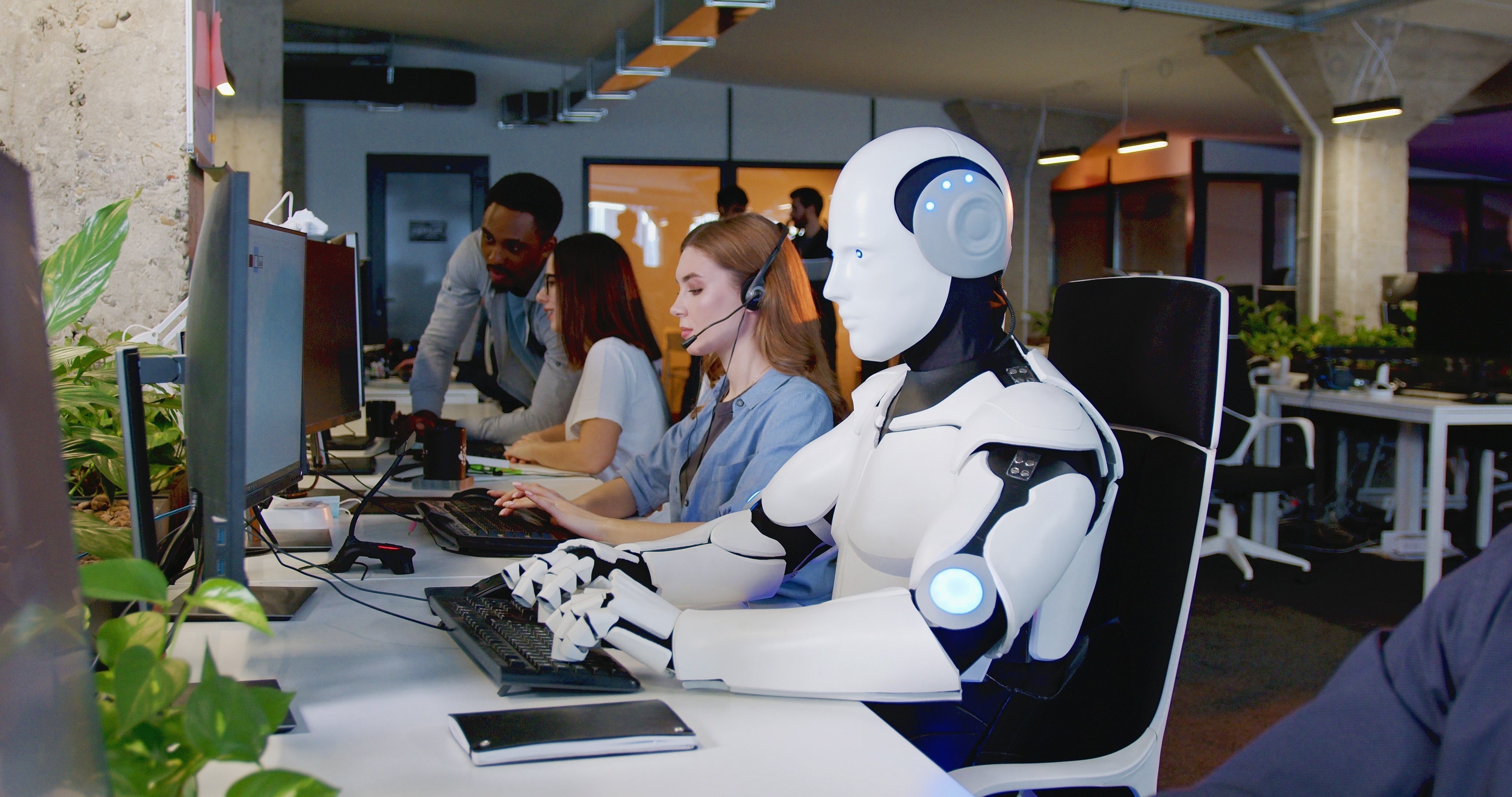
We tend to assume that technology replaces muscle before it replaces brains. For years, the standard advice was to get a degree and secure an office job to stay ahead of automation. But the current surge in artificial intelligence is targeting a completely different demographic, leaving construction sites and hospital wards largely untouched while disruption hits marketing departments and coding bays. The old rules of career safety are failing to hold up, forcing many professionals to rethink which skills actually offer protection in a digital age.
55,000 Jobs Lost to AI
The artificial intelligence revolution is no longer a distant forecast. It is actively reshaping the workforce right now. Data from consulting firm Challenger, Gray & Christmas reveals that employers cited AI rollouts as the direct cause for at least 55,000 layoffs in 2025. This technological shift is part of a broader economic contraction that saw 1.17 million jobs lost nationwide during the same period, marking the most significant reduction since the onset of the pandemic. Companies are aggressively seeking new efficiencies, and for many, that means replacing human labor with automated solutions.

To understand exactly which roles are on the chopping block, Microsoft took a pragmatic approach that moves beyond theoretical predictions. Previous reports, such as OpenAI’s “GPTs are GPTs” study, relied heavily on expert forecasts to guess potential impacts. In contrast, Microsoft tracked actual behavior. Researchers analyzed 200,000 real-world conversations held with Microsoft Copilot and mapped that activity to specific labor categories using Department of Labor data.
This method allowed them to generate an “AI applicability score” based on how workers currently utilize the technology. The results offer a concrete distinction between tasks that AI can easily manage and those it cannot touch. The data indicates that AI is overwhelmingly used for knowledge work and communication tasks like writing, information gathering, and learning. This usage pattern highlights a clear divide. While knowledge-based roles face disruption, the study clarifies why physical and high-touch professions remain largely insulated from these digital efficiencies.
The Unreplaceable Human Touch

Microsoft’s data identifies a clear boundary where AI hits a wall: the physical world and human emotion. The study found that roles requiring manual dexterity, physical presence, and empathy are the most insulated from automation. Topping the list of AI-safe professions are phlebotomists. While an algorithm might be able to schedule an appointment or analyze lab results, the delicate act of inserting a needle into a vein requires fine motor skills and a level of trust that machines cannot replicate. Even with the existence of vein-detecting technology, the ability to calm a nervous patient remains a strictly human skill.
Nursing assistants and embalmers also rank among the most secure jobs for similar reasons. These positions demand a high degree of emotional intelligence. A computer cannot build a rapport with a patient in pain or offer genuine compassion to a family grieving a loved one. Embalming, specifically, exemplifies this security. It combines the need for “an excess of kindness” when dealing with bereaved families with the technical skill to handle unique physical challenges presented by each body.
Beyond healthcare and funeral services, skilled manual labor offers significant job security. Hazardous material removal workers, for instance, are protected by the necessity of physical action and liability. AI can explain how to dispose of industrial solvents, but it cannot physically remove them from a site. Furthermore, a machine cannot be held legally or morally responsible if a safety procedure is executed incorrectly. These roles prove that while AI dominates information processing, it lacks the tactile adaptability and accountability required for hands-on work.
Knowledge Workers Face the Highest Risk

While manual laborers find safety in physical tasks, the outlook is significantly different for professionals in the information economy. Microsoft’s analysis reveals that the very skills previously considered “future-proof”—coding, writing, and analysis—are now the most exposed to automation. The study explicitly states that AI is most useful for tasks related to knowledge work and communication, placing writers, interpreters, and programmers directly in the crosshairs.
Interpreters and translators top the list of occupations facing the highest AI disruption. The technology’s ability to process language and context in real-time rivals human speed and accuracy. Similarly, historians and authors face uncertainty as algorithms demonstrate an increasing ability to synthesize vast amounts of data and generate coherent narratives. These roles rely heavily on information processing and digital output, functions that do not require physical presence and are easily replicable by generative models.
Crucially, this data debunks the myth that advanced degrees guarantee job security. The study indicates that workers with higher education levels, such as data scientists, management analysts, and business teachers, are often more vulnerable than entry-level manual workers. Because these high-paying roles revolve around data manipulation and pattern recognition, they overlap significantly with AI’s core strengths. In this new landscape, a master’s degree in economics offers less protection against automation than a certification in drywall installation.
Augmentation Versus Replacement

The narrative that AI will simply delete jobs obscures a more complex reality found in the data. Microsoft’s report suggests that for many vulnerable roles, the technology functions more as a collaborator than a competitor. The research reveals that AI is augmenting work just as frequently as it is automating it. In professions like writing, financial advising, and customer service, the technology is primarily used to handle routine information gathering and drafting. This shift allows human workers to retain control over high-level creative and interpersonal tasks.
However, there is still a significant gap between user expectations and actual performance. The study identified only a 60% overlap between what users wanted the AI to do and what it could successfully accomplish. This statistic indicates that while AI is a powerful engine for efficiency, it is not a magic solution that solves every problem instantly. It requires substantial human oversight to correct errors and bridge the gap between digital output and real-world application.
Microsoft advises workers in high-applicability fields to view these tools as workflow enhancements rather than existential threats. Knowledge workers who leverage these systems for tasks like summarizing data or generating initial drafts can drastically increase their efficiency. The path forward for these professionals involves integrating the technology to handle the repetitive grunt work, effectively freeing them to focus on the critical thinking and complex decision-making that algorithms still struggle to replicate.
Future-Proofing Your Career: Cultivating the Skills AI Can’t Replace

The smartest career move right now isn’t necessarily getting another degree. With highly educated roles like data scientists and business analysts facing significant exposure, credentials alone no longer guarantee security. Instead, the most effective strategy is to cultivate the specific human qualities that AI fails to replicate: complex problem-solving, genuine empathy, and physical adaptability.
For those in knowledge-based industries, the goal is to become an expert operator of these tools rather than ignoring them. Writers, marketers, and administrators should focus on high-level strategy and creative direction—areas where AI often produces generic or hallucinated output—while using the software to handle the heavy lifting of research and drafting. If a machine can do the technical basics, the human value lies in the unique insight and final judgment that a computer lacks.
There is also a strong case for diversifying skill sets to include “offline” capabilities. As the data shows, physical trade skills are the safest bet against automation. While a complete career pivot to plumbing or electrical work isn’t feasible for everyone, understanding the mechanics of physical industries or developing manual skills creates a safety net. The future belongs to professionals who can bridge the gap, combining technical literacy with the interpersonal and hands-on skills that remain strictly human territory.
The Human Premium

This data from Microsoft gives us a clear look at where the workforce is heading. We are seeing a shift where basic information processing is becoming less valuable. For a long time, a good career meant analyzing data or writing reports faster than the next person. Now, software can handle those tasks in seconds. The market is placing a higher value on the things that actually make us human, like building trust, using complex judgment, and having physical skills.
The recent job cuts show that companies are prioritizing efficiency. If a computer can handle your daily to-do list, it is time to rethink your approach. This is not a reason to panic, but it is a reason to pay attention. If your workday is mostly repetitive, predictable tasks behind a screen, you might be more exposed to these changes. Real job security is found in the parts of work that need a personal touch, negotiation, or physical presence.
You do not need to wait for a manager to explain how AI affects your role. Start defining what you bring to the table that a chatbot cannot. The workforce is separating into those who let technology do the work for them and those who use it to improve their own output. These tools are powerful, but they still need a human in charge to make them useful. The change is here, so the best move is to make sure you are the one directing it.
Curious if your career path is in the clear? Read on to see the full list of the 40 jobs most at risk and the 40 roles that remain safest from the AI revolution according to Microsoft’s analysis.
The Most Vulnerable Roles
- Interpreters and Translators
- Historians
- Passenger Attendants
- Sales Representatives of Services
- Writers and Authors
- Customer Service Representatives
- CNC Tool Programmers
- Telephone Operators
- Ticket Agents and Travel Clerks
- Broadcast Announcers and Radio DJs
- Brokerage Clerks
- Farm and Home Management Educators
- Telemarketers
- Concierges
- Political Scientists
- News Analysts, Reporters, and Journalists
- Mathematicians
- Technical Writers
- Proofreaders and Copy Markers
- Hosts and Hostesses
- Editors
- Business Teachers (Postsecondary)
- Public Relations Specialists
- Demonstrators and Product Promoters
- Advertising Sales Agents
- New Accounts Clerks
- Statistical Assistants
- Counter and Rental Clerks
- Data Scientists
- Personal Financial Advisors
- Archivists
- Economics Teachers (Postsecondary)
- Web Developers
- Management Analysts
- Geographers
- Models
- Market Research Analysts
- Public Safety Telecommunicators
- Switchboard Operators
- Library Science Teachers (Postsecondary)
The Most Secure Roles
- Phlebotomists
- Nursing Assistants
- Hazardous Materials Removal Workers
- Helpers—Painters, Plasterers, etc.
- Embalmers
- Plant and System Operators (All Other)
- Oral and Maxillofacial Surgeons
- Automotive Glass Installers and Repairers
- Ship Engineers
- Tire Repairers and Changers
- Prosthodontists
- Helpers—Production Workers
- Highway Maintenance Workers
- Medical Equipment Preparers
- Packaging and Filling Machine Operators
- Machine Feeders and Offbearers
- Dishwashers
- Cement Masons and Concrete Finishers
- Supervisors of Firefighters
- Industrial Truck and Tractor Operators
- Ophthalmic Medical Technicians
- Massage Therapists
- Surgical Assistants
- Tire Builders
- Helpers—Roofers
- Gas Compressor and Gas Pumping Station Operators
- Roofers
- Roustabouts (Oil and Gas)
- Maids and Housekeeping Cleaners
- Paving, Surfacing, and Tamping Equipment Operators
- Logging Equipment Operators
- Motorboat Operators
- Orderlies
- Floor Sanders and Finishers
- Pile Driver Operators
- Rail-Track Laying and Maintenance Equipment Operators
- Foundry Mold and Coremakers
- Water Treatment Plant and System Operators
- Bridge and Lock Tenders
- Dredge Operators
