
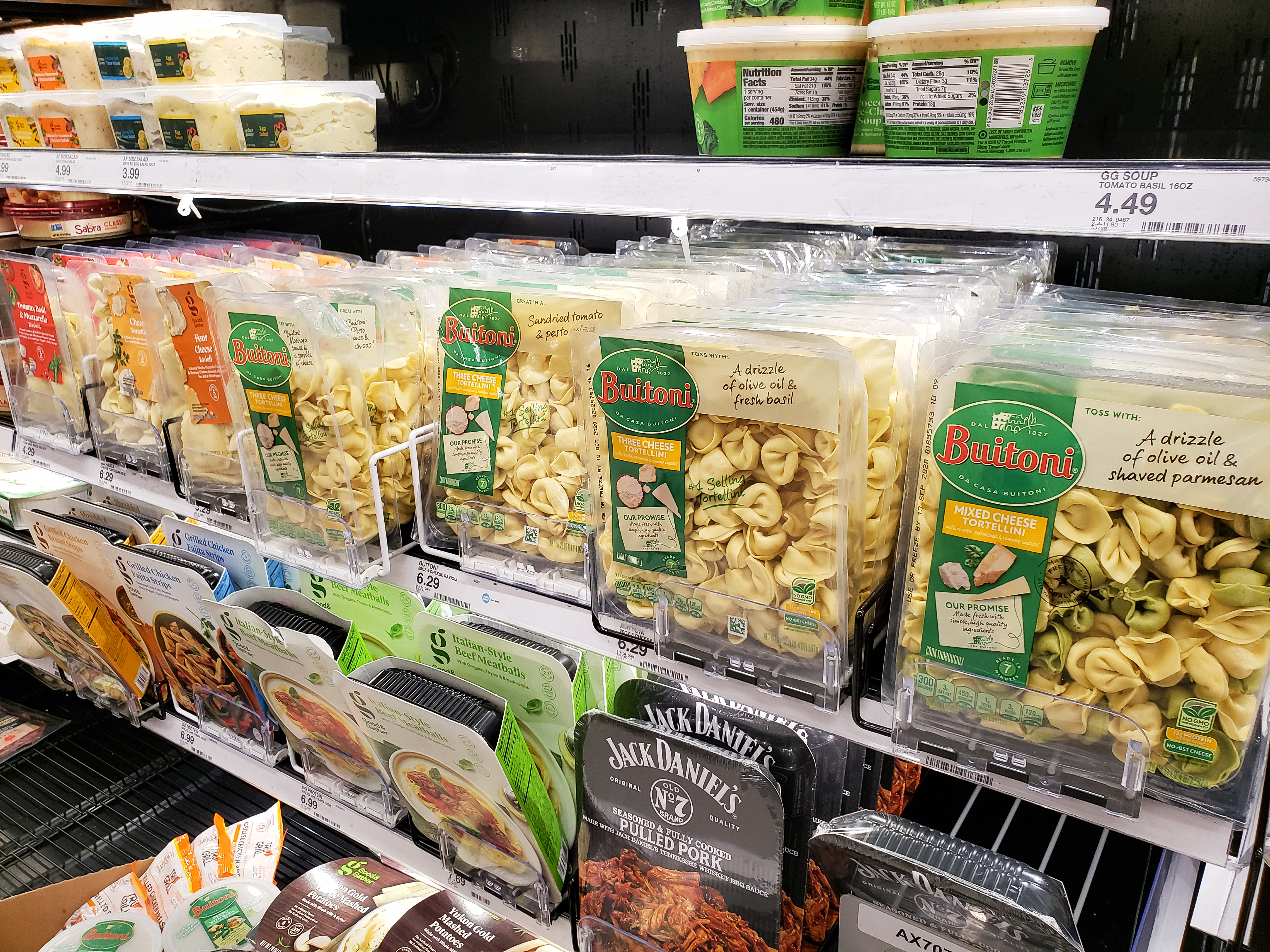
Early 2026 might feel like any other year in the grocery store, until you reach for your usual Italian pasta and notice something is off. The brand you love might be missing from the shelf, or the price might have quietly jumped so much that you hesitate before putting it in your cart.
That change traces back to a trade move that sounds boring on paper but hits very real at checkout. Starting in January 2026, many authentic Italian pastas will face a combined tariff of roughly 107 percent. The pasta most at risk is the bronze-cut, slow-dried kind that people choose because it tastes better, feels lighter, and actually holds sauce. A bag that used to cost around 3.99 dollars could creep toward 8 dollars. Some brands may stay, but only as pricey specialty items. Others are likely to stop shipping to the United States altogether.
Technically, this is just a tariff. For everyday shoppers, it will feel less like a fine-tuning of trade rules and more like Italian pasta quietly being pushed out of reach, both in price and availability.
How A 107 Percent Tariff Put Italian Pasta At Risk

This whole situation started not with a crop failure, but with paperwork. In August 2024, two American companies, Winland Foods and 8th Avenue Food & Provisions, filed a petition claiming that Italian producers were “dumping” pasta in the United States. In simple terms, they argued that Italy was sending pasta here at unfairly low prices that hurt domestic manufacturers. These two companies make a lot of the store-brand pasta sold at chains such as Walmart and Kroger.
In response, the U.S. Department of Commerce launched an investigation into Italian exporters, focusing on firms including La Molisana and Pastificio Lucio Garofalo. Rather than relying only on real transaction data, regulators leaned on a legal tool called Adverse Facts Available (AFA). If Commerce decides a company did not perfectly cooperate with its requests, AFA lets them assume the worst possible scenario and plug in very high numbers.
Using AFA, the Department assigned a 91.74 percent anti-dumping duty. That was then added to an existing 15 percent retaliatory tariff related to broader U.S. European Union disputes, bringing the total to about 106.74 percent. Once tariffs go past 100 percent, importers can end up owing more in tax than the pasta itself is worth. At that point, continuing to ship Italian pasta into the United States becomes a losing proposition, even if shoppers still want it.
Why Italian Pasta Is Different From The Cheap Stuff

If all pasta were basically the same, this would just be a story about higher prices. But a lot of people notice that they feel very different after eating a bowl of cheap store-brand pasta compared to a bowl of high quality Italian pasta, even if both say “durum semolina” on the label.
Most industrial pasta made in the United States is built for speed and volume. It usually:
- Uses Teflon dies, which help the dough slide through quickly and create a smooth, shiny surface
- Is dried using high-temperature, short-time methods, often above 194°F, for only 3 to 4 hours
That fast and hot approach locks the gluten structure very quickly. The pasta is almost partly cooked before it ever touches your pot. Many people describe the texture as rubbery, and the feeling afterward as heavy or bloating. Sauce tends to slide off the slick surface instead of clinging.
Italian brands now under pressure, such as Garofalo, Rummo, and La Molisana, usually take a slower, more traditional path. They:
- Use bronze dies, which add friction and gently roughen the surface so sauce can grip
- Dry the pasta at lower temperatures, often under 140°F, over 24 to 72 hours
This long, gentle process preserves more of the wheat’s structure and allows subtle changes in the dough that many people find easier on their digestion. It is common to hear someone say they feel awful after basic pasta but perfectly fine after eating a bowl of imported Italian rigatoni. When tariffs hit this specific category hardest, what gets squeezed out is not just a brand image, but a style of pasta that truly behaves differently in the body.
Food Safety Worries In The Background

While imported Italian pasta is being pushed toward luxury pricing, parts of the domestic pasta supply are dealing with their own problems. As of late 2025, federal health agencies have linked a multi-state Listeria monocytogenes outbreak to pre-cooked pasta produced by Nate’s Fine Foods in the United States. At least 27 people have become ill and 6 have died across 18 states. The affected items were sold under various labels at major retailers, including Costco, Trader Joe’s, and Walmart.
Events like this change how people shop, even if they do not talk about it. Many quietly shift toward products that feel safer, more regulated, and less perishable. For years, imported dry goods from the European Union have filled that role. Authentic Italian dry pasta is a textbook example: simple ingredients, long shelf life, strict European rules, and further checks at the U.S. border.
Very high tariffs shrink that safety valve. If imported pasta becomes too expensive or simply less available, people looking to step away from a shaky domestic product will have fewer realistic options. Instead of being able to say, “I will buy the Italian stuff until this blows over”, they may find that the Italian shelf is either bare or out of budget. The result is a strange mismatch: a policy that limits import choices arriving just as confidence in parts of the local system is already being tested.
What You Will Notice In The Grocery Store

From the shopper’s point of view, this change will not show up as a big sign saying “New Tariffs In Effect”. It will show up as slow, annoying shifts that start to feel normal over time. You might walk into your regular store and see that your preferred Italian brand is out of stock, then see it return a month later with a noticeably higher price tag.
Some of the first pastas to disappear are likely to be the premium and specialty lines. Pasta Garofalo, which many people buy at Costco because it feels like a good value for its quality, is directly in the risk zone. Rummo, which is popular among people who say they cannot handle most pasta but feel fine eating Rummo, is also exposed. La Molisana sits in the same category.
You may also start to see a split personality in certain brands. Barilla is a key example. The standard blue-box Barilla that fills most American shelves is made in the United States using faster, more industrial processes, so it is largely protected from these tariffs. Barilla’s Al Bronzo line, made in Italy with bronze dies and slow drying, is far more vulnerable and may either jump in price or fade from everyday stores.
Then there is De Cecco. Because of its particular trade status, it has not been assigned the same 91.74 percent punitive rate so far. It may remain one of the few somewhat affordable Italian options, although its prices are likely to climb as other brands disappear and demand shifts toward it. At the same time, expect more boxes on the shelf that look very Italian yet quietly say “Made in USA” on the back.
How To Shop Smarter Before 2026

If pasta is a staple in your home, or if you are one of those people who feels clearly better after eating imported Italian pasta, there are practical steps you can take without falling into panic mode. The first is to get in the habit of reading labels more closely. The front of the box can be full of Italian flags and village scenes, but the back tells you where it was really made.
Look specifically for “Product of Italy” and watch for phrases such as “Bronze Die” or “Trafila al bronzo”. Those details are strong hints that you are buying the kind of pasta that may become harder to find or significantly more expensive. Your eyes can help too. Shiny, very smooth, bright yellow pasta is usually made with Teflon dies and dried quickly. Pasta that looks rough, pale, and matte is more likely to be bronze-cut and slow-dried.
If you already know which brands and shapes sit best with you, consider keeping a small buffer at home. Many people rely on Garofalo, Rummo, La Molisana, and De Cecco for this reason. Dry pasta keeps well in a cool, dry, dark place, so a pantry shelf or storage bin is enough. You do not need to fill a closet with spaghetti, but picking up a few extra bags of your favorites when you see a good price can give you breathing room if supply tightens or price spikes arrive in 2026.
From Italian To “Italian Style”

On the surface, this pasta story is about trade rules, anti-dumping tools, and tariff percentages. In day-to-day life, it is about what kind of food you can actually buy without turning a basic pantry item into a luxury. As genuine Italian pasta gets squeezed by triple-digit tariffs, domestic manufacturers are ready to slide in with “Italian style” products that borrow the look and language of Italy while using fast, high-heat methods that are very different from traditional Italian production.
Over time, real Italian pasta is likely to shift from a normal weeknight option to something closer to a specialty treat. The word “Italian” will still be everywhere on the shelves, but it will describe branding more than origin or craft. For many households, that means losing easy access to pasta that not only tastes better, but often feels better to eat. If you walk down the aisle in 2026 and feel like something important has quietly changed, you will not be imagining it. Policy decisions made on paper will have reshaped your pantry, one box of pasta at a time.
