
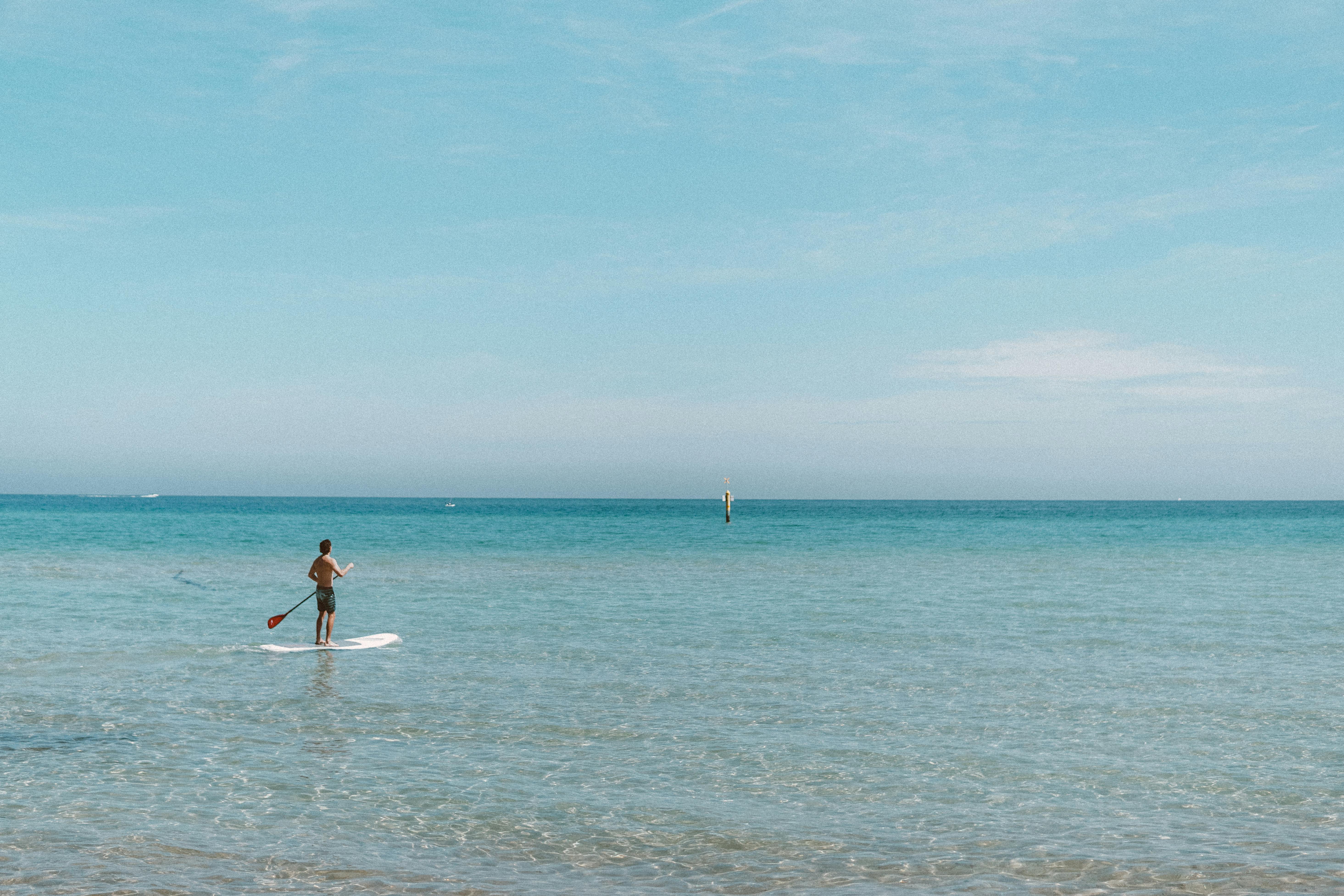
For more than three decades, Mauro Morandi lived out a life that seemed to belong more to legend than to the modern world. In 1989, while much of the globe was brimming with chatter, consumption, and technological advances, he made a choice that stunned those who later learned of it: he walked away from society and lived alone on Budelli, a small island in Italy’s Maddalena archipelago. There, surrounded by pink beaches and turquoise seas, he became a man apart, surviving in silence and isolation. His retreat was not born of disaster but of deliberate rejection. He simply wanted peace, to escape the relentless hum of civilization, and, by his own words, because he “didn’t feel like talking to anyone.” His daily life consisted of maintaining the island, harnessing solar energy, and embracing minimalism, while his companions were stray cats, birds, and the occasional visitor curious about the mysterious hermit of Budelli.
What makes Morandi’s story so captivating is not only the radical solitude he embraced but the fact that he sustained it for over 30 years in an era defined by hyperconnection. His tale is one of resilience, yes, but also one of paradox: while he shunned the noise of society, he became celebrated by it. He was photographed, interviewed, and even mythologized as Italy’s Robinson Crusoe, the man who turned his back on modern life but, in doing so, became a reluctant cultural icon. Now, with his passing at the age of 85, just three years after leaving his island home for good, his extraordinary journey has taken on a final chapter that calls us to reflect not only on what it means to live in solitude, but what it means to return, to re-enter the human fold, and to face mortality after decades of silence.
The Accidental Castaway
Mauro Morandi’s transformation into Italy’s most famous hermit began not with intention, but with an accident. In 1989, while attempting to sail toward Polynesia in search of a simpler, freer existence, his catamaran broke down near the Sardinian archipelago. Stranded, he discovered Budelli, a small island whose pink beach, dotted with crushed coral, seemed like something out of a dream. Many would have seen this moment as a setback, a delay in their journey. Morandi saw it as a beginning. Instead of pressing on, he stayed. What drew him in was the silence, the possibility of solitude, and the natural beauty that seemed untouched by the trappings of modernity. From then on, the island became his sanctuary, and he its caretaker.
Unlike Daniel Defoe’s fictional Robinson Crusoe, who contended with shipwrecks, mutineers, and survival against hostile elements, Morandi’s challenges were less theatrical but no less demanding. Winters were harsh, food supplies could be scarce, and loneliness was a constant shadow. He lived in a former World War II radio hut, built makeshift systems to generate power, and taught himself to thrive on the essentials. His “escape” was not about testing survival in the wilderness but about testing whether one could find peace by stripping life down to its core elements. Over time, he began to see his existence less as exile and more as liberation. The island demanded simplicity, and simplicity brought him purpose. Still, this isolation placed him at odds with the outside world, particularly local authorities who questioned his right to stay on land that was ultimately not his to claim.
The Fight to Stay and the Forced Goodbye

For decades, Morandi served as Budelli’s unofficial guardian. He was not appointed, but his presence offered an unintentional service. He cleaned its beaches of rubbish, deterred reckless tourists from disturbing the fragile coral sands, and acted as an educator to those who stumbled upon the island. He was protective of its ecosystem, warning of the damage mass tourism could inflict, and he grew to embody an almost mythic role: the hermit who loved an island so much that he became its shield. Yet this guardianship had a fragile legal foundation. Ownership of Budelli changed hands several times, passing from private hands to a New Zealand businessman, and eventually to Italy’s national park system. With that transfer, Morandi’s presence was deemed unlawful. The very state that benefited from his quiet stewardship began pressing him to leave.
His resistance stretched for years. Each time authorities attempted to evict him, there was pushback from admirers around the world who viewed him as a symbol of environmental responsibility. Yet bureaucracy prevailed. By 2021, exhausted from the battles, Morandi accepted the inevitable. In an interview with The Guardian, he confessed his resignation, remarking: “After 32 years here, I feel very sad to leave. They told me they need to do work on my house and this time it seems to be for real.” It was a reluctant goodbye, a departure that severed his bond with the island he had loved more deeply than most love people. It also marked the beginning of a new chapter, one that would test his ability to reintegrate into the very society he had so deliberately abandoned.
A New Life After 80

If being forced from Budelli seemed like a cruel end to his hermit life, what followed was an unexpected rebirth. Many assumed Morandi, now in his 80s, would never adapt to modern life again. Yet the opposite proved true. Settling on the nearby island of La Maddalena, he used his pension from his previous career as a teacher to buy a modest apartment. To outsiders, it may have seemed ordinary: a small whitewashed home with a kitchen, a king-sized bed, and, most importantly, running water and a shower. To Morandi, it was extraordinary. After decades without such conveniences, he relished the comfort of daily life. He described rediscovering the pleasure of food, particularly fresh fish that he had rarely tasted on Budelli, where supplies depended on deliveries. He marveled at something as simple as hot water, a bed with space to stretch, and a kitchen fully fitted with the luxuries he once considered superfluous.
But the transformation went deeper than material comforts. Morandi opened himself to people again. He began posting photos and reflections on social media, gaining a following as he shared both memories of Budelli and new experiences from La Maddalena. He reconnected with an old flame who moved in with him, finding companionship in his later years that he had once thought unnecessary. In interviews, he described this new phase with surprising optimism: “I’m the living proof that a second, new life is possible. You can always start all over again, even if you’re over 80, because there are other things you can experience, a totally different world.” The hermit who once rejected human contact now embraced it, a reminder that transformation is never confined by age.
The Struggles of Return

Yet this second life was not without its shadows. As Morandi admitted, there was something irreplaceable about Budelli’s silence. The city, even the relatively modest bustle of La Maddalena, overwhelmed him with noise. “I became so used to the silence. Now it’s continuous noise,” he told The Guardian. Cars, motorbikes, the chatter of people all of it grated against the calm he had lived in for so long. Rejoining the human world came with a price: the loss of the deep, almost spiritual quiet that had defined his decades alone.
Then came physical struggles. In the summer of 2023, he suffered a serious fall that left him with vertebral injuries. Hospitalization followed, then time in care homes, and eventually a return to his birthplace of Modena. These final years were marked not by solitude but by frailty, a stark contrast to the hardy hermit who once lived on tinned food and solar power. On January 3, 2025, Morandi passed away at the age of 85, closing a life that had defied convention at every turn. His story ended not on the island where he had built his legend, but in the city he once fled a poetic reminder that even the greatest escape artists eventually return.
A Legacy Beyond the Island

Morandi’s death stirred memories of his unusual existence, and with them came questions. Was his choice to leave society a retreat or a triumph? Did he abandon life, or did he live it more fully than most? For environmentalists, his decades on Budelli serve as a model of stewardship. He lived lightly, cared deeply, and proved that an individual can make a difference in protecting fragile ecosystems. For romantics, his solitude evokes the timeless dream of running away to an island paradise, free from the burdens of consumerism and social pressure. Yet for others, his hermitage raises questions about loneliness, legality, and the limits of escape.
His influence did not end with his departure from Budelli. Morandi wrote books about his experiences, shared his reflections widely, and even became the subject of film projects. He left behind not only memories but a narrative that challenges us to consider our own relationship with noise, with silence, with consumption, and with simplicity. Perhaps the greatest paradox of his life was that in seeking anonymity, he found global recognition. In withdrawing, he became an unwilling public figure, his every choice scrutinized and celebrated.
What We Can Learn From the Hermit of Budelli
The story of Mauro Morandi is not just about one man and one island. It is about the tension that lives in all of us: the push and pull between solitude and community, silence and connection. His decades alone remind us of the restorative power of retreat, the beauty in simplicity, and the possibility of rediscovering ourselves when we step away from the crowd. At the same time, his return underscores a truth just as important: that humans are social creatures, and even those who thrive in isolation can find joy in reconnection.
Morandi’s life was proof that reinvention is possible at any age. He showed that endings are never truly final that even after 30 years apart from the world, one can return, engage, and find meaning again. He once declared that he simply did not feel like talking to anyone, but in his final years he found his voice, speaking to thousands, sharing wisdom, and reminding us that life is not a single chapter but a book we keep writing until the end. The hermit of Budelli lived as a paradox: a man who vanished into solitude only to leave behind one of the most enduring legacies of our time.
