
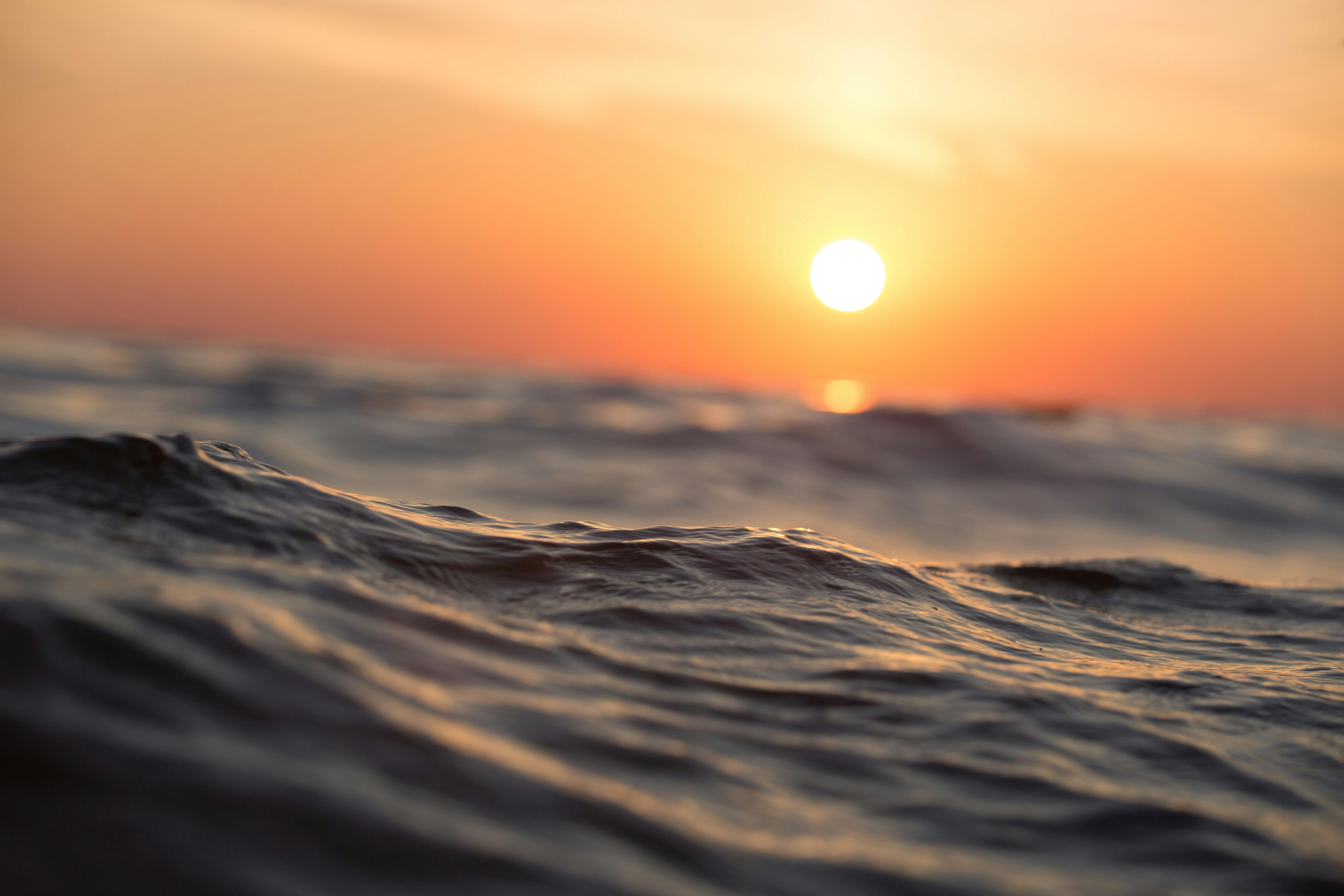
Imagine trying to understand the Amazon rainforest by looking at a single tree—or judging an entire city after walking just one block. That’s essentially what we’ve done with the ocean floor. Despite covering more than 70% of Earth’s surface, the deep seafloor remains a mystery: we’ve only seen 0.001% of it with our own eyes. That’s not a rounding error—it’s a statistical gut punch.
We’ve mapped Mars and sent probes beyond our solar system, yet we know next to nothing about the vast world beneath our own waves. Most of what lies below 200 meters—depths that make up two-thirds of the planet’s surface—has never been directly observed. Not because it’s impossible, but because we haven’t prioritized it. What little we have seen is limited to a few coastal zones explored by a handful of wealthy nations.
And that lack of exploration isn’t just an academic problem. It’s a blind spot that affects everything from climate science to conservation to potential medical breakthroughs. So how did we end up knowing more about outer space than our own ocean floor? And what’s at stake if we keep ignoring it?
The Invisible World Beneath the Waves

It’s easy to assume that in 2025, Earth is fully mapped and understood—but when it comes to the deep ocean floor, that couldn’t be further from the truth. Despite decades of exploration, humans have visually observed just 0.001% of the seafloor. That’s equivalent to scanning a single pixel on a 4K screen and thinking you’ve grasped the whole image.
The ocean makes up about 71% of Earth’s surface, and roughly 66% of that lies deeper than 200 meters—what scientists consider the “deep ocean.” Yet, the total area we’ve actually seen through photos or video since the 1950s adds up to about 1,476 square miles—just a bit larger than Rhode Island. And even that figure is generous, given that nearly a third of those visuals come from outdated, blurry black-and-white images.
Part of the problem is how we gather data. Mapping with sonar has given us outlines of about 26.1% of the seafloor as of mid-2024, but mapping isn’t the same as seeing. Sonar shows topography; it doesn’t reveal life forms, textures, or ecosystems.
Imaging, on the other hand, is slow, expensive, and usually limited to small zones. According to the study, if we keep going at our current pace, it would take over 100,000 years to finish the job.
Even more concerning is where this limited exploration has taken place. About 65% of all observations have been within the waters of just three countries: the U.S., Japan, and New Zealand. Most dives hug coastal zones, and just a few sites—like Monterey Canyon in California—have been surveyed repeatedly, skewing the overall picture of what’s down there.
This means we’re making global decisions—about mining, fishing, and conservation—based on an incredibly narrow and potentially misleading sliver of visual data. It’s not just that we’ve missed a few spots. We’ve missed nearly the entire planet’s largest living space.
Why the Depths Remain a Mystery

The deep sea isn’t out of reach—but it is out of budget, out of sight, and often out of mind. The primary reasons we’ve explored so little of the seafloor boil down to a mix of cost, complexity, and concentration of effort in just a few corners of the world.
For starters, deep-sea exploration is logistically intense and expensive. Most of it relies on remotely operated vehicles (ROVs) that move at speeds under 1 mile per hour and can only capture visuals across a 10-meter-wide field. Deploying these machines requires large research ships that cost around $100,000 per day to operate. Factor in weather risks, technical breakdowns, and tight research budgets, and it’s no wonder missions are limited and slow.
Then there’s the depth challenge itself. With an average ocean depth of about 12,080 feet (3,682 meters), the seafloor is under immense pressure and total darkness. While these conditions aren’t insurmountable, they require highly specialized (and expensive) technology. Most countries simply don’t have the infrastructure or funding to conduct regular deep-sea missions.
But it’s not just a money issue—it’s also about who’s doing the exploring. The data shows that 97.2% of all recorded deep-sea dives have been conducted by just five countries: the United States, Japan, New Zealand, France, and Germany. And they’re largely sticking close to home. Nearly all visual observations occur within 200 nautical miles of their coastlines, where they have easier access and legal authority to operate.
This heavy concentration of activity has created major gaps in global coverage. Vast sections of the international seabed—home to underwater ridges, plains, and trenches—have been almost entirely overlooked. Instead, regions like canyons and escarpments near wealthier nations get repeated attention, leading to a biased and incomplete understanding of the ocean’s full range of ecosystems.
Deep Sea Risks We Can’t Ignore

One of the biggest concerns is deep-sea mining. This process extracts minerals like cobalt, nickel, and manganese—used in batteries and renewable energy tech—from the ocean floor. But the areas targeted for mining, such as underwater ridges and polymetallic nodule fields, are some of the least studied on Earth. Scientists fear that this could lead to the destruction of entire ecosystems that haven’t even been documented.
These aren’t hypothetical risks. In just the last few years, research teams have discovered life beneath the seafloor, organisms with unique adaptations to pressure, temperature, and darkness. If mining operations disturb these areas, those life forms could vanish before we even know what they are or how they contribute to ocean health.
Climate science is also at stake. The deep ocean helps absorb and store carbon dioxide, playing a key role in regulating Earth’s climate. But how exactly this works—and how human interference might disrupt it—is still not fully understood. Without better data, our climate models have blind spots that could affect how we prepare for global warming.
Policy decisions are being made on a foundation that’s shockingly thin. International bodies like the International Seabed Authority (ISA) are under pressure to grant mining licenses, while countries like the U.S. have pushed forward with mining initiatives outside global frameworks. Yet according to ocean researchers, these decisions are happening with 0.001% visibility—literally.
In legal terms, this lack of data should trigger the precautionary principle, which requires decision-makers to proceed carefully when information is lacking. But in practice, that’s not always happening. Scientists and advocacy groups are urging governments to pause and invest in more exploration before exploiting the seafloor further.
A New Approach to Ocean Exploration

If we want to understand the deep sea—let alone protect it—we need to change how exploration is done. Right now, the approach is too narrow, too expensive, and too exclusive. To fix that, the scientific community is calling for a global reset in how we study the ocean floor.
First, the field needs more countries and institutions involved. Currently, a handful of wealthy nations dominate deep-sea research. That leaves massive gaps in both geographic coverage and scientific perspective. Opening up access to lower-income nations and underrepresented regions could help fill those gaps and diversify what kinds of ecosystems we study.
Second, we need to shift from isolated, high-cost missions to scalable, cost-effective exploration. Until recently, deep-sea imaging required multimillion-dollar equipment and massive support vessels. But that’s starting to change. Groups like the Ocean Discovery League are testing lower-cost tools—including compact winch systems and affordable ROVs—that could be deployed more widely and more often. These tools won’t replace big missions, but they can dramatically increase global coverage.
Third, data from deep-sea dives must be centralized and accessible. The new study that revealed the 0.001% figure had to pull together fragmented dive data from institutions around the world. Right now, there’s no unified system for storing, sharing, or comparing visual data from different missions. That needs to change if we want to build a clearer picture of what’s been explored—and what hasn’t.
Finally, scientists, policymakers, and industry leaders need to acknowledge what we don’t know. When information is limited or missing, the default approach should be caution—not exploitation. That’s already a principle in many international agreements, but it needs to be followed, not just cited.
Simple Ways You Can Help Protect Our Oceans

Caring for our oceans doesn’t require being an expert—it’s about making small, realistic choices that add up. The health of the deep sea impacts all of us, from the air we breathe to the food we eat. Here’s how you can make a difference today:
- Stay informed: Understanding the importance of the ocean is the first step. Follow trustworthy sources like NOAA or the Ocean Discovery League to stay updated. You don’t need to be a scientist to help spread the word about the ocean’s importance.
- Support ocean-friendly brands: When you shop, choose companies that are committed to sustainability. Look for products made with responsibly sourced materials, and avoid those linked to harmful practices like deep-sea mining. Small choices can lead to big changes over time.
- Minimize your plastic use: Plastic waste ends up in the ocean, harming marine life. Reducing your use of single-use plastics—like straws, bottles, and bags—can directly help cut down on ocean pollution. Simple swaps, like using reusable bags and water bottles, can make a real difference.
- Get involved locally: Volunteer with or donate to organizations focused on protecting oceans and marine life. Many groups offer local beach clean-ups, educational events, or research projects that need your help. Even small actions in your community have an impact.
- Advocate for ocean protection: Speak up about the importance of ocean conservation. Support policies that protect marine environments and encourage better regulation of ocean resources. Contact your representatives to let them know you care about the health of the ocean.
The deep ocean plays a crucial role in our planet’s health, and right now, it’s at risk. Every small action you take can help protect this vital part of our world. We don’t need to wait for drastic change—we can make a difference today.
Time to Turn the Twide

For a planet that’s more water than land, we’ve spent remarkably little time trying to understand what lies beneath the surface. We’ve poured resources into space exploration and built a digital map of the world’s cities, but 99.999% of the deep seafloor remains unseen. That’s not just a curiosity—it’s a warning sign.
We’re making global decisions on mining, biodiversity, and climate policy using a dataset that barely scratches the surface. We’re altering ecosystems we’ve never witnessed. And we’re assuming we can manage the unknown without first understanding it.
But this isn’t hopeless—it’s a call to act. We have the tools, the science, and the urgency to scale up exploration. We just need to shift the mindset: from treating the deep sea as a resource to exploit, to seeing it as a frontier of knowledge that’s vital to life on Earth.
We don’t have 100,000 years to get this right. What we choose to explore—or ignore—today will shape the legacy we leave underwater.
