
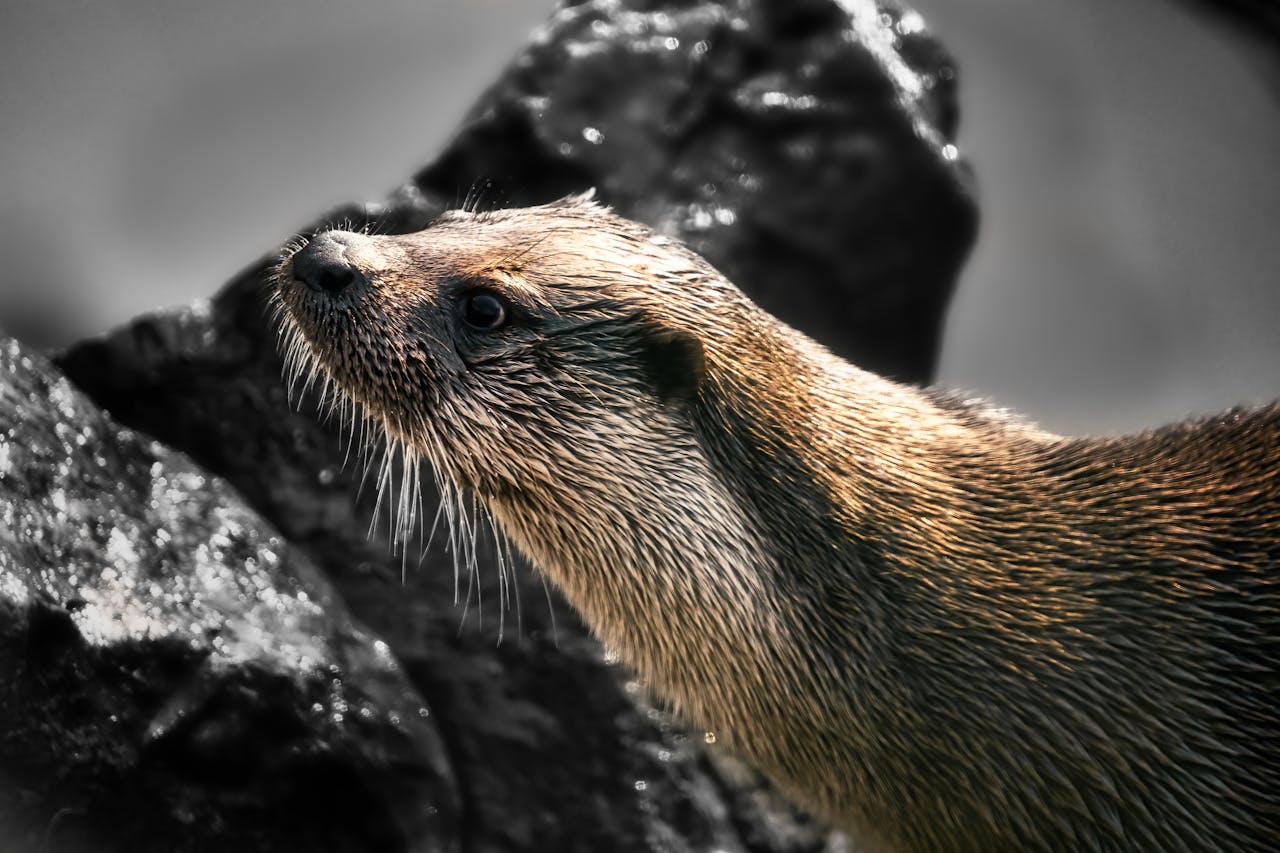
In Florida, something remarkable has happened. A police department has deployed the first specially trained search and recovery otter to assist in water based missions, marking a rare collaboration between wildlife and law enforcement. At first glance, the story sounds like something pulled from a children’s book, yet this development is very real and quietly reshaping how we think about animals, innovation, and problem solving.
The otter, named Splash, was trained to detect human remains underwater, assisting dive teams in challenging aquatic searches where visibility is low and currents are unpredictable. His work has already supported multiple missions across the state, drawing national attention. While dogs have long served as trusted partners in search operations, water presents unique obstacles that limit their effectiveness and require alternative approaches.
Behind Splash’s training is Peace River K9 Search and Rescue, a Florida based nonprofit search team dedicated to expanding rescue capabilities through creative methods. The organization recognized potential in an animal whose biology makes underwater scent detection possible in ways traditional rescue animals cannot replicate. Their willingness to think differently opened the door to a new form of collaboration.
Beyond operational success, Splash’s story carries something deeper. It invites us to reconsider the relationship between humans and the natural world and reminds us that wellness is not only found in structured routines and regimens, but also in connection, creativity, environmental awareness, and collaboration with nature itself.
How Splash Works: The Science Behind the Scent
Search and rescue operations depend heavily on scent detection to locate missing persons efficiently. Dogs are exceptional at tracking on land, but underwater scent behaves differently and becomes far more complex due to shifting currents, temperature changes, and dispersion patterns that alter how odor travels.
Otters possess a unique biological adaptation that makes them ideal for aquatic detection work in ways most mammals cannot match. They release small air bubbles from their nostrils and then re-inhale them, capturing scent particles even while submerged and allowing them to identify odor beneath the surface with notable sensitivity.
Splash was trained through scent imprinting, a process that teaches an animal to associate a specific odor with reward and task focus over time. Trainers worked with his instincts rather than forcing unnatural behavior, reinforcing diving and signaling patterns that assist divers and narrow search zones with greater efficiency.
During a high profile case involving a missing woman in Pensacola, Splash was brought in to assist authorities including the Martin County Sheriff’s Office. Although the woman was later found alive before Splash entered the water, his deployment demonstrated growing confidence in this innovative approach and highlighted the expanding possibilities of wildlife assisted rescue.
What This Story Teaches Us About Stress and Adaptability
Modern life often feels like constant resistance against deadlines, notifications, responsibilities, and uncertainty. These ongoing stressors accumulate and strain the nervous system over time, affecting sleep quality, digestion, mood balance, and overall energy levels in subtle but significant ways.
Splash’s work presents a different model of engagement. He operates calmly in water, an environment that could overwhelm another species, relying on repetition, focus, and steady conditioning rather than urgency or panic driven responses.
Water itself has measurable calming effects on the body and mind. Exposure to natural environments, especially bodies of water, has been associated with improved mood regulation, reduced stress hormone levels, and enhanced cognitive clarity in both short and long term studies.
Observing Splash dive with quiet concentration reminds us of the value of presence and intentional focus. For humans, cultivating focused attention through breathwork, meditation, journaling, mindful movement, or simply spending time outdoors can buffer stress and strengthen emotional regulation over time.
The Emotional Power of Animals in Human Healing
Stories about animals often capture widespread attention because they evoke warmth, curiosity, and a sense of shared existence. Interacting with animals can stimulate oxytocin release, supporting feelings of trust, emotional safety, and deeper social connection.
Animal assisted therapy programs have shown benefits for individuals coping with anxiety, depression, trauma, and chronic illness in clinical settings. While Splash is not a therapy animal, the emotional response people have toward him reflects the broader healing influence animals can provide simply through their presence and actions.
Watching Splash work sparks curiosity and even joy in audiences who follow his missions. Positive emotional states are linked with improved immune response and lower inflammatory markers associated with chronic stress, reinforcing the connection between emotional wellbeing and physical health.
The story reinforces the idea that humans are not separate from ecosystems but are participants within them. Reconnecting with the natural world through observation, outdoor activity, wildlife appreciation, or conservation efforts can strengthen emotional wellbeing and renew appreciation for living systems.
Innovation Rooted in Nature: A Blueprint for Future Wellness
Splash’s deployment demonstrates that solutions sometimes lie in observation rather than constant technological invention. Instead of creating new mechanical devices, trainers examined natural abilities already present in an aquatic mammal and refined them for practical use.
This principle applies broadly in wellness and preventive health practices. Sustainable health strategies often support what the body is already designed to do instead of overriding biological processes with extreme or short term interventions.
Circadian rhythms regulate hormone release, digestion, metabolism, immune function, and cellular repair across the body. Aligning sleep, movement, and nutrition with natural light cycles and seasonal patterns strengthens these internal systems in ways that feel balanced and sustainable.
Splash represents innovation that respects biology rather than suppressing it. His training refines instinct instead of replacing it, offering a model for how humans can approach health decisions with greater alignment, patience, and long term thinking.
Nature as Co-Healer: Why Environmental Wellness Matters
Environmental wellness influences nearly every physiological system in the body, from cardiovascular regulation to immune response. Time spent in natural settings has been associated with lower blood pressure, improved concentration, stronger mood balance, and reduced symptoms of mental fatigue.
Water environments in particular evoke calm and sensory grounding. The sound and rhythm of water can promote parasympathetic nervous system activation, allowing the body to move into rest and repair mode more efficiently and consistently.
Splash’s work takes place in these water environments where movement appears fluid and purposeful. His graceful dives symbolize adaptability and balance, qualities that mirror many foundational wellness principles centered on flow rather than force.
Incorporating simple practices such as walking near water, spending time in green spaces, practicing outdoor mindfulness, or supporting conservation efforts can strengthen both personal wellbeing and environmental health simultaneously.
A Small Otter with a Powerful Wellness Message
Splash may be the first specially trained search and recovery otter deployed by a Florida police department, but his influence extends beyond rescue missions and operational innovation. He represents curiosity, adaptability, cooperation, and thoughtful collaboration between humans and wildlife.
His story reminds us that effective solutions often arise from respecting natural intelligence and observing closely. Working with biological strengths rather than against them can produce meaningful, sustainable results across many areas of life.
In a time when stress and disconnection are increasingly common experiences, stories like this encourage renewed appreciation for the natural world and its quiet wisdom. They suggest that innovation and empathy can coexist within public service and community wellbeing.
If a small aquatic mammal can reshape search and rescue strategy, perhaps we can reshape our approach to wellness by aligning with natural rhythms, cultivating presence, strengthening environmental awareness, and deepening our relationship with the world around us.
