
A Japanese manga artist’s prediction of a catastrophic disaster in July has triggered a wave of travel cancellations across Asia. The prophecy, which claims massive destruction will hit Japan on a specific date, has travelers scrambling to change their plans—even as tourism officials and scientists call the predictions baseless.
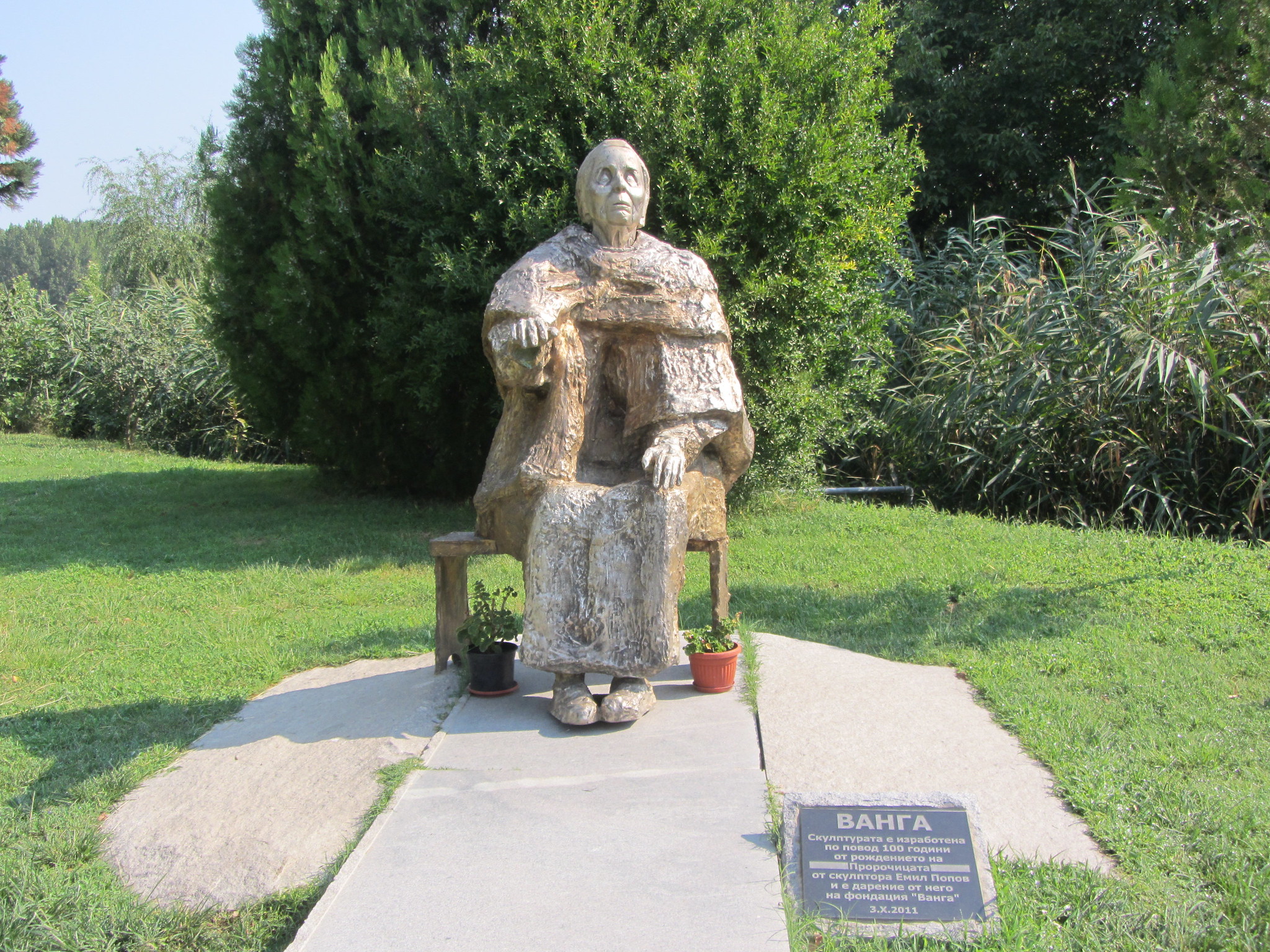
The artist behind the panic has earned comparisons to the legendary Bulgarian mystic Baba Vanga, known for her eerily accurate predictions about world events. However, while Baba Vanga’s prophecies were conveyed through mystical visions, this modern-day prophet claims to see the future through her dreams—and then draws them in comic book form.
As social media spreads the warning like wildfire and travel agencies report plummeting bookings, Japan finds itself facing an unusual crisis, not from any actual disaster, but from the fear of one that may never come. The question remains: why are so many people willing to upend their travel plans based on a comic book prediction?
Meet Ryo Tatsuki: The Woman They’re Calling Japan’s Baba Vanga
Ryo Tatsuki isn’t your typical fortune teller. She’s a manga artist who claims to see the future in her dreams, then transforms these visions into illustrated stories. Her 1999 book “The Future I Saw” has sold 900,000 copies and gained a devoted following across Asia, particularly in China, Thailand, and Hong Kong, where translated versions have spread her reputation far beyond Japan’s borders.
The comparison to Baba Vanga isn’t made lightly. The late Bulgarian mystic, who died in 1996, became world-renowned for predictions that seemed to anticipate major events like the 9/11 attacks and Princess Diana’s death. Now, believers claim Tatsuki possesses similar abilities, pointing to her track record of supposed hits as evidence that her warnings deserve serious attention.
In her manga, Tatsuki draws a cartoon version of herself sharing dream visions with other characters. These aren’t presented as definitive prophecies, but rather as glimpses of possible futures she has witnessed while sleeping. The artistic presentation adds an unusual twist to the prophecy game—her predictions come illustrated in comic book panels rather than cryptic verses or mystical pronouncements.
What sets Tatsuki apart from other self-proclaimed prophets is her specificity. While many predictions rely on vague language that can be interpreted multiple ways, her manga includes concrete dates and detailed scenarios. It’s this precision that has both attracted believers and provided ammunition for skeptics who point out when predictions don’t materialize.
Her Track Record Is Why People Are Freaking Out
The prediction that launched Tatsuki to fame came in her original 1999 book, where she warned of a “massive disaster in March 2011.” When the 9.0-magnitude earthquake struck Japan’s Tohoku region on March 11, 2011, triggering a devastating tsunami that killed tens of thousands and caused the Fukushima nuclear disaster, believers saw vindication of her abilities.
The cover of her book bore the words “massive disaster in March 2011,” making it difficult to dismiss as coincidence or retroactive interpretation. This apparent direct hit transformed Tatsuki from an obscure manga artist into a phenomenon, particularly in disaster-conscious Asia, where her work began selling out and spawning translations.
Fans have combed through her other predictions, claiming she also foresaw the deaths of Princess Diana and Freddie Mercury, the 1995 Kobe earthquake, and even the COVID-19 pandemic. Critics argue these interpretations stretch her actual words, noting that vague drawings of illness or tragedy can be matched to numerous events after the fact. Still, the 2011 prediction remains stubbornly specific and complex to explain away.
Her influence extends far beyond typical prophecy circles. In countries like Thailand and China, her work has achieved mainstream recognition, with social media groups dedicated to analyzing her drawings and warning about upcoming predictions. The complete version of her book, released in 2021, has only amplified this following by adding new visions, including the one that is causing the current panic.
The July 5 Prediction That Has Everyone Spooked

The prediction sending shockwaves through Asia’s travel industry appears in “The Future I Saw (Complete Version),” published in 2021. According to the manga, on July 5, 2025, “a crack will open up under the seabed between Japan and the Philippines, sending ashore waves three times as tall as those from the Tohoku earthquake.”
If accurate, this would mean tsunami waves reaching heights of over 120 feet—a scenario that would be apocalyptic and dwarf even Japan’s worst recorded disasters. The manga also depicts Japan’s oceans “boiling,” which some interpreters believe indicates underwater volcanic activity or a massive undersea eruption accompanying the earthquake.
Tatsuki’s illustration shows the disaster’s epicenter as a diamond-shaped region linking Japan, Indonesia, Taiwan, and the Northern Mariana Islands. This geographic specificity has particularly alarmed travelers planning visits to coastal areas within this zone. The detailed nature of the prediction—down to the exact date and affected regions—makes it harder to dismiss than vaguer prophecies.
Adding to the anxiety, other self-proclaimed psychics have piled on with their disaster predictions for Japan in 2025. A Japanese psychic garnered massive attention on Chinese social media by predicting a major earthquake would hit Tokyo Bay on April 26 (which passed without incident). Hong Kong TV personality Master Seven, a popular feng shui master, urged people to avoid Japan starting in April, citing spiritual concerns about the country’s energy.
Travel Bookings Are Plummeting (And It’s Not Just a Few Cancelations)

The impact on Japan’s tourism industry has been swift and measurable. CN Yuen, managing director of WWPKG, a Hong Kong-based travel agency, reports that “bookings to Japan dropped by half during the Easter holiday and are expected to dip further in the coming two months.” This dramatic decline represents millions in lost revenue for an industry still recovering from pandemic disruptions.
The cancellations have primarily come from mainland China and Hong Kong, Japan’s second- and fourth-largest tourist markets, respectively. But the fear has spread beyond Chinese-speaking regions. Social media platforms in Thailand and Vietnam are overflowing with videos and posts warning people to reconsider their travel plans to Japan, creating a regional panic that transcends language barriers.
Travel agents report that the fear has become “ingrained” in potential travelers’ minds. Even those who initially dismiss the predictions find themselves second-guessing when faced with non-refundable bookings and family members expressing concern. The psychological impact appears to be cumulative—each new prophecy or social media warning adds another layer of doubt.
The situation worsened when the Chinese embassy in Tokyo issued a general warning about natural disasters in Japan last month. While the advisory didn’t mention any specific predictions, its timing led many to connect it with Tatsuki’s prophecy, lending an air of official concern to what scientists insist are baseless predictions.
Real People Are Changing Their Plans

The cancellations aren’t just statistics—they represent real travelers abandoning long-anticipated trips. Samantha Tang, a 34-year-old yoga teacher from Hong Kong who has visited Japan at least once yearly since the pandemic ended, shelved her August plans to visit Wakayama, a beach destination south of Osaka. “Everyone says so much about an earthquake coming,” she explained, despite her love for the country.
Oscar Chu, 36, another regular visitor to Japan from Hong Kong, has also changed his mind for 2025. “It’s best to avoid it. It’s going to be really troublesome if an earthquake indeed happens,” he said. His concerns focus less on the disaster itself and more on potential travel chaos, being stranded abroad if airports close or transportation systems fail.
These aren’t people prone to superstition or panic. They’re experienced travelers who’ve visited Japan multiple times without concern. However, the convergence of various predictions, social media amplification, and memories of real disasters, such as 2011’s tsunami, has created a perfect storm of anxiety that rational arguments struggle to penetrate.
Travel forums and social media groups reveal similar stories—honeymoons postponed, family reunions rescheduled, business trips moved to video calls. The economic ripple effects extend beyond tourism to airlines, hotels, restaurants, and attractions that depend on international visitors. Some travelers report being unable to convince travel companions to proceed with plans, forcing group cancelations even when they remain skeptical.
But Wait—Japan Is Still Breaking Tourism Records
Despite the prophecy-driven cancellations, Japan’s tourism numbers tell a different story. The country welcomed a record-breaking 10.5 million visitors in the first three months of 2025, according to the Japan National Tourism Organization. Mainland Chinese travelers, supposedly the most affected by the predictions, actually increased by 78% year-over-year to 2.36 million visitors in the first quarter.
Hong Kong visitors reached 647,600 in the same period, marking a 3.9% growth despite the reported cancellations. American tourists seem entirely unaffected by the Asian prophecy panic, with 343,000 visiting in March alone, alongside 68,000 Canadians and 85,000 Australians. These Western markets show no signs of slowdown, suggesting the prediction’s influence remains culturally specific.
Some Asian travelers are also refusing to let prophecies dictate their plans. Vic Shing from Hong Kong remains committed to his June trip to Tokyo and Osaka despite hearing about “the prophecy.” “Earthquake predictions have never been accurate,” he stated flatly. He added that even if a disaster occurred, “Japan has encountered many massive earthquakes before. It shouldn’t be too bad when it comes to disaster management.”
This confidence in Japan’s disaster preparedness represents a key dividing line between those who cancel and those who proceed with plans. Japan’s building codes, early warning systems, and disaster response protocols are among the world’s most advanced, developed through decades of experience with seismic activity.
What Science Says About Earthquake Predictions (Spoiler: They’re Impossible)
Faced with the impacts of tourism due to unscientific predictions, Japan’s Cabinet Office took an unusual step by addressing the issue directly on social media, explaining that modern technology cannot accurately predict earthquakes. Seismologists worldwide agree—while we can assess probability and identify risk zones, pinpointing when a major earthquake will strike remains beyond current scientific capability.
Even Japan’s government warnings about an 80% chance of a severe earthquake hitting the Nankai Trough within 30 years have drawn criticism from some seismologists who question whether such long-term probability assessments are meaningful or helpful. The difference between scientific risk assessment and data-specific prophecy is vast, though both can trigger public anxiety.
Yoshihiro Murai, governor of Miyagi prefecture which suffered devastating damage in 2011, spoke out against the tourism impact: “I believe it is a serious issue when the spread of highly unscientific rumors on social media had an effect on tourism.” His prefecture, still rebuilding from a real disaster, now faces economic harm from imaginary ones.
As July 5 approaches, Japan finds itself in an absurd position—preparing not for a disaster, but for the aftermath of a non-disaster. When the date passes without incident, as scientists insist it will, the country will still need to rebuild tourist confidence and address why so many were willing to believe a comic book over seismology. Until then, the real disaster remains the one happening to Japan’s tourism industry, caused not by tectonic plates but by the power of prophecy in the social media age.
Featured image source: Jeff and Neda Fields, Flickr
