
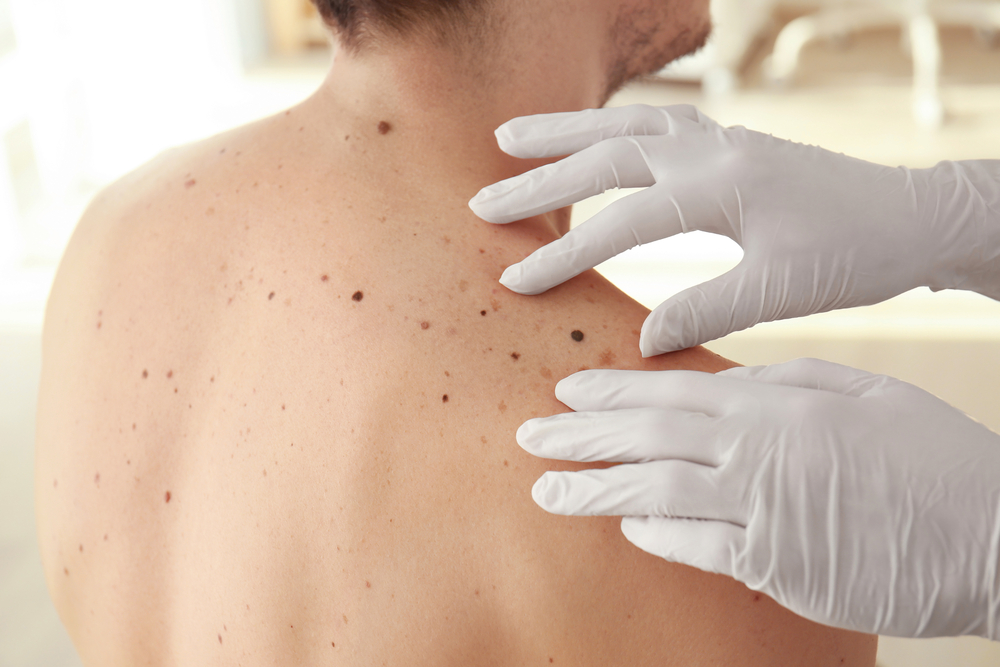
What if a virus best known for causing cold sores could one day help cure cancer? That’s exactly what scientists are exploring with an experimental treatment that uses a genetically modified herpes simplex virus (HSV-1) to shrink advanced melanoma tumors even those hidden deep in the body. And the early trial results are turning heads.
A Surprising Ally in the Fight Against Skin Cancer
Herpes simplex virus type 1 (HSV-1) is most commonly associated with oral herpes, which causes cold sores and fever blisters around the mouth. It’s estimated that nearly two-thirds of the global population under age 50 carries HSV-1, though many never experience symptoms. Traditionally, HSV-1 has been managed as a latent viral infection with antiviral medications aimed at reducing outbreak frequency.
In recent years, however, scientists have begun to explore the virus’s potential in entirely new territory: cancer therapy. When genetically modified in the lab, HSV-1 loses its disease-causing abilities and gains a more hopeful function it becomes a precision tool to seek out and destroy cancer cells.

The treatment centers around RP1, an engineered form of HSV-1 that’s been stripped of its ability to cause cold sores. Instead, it’s been retooled to attack and kill cancer cells from the inside out. RP1 is part of a new class of cancer therapies known as oncolytic viruses, which not only destroy tumors directly but also activate the body’s immune system to hunt down cancer elsewhere.
For decades, viruses have been seen as enemies of human health. But in a twist of medical innovation, researchers are harnessing one virus to fight another disease turning the herpes virus into a targeted melanoma destroyer.
The treatment centers around RP1, an engineered form of HSV-1 that’s been stripped of its ability to cause cold sores. Instead, it’s been retooled to attack and kill cancer cells from the inside out. RP1 is part of a new class of cancer therapies known as oncolytic viruses, which not only destroy tumors directly but also activate the body’s immune system to hunt down cancer elsewhere.
The IGNYTE Clinical Trial: What Happened
A global clinical trial called IGNYTE involved 140 patients with advanced melanoma, a form of skin cancer that had spread and stopped responding to standard treatments like immunotherapy. These patients received RP1 injections directly into their tumors, along with the immune-boosting drug nivolumab (brand name Opdivo).
The treatment was administered every two weeks for up to eight cycles. If a patient showed a positive response, they continued with nivolumab alone for up to two years. Notably, this approach treated both superficial tumors on or under the skin and deeper ones in organs like the lungs or liver.
The diversity in patient profiles including those with previously treated but unresponsive cancers made this trial particularly insightful. Researchers could evaluate not just the average response, but also see how different types of tumors, locations, and patient backgrounds influenced outcomes.
Results That Go More Than Skin Deep

The results were promising. About one-third of patients saw their tumors shrink by at least 30%. Even more impressive? In nearly 1 in 6 patients, their tumors completely disappeared. But the real surprise came from how the body responded overall. Tumors that weren’t even injected with RP1 also began to shrink, suggesting that the virus had triggered a whole-body immune response.
“This result suggests that RP1 is effective in targeting cancer throughout the entire body,” said lead trial investigator Dr. Gino Kim In. “That expands the potential effectiveness of the drug because some tumors may be more difficult or impossible to reach.”
More granular data showed that the therapy was especially effective in patients with superficial melanoma lesions, though deep tumors in the lungs and liver also responded. Additionally, patients who had already failed multiple lines of treatment showed renewed response when given RP1 and nivolumab, suggesting its utility in advanced, treatment-resistant cases.
Demographic analysis from the IGNYTE trial revealed that patients over 60 responded nearly as well as those under 60, with no statistically significant differences in tumor shrinkage. Interestingly, individuals with mucosal melanoma, a rare subtype affecting mucous membranes also showed modest but encouraging improvements, even though this form typically resists conventional treatment.
Patient testimonials underscore the human impact. Maria, a 58-year-old participant from California, had melanoma metastases in her liver and lungs. After six cycles of RP1 and nivolumab, imaging showed more than 60% reduction in her tumor load. She says, “This treatment gave me a second chance. I was running out of hope.”
Another case involved Jamal, a 41-year-old patient whose melanoma had spread to multiple lymph nodes and internal organs. Within five months of initiating RP1 therapy, three of his largest tumors shrank by over 70%, and he experienced a marked reduction in fatigue and pain. His oncologists believe the immune activation may have extended well beyond the initial target sites.
These early findings demonstrate not just the clinical efficacy of the treatment, but also its potential to shift patient outcomes in ways that are deeply personal and meaningful.
The results were promising. About one-third of patients saw their tumors shrink by at least 30%. Even more impressive? In nearly 1 in 6 patients, their tumors completely disappeared. But the real surprise came from how the body responded overall. Tumors that weren’t even injected with RP1 also began to shrink, suggesting that the virus had triggered a whole-body immune response.
“This result suggests that RP1 is effective in targeting cancer throughout the entire body,” said lead trial investigator Dr. Gino Kim In. “That expands the potential effectiveness of the drug because some tumors may be more difficult or impossible to reach.”
More granular data showed that the therapy was especially effective in patients with superficial melanoma lesions, though deep tumors in the lungs and liver also responded. Additionally, patients who had already failed multiple lines of treatment showed renewed response when given RP1 and nivolumab, suggesting its utility in advanced, treatment-resistant cases.
How the Modified Herpes Virus Works

RP1 works through a dual mechanism. First, it replicates inside cancer cells, causing them to burst and die. Second, it alerts the immune system to the presence of cancer, prompting white blood cells to attack other tumors throughout the body. Unlike natural HSV-1, RP1 does not cause herpes and is well-tolerated by patients.
Nivolumab plays a supporting role by releasing the brakes on immune cells, helping them better recognize and fight off cancer. Together, the virus and the immune checkpoint inhibitor pack a double punch.
The immune-stimulating effects of RP1 go even deeper: the viral replication leads to the release of tumor antigens, which help immune cells recognize and destroy similar cancer cells elsewhere in the body. It’s not just a local therapy it’s an immune educator.
Most patients tolerated the treatment well. Mild side effects such as fatigue, fever, or flu-like symptoms were reported, similar to those seen with other forms of immunotherapy. No serious adverse reactions were linked directly to the virus.
However, researchers did monitor for potential viral shedding or reactivation, especially in patients with compromised immune systems. None of the participants developed herpes infections, underscoring the safety of this modified virus.
While long-term monitoring is still ongoing, the safety profile of RP1 gives researchers hope that it could be used in broader oncology settings perhaps even in combination with other immunotherapies or vaccines.
A Deeper Look at Oncolytic Virus Therapy

Oncolytic virus therapy is not entirely new. In 2015, the FDA approved a similar herpes-based drug called Imlygic (talimogene laherparepvec), used to treat certain types of melanoma. However, Imlygic is primarily effective on tumors that can be easily accessed on the skin.
RP1 appears to go several steps further not only treating visible tumors, but also shrinking those buried deep in tissues and organs. Its broader reach is attributed to enhancements in viral engineering and its pairing with nivolumab, which boosts systemic immune activation.
Scientists are exploring whether similar techniques can be applied to other viruses, such as adenoviruses or vaccinia viruses, creating a potential toolbox of oncolytic therapies for different cancer types.
What Comes Next for RP1 Therapy?

The success of the phase 1/2 IGNYTE trial has led to the launch of a larger and more comprehensive phase 3 clinical study, officially titled IGNYTE-3. This pivotal trial will enroll over 400 participants across 15 countries, including the United States, Canada, Australia, and several European nations. It aims to confirm the safety and effectiveness of RP1 in combination with nivolumab among a broader, more diverse population.
The primary endpoint of IGNYTE-3 is progression-free survival, which measures how long patients live without the cancer worsening. Secondary endpoints include overall response rate, duration of response, and overall survival. Investigators will also closely monitor quality of life scores and immune biomarkers to better understand how patients are responding to treatment on both a physical and molecular level.
Participants in IGNYTE-3 will be randomized to receive either the RP1 and nivolumab combination or nivolumab alone, allowing researchers to directly compare outcomes and verify whether RP1 provides additional benefits beyond current standards of care.
This trial also explores RP1’s efficacy in patients who have not yet received immunotherapy, as well as those who previously did but showed limited or no response. By including both first-line and second-line cases, IGNYTE-3 may clarify which patient subgroups benefit most from this novel viral approach.
The anticipated completion date for IGNYTE-3 is late 2026, with interim analyses planned to assess early trends and guide possible regulatory filings. If the results echo or exceed those from the earlier phases, RP1 could soon be on track for FDA approval and global clinical adoption.
Beyond melanoma, Replimune is initiating studies of RP1 in other difficult-to-treat cancers like head and neck squamous cell carcinoma, triple-negative breast cancer, and non-small cell lung cancer. These next steps indicate a strong commitment to expanding the use of oncolytic virus therapy across oncology’s toughest frontiers.?
The success of the phase 1/2 IGNYTE trial has led to a larger, phase 3 global trial known as IGNYTE-3. This ongoing study will evaluate the effectiveness of RP1 therapy in over 400 participants worldwide. If the results remain strong, RP1 could soon become an FDA-approved option for patients with treatment-resistant melanoma.
This expanded trial also opens the door to investigating RP1 in earlier stages of melanoma, or even in combination with surgery, radiation, or other emerging biologics. Moreover, other tumor types like head and neck cancer, colorectal cancer, and even glioblastoma are being considered for future RP1-based trials.
The Human Impact: Giving Patients a New Option

Behind every clinical trial statistic is a person. For patients who have faced months—or even years—of failed therapies, RP1 presents a powerful new option. It may not be a cure for everyone, but it is a glimmer of hope for many.
Sarah, a 63-year-old grandmother from Oregon, was diagnosed with advanced melanoma that had spread to her lungs and bones. “When my oncologist told me about the trial, I thought, ‘Why not?’ I had nothing left to lose,” she shared. After five months of therapy, her scans showed a 65% reduction in tumor size. “I can play with my grandkids again without needing to sit down every five minutes. This treatment gave me more than time it gave me quality of life.”
Another patient, 29-year-old Alex from Chicago, had undergone several rounds of immunotherapy with little success. “RP1 was my last shot,” he said. “After the third round, I started to feel stronger. My fatigue lifted, my scans improved, and I felt like myself again.” He remains in partial remission nearly a year later.
These individual stories add real-world depth to the clinical data. They remind us that behind every tumor marker is a human life hoping for more time, more memories, and another chance.
Behind every clinical trial statistic is a person. For patients who have faced months or even years of failed therapies, RP1 presents a powerful new option. It may not be a cure for everyone, but it is a glimmer of hope for many.
One patient with widespread melanoma reportedly experienced complete remission after the trial, remaining cancer-free for over 18 months. Another participant, with tumors in both the liver and lungs, saw a reduction of over 70% in total tumor burden.
These individual stories add real-world depth to the clinical data. They remind us that behind every tumor marker is a human life hoping for more time.
Rethinking Cancer Treatment With Nature’s Tools
Oncolytic virus therapy has a surprisingly long history researchers first proposed using viruses to treat cancer as early as the 1900s, when physicians noticed temporary tumor regressions following natural viral infections. But only in the past few decades has the field evolved from theoretical promise to clinical application.
One of the most pivotal moments came in 2015 when the FDA approved Imlygic (T-VEC), a modified herpes virus designed to treat advanced melanoma. While Imlygic demonstrated benefits, its effectiveness was largely confined to tumors that could be directly injected, limiting its use to more superficial lesions. The breakthrough with RP1 is that it goes beyond this limitation.
RP1 differs significantly from its predecessors in both structure and impact. It has been engineered to express additional immune-stimulating molecules that improve antigen presentation and immune recognition. When paired with nivolumab, an immune checkpoint inhibitor, the viral therapy doesn’t just kill tumor cells locally it rallies the body’s entire immune army to seek and destroy cancer cells system-wide.
This advancement reflects a broader trend in cancer treatment: moving from blunt-force tools like chemotherapy toward biologically intelligent therapies that leverage the body’s own defenses. RP1 represents a next-generation oncolytic virus, capable of addressing the limitations of earlier treatments and showing potential in a wider array of cancers beyond melanoma.
We are no longer merely defending against viruses we are recruiting them as allies in one of the greatest battles in modern medicine. And that shift could reshape how we treat cancer for generations to come.
Oncolytic virus therapy, once a niche concept, is fast becoming a field to watch. Scientists are now engineering familiar viruses not to make us sick but to make us well. And this approach may help patients who feel like they’ve exhausted all other options.
This reimagining of viral medicine opens up exciting possibilities. With RP1 leading the charge, we may be witnessing the rise of a whole new class of therapies rooted not in chemicals or radiation, but in the very microorganisms we once feared.
Viruses as Healers? It Might Be Closer Than You Think
Science has long battled viruses. Now it’s beginning to partner with them. If RP1 continues to show promise, it could signal a turning point not just for melanoma patients, but for the future of oncology.
Cancer isn’t going away anytime soon. But thanks to innovations like oncolytic virus therapy, we might just be getting smarter about how we fight back.
Source
- Montagnaro, S., Damiano, S., Ciarcia, R., Puzio, M. V., Ferrara, G., Iovane, V., Forte, I. M., Giordano, A., & Pagnini, U. (2018). Caprine herpesvirus 1 (CpHV-1) as a potential candidate for oncolytic virotherapy. Cancer Biology & Therapy, 20(1), 42–51. https://doi.org/10.1080/15384047.2018.1504722
- Arruebo, M., Vilaboa, N., Sáez-Gutierrez, B., Lambea, J., Tres, A., Valladares, M., & González-Fernández, Á. (2011b). Assessment of the evolution of cancer treatment therapies. Cancers, 3(3), 3279–3330. https://doi.org/10.3390/cancers3033279
