
You reach for your phone to check a text message. Squinting doesn’t help. You hold it at arm’s length, but words stay blurred. Reading a restaurant menu becomes an awkward dance of distance and lighting. Sound familiar?
Nearly 128 million American adults deal with presbyopia, the age-related loss of near vision that typically starts creeping in during your mid-40s. Up until now, your options were reading glasses, bifocals, contact lenses, or surgery. Each came with trade-offs.
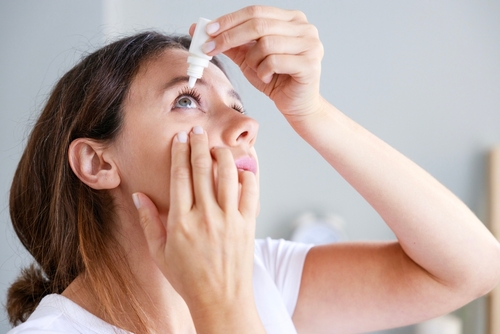
But scientists just received FDA approval for something different. VIZZ (aceclidine ophthalmic solution) became the first and only approved eye drop in the United States designed to restore near vision for up to 10 hours with a single daily dose. No glasses required.
What makes these results surprising isn’t just that the drops work. It’s how well they work, how fast they work, and what happened when researchers tested them on 466 people for over 30,000 treatment days.
Your Eyes Lose Focus After 40, and Here’s Exactly Why
Presbyopia affects almost everyone who lives long enough to experience it. By age 40, around 85% of people start noticing the changes. By 50, nearly everyone needs some form of correction.
Inside your eye sits a crystalline lens that changes shape to help you focus on objects at different distances. When you’re young, this lens stays flexible and elastic. Your ciliary muscles contract and relax, changing the lens shape to bring near objects into focus.
As years pass, the lens hardens. Elasticity drops. Your ciliary muscles weaken. Around age 50, you lose an average of 1.5 lines of near vision every six years.
Scientists estimate 1.8 billion people globally had presbyopia in 2015. Projections suggest 2.1 billion will have it by 2030.
Most people notice it abruptly. One day, you’re reading fine print without thinking about it. A few months later, you can’t make out the text on a prescription bottle without holding it away from your face. Reading glasses become a sudden necessity, not a choice.
Reading Glasses Work, But People Want Better Options

Varifocal glasses and contact lenses do their job. People have relied on them for decades. But patients consistently report frustrations that go beyond simple inconvenience.
Studies show presbyopia interferes with reading and electronic device use. People feel limited by corrective lenses in daily activities. Varifocal glasses force compromises in vision quality at different distances. Contacts can cause dryness and discomfort. Some find the constant need to put on and take off reading glasses disruptive to workflow.
Surgical options exist, but come with permanent alterations to your eye. Monovision LASIK, corneal inlays, and multifocal procedures carry risks like reduced contrast sensitivity, dysphotopsia (visual disturbances from light), and the possibility that results might regress over time.
Patients wanted a middle ground. Something reversible. Something that doesn’t require wearing anything. Something that works without permanent changes to eye structure.
One Drop Creates a Pinhole Effect Inside Your Pupil
VIZZ works through a mechanism different from reading glasses or older eye drops. Aceclidine, the sole active ingredient, acts as a pupil-selective miotic. In plain terms, it shrinks your pupil.
When you put VIZZ in your eye, aceclidine causes your iris sphincter muscle to contract. Your pupil reduces to less than 2mm in diameter. At this size, a pinhole effect occurs.
Photographers know pinhole cameras create images with exceptional depth of field. Everything from near to far stays in focus. Your eye does something similar when the pupil shrinks enough. Light rays entering through a smaller opening need less focusing power from the lens to form a sharp image on your retina.
What makes aceclidine different from older miotics like pilocarpine? Selectivity. Aceclidine targets the iris with minimal stimulation of your ciliary muscle. Pilocarpine causes both pupil constriction and ciliary muscle contraction, which can create a myopic shift. Your distance vision gets blurry when trying to fix your near vision.
VIZZ avoids this problem. Near vision improves while distance vision stays clear. You can read your phone and still see the road ahead when driving.
Clinical Trials Tested 466 People for 42 Days

Before FDA approval, LENZ Therapeutics ran three phase 3 clinical trials. CLARITY 1 and CLARITY 2 enrolled 466 participants who used VIZZ once daily for 42 days. CLARITY 3 followed 217 participants for six months to assess long-term safety.
Both CLARITY 1 and CLARITY 2 met all primary and secondary endpoints for near vision improvement. Results were randomized, double masked, and controlled against placebo.
At 30 minutes after instillation, 71% of participants gained three or more lines of near vision improvement. At three hours, the same percentage maintained those gains. Even at 10 hours, 40% still showed three or more lines of improvement.
Researchers collected safety data across more than 30,000 treatment days. Zero serious treatment-related adverse events occurred across all three trials.
Eef Schimmelpennink, President and CEO of LENZ Therapeutics, stated, “We are ready and excited to launch the first and only once-daily eye drop with proven efficacy for up to 10 hours into the market.”
Vision Improves in 30 Minutes and Lasts Through Your Workday
Speed matters when you’re trying to manage daily tasks. VIZZ delivers measurable improvement within 30 minutes for most users. You put in one drop when you wake up, and near vision clarity kicks in by the time you finish breakfast.
Duration matters just as much. Many prescription eye treatments wear off after a few hours. VIZZ maintains its effect for up to 10 hours in a substantial percentage of users. Put drops in at 7 AM, and you’re still reading clearly at 5 PM.
Each dose comes in a single-use vial with no preservatives. Open it, apply one drop to each eye, and dispose of the vial immediately. No bottle contamination. No preservative-related irritation. No guessing whether yesterday’s opened bottle is still good.
Once daily dosing means you don’t need to remember midday applications. You don’t need to carry drops with you to work. You don’t need to reapply before evening activities.
Side Effects Are Mild and Go Away on Their Own

Safety data from clinical trials showed a favorable profile. Out of 466 participants in CLARITY 1 and 2, common side effects included installation site irritation at 20%, dim vision at 16%, and headache at 13%. Conjunctival hyperemia (redness of the eye surface) occurred in 8% of users. Ocular hyperemia (redness inside the eye) affected 7%.
Most adverse reactions were mild. Most were transient. Most resolved without intervention.
Dim or dark vision happens because your pupil is smaller. Less light enters your eye. You might notice this effect for a short period after application, especially if you move from bright outdoor light to indoor spaces. Vision adjusts as your eyes adapt to the pupil size.
Irritation at the installation site feels like a brief sting or burning when the drop hits your eye. It typically fades within minutes.
Headaches reported in trials were mild and didn’t require discontinuation of treatment. Some users of older miotic drops experience brow ache from ciliary muscle stimulation, but aceclidine’s selectivity reduces this issue.
No serious treatment-related adverse events occurred in over 30,000 days of use. No reports of infections, severe allergic reactions requiring hospitalization, or vision threatening complications appeared in the trial data.
VIZZ Compares Favorably to Pilocarpine and Surgery
Older miotic drops like pilocarpine have been available for years, but they come with drawbacks. Pilocarpine works faster in some cases but doesn’t last as long. Effect duration typically runs four to six hours rather than 10. Users often need multiple daily applications.
Pilocarpine also stimulates ciliary muscles more than aceclidine does. Ciliary muscle contraction causes accommodative spasm, which creates a myopic shift. Near vision improves, but distance vision blurs. Users report more frequent headaches and brow ache with pilocarpine compared to acetylcholine.
Head-to-head randomized trials comparing VIZZ directly to pilocarpine haven’t been published yet. Current evidence comes from placebo-controlled studies of each drug separately. Direct comparison data would help clarify which patients benefit most from each option.
Surgical corrections offer permanent changes but irreversible ones. Monovision LASIK, where one eye gets corrected for distance and one for near vision, forces your brain to adapt to different inputs from each eye. Some people adapt well. Others struggle with reduced depth perception or visual confusion.
Corneal inlays place a small ring or disc in the cornea to change how light focuses. Results can regress over time. Removal might become necessary if complications develop.
Multifocal LASIK reshapes the cornea to create different zones for different focal distances. Dysphotopsia, halos around lights, and reduced contrast sensitivity affect some patients. These effects may persist permanently.
VIZZ offers reversibility. If you don’t like the effect, stop using it. Your pupils return to normal size. Your vision returns to baseline. No permanent alterations. No surgical risks. No recovery period.
Cost comparisons remain difficult because VIZZ hasn’t launched commercially yet. Pricing details will emerge when samples and the product reach the market in late 2025.
Samples Arrive in October, Full Launch by Year End

FDA approved VIZZ on July 31, 2025. LENZ Therapeutics expects to distribute samples to eye care professionals starting in October 2025. The full commercial product should reach broad availability by mid-fourth quarter 2025.
Direct to eye care professional sales and marketing activities began immediately after approval. Ophthalmologists and optometrists will receive education about prescribing protocols, patient selection, and follow-up care.
Currently, approval applies only to the United States. LENZ Therapeutics continues to establish licensing partnerships internationally to provide access globally. Regulatory submissions in other countries will follow their own timelines and requirements.
Patients interested in trying VIZZ should contact their eye care provider. You’ll need a prescription. Your doctor will evaluate whether you’re a good candidate based on your health history, other medications, and specific vision needs.
Aceclidine Represents a Global First for Presbyopia Treatment
Aceclidine is a new chemical entity in the United States. No other approved medication uses this specific compound for presbyopia treatment. FDA approval marks a global first, not just an American one.
What makes aceclidine different from existing treatments goes beyond just newness. Its mechanism targets the iris sphincter with minimal effect on surrounding muscles and tissues. Earlier miotics weren’t selective. They affected multiple structures in the eye, causing broader side effects.
Selectivity matters in pharmacology. Drugs that hit specific targets with precision tend to produce fewer unwanted effects than drugs that scatter their action across multiple sites. Aceclidine’s pupil-selective profile represents refined drug design.
Market disruption potential exists. Reading glasses and contact lenses dominate presbyopia management because they’ve been the only practical options for most people. VIZZ could shift treatment patterns if real-world use matches clinical trial performance.
Whether VIZZ becomes standard of care depends on factors beyond clinical trials. Cost, insurance coverage, patient adherence, long-term safety data, and comparative effectiveness studies will all influence adoption rates.
Young Presbyopes May Find VIZZ More Appealing Than Glasses

People in their mid 40s face different life circumstances than those in their 60s and 70s. Younger presbyopes often work in professional settings where they interact with clients, give presentations, and maintain a specific image. Reading glasses can feel like an unwelcome announcement of aging.
Active lifestyles complicate glasses use. Playing sports, exercising, or outdoor activities makes reading glasses impractical. Switching between distance glasses and reading glasses becomes tedious. Bifocals solve the switching problem but create visual distortions at the line between lens zones.
Digital device use runs higher in younger age groups. Smartphones, tablets, laptops, and monitors dominate work and leisure. Younger presbyopes might use VIZZ specifically for screen time, gaining hours of clear near vision during peak productivity periods.
Cosmetic concerns matter more to some people than others. Vanity isn’t wrong. Appearance affects self-confidence and social comfort. If avoiding glasses makes someone feel better about themselves, that’s a legitimate reason to consider VIZZ.
Patient preference data from trials showed good acceptance. People liked the convenience of once daily dosing. They appreciated not needing to carry glasses everywhere. They valued the ability to stop treatment anytime without permanent consequences.
Eye Care Professionals Can Now Offer a Non Surgical Alternative

Optometrists and ophthalmologists gain a new tool in their treatment arsenal. Before VIZZ, the conversation about presbyopia management followed predictable paths. Reading glasses first. Maybe bifocals or progressives. Contact lenses for some patients. Surgery for those willing to accept risks and irreversibility.
Patient counseling becomes more nuanced. Doctors need to explain how VIZZ works, what to expect, and who makes a good candidate. They need to set realistic expectations about effect duration and side effects. They need to discuss cost once pricing becomes available.
Prescription protocols are straightforward. One drop daily in each affected eye. Single use vials eliminate dosing confusion. No titration. No complex schedules.
Follow up care recommendations should include vision checks after starting VIZZ. Doctors want to verify that patients achieve the expected improvement. They want to monitor for side effects. They want to make sure patients use the proper instillation technique.
Integration into existing presbyopia management means VIZZ becomes one option among several, not a replacement for everything else. Some patients will prefer glasses. Some will choose surgery. Some will try VIZZ first and switch to something else if it doesn’t meet their needs. Some will use VIZZ on certain days and glasses on others.
Bloomenstein added context about the clinical impact, stating, “I believe this will be a welcome solution for both optometrists and ophthalmologists who will now be able to offer a highly effective and sought-after presbyopia treatment that could immediately become the standard of care, with a product profile that will meet our patients’ needs.”
A Pharmacological Bridge Between Glasses and Surgery
VIZZ occupies new territory in the presbyopia treatment landscape. More convenient than glasses for many people. Less permanent than surgery. Reversible if you don’t like it. Proven effective in controlled trials.
Evidence based approval came from three phase 3 trials with over 30,000 treatment days of data. The FDA reviewed safety and efficacy before approving. Aceclidine earned status as the first and only approved medication of its type in the United States.
Balanced perspective requires acknowledging both promise and uncertainty. VIZZ works for the people it works for. Clinical trials showed 71% achieved meaningful improvement at 30 minutes and three hours. But 29% didn’t reach that threshold. Effect duration varied among participants. Some maintained benefit for 10 hours. Others saw it fade sooner.
For the 128 million American adults dealing with presbyopia, VIZZ represents something they didn’t have before. A choice. An option that falls between putting on reading glasses and going under a laser. Whether it becomes their choice depends on individual needs, preferences, and how well it performs when moved from controlled trials into messy real life.
Samples reach doctors’ offices in October 2025. Commercial product follows by year’s end. Patients who want to try it won’t wait long.
