
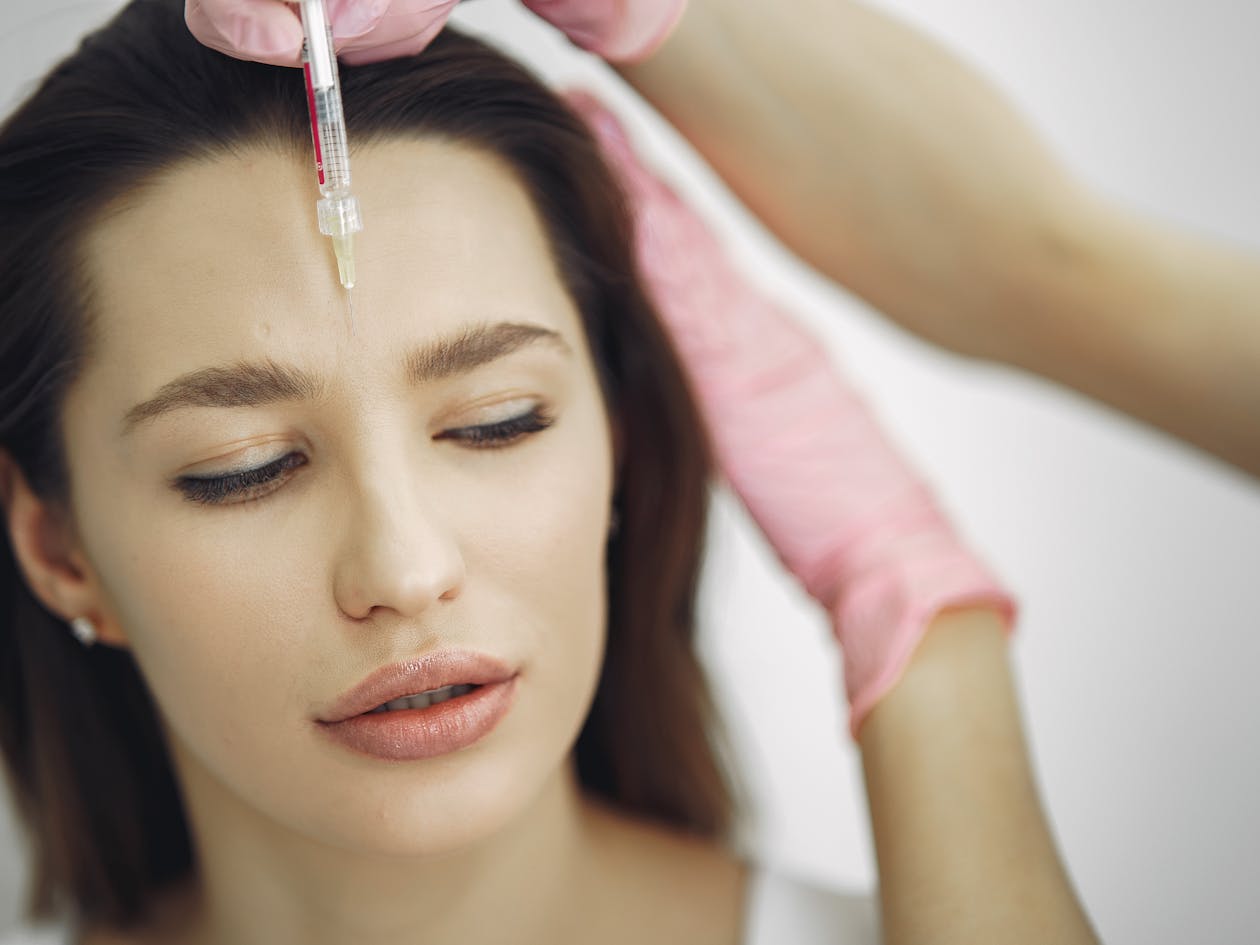
A doctor drew a black line down the center of her face. One side would get treatment. One side would stay natural. Two weeks later, she turned on her camera to show the results.
Her face told two completely different stories. One half moved freely, muscles contracting and pulling as nature intended. The other half stayed frozen, barely twitching despite her best efforts to activate the muscles beneath the skin.
No Photoshop tricks. No clever lighting changes. No before-and-after photos taken months apart. Just one face, one day, two dramatically different halves captured on video for everyone to see.
Dr. Bita Farrell volunteered herself as a living experiment. What happened revealed exactly what millions of people inject into their faces every year, but rarely get to witness so clearly.
California Doctor Turned Herself Into Living Before-and-After Photo
Dr. Farrell announced her intentions plainly: “For the sake of science and education and all of you, and myself, I made myself my own lab rat.”
Board-certified physician with over 20 years of injection experience, she trained and practiced as Clinical Professor at UCLA. Her credentials meant she understood facial anatomy better than most. She knew exactly which muscles to target and what results to expect.
She drew a line down the middle of her face, dividing it into two halves. The right side would receive Botox injections. The left side would remain untreated. Two weeks later, she’d present results to her 101,000 Instagram followers and thousands more on social media.
The experiment required patience. Botulinum toxin doesn’t work immediately. Injections take days to start affecting muscles, with full results appearing around two weeks post-treatment. Dr. Farrell waited the full period before filming her demonstration.
Which Muscles Got Frozen by Botox
Dr. Farrell targeted specific muscles in the lower face. The DAO muscle, short for depressor anguli oris, pulls down the corners of the mouth. When active, it creates a downturned expression sometimes called “resting sad face.”
She also injected the platysma muscle running along the jawline and neck. Platysma controls facial expressions and mouth movements. When contracted, it pulls the jawline downward and creates visible banding in the neck.
Both muscles sit in the lower face, below the cheekbones. Neither directly causes wrinkles around the eyes or forehead. Yet relaxing them creates visible changes throughout the face through muscle balance shifts.
Injections went into her right side only. The left side remained completely untreated, preserving natural muscle function for comparison purposes.
Left Side Moved Freely While Right Side Stayed Frozen

The video demonstration showed a stark contrast. Dr. Farrell attempted to contract her lower face muscles, pulling down with the same muscles on both sides simultaneously.
The left side responded immediately. The platysma muscle visibly contracted, pulling her jawline downward. DAO muscle tugged the corner of her mouth down. Skin moved, creating natural expression lines. Everything functioned as designed.
The right side barely twitched. Despite her efforts, the Botox-treated muscles refused to activate. She strained visibly, trying to engage muscles that no longer responded to nerve signals. Frozen muscles couldn’t pull downward, no matter how hard she tried.
Side-by-side comparison made the paralysis obvious. Same face, same moment, same effort applied to both sides. Results couldn’t have been more different.
How Botox Actually Paralyzes Face Muscles
Botulinum toxin works by blocking nerve signals. Nerves normally tell muscles when to contract. Chemical messengers called neurotransmitters carry these signals across tiny gaps between nerve endings and muscle fibers.
Botox interrupts this communication. Toxin prevents neurotransmitter release, so signals never reach muscles. Without instructions to contract, muscles stay relaxed regardless of what the brain commands.
Paralysis remains temporary. The body gradually breaks down the toxin over months. New neurotransmitter receptors grow at nerve endings. Eventually, signals resume and muscles regain normal function. Typical duration lasts three to four months before another injection becomes necessary.
Neurotoxic protein used medicinally for various conditions beyond cosmetics. Doctors prescribe it for muscle spasms, chronic migraines, and excessive sweating. Medical applications rely on the same paralysis mechanism that smooths wrinkles.
Why Freezing Lower Muscles Lifts Upper Face
Neurotoxins such Botox relax the muscle that pulls the jaw down. This results in a neck lift (Nefertiti neck lift) and…
Posted by Natural Aesthetics Center by Dr. Bita Z. Farrell on Thursday, January 12, 2023
Dr. Farrell explained the counterintuitive result in her caption: “Muscles of the face either pull up or pull down. When the muscles that pull the lower face down (platysma and DAO) are injected and relaxed with a neuromodulator such as Botox, the muscle that pulls the mid face up (zygomaticus or cheek muscle) dominates and pulls the face up!”
Face muscles work in opposition. Some pull tissue upward toward the temples. Others pull downward toward the jaw and neck. The balance between these opposing forces determines facial appearance.
Relaxing downward-pulling muscles doesn’t leave the face neutral. Instead, upward-pulling muscles win the tug-of-war. The zygomaticus muscles in the cheeks keep pulling upward without opposition from the paralyzed muscles below.
The result creates a lifting effect without injecting anything into the upper face. Cheeks ride higher. Jaw looks sharper. The neck appears more taut. All from relaxing muscles that were pulling everything downward.
Visual Differences Between Two Sides
Dr. Farrell pointed out specific changes visible in her demonstration. Cheek on the Botox side sat noticeably higher than the untreated side. Elevated cheek position created more youthful contours.
The nasal labial fold, the line running from the nose to the corner of the mouth, appeared softer on the treated side. A deeper, more pronounced fold marked the untreated side, where muscles continued pulling downward.
The shadow at the marionette line, where the mouth corners meet the chin, looked less prominent on the Botox side. A darker, more visible shadow appeared on the natural side where the DAO muscle pulled the corner of the mouth downward.
Jawline definition improved on the treated side. Without the platysma muscle pulling downward, the jaw appeared sharper and more defined. The untreated side showed a softer, less defined jawline.
The neck showed subtle lifting effects. Platysma relaxation reduced the downward pull on neck skin, creating a smoother appearance and reducing visible banding.
What Botox Can Fix According to Demonstration

Dr. Farrell’s split-face experiment illustrated several age-related concerns that Botox addresses. Marionette lines running from mouth corners to the chin softened when the DAO muscles were paralyzed. Without a constant downward pull, lines became less pronounced.
Jowls along the jawline diminished. Sagging tissue occurs partly from downward muscle pull over time. Relaxing those muscles reduces the dragging force creating jowls.
Frown lines and sad facial expressions improved. Resting face appearance shifted from downturned to neutral or slightly uplifted when the mouth corners stopped being pulled downward constantly.
Nasolabial folds, deep creases from nose to mouth, appeared less prominent. While Botox didn’t directly target this area, reduced downward tension throughout the lower face softened these lines.
Neck lifting occurred without directly injecting the neck area. Platysma muscle relaxation in the jaw released tension that was pulling the neck skin downward.
Jawline sharpening happened through muscle balance changes. Without the platysma contracting along the jaw, the defined edge became more visible and angular.
Cheeks looked fuller and more lifted. Elevation came from removing opposition to the upward-pulling cheek muscles rather than adding volume.
Treatment Requires Regular Maintenance Appointments
The results shown in Dr. Farrell’s video represent temporary effects. She noted that outcomes typically last three to four months before the body metabolizes the toxin and muscles regain function.
Maintaining appearance requires repeated injections every few months. Skipping appointments means returning to natural muscle function and the appearance that goes with it. No permanent changes occur from Botox alone.
Any FDA-approved neuromodulator produces similar results. Botox represents the most recognized brand, but other options work through identical mechanisms. Choice between products often comes down to cost, availability, and injector preference.
Dr. Farrell joked about her asymmetric face at the end of the video, noting she needed to “inject the other side to even things out.” Walking around with half a frozen face served educational purposes but wasn’t practical long-term.
Side Effects Range From Minor to Concerning

Botox carries risks despite widespread use. Bruising and pain at injection sites occur commonly. Most people experience some discomfort during and after treatment.
Flu-like symptoms affect some recipients. Headaches rank among the most frequently reported complaints. Nausea and dizziness trouble certain patients, though usually temporarily.
Redness in treatment areas appears routinely and typically fades within hours or days. More concerning side effects include facial weakness or drooping when too much toxin is used or when injections miss their intended targets.
Blurred or double vision happens in rare cases, particularly when injections occur near the eyes. Breathing difficulties represent the most severe potential complication, though extremely uncommon with properly administered treatments.
Research published last year found nearly four in five patients experience some effects following anti-wrinkle injections. The study identified headaches, pain, dizziness, and brain fog as common complaints. Most effects resolve without intervention, but prevalence surprised researchers.
Regulation Concerns About Training Requirements

Campaigners call for stricter oversight in the aesthetics industry. Some providers complete only week-long training courses before injecting paying patients. Limited instruction raises safety concerns, as it may indicate that practitioners lack a thorough understanding of facial anatomy and proper technique.
No standardized certification requirements exist across the industry. Training quality varies dramatically between providers. Board-certified physicians, like Dr. Farrell, bring years of medical education and supervised practice experience. Others may have far less preparation.
Botox costs as little as £100 privately, making it accessible but potentially attracting less qualified providers. Procedures take only 10 minutes to perform, encouraging quick turnover and high patient volume.
NHS doesn’t offer Botox for cosmetic purposes. Treatment remains available for medical conditions, including chronic migraines, muscle spasms, and excessive sweating, where therapeutic benefits justify use.
Why Split-Face Demonstration Matters
Dr. Farrell’s experiment provided something that before-and-after photos cannot: identical conditions for comparison. Same face, same lighting, same day, same photographer. The only variable was Botox presence on one side.
Traditional before-and-after photos introduce multiple variables. Lighting changes. Weight fluctuations. Time gaps allow other factors to affect appearance. Makeup differences. Photo editing. All complicated interpretation.
Split-face approach removes these confounding factors. Viewers see exactly what Botox does without wondering what else might have changed. Transparency builds trust in the medical aesthetics field often criticized for deceptive marketing.
Educational value extends beyond showing results. Dr. Farrell explained which muscles were targeted, why those muscles matter, and how relaxing them creates lifting effects. Viewers learned facial anatomy and Botox mechanisms simultaneously.
Demonstration helps people make informed decisions. Some viewers found the results compelling. Others decided natural movement matters more than lifted appearance. Both conclusions represent valid personal choices based on actual evidence rather than marketing claims.
Dr. Farrell’s willingness to document her own treatment and share it publicly demonstrates confidence in the procedure and commitment to patient education. Her medical credentials lend credibility that influencer endorsements lack.
