
In the wellness world, we often look to meditation, mindfulness, or breathwork as tools to clear the mind and restore emotional balance. But what if some of the oldest religious traditions have been practicing something similar for centuries, just under different names? What if a structured spiritual path, such as Catholicism, carries with it practices that strengthen clarity, not just of the heart, but of the mind?

This idea has sparked growing curiosity. Not because it places one belief system above others, but because it raises a deeper question. Can spiritual rituals, daily prayers, symbolic reflection, and moral discipline condition the brain in ways that improve focus, perception, and emotional regulation? Exploring this possibility is not just about faith. It is about understanding how the connection between body, mind, and spirit may be shaped by consistent spiritual habits that quietly train attention and awareness over time.
What Symbols Say About the Self
Throughout history, religious texts have used rich imagery to communicate deep truths about the human experience. In the Book of Daniel, a powerful vision of four beasts rising from turbulent waters has long intrigued scholars and believers alike. While traditionally interpreted as references to ancient empires and political prophecy, others see these creatures as symbolic of the different emotional and behavioral forces that shape our lives. They mirror patterns such as fear, excess, ego, compassion, and moral strength.

Interpreting these symbols through a metaphorical lens is not a modern invention. Many spiritual paths encourage reading sacred texts as guides to inner transformation. Rather than predicting the future, these stories help us understand the present. They invite reflection on the parts of ourselves that may be out of alignment and offer wisdom on how to return to a centered, meaningful life.
Academic sources, including the overview titled Metaphors in the Prophetic Literature published by Brill, support the idea that biblical symbols often reflect human consciousness rather than external events. When viewed this way, the question of whether Catholics exhibit a certain clarity of thought becomes less about comparison and more about cause. The focus shifts toward the daily rituals and reflective practices that support emotional clarity and spiritual consistency. It is in these habits that lasting insight often takes root.
How Personal Growth Mirrors the Beasts of Daniel
These archetypes do more than reflect outer civilizations. They echo parts of ourselves that surface in different life stages. Seeing them this way opens up a more intimate interpretation of growth and personal evolution. Ancient texts often use vivid imagery to reveal deeper truths about human nature. In the Book of Daniel, the four beasts that rise from the sea have long been interpreted as metaphors for empires or spiritual forces. But when viewed through a wellness lens, they can also represent the emotional states we cycle through on our path to growth.
The first beast, like a lion with eagle’s wings that are later plucked, can symbolize the transition from raw instinct to reflective awareness. It parallels the early stages of life where power may be present but remains untempered by wisdom. The second beast, described as a bear with tusks and a command to “devour much flesh,” reflects unexamined desire or the part of us that acts from survival mode without ethical reflection.

The leopard with four wings and heads may speak to the multitasking mind, fragmented by modern demands yet seeking dominion through competence. And the final, most terrifying beast, described with iron teeth and a boastful horn, can be seen as the part of the psyche that becomes inflated by ego and driven by domination. These symbols are not distant relics. They are psychological patterns that show up in everyday choices, reactions, and motivations.
By interpreting these visions as stages or states of the self, we are invited not just to decode ancient prophecy but to reflect on how inner transformation requires facing and integrating each of these parts. Wellness is not about avoiding discomfort. It is about understanding what drives us, where we get stuck, and how spiritual insight helps us move toward clarity and compassion.
When Inner Values Begin to Align the Mind Follows
Understanding our inner patterns is only the first step. What gives them shape is the alignment between our values, intentions, and daily behavior, where spiritual clarity starts to emerge from within. In holistic wellness, alignment is often associated with the body. But when beliefs, intentions, and actions begin to work in harmony, something equally powerful happens within the mind. This is what many refer to as spiritual clarity. It does not mean having all the answers. It means moving through life with a consistent internal compass. When people regularly engage in meaningful practices that tie their spiritual values to their daily behavior, a sense of coherence begins to emerge. This internal alignment helps filter distractions and reinforces a stable sense of direction even in the face of stress or uncertainty.
Scientific research supports this lived experience. A review published in the journal Psychology of Religion and Spirituality found that individuals who engage in devotional or contemplative practices often report a stronger ability to make meaning and navigate emotional challenges more effectively. Their clarity is not the result of intellectual knowledge alone but of consistent habits that train attention and support reflection. These habits may include quiet prayer, thoughtful journaling, or simply making time to pause and reconnect with intention.
Spiritual clarity is less about what a person knows and more about what they return to. When the inner world becomes more organized and values are lived rather than just believed, decisions feel less overwhelming. Thoughts become easier to manage. Life’s challenges are still present, but they are no longer disorienting. Instead, they are approached from a place of centered awareness. This kind of clarity, grounded in alignment, becomes a steady resource that supports mental and emotional wellbeing over time.
How Prayer Shapes Mental Stillness from the Inside Out
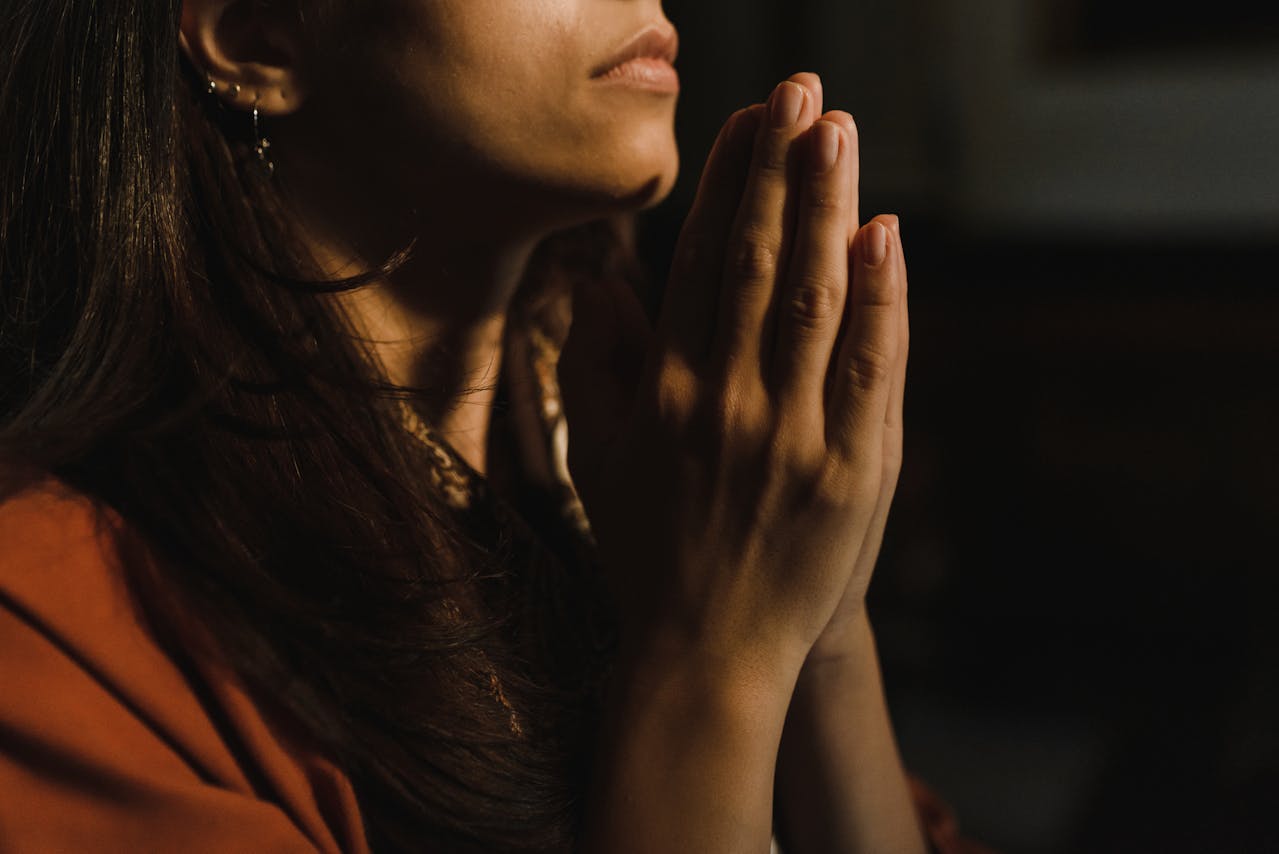
As internal coherence begins to form, the mind still needs ongoing care. This is where regular practices like prayer offer not just reflection, but neurological support for staying mentally grounded. Prayer is often seen as a moment of spiritual expression, but it may also be one of the most accessible tools for mental recalibration. In a world saturated with information and overstimulation, structured prayer offers something increasingly rare. It offers rhythm. It offers pause. And more importantly, it creates a container for emotional clarity. When prayer becomes a regular practice, it helps train the mind to revisit core values and reflect on experiences through a lens of meaning and moral grounding. This is not about bypassing difficult emotions. It is about giving them structure and context so they do not overwhelm or define the person experiencing them.

What makes prayer even more compelling from a wellness perspective is its influence on the nervous system. The physical elements of prayer such as slow breathing, gentle repetition, and intentional posture activate the parasympathetic branch of the nervous system. This is the same system responsible for helping the body shift out of a stress state. According to research published in the Journal for the Scientific Study of Religion, individuals who pray frequently show increased activity in brain regions tied to emotional regulation and focused attention. These findings support what many have long felt intuitively. Prayer is not just spiritually grounding. It is physiologically calming.
There is also a powerful relational aspect that gives prayer emotional weight. For those who see prayer as a conversation with a divine presence, the act mirrors the dynamics of trust and attachment seen in close human relationships. The brain responds accordingly, engaging circuits that regulate empathy and emotional security. This helps explain why prayer can provide relief during uncertainty or emotional isolation. It becomes a space where the mind can reorganize itself not through control but through surrender. And in that surrender, clarity is not forced. It naturally unfolds.
Why Repetition Trains the Mind to Heal
In the realm of wellness, repetition is often misunderstood as mere habit. But in both spiritual practice and psychological healing, it plays a much deeper role. When an individual repeats a prayer, returns to the same sacred reading, or follows a ritual sequence day after day, the brain begins to respond not only with familiarity but with increased stability. This kind of patterned engagement trains the nervous system to expect safety, reflection, and coherence in a world that often feels unpredictable.
The health benefits of repetition are well documented. Structured routines help regulate cortisol levels, support circadian rhythm balance, and reduce mental fatigue. In spiritual traditions like Catholicism, the rhythm of daily rituals such as morning prayer, evening reflection, or weekly liturgical cycles provides more than religious observance. It becomes a cognitive anchor. Over time, these moments help quiet mental noise and orient the mind toward meaning. They also reinforce neural pathways that support emotional self-regulation and mental flexibility.

In therapeutic settings, this is mirrored through grounding techniques and affirmations that rely on repetition to bring awareness back to the present. Spiritually, these same principles have long been used to bring the soul back to stillness. It is not the novelty of the practice that brings transformation. It is the consistency. And through that repetition, the mind begins to remember what stillness feels like. Not as a fleeting state, but as a place to return to.
Clarity Is Not Just Found It Is Cultivated
True clarity rarely arrives all at once. It is shaped through the quiet rituals we repeat, the values we reaffirm, and the symbolic truths we choose to reflect upon. Whether through prayer, contemplation, or consistent spiritual discipline, the process is not about escaping life’s complexity but learning to face it with greater steadiness. Ancient traditions like Catholicism offer structures that are not rigid but rhythmic. They invite individuals to become more intentional in how they think, feel, and act.

When inner clarity grows, it is not because the world has become simpler. It is because the individual has become more aligned. Through symbolic insight and regular spiritual engagement, the mind begins to organize itself around deeper principles. This is the type of clarity that does not just inform decisions. It transforms perception. And in a time where distractions are endless and attention is fragile, that kind of transformation may be one of the most grounded paths to peace.
