
Noticing tiny red spots on your skin can be unsettling. They may seem to appear overnight, catch your attention while showering, or stand out unexpectedly on your arms or legs. For many people, the immediate concern is whether these spots are harmless or a sign that something more serious could be going on.

Dermatologists explain that small red spots are extremely common and, in many cases, completely benign. At the same time, some red spots can reflect irritation, sun related changes, or underlying health issues that should not be ignored. Knowing how these spots typically behave and what patterns matter can help you decide when reassurance is enough and when medical input is important.
What follows is a detailed, evidence based explanation of the most common causes of tiny red spots on the skin, how dermatologists evaluate them, and what situations warrant further medical attention.
Why Tiny Red Spots Appear in the First Place
The skin responds quickly to changes both inside and outside the body. Tiny red spots often form when small blood vessels close to the surface of the skin become more visible, damaged, or inflamed. According to board certified dermatologist Dr. Christopher J. Haas of LCMC Health in Louisiana, these spots may develop gradually over many years or appear suddenly over a short period of time depending on the underlying cause.
Dermatologists focus on several core details when evaluating red spots. These include how quickly the spots appeared, where they are located on the body, whether they change in size or color, and whether other symptoms are present. Taken together, these details help determine whether the spots are harmless skin changes or signals that further evaluation is needed.
Cherry Angiomas and Why They Are So Common
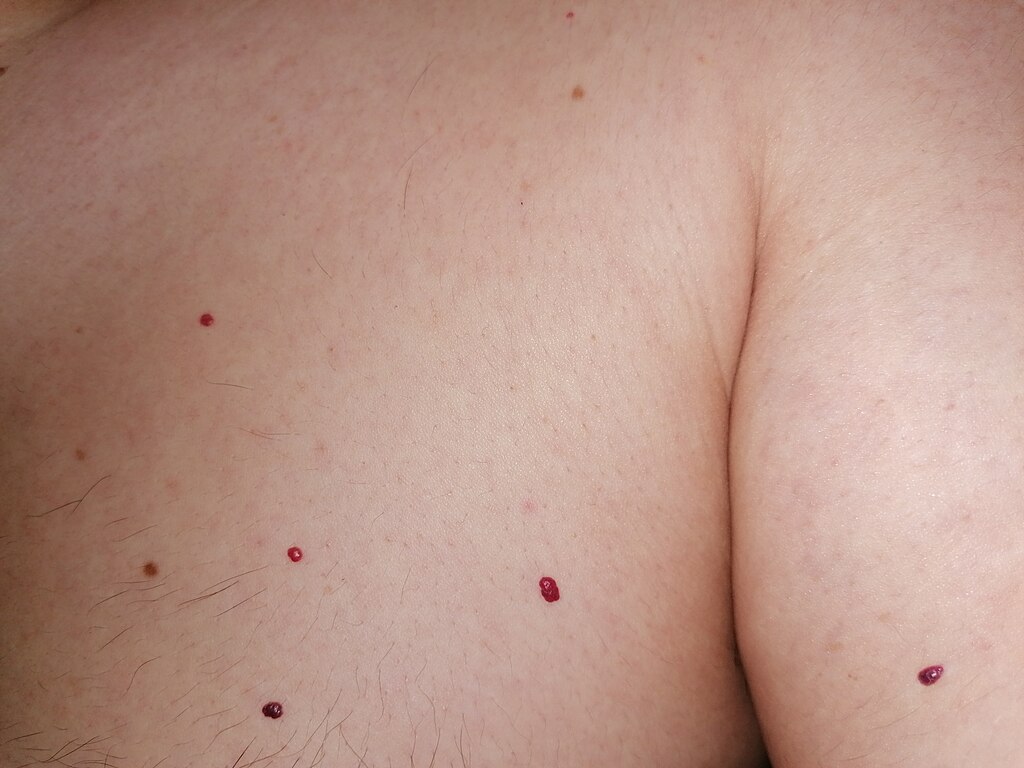
One of the most frequent explanations for tiny red dots on adult skin is cherry angiomas. These are benign growths made up of small clusters of blood vessels and are considered a normal skin finding for many people as they age.
Cherry angiomas usually appear as small, bright red or purplish dots that develop slowly over time. They are most commonly found on the torso, arms, and legs, although they can appear anywhere on the body. Their likelihood increases after the age of thirty. The Cleveland Clinic reports that roughly half of adults have cherry angiomas by midlife.

Dr. Haas emphasizes that cherry angiomas are almost always noncancerous and do not pose a health risk. For most people, they are a cosmetic concern rather than a medical one. However, dermatologists still recommend monitoring them. If a cherry angioma changes color, grows rapidly, becomes painful, or begins to bleed without injury, it should be evaluated to rule out other conditions.
Sun Exposure and Visible Blood Vessels
Long term sun exposure is another common cause of small red marks on the skin. These marks are often due to telangiectasias, which occur when ultraviolet radiation weakens tiny blood vessels near the surface of the skin.
Over many years, repeated sun exposure can make these vessels more visible, leading to fine red lines or small spider like patterns. These changes tend to appear on areas that receive frequent sun exposure, including the face, chest, shoulders, and upper back. Research published in the Journal of the American Academy of Dermatology has shown that cumulative sun exposure over decades contributes significantly to the development of these vascular changes, particularly in adults over forty.

While telangiectasias are generally harmless, dermatologists view them as a sign of chronic sun damage. Their presence reinforces the importance of consistent sun protection throughout life, not just during occasional outdoor activities.
Petechiae and Why Timing Matters
Not all red spots are harmless. Petechiae are tiny red or purple dots that form when small blood vessels break and bleed under the skin. Unlike cherry angiomas, petechiae usually appear suddenly rather than developing gradually.
Petechiae are flat, do not fade when pressed, and often appear in clusters. They are commonly associated with low platelet counts, which affect the blood’s ability to clot properly. Platelet levels can drop for a variety of reasons, including viral infections, medication side effects, autoimmune conditions, and disorders that affect bone marrow function.

Dr. Haas explains that petechiae can also occur in otherwise healthy individuals after intense physical strain such as heavy coughing, vomiting, sneezing, or strenuous exercise. In these situations, the spots are caused by sudden pressure changes in small blood vessels and typically fade within a few days. However, when petechiae appear without an obvious trigger or are accompanied by symptoms such as fatigue, fever, headaches, or unexplained bruising, prompt medical evaluation is essential.
A 2021 review published in Dermatology Practical and Conceptual highlights that sudden onset petechiae combined with systemic symptoms should be assessed quickly to rule out serious conditions affecting platelet production or blood clotting.
Skin Irritation, Allergic Reactions, and Heat Related Rashes
Not all tiny red spots involve blood vessels. Many are caused by irritation, allergic reactions, or blocked sweat ducts. The skin is highly sensitive and reacts easily to new products and environmental changes.
Common triggers include new skincare products, laundry detergents, fragrances, harsh soaps, tight clothing, insect bites, and hot or humid conditions. Allergic reactions and irritation often cause red spots that itch, feel tender, or appear slightly raised. Heat rash, also known as miliaria, occurs when sweat becomes trapped under the skin and typically shows up in warm, humid environments.
These types of red spots usually improve once the trigger is removed and the skin is allowed to cool and recover. Dermatologists generally consider these causes less concerning unless symptoms persist, worsen, or are accompanied by signs of infection.
How Dermatologists Evaluate Tiny Red Spots
Dermatologists rely on pattern recognition and clinical context rather than appearance alone. During an examination, they assess whether a spot fades when pressed, whether it is flat or raised, how widely it is distributed, how quickly it appeared, and whether symptoms such as pain, itching, fever, or fatigue are present.
A detailed medical history is also important. Recent illnesses, medication use, known allergies, and sun exposure habits can all provide clues about what is causing the spots. When the cause is not clear, blood tests may be ordered to assess platelet levels or look for signs of infection. In rare cases, a small skin biopsy is performed to confirm a diagnosis.

When You Should See a Doctor
Dermatologists agree that certain patterns should prompt medical evaluation. Red or purple dots that appear suddenly in clusters, do not fade when pressed, or are accompanied by symptoms such as fever, fatigue, unexplained bruising, or bleeding should be checked promptly. Rapid changes in size, color, or number also warrant attention, as do new spots on areas of skin that receive frequent sun exposure.
Early evaluation helps distinguish harmless skin changes from conditions that require treatment and can provide reassurance when nothing serious is found.
Treatment Depends on the Cause
Treatment varies depending on the underlying reason for the red spots, and dermatologists emphasize that not every spot needs to be actively treated. In many cases, understanding the cause and monitoring for changes is enough.
- Cherry angiomas: These growths are benign and do not require medical treatment. Dermatologists often reassure patients that leaving them alone is perfectly safe. Some people choose to have cherry angiomas removed for cosmetic reasons or if they bleed easily due to friction from clothing. Removal methods such as laser therapy or cautery are typically quick procedures performed in a clinical setting.
- Telangiectasias: Because these visible blood vessels are linked to cumulative sun exposure, treatment is usually elective and focused on appearance rather than health risk. Laser therapy is commonly used to reduce their visibility. Dermatologists also stress the importance of daily sun protection, including broad spectrum sunscreen and protective clothing, to help prevent new vessels from forming or existing ones from becoming more noticeable.
- Petechiae: Petechiae are approached differently because they can signal an underlying issue. Treatment focuses on identifying and addressing the root cause, which may involve blood tests, medication review, or treatment of an infection or medical condition. The spots themselves usually fade once the underlying problem is resolved, and direct skin treatment is rarely needed.
- Irritation or heat rash: These causes are typically managed with simple measures. Removing the trigger, keeping the skin cool and dry, and using gentle, fragrance free skincare products often leads to improvement within days. In some cases, dermatologists may recommend soothing creams or short term topical treatments to reduce discomfort.
The goal is not to treat every red dot on the skin, but to understand why it is present and whether it reflects a harmless change or something that needs medical attention.
What Your Skin Can Reveal About Your Health
Most tiny red spots are harmless and reflect normal changes in the skin over time. However, the skin can also provide early clues about internal health. Paying attention to new, sudden, or unusual changes allows potential problems to be addressed early without unnecessary fear.

As Dr. Haas points out, the skin is not just a protective barrier. It often reflects what is happening inside the body. Knowing which signs matter and which do not helps people respond calmly and appropriately. When something looks new or concerning, having it checked is a reasonable and often reassuring step.
Featured Image from JOAN, CC BY 4.0, via Wikimedia Commons

