
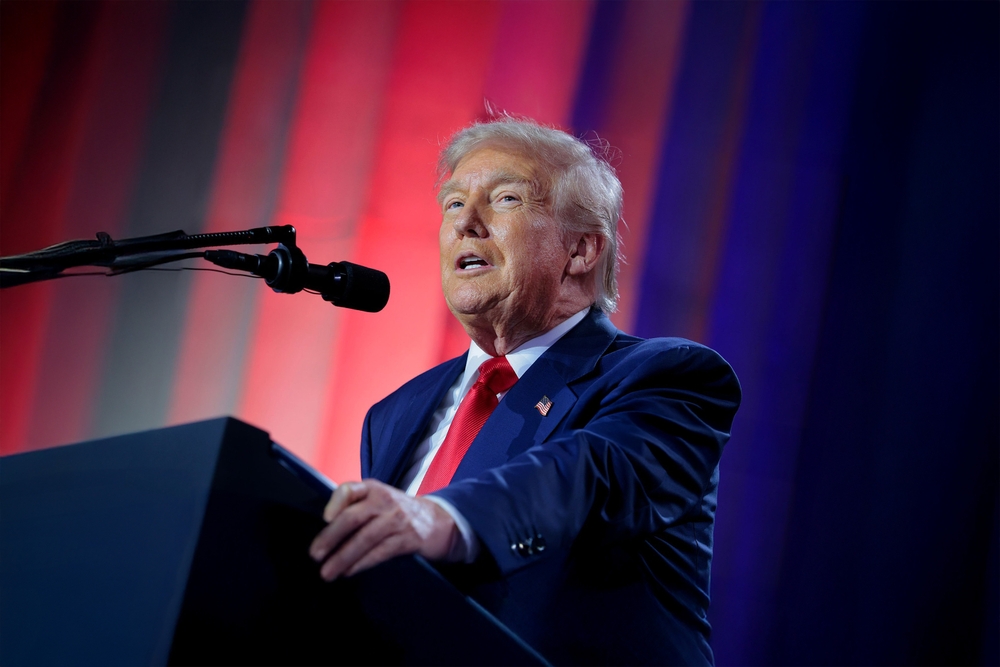
For decades, Coca-Cola has been more than a drink it’s been a cultural artifact, a symbol of Americana fizzing through decades of change. From its glass-bottled heyday in the 1950s to the aluminum-can convenience of the modern era, every generation has had its own Coke story. But this fall, a curious twist in that story began bubbling up. Coca-Cola announced it would roll out a version of its signature soda made with real U.S. cane sugar, a move that immediately set tongues wagging across political and pop culture lines. The timing was uncanny: the announcement came mere days after former President Donald Trump claimed he had personally convinced the beverage giant to replace high-fructose corn syrup with “real sugar.”
It was the kind of headline that seemed too strange to ignore part political theater, part nostalgia trip, and part corporate strategy. For some, the new cane-sugar Coke was a long-overdue return to form, a throwback to a time when soda came in curvy glass bottles and tasted like childhood summers. For others, it was yet another reminder of how deeply intertwined politics, marketing, and public health have become. As Coca-Cola executives delicately explained their decision to investors, health experts weighed in, politicians celebrated, and the internet did what it does best turned a beverage rollout into a national conversation about taste, truth, and the American identity itself.
Trump’s Sweet Claim
The saga began, fittingly, with a social media post. In mid-July, Trump took to his platform, Truth Social, to declare a sugary victory. “I have been speaking to Coca-Cola about using REAL Cane Sugar in Coke in the United States, and they have agreed to do so,” he wrote. “This will be a very good move by them You’ll see. It’s just better!” For many, it sounded like another Trumpian boast, an unlikely claim about persuading one of the world’s largest corporations to rewrite its formula. But within weeks, Coca-Cola did, in fact, confirm plans for a new version of its drink made with U.S. cane sugar – though executives were careful to say this was an addition, not a replacement.
James Quincey, Coca-Cola’s CEO, explained to investors that the move was about “expanding our trademark range” to reflect consumer interest in “differentiated experiences.” In plain English, that meant the company wanted to offer something nostalgic, premium, and a little bit patriotic.
The timing, of course, lined up perfectly with Trump’s public campaign to “Make America Healthy Again” (MAHA), an initiative led by Health and Human Services Secretary Robert F. Kennedy Jr. who had called high-fructose corn syrup “poison.” Whether coincidence or coordination, the optics were hard to ignore. Trump framed the launch as proof of his influence; Coca-Cola framed it as market innovation. In reality, it was probably a bit of both.
Coca-Cola has long known the appeal of cane sugar. Mexican Coke, made with the ingredient and imported into the U.S. since the mid-2000s, has enjoyed cult status among American soda purists. Fans swear it tastes cleaner, crisper, more authentic. It also happens to be sold at nearly double the price of regular Coke. Trump’s push, in essence, was about bringing that coveted flavor home and perhaps claiming a little political credit for it along the way.
The Taste of Nostalgia

The decision to bring back cane sugar in American Coke taps into something far deeper than just flavor preference. Sugar has long been part of Coke’s mythos. When the company switched from cane and beet sugar to high-fructose corn syrup in the early 1980s, it wasn’t just an economic move it was a cultural shift. The change came amid global sugar price spikes and import restrictions, making corn syrup the cheaper, more stable option. But ever since, a certain nostalgia has lingered, one that equates cane sugar with authenticity, quality, and a simpler past.
Blind taste tests have often shown that consumers can tell the difference between Mexican Coke and the corn syrup version, but the science of sweetness is murky. Chemically, the two are remarkably similar: both are mixtures of glucose and fructose. The main difference lies in perception. Cane sugar dissolves differently, interacts with acids in the soda in subtle ways, and crucially carries emotional weight. It tastes like memory. And memory, as any marketer knows, is the most powerful flavor of all.
That nostalgia is precisely what Coca-Cola is selling. The new U.S. cane sugar version comes packaged in 12-ounce glass bottles, echoing the design of mid-century Coke. It’s not meant to replace the corn syrup variant but to coexist with it, much like how vinyl records thrive alongside streaming services. In this sense, Coca-Cola isn’t just selling a beverage; it’s bottling a feeling. Trump’s endorsement may have amplified the buzz, but the brand’s real bet is on the American appetite for the past a longing for the taste of “what once was.”
The Supply Chain Snag

Turning a social media post into a physical product, however, isn’t quite as easy as flipping a switch. Coca-Cola’s Chief Financial Officer, John Murphy, told Bloomberg that the rollout would be gradual due to a surprisingly simple problem: there just isn’t enough cane sugar grown in the U.S. to meet large-scale demand. “It’s going to be a measured rollout,” he said. “There is only a certain amount of cane sugar available in the United States.” The company plans to expand gradually through 2026 as supplies and bottling capabilities increase.
The bottleneck doesn’t end with sugar. The decision to use glass bottles, a deliberate nod to nostalgia, also complicates production. Glass bottling is slower, more fragile, and more expensive than aluminum or plastic. It requires specialized equipment and careful transport, particularly at a time when global supply chains are still recovering from years of disruptions. But for Coca-Cola, the symbolism is worth the cost. Glass bottles signal craftsmanship and heritage exactly the image the company wants for this launch.
Beyond logistics, there’s a deeper irony: while Trump’s campaign pitched the move as an all-American triumph, much of the world’s cane sugar still comes from Latin America, Asia, and the Caribbean. The U.S. produces only a fraction of the global supply, and even that is mostly in Florida, Louisiana, and Texas. In other words, the patriotic promise of “American cane sugar” is somewhat complicated by global trade realities. Still, the symbolic power of the phrase is undeniable. It fits neatly into the narrative of reclaiming something once lost to globalization, even if the economics tell a messier story.
The Health Question

No matter how charming the packaging or nostalgic the flavor, health experts have been quick to remind the public that cane sugar isn’t a miracle ingredient. “Excess consumption of sugar from any source harms health,” said Eva Greenthal, a senior policy scientist at the Center for Science in the Public Interest. Nutritionist Caroline Susie echoed the sentiment, explaining that “our bodies aren’t going to know if that’s cane sugar or high-fructose corn syrup. We just know that it is sugar and we need to break that down.”
Scientifically speaking, both sweeteners deliver roughly the same number of calories and are metabolized in nearly identical ways. High-fructose corn syrup contains about 55% fructose and 45% glucose, while cane sugar (sucrose) is a near 50-50 split.

The American Medical Association has even stated that there’s no strong evidence linking corn syrup to obesity more than any other full-calorie sweetener. So why do people believe cane sugar is better? The answer lies in psychology, not biology.
In the era of clean eating and ingredient transparency, the word “real” carries weight. Consumers have grown skeptical of anything that sounds engineered or artificial. High-fructose corn syrup, with its lab-like name, has become shorthand for processed excess. Cane sugar, by contrast, feels natural, earthy, and pure. Coca-Cola, ever attuned to the emotional undercurrents of consumer behavior, has cleverly positioned the new drink as a lifestyle choice rather than a health one. It’s not about losing calories – it’s about gaining authenticity.
Marketing Alchemy and Political Theater

The rollout of cane-sugar Coke isn’t just a corporate maneuver; it’s a masterclass in marketing alchemy. Coca-Cola has managed to stir nostalgia, patriotism, and a dash of political intrigue into a single, photogenic bottle. Trump’s endorsement helped the story go viral, but the company’s real triumph was in how deftly it balanced the politics of the moment. By neither confirming nor denying Trump’s personal role, Coca-Cola kept both sides of the cultural divide engaged. The result was a frenzy of free publicity and a new chapter in America’s ongoing fascination with its favorite soda.
At the same time, the move underscores the company’s broader strategy. While sugary drinks remain a cornerstone of Coca-Cola’s identity, the brand has spent years diversifying into low- and no-calorie alternatives. Coke Zero Sugar, for example, saw double-digit growth last year, reflecting a global trend toward moderation. The new cane-sugar Coke doesn’t contradict that direction; it complements it. By offering multiple versions of the same beloved product, Coca-Cola caters to every kind of consumer from the health-conscious to the nostalgic to the politically motivated.
And let’s not forget the sheer theatricality of it all. When a former president’s personal preference can shape the narrative of a global brand, it reveals just how porous the boundary between politics and pop culture has become. In another era, the idea of a president influencing a soda recipe might have seemed absurd. In 2025, it feels almost inevitable.
A Sweet Reflection
In the end, Coca-Cola’s cane-sugar experiment says as much about America as it does about the company. It shows how nostalgia can be repackaged as innovation, how politics can double as marketing, and how even the simplest consumer product can become a symbol of national identity. Whether you see Trump’s role as visionary or self-promotional, there’s no denying that his social media post helped spark one of the most talked-about product launches of the year.
Health experts may continue to warn that sugar is sugar, but for millions of Americans, this new Coke represents something less tangible: a taste of the past, bottled for the present. It’s a reminder that brands don’t just sell products; they sell stories. And sometimes, those stories are fizzy, nostalgic, and just controversial enough to make everyone take a sip.
So the next time you spot a glass bottle of cane-sugar Coke glinting in a store fridge, remember the odd convergence of forces that brought it there: a politician’s whim, a company’s calculation, and a nation’s enduring sweet tooth for nostalgia. In the strange alchemy of modern America, even sugar can spark a debate – and every bubble carries a story.
