
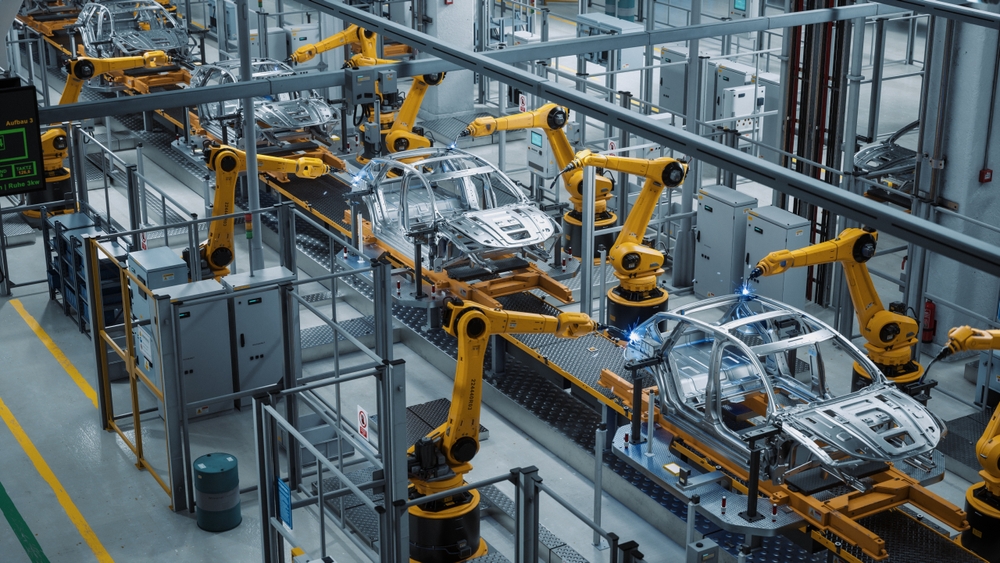
Factories without workers. Lights switched off because no one needs them. Machines silently working around the clock. This is no longer science fiction—China has officially entered the era of dark factories, industrial spaces that are fully automated and run without human presence. These facilities are powered by robotics, artificial intelligence, and sensors, creating a production environment that doesn’t require lighting, air conditioning, or even employee rest breaks. The transformation marks a new stage in industrial history where efficiency has been maximized in ways that would have seemed impossible just decades ago. These fully automated systems are not just a technological marvel—they represent an entirely new philosophy of production.
But behind this leap in innovation lies a deeper story about people, communities, and well-being. When human labor is no longer central to production, what happens to the millions whose livelihoods depend on factory jobs? What does it mean for mental health, for social connection, and for the broader structure of society? And can the promise of greater energy efficiency offset the risks of widespread unemployment? These questions remind us that dark factories aren’t only about robots in the shadows—they are also about how humans will adapt in the light of profound change. As China accelerates this trend, the rest of the world must pay close attention to how these factories reshape both economies and everyday lives.

What Makes a Factory ‘Dark’?
A dark factory is not simply a facility with fewer workers—it is a manufacturing environment designed from its foundation to function without humans. Robots handle every stage of production, from assembly to packaging. Sensors monitor each product, feeding data into artificial intelligence systems that make adjustments in real time. Without human beings present, the entire infrastructure changes. Lighting becomes unnecessary, ventilation systems are scaled back, and space can be used differently because machines don’t need comfort or rest. The efficiency gains are remarkable: factories can run 24/7 without interruptions, dramatically lowering costs while boosting output.
China has emerged as a global leader in this shift, with major corporations experimenting aggressively in this field. Foxconn, one of the world’s largest electronics manufacturers, has invested billions into robotics and automation technology. By eliminating many human-related costs—such as wages, benefits, and worker safety protocols—companies claim to increase profitability while reducing overhead. But the efficiency achieved inside the walls of these facilities does not erase the human consequences outside them. Entire workforces risk being displaced, and the communities that grew around traditional factories face an uncertain future.
The idea of dark factories may appear futuristic, but the concept has already become operational reality. As more businesses adopt these models, questions arise not just about productivity but about humanity itself: what is the role of people in an industrial system where machines hold all the power? The answer will shape the way societies adjust to automation over the coming decades.

The Human Impact: Job Loss and Stress
The rise of dark factories raises urgent concerns about employment. For decades, factory work has been the backbone of economic survival for millions of families worldwide. Now, entire categories of jobs are at risk of disappearing, replaced by machines that never sleep. Unlike past industrial revolutions, where machines still required human operators, this new era cuts workers out almost entirely. That level of displacement can destabilize lives in ways that ripple far beyond the factory floor.
Job loss is rarely just about income. It carries with it a deep sense of insecurity and identity crisis. Many workers define their self-worth and purpose through their labor, and when that disappears, mental health often suffers. Research consistently links unemployment to anxiety, depression, and physical stress-related illnesses. Families under financial strain may struggle to access healthcare, proper nutrition, or education, creating intergenerational challenges. Communities that depend heavily on manufacturing industries may also collapse, leaving behind empty towns and weakened social fabrics.
Even for those still employed, the looming threat of automation creates chronic stress. Workers may feel disposable or pressured to perform at higher levels to justify their employment. This stress erodes well-being and can lead to burnout or worsening health. While younger workers may find opportunities in new fields such as AI maintenance or robotics engineering, older workers often lack access to retraining programs, leaving them particularly vulnerable. Without comprehensive policies to address this transition, the human toll of dark factories could outweigh their technological promise.
Environmental Promise: Can Dark Factories Be Green?
Advocates for dark factories emphasize their potential environmental benefits. With no humans on the floor, factories no longer require lighting, heating, or cooling systems, which dramatically cuts energy use. Robots also function with a precision that minimizes waste, leading to fewer defective products and reduced material consumption. At first glance, this appears to be a win for sustainability, with the possibility of shrinking the carbon footprint of heavy industry.
However, the green potential of dark factories is not guaranteed. Much depends on how these facilities are powered. If electricity comes from coal or other fossil fuels, then the environmental advantage is undercut by the high emissions from power plants. On the other hand, integrating renewable energy sources such as wind, solar, or hydropower could make these automated factories a cornerstone of a cleaner economy. The environmental promise lies not just in automation itself but in how it is integrated into broader energy strategies.
Another consideration is the material footprint of automation. Robots, sensors, and AI systems require rare earth minerals and other resources, many of which have significant ecological costs when extracted. Disposal of obsolete machines also creates e-waste challenges. While efficiency gains are real, they must be weighed against the full lifecycle costs of producing and maintaining these systems. Dark factories may save energy on the surface but carry hidden environmental debts if not managed responsibly.

Health in the Age of Automation
The health implications of dark factories cut both ways. On one hand, automation can improve safety by removing people from hazardous environments. Workers no longer need to handle toxic chemicals, heavy machinery, or long, exhausting shifts. This reduction in exposure could lower rates of occupational injury and disease, offering clear benefits for public health.
Yet, the psychological health impact of job loss cannot be ignored. Mental distress, financial insecurity, and feelings of purposelessness often rise when employment opportunities vanish. Social isolation, substance abuse, and even higher suicide rates can follow mass unemployment. These outcomes suggest that automation’s health impact may not always be positive—especially if social safety nets and retraining opportunities are lacking.
Balancing these two realities requires proactive planning. Governments and companies alike must invest in retraining initiatives to help workers move into new sectors. At the same time, community-based mental health programs are critical to support those navigating career loss or transitions. If society manages this shift well, automation could reduce physical risks while creating healthier work-life balance. If mismanaged, the fallout could create a generation of workers facing unprecedented mental and social health challenges.
Coping with a Shifting Work Landscape
As automation expands, individuals and communities must adapt to protect their health and stability. Reskilling stands out as a practical strategy—learning new skills in technology-driven fields like robotics, AI management, or renewable energy offers a path toward future employment. Lifelong learning will become more essential than ever as industries evolve, requiring workers to stay flexible and open to new possibilities.
Equally important is the cultivation of resilience through health and wellness practices. Stress management techniques such as meditation, yoga, and mindfulness help buffer against the anxiety of uncertain times. Physical exercise and balanced nutrition also contribute to greater mental and emotional strength, preparing people to face change with clarity. Communities that nurture social connections—through support groups, neighborhood programs, or extended family networks—are better equipped to weather the economic storm brought by automation.
Ultimately, adapting to the rise of dark factories requires both practical and emotional strategies. It means embracing new opportunities while staying grounded in human needs for purpose and connection. Machines may perform the labor, but humans must safeguard their creativity, relationships, and sense of meaning. In doing so, they ensure that the age of automation does not erase what makes life worth living.
Finding Balance in the Age of Dark Factories
Dark factories represent more than an industrial innovation—they symbolize a turning point in the way societies function. These facilities may increase productivity, reduce operational costs, and even cut energy use. But they also test our ability to adapt, to protect mental and physical health, and to preserve community ties. The challenge is not only technological but profoundly human.
Communities and governments must act deliberately to ensure automation benefits society rather than undermining it. Investments in education, job retraining, and social support will be key. On an individual level, cultivating adaptability, health, and strong social connections will help people thrive amid uncertainty. Automation need not mean alienation, if balanced with strategies that place human well-being at the center.
In the end, machines may run tirelessly in the dark, but people will always need light—light in their homes, their communities, and their sense of purpose. The story of dark factories is not only about technology; it is about how humans choose to live alongside it, ensuring that progress serves both innovation and humanity alike.
