
What if a severed spinal cord wasn’t the end of the story? For decades, paralysis after spinal injury was treated as a closed case — a point of no return. Even the most cutting-edge brain-computer technologies, like Elon Musk’s Neuralink, operate under the assumption that once nerve pathways are destroyed, the limbs below them are lost forever.
But something remarkable just happened in Shanghai.
A man who hadn’t moved his legs in two years stood up — not with robotic limbs or computer assistance, but with his own body. Just 24 hours after receiving a tiny implant in his brain and spine, he lifted his legs. Two weeks later, he was walking over obstacles. And he’s not the only one.
In a clinical trial that’s challenging the core assumptions of paralysis treatment, Chinese researchers have developed a brain-spinal interface that doesn’t just bypass damage — it appears to restore the body’s own healing mechanisms. This isn’t science fiction. It’s a sign that the human nervous system may be more capable of repair than we ever believed.
And it may just change everything we thought we knew about what’s possible after spinal cord injury.
A Rice-Sized Chip That Restores Movement

Traditional treatments for spinal cord injuries have worked around the problem — not through it. They typically rely on external devices or physical therapy to help patients adapt, but they don’t actually repair the communication breakdown between brain and body. Even advanced systems like Neuralink assume that the limbs below a spinal cord injury are beyond saving. China’s new brain-spinal interface changes that.
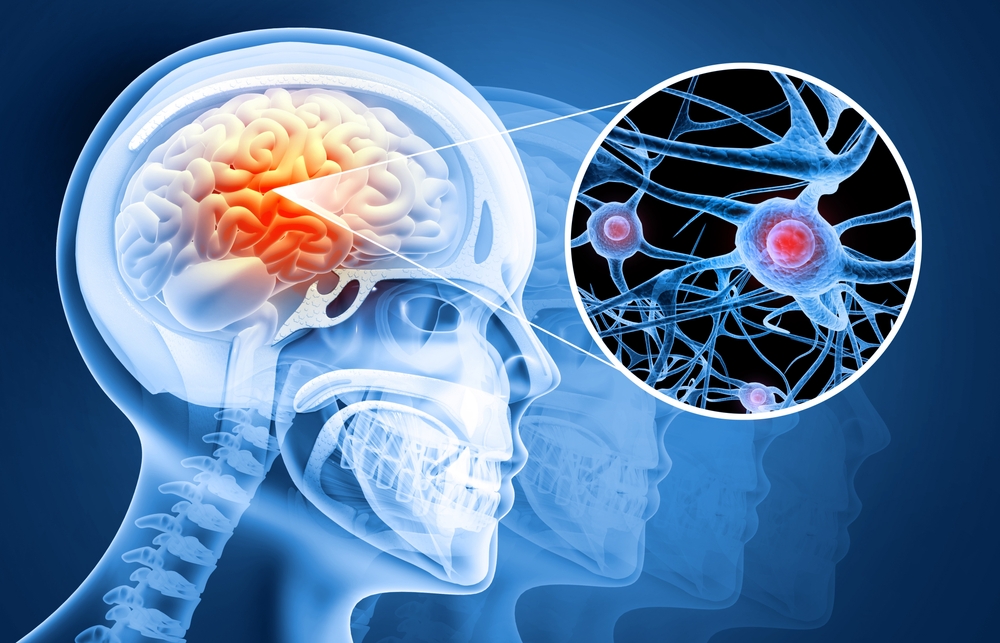
Developed by researchers at Shanghai’s Fudan University, this implant creates a direct bridge between the brain and spinal cord. Here’s how it works: two ultra-thin electrode chips — each about the size of a grain of rice — are implanted into the motor cortex (the part of the brain that controls movement) and the spinal nerve roots below the injury site. These chips decode electrical signals in the brain and send precisely timed electrical pulses to the spinal cord, targeting the nerves responsible for leg movement.
hat’s different here is what happens next. The electrical stimulation doesn’t just produce reflexive movement. It reactivates previously dormant nerves — nerves that have been silent, sometimes for years. This process is known as neural remodeling, and it’s where this technology truly breaks new ground.

Neural remodeling refers to the brain and spinal cord’s ability to rebuild and reshape connections. It’s the difference between movement that’s artificially triggered and movement that’s actually controlled by the patient. In earlier studies from Europe, this kind of nerve rewiring took months. In the Fudan trial, it began within days.
And unlike systems that tether patients to computers or robotic limbs, this implant is entirely internal. Patients aren’t learning to control machines — they’re regaining control of their own bodies.
What makes this especially promising is the efficiency of the system. By combining three functions into a single, integrated device, the surgical procedure is minimally invasive, and the risk of complications is reduced. All of the components were developed and manufactured in China, which could make this innovation more scalable — and more accessible — than comparable tech from Western labs.
How One Man Regained Movement Overnight

The first patient in the Shanghai trial was a 34-year-old man who had been paralyzed from the waist down for two years after falling from a height of three meters. Like many with spinal cord injuries, he was told recovery wasn’t possible. But that changed on January 8, 2024. Within 24 hours of receiving the brain-spinal implant, he lifted both legs. Just two weeks later, he could walk over five meters using a standing frame — and more importantly, he began to feel again.
“My feet feel warm and sweaty, and there is a tingling sensation,” he reported at a follow-up. “When I stand, I feel the muscles in my legs contracting.” He also regained awareness of bladder function — a sign that sensory nerves were reawakening, not just motor control.
Three other patients underwent the same surgery in the following weeks. All of them had long-term paralysis. All began to recover movement shortly after surgery. Each case showed slightly different recovery speeds, but all demonstrated the same core outcome: voluntary leg movement, regained sensation, and a return of basic bodily functions once thought permanently lost.
These weren’t minor improvements. For people who had lived without movement or sensation for years, these changes meant regaining parts of their lives — walking short distances, standing unaided, sensing their own body’s signals. The type of progress that typically takes months or years of assisted rehab happened here in a matter of days and weeks.
And what’s especially significant is that some of these gains continued even when the implant was not actively in use — suggesting that the nervous system was beginning to rewire itself in a lasting way. This points to long-term potential far beyond temporary symptom management.
In each of these cases, the outcome wasn’t just about walking again. It was about reclaiming independence, confidence, and basic dignity. These patients aren’t being guided by machines — they’re leading the movement themselves, with their own nervous systems coming back online.
Not Just Bypassing Damage—But Actually Healing It

The brain-spinal implant developed in Shanghai doesn’t just mark another step in neurotechnology — it marks a turning point. What sets it apart isn’t just what it does, but how it does it, and how quickly it works.
Most existing neurotechnologies, like Elon Musk’s Neuralink or earlier brain-computer interface (BCI) systems in Europe, follow a similar approach: they bypass the damaged spinal cord by sending brain signals to external devices like robotic limbs or computers. These tools give patients a way to interact with the world, but they don’t repair the body itself — they compensate for it.
China’s implant takes a different route. It’s not about bypassing the damage. It’s about restoring internal communication within the nervous system. The device re-establishes the link between the brain and the spinal cord using spatiotemporal electrical stimulation — activating the body’s natural pathways instead of relying on machines.
Another major difference is how quickly it works. In prior studies, such as those conducted in Switzerland, signs of neural remodeling — the rewiring of nerve pathways — began to appear after about six months. In the Chinese trial, patients showed significant progress within 24 hours of surgery. By the two-week mark, some were walking short distances, navigating obstacles, and regaining sensation.
That speed isn’t just a bonus — it’s a critical breakthrough. Faster recovery timelines could mean less intensive long-term rehab, reduced risk of complications from immobility, and better outcomes overall.
The implant’s design also plays a big role in its effectiveness. It integrates three brain-interface components into a single unit, which reduces surgical complexity and lowers the risk of complications. The surgery itself is minimally invasive, typically lasting about four hours.
And perhaps most importantly, all of the equipment — from the chips to the software — was developed and manufactured in China. This matters for two reasons. First, it shows that advanced neurotech doesn’t have to be exclusive to a handful of Western labs. Second, it opens the door for broader accessibility in countries where high-end imported medical equipment isn’t feasible.
What This Means for the Future of Paralysis Treatment
Until now, most spinal cord injury treatments focused on management — preserving muscle tone, preventing complications, and helping patients adapt to permanent loss of function. Recovery, in the true sense, wasn’t part of the conversation. That may no longer be the case.
The results from the Fudan University trial suggest a major shift: that paralysis doesn’t have to be permanent — and that healing may be possible when the right systems are activated. For the estimated 3.74 million people living with spinal cord injuries in China, and millions more globally, this changes the outlook dramatically.
What makes this breakthrough especially significant is its scalability. All the components — the implants, software, and surgical tools — were developed domestically in China. That makes the technology potentially more accessible and cost-effective than systems dependent on imported parts or external machines. In countries where high-end medical devices are rare or unaffordable, this kind of local innovation could provide a lifeline.
It also challenges the idea that patients must remain dependent on external tech for life. While some BCIs require patients to be permanently linked to devices or computers to function, this implant is designed to restore independence, not manage dependence. Over time — and with continued use — the goal is for patients to rely on their own nervous systems, not the implant itself. As lead researcher Jia Fumin noted, with ongoing rehab, the hope is to eventually remove the need for the implant altogether.
This is more than just a technical win — it’s a paradigm shift. It suggests that the nervous system isn’t as fragile or final as once believed. With the right electrical cues, even long-dormant nerve pathways can begin to reorganize and recover.
What This Means for Aging, Stroke, and Neurodegeneration

You may not have a spinal cord injury, but the story unfolding in Shanghai carries insights that go far beyond paralysis. At its core, this breakthrough is about the body’s potential to recover — and how new science is helping unlock that potential faster than ever. Here’s what you, as a reader, can take away:
- The Nervous System Is More Adaptable Than We Thought: For decades, it was widely accepted that once nerves in the spinal cord were damaged, they couldn’t be repaired. But the concept of neural remodeling — where the nervous system begins to rewire and restore itself with the right stimulation — challenges that belief. This suggests that the human body, even years after injury, still holds untapped capacity for change and recovery.
- Recovery Timelines Are Changing: What used to take months or years may now take days or weeks. That’s a message of hope not just for those with paralysis, but for anyone recovering from serious injury or illness. The nervous system responds to precise input. Whether it’s physical therapy, electrical stimulation, or targeted rehab, early and intentional intervention can matter — and may work faster than previously believed.
- Technology Is Moving Toward Restoration, Not Replacement: Many past solutions for neurological injuries have relied on workarounds — robotic limbs, assistive devices, or external aids. This implant represents a different mindset: restoring the body’s own systems. That philosophy could soon shape how we think about aging, neurodegenerative conditions, or stroke recovery — aiming not just to support function, but to rebuild it.
- Access to Innovation Is Expanding: This development didn’t come from a Silicon Valley lab or a Western tech giant. It came from a Chinese research team using locally developed tools. That matters. It signals a shift where life-changing medical advances may become more globally distributed — not locked behind borders, brands, or price tags.
- You Don’t Need an Implant to Start Reconnecting: At a broader level, this research reminds us that the body responds to consistent, purposeful input. Whether it’s movement, therapy, mindfulness, or habit change — small, regular actions can literally reshape the brain and body over time. That’s not marketing hype — that’s neuroscience.
The Real Shift Isn’t Just Technological — It’s Human
For a long time, spinal cord injuries were seen as the end of the line — a hard stop in someone’s life. Treatments were all about learning to cope, not about actually recovering. The general belief in medicine was that paralyzed limbs couldn’t be fixed. But now, things are changing. Thanks to a brain-spinal implant developed in China, people who once thought they’d never move again are regaining control of their bodies in just days. It’s not science fiction; it’s real.
This breakthrough is bigger than just a medical achievement; it’s a mindset shift. It challenges the idea that some things are simply beyond repair. What was once thought impossible — muscles moving again, sensation returning, independence becoming a reality — is now happening, all because a group of researchers dared to ask a different question: What if this could work?
The lesson here isn’t just about medical technology; it’s about rethinking what’s possible. It’s about not accepting things just because they’ve always been that way. Whether you’re dealing with paralysis or just facing challenges in life, this breakthrough shows that sometimes progress starts when we stop believing something is final. The next big breakthrough in your life might just start with questioning what you thought was impossible — and realizing it’s not.
Sources:
- Borton, D. A., Yin, M., Aceros, J., & Nurmikko, A. (2013). An implantable wireless neural interface for recording cortical circuit dynamics in moving primates. Journal of Neural Engineering, 10(2), 026010. https://doi.org/10.1088/1741-2560/10/2/026010
- Kulshreshth, A., Anand, A., & Lakanpal, A. (2019). Neuralink- An Elon Musk Start-up Achieve symbiosis with Artificial Intelligence. 2022 International Conference on Computing, Communication, and Intelligent Systems (ICCCIS), 105–109. https://doi.org/10.1109/icccis48478.2019.8974470
- Schalk, G., McFarland, D., Hinterberger, T., Birbaumer, N., & Wolpaw, J. (2004). BCI2000: A General-Purpose Brain-Computer Interface (BCI) system. IEEE Transactions on Biomedical Engineering, 51(6), 1034–1043. https://doi.org/10.1109/tbme.2004.827072
