
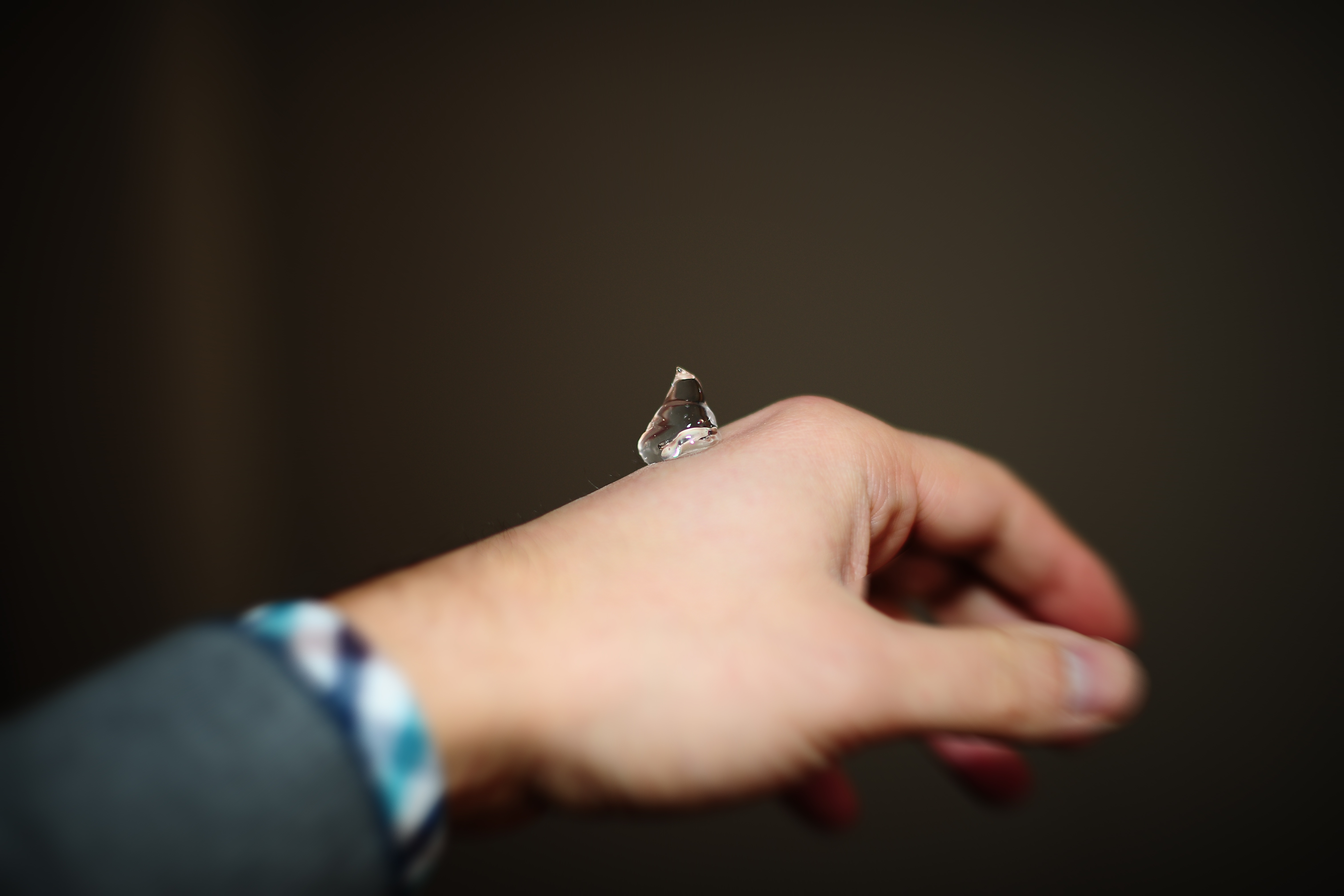
A recent breakthrough in material science has introduced a hydrogel that mimics the remarkable properties of human skin—flexible, strong, and, most impressively, capable of healing itself. This self-healing hydrogel can repair up to 90% of its damage within just four hours and fully regenerate within 24 hours.
This innovation holds tremendous potential for advancing artificial skin technologies, which have long struggled to replicate the durability and regenerative abilities of real human skin. With applications ranging from wound healing to soft robotics, this new material promises to transform not only medical care but also industries that rely on materials that need to withstand wear and tear.
By combining biology with technology, this hydrogel brings the concept of self-repairing materials into a whole new light, offering exciting possibilities for the future of artificial skin and beyond.
What Makes This Hydrogel Special?

This new hydrogel is unlike anything we’ve seen before. It combines the flexibility and strength of human skin with an incredible self-healing ability. In fact, this material can repair itself quickly after being cut or damaged. Within just four hours, up to 90% of the damage can be repaired, and in 24 hours, it is fully restored, just like new.
What sets this hydrogel apart from traditional materials is its ability to combine both stiffness and flexibility. Typically, materials are either tough but brittle or flexible but weak. Creating a material that strikes the perfect balance between strength, elasticity, and self-repair has been a long-standing challenge for scientists. This hydrogel, however, does just that by using an innovative structure of nanosheets and entangled polymers.
When you compare it to other artificial skin materials, this hydrogel stands out not just for its resilience, but for its ability to regenerate on its own. Unlike standard bandages or synthetic skin, which often need to be replaced or treated after becoming damaged, this hydrogel can heal itself without any intervention, drastically reducing the risk of infection and speeding up recovery times.
Its potential to heal and regenerate makes it a promising candidate for medical applications, but the technology doesn’t stop there. It could also pave the way for more durable and self-repairing materials in robotics and other industries.
The Science Behind the Hydrogel

The self-healing ability of this hydrogel is rooted in an innovative approach to material design, which combines polymer entanglement with nanosheet confinement. To put it simply, the hydrogel consists of a network of polymers, which are long, chain-like molecules that are woven together. These polymers are not just loosely scattered; they are entangled, creating a structure that is flexible yet strong. When the material is damaged, the entangled polymers are able to shift and rebind themselves, essentially “healing” the cut or tear. This dynamic molecular network is what allows the material to repair itself quickly and efficiently.
The addition of nanosheets—ultra-thin layers of clay—plays a crucial role in enhancing the hydrogel’s strength and durability. These nanosheets are strategically embedded within the hydrogel, creating a scaffold that holds the polymer network in place. The nanosheets themselves are extremely small, with each one only about one nanometer thick, but they have a large surface area, which helps to distribute the stress across the material. This arrangement ensures that the hydrogel retains its rigidity while still offering the flexibility needed to mimic the behavior of skin.
What’s particularly fascinating is how these nanosheets, when combined with the polymers, allow the hydrogel to withstand significant damage without breaking down. The structure is designed so that even after a tear or cut, the material doesn’t lose its integrity. Instead, the polymers and nanosheets work together to redistribute the load and initiate the healing process. This process occurs at a molecular level: the polymer chains, once broken, move around, interact, and rebind, quickly restoring the material to its original state. This healing process is remarkably fast, with the hydrogel healing up to 90% of the damage within just four hours.
In nature, self-healing materials like skin work because of complex biological processes that trigger the repair of damaged tissue. This hydrogel replicates that function through its innovative design. By mimicking nature’s methods at the molecular level, it bridges the gap between biology and technology. The combination of polymer entanglement and nanosheet confinement creates a material that can heal itself autonomously, without the need for external resources or complex repair processes. It’s this breakthrough design that makes the hydrogel not just an advancement in material science, but a true game-changer in fields like medicine, robotics, and beyond.
The Revolutionary Applications of Self-Healing Hydrogel

The potential of this self-healing hydrogel goes far beyond the lab. Its unique properties offer transformative possibilities in several fields, particularly in medicine and robotics. One of the most exciting applications is in the area of wound healing. In healthcare, this hydrogel could be used as a more effective alternative to traditional bandages and dressings. When applied to a wound, the hydrogel not only protects the area from infection but also actively accelerates the healing process. It can mimic the regenerative properties of human skin, promoting faster recovery without the need for constant reapplication or additional treatments.
For patients with severe burns or chronic wounds, the ability of this hydrogel to heal itself means it could serve as an artificial skin that grows with the body. Traditional skin grafts often face challenges like rejection or failure to adapt to the body’s natural movements. This self-healing hydrogel could offer a more flexible and durable solution that adjusts as the skin beneath it regenerates. In addition, because the material can heal itself, it would be far more durable and long-lasting, reducing the need for costly and time-consuming surgeries.
Beyond wound care, the hydrogel holds great promise in the field of soft robotics. Robots designed with materials that can heal themselves could outperform traditional robots, particularly in environments where wear and tear is inevitable. For example, robots used in medical surgeries or hazardous environments could experience minor damages—such as cuts or abrasions—that would not affect their function. These robots could autonomously repair themselves, ensuring continued operation and reducing the need for costly maintenance or repairs. This self-healing capability makes soft robotics much more practical for long-term use, opening up new possibilities for their application in various industries, from healthcare to manufacturing.
Another potential use lies in the development of advanced prosthetics and artificial skin. For people who have lost limbs or suffer from skin diseases, this hydrogel could be a game-changer. Prosthetics made from this material could more closely mimic the texture and function of human skin, providing both a natural look and the practical benefits of self-healing. Whether used for cosmetic purposes or in more advanced medical treatments, this hydrogel could become a vital component in creating more functional, durable, and adaptable prosthetic devices, drastically improving the quality of life for individuals who rely on them.
The Road Ahead: Challenges and Opportunities

While the potential of self-healing hydrogels is clear, there are still several hurdles to overcome before they can be fully integrated into everyday applications. One of the main challenges is scaling up production. While the technology works well in the lab, manufacturing the hydrogel in large quantities without compromising its effectiveness or affordability remains a significant obstacle. For instance, ensuring consistent quality and performance across larger batches, while keeping costs reasonable, will be critical for its widespread adoption in fields like healthcare or robotics.
Another consideration is the long-term durability of the hydrogel. Though it shows impressive self-healing properties in the short term, there needs to be more research on how it behaves over extended periods. How will it hold up under constant wear, especially when used in environments that involve frequent friction or mechanical stress? Researchers will need to assess how the material performs in real-world conditions over time, ensuring that it doesn’t lose its ability to heal itself after repeated use.
Moreover, integrating this hydrogel into existing systems—like wound care or soft robotics—will require careful adaptation. It’s not just about the material itself; it’s also about how it interacts with other technologies and biological tissues. For instance, in medical applications, the hydrogel must be compatible with the human body, not just in terms of healing but also in terms of biocompatibility and safety. More clinical trials and testing are needed to ensure that the hydrogel is safe for use in patients and won’t cause any unintended side effects.
Despite these challenges, the opportunities for this technology are vast. With further advancements in material science, manufacturing techniques, and safety protocols, self-healing hydrogels could soon become a staple in everything from advanced wound dressings to the next generation of smart robotics. The breakthrough opens the door to not only improving current technologies but also creating entirely new industries. As scientists continue to fine-tune this material and address these challenges, the future for self-healing hydrogels looks incredibly promising.
Other Bio-Inspired Technology: Nature’s Genius at Work

The development of self-healing hydrogel is just one example of how science is looking to nature for inspiration in creating more resilient and efficient technologies. Biomimicry—the practice of designing products, materials, and systems based on biological processes—has been at the forefront of innovation in a wide range of fields, from robotics to energy production. Nature has had millions of years to perfect its solutions, and scientists are increasingly turning to the natural world for insights that can solve modern-day challenges.
One prime example is self-healing concrete, which mimics the repair mechanisms found in biological systems. Just as our skin can heal after an injury, this type of concrete can repair its own cracks by using bacteria embedded within it. When the concrete cracks, the bacteria are activated by moisture and begin to produce limestone, effectively sealing the crack and preventing further damage. This kind of technology not only extends the lifespan of infrastructure but also reduces maintenance costs and resource consumption, similar to how the self-healing hydrogel could reduce the need for constant replacements in healthcare and robotics.
Another breakthrough inspired by biology is biodegradable plastics made from natural materials like algae and fungi. These plastics break down naturally without harming the environment, much like how organic matter decomposes in nature. This innovation could play a significant role in reducing plastic pollution, a growing global concern. Nature’s ability to break down complex materials efficiently is a powerful model for creating sustainable alternatives to petroleum-based plastics.
In robotics, bio-inspired designs have led to the development of soft robots that imitate the movements and flexibility of animals. These robots, like the “Octobot” that mimics the movement of an octopus, are more adaptable and versatile than traditional rigid robots. Their ability to change shape and respond to their environment with fluidity and grace has opened new doors in fields such as medicine, where these robots could be used for delicate surgeries or navigating narrow spaces.
Energy harvesting technologies are also taking cues from nature. The way plants and animals harness energy from their environment is being used to create more efficient solar panels, wind turbines, and even devices that harvest energy from human motion. For example, researchers have designed solar cells inspired by the way plants convert sunlight into energy through photosynthesis, making solar panels more efficient and adaptable to various environments.
These bio-inspired technologies highlight the incredible potential that comes from studying nature’s designs. By applying the principles of nature’s own problem-solving strategies to modern challenges, we are unlocking a new wave of innovation. As the self-healing hydrogel shows, the future of technology doesn’t have to be about creating something entirely new—it can be about learning from nature’s time-tested solutions and making them work for us.
The Promise of Bio-Inspired Technology

The development of self-healing hydrogel is a remarkable example of how nature’s ingenuity can inspire groundbreaking technological advances. By mimicking the regenerative abilities of human skin, this material not only offers a solution for current challenges in medical treatments and robotics but also paves the way for a future where materials heal and adapt, just like living organisms. It represents a shift in how we approach material design, moving beyond simple durability to create systems that can recover and regenerate.
The possibilities for this hydrogel are vast. From enhancing wound healing and improving prosthetics to transforming soft robotics and artificial skin, its potential to change industries is undeniable. While there are still challenges ahead, particularly in scaling production and ensuring long-term durability, the foundation has been laid for a future where self-healing materials play a central role in healthcare and technology.
This breakthrough not only teaches us about the power of innovation but also reminds us of the resilience inherent in nature. Just as our skin can heal and regenerate, this hydrogel shows that with the right design and understanding, technology can do the same. The future is bright for bio-inspired materials, and with continued research and development, self-healing hydrogel could soon become a staple in our daily lives, offering a new way to bridge the gap between biology and technology.
Source:
- Liang, C., Dudko, V., Khoruzhenko, O., Hong, X., Lv, Z., Tunn, I., Umer, M., Timonen, J. V. I., Linder, M. B., Breu, J., Ikkala, O., & Zhang, H. (2025). Stiff and self-healing hydrogels by polymer entanglements in co-planar nanoconfinement. Nature Materials. https://doi.org/10.1038/s41563-025-02146-5
