
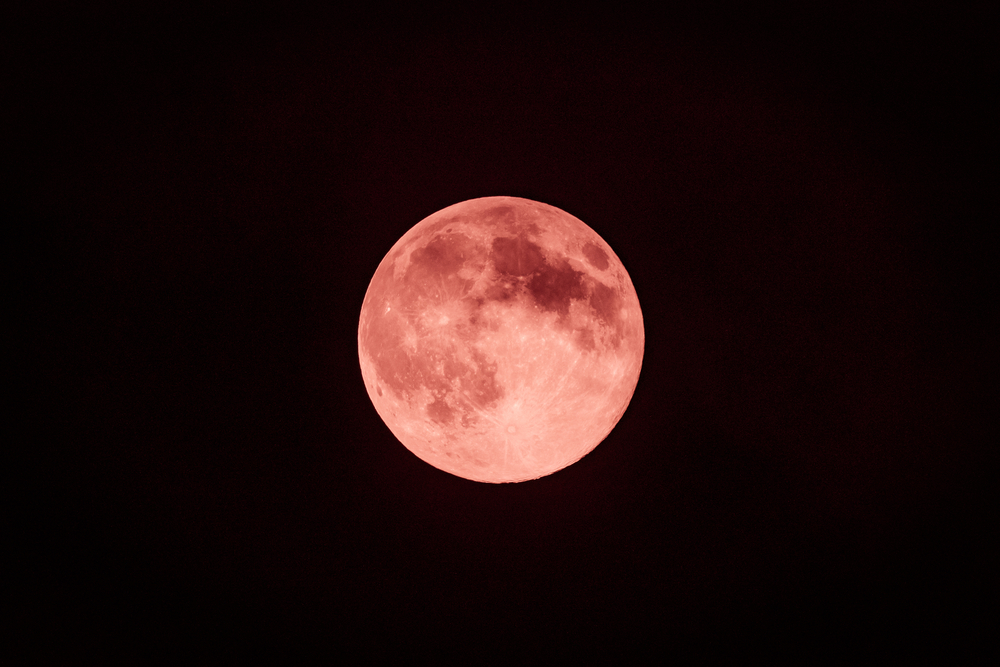
Imagine looking up at the night sky on September 7, 2025, and seeing the Moon transform before your eyes, shifting from its usual pale glow to a deep, fiery red. It’s not a trick of the light or the stuff of myth it’s the Blood Moon, one of nature’s most striking spectacles. For 83 uninterrupted minutes, this celestial phenomenon will unfold, offering skywatchers across the globe a rare opportunity to witness the longest total lunar eclipse in years. This isn’t just any eclipse; it’s a cosmic event that will be visible to over 6 billion people across multiple continents.
But why does the Moon turn red? And why is this eclipse drawing so much attention? Whether you’re a seasoned stargazer or just someone looking to catch a glimpse of something extraordinary, the September 2025 Blood Moon promises to be an unforgettable event. As the Moon inches into Earth’s shadow, it won’t vanish but instead glow with the colors of every sunrise and sunset happening on Earth at that very moment.
So, mark your calendar this celestial show is one you won’t want to miss.
What Is a Blood Moon?
A Blood Moon is simply a total lunar eclipse, but the name itself evokes mystery and drama and for good reason. During a total lunar eclipse, the Earth comes between the Sun and the Moon, casting a shadow on the lunar surface. But instead of the Moon fading into darkness, it takes on a deep, reddish hue. This dramatic transformation happens because of Rayleigh scattering, a process that occurs when sunlight passes through Earth’s atmosphere.
When sunlight reaches Earth, the atmosphere scatters shorter wavelengths, like blue and violet light, in all directions. However, the longer red wavelengths bend around the Earth and travel toward the Moon. As the light passes through the atmosphere, it’s filtered and refracted, painting the Moon with the warm colors of sunrises and sunsets from across the globe. The deeper the Moon plunges into Earth’s shadow, the more pronounced this red glow becomes.
Unlike solar eclipses, which can be dangerous to watch without special glasses, lunar eclipses are completely safe to view with the naked eye. And although the red color of the Moon during a Blood Moon is stunning, it’s a result of predictable, everyday physics a beautiful reminder of the dynamic forces at work in our sky.
Why the September 7, 2025 Blood Moon is a Celestial Showstopper

The September 7, 2025 Blood Moon isn’t just another eclipse; it’s a celestial event that checks nearly every box for skywatchers and astronomy enthusiasts alike. What makes this one particularly exciting is its duration. For 83 minutes, the Moon will be fully immersed in Earth’s shadow, one of the longest total lunar eclipses in recent memory. In a world where we’re used to fast-paced events, this extended totality gives us time to truly soak in the visual marvel a slow, mesmerizing shift as the Moon transitions from bright silver to a fiery red, only to fade back into its usual glow.
But that’s not all. This eclipse also coincides with the Moon’s closest point to Earth, known as perigee. While the difference may not be obvious to the naked eye, the Moon will appear slightly larger and brighter, intensifying the impact of the eclipse. Imagine witnessing a red-tinged, oversized Moon slowly crossing the night sky an extraordinary sight that will feel larger than life.
Then, there’s the fact that this eclipse belongs to Saros Series 128. It’s part of a family of eclipses that occur roughly every 18 years and 11 days. This connection to a predictable, recurring cosmic rhythm adds an extra layer of significance, linking this Blood Moon to centuries of astronomical history.
And if you’re looking for added celestial bonuses, during totality, the Moon will be positioned near Saturn and the star Fomalhaut. With the Moon’s brightness dimmed, these neighboring celestial bodies will become visible to the naked eye, making the experience even more captivating. For those lucky enough to be in the right place at the right time, this will be a rare chance to witness multiple wonders of the night sky in a single event.
Where and When to Watch the Blood Moon

On the night of September 7, 2025, the night sky will offer a breathtaking spectacle: a total lunar eclipse, commonly known as a “Blood Moon.” This celestial event occurs when the Earth positions itself directly between the Sun and the Moon, casting a shadow that turns the Moon a deep red. Unlike solar eclipses, lunar eclipses are safe to view with the naked eye, making them accessible to all.
In India, including Ahmedabad, the eclipse will be visible in its entirety. The penumbral phase begins at 8:58 PM IST, followed by the partial eclipse at 11:00 PM IST. The total eclipse, where the Moon takes on its striking red hue, will commence at 11:41 PM IST and last until 2:25 AM IST on September 8. This duration of totality is approximately 3 hours and 29 minutes, offering ample time for observation. Given the favorable weather conditions expected, with clear skies and minimal cloud cover, this event promises to be a memorable experience for skywatchers across the country.
For those unable to witness the eclipse in person, various online platforms will provide live streams of the event. Additionally, local astronomy clubs and observatories may organize viewing sessions, offering telescopes and expert guidance to enhance the experience.
Whether you’re an amateur astronomer or simply someone who appreciates the wonders of the universe, the Blood Moon eclipse on September 7, 2025, is an event not to be missed. Mark your calendars and prepare for a night of celestial wonder.
How to Safely Experience the Eclipse

Watching a lunar eclipse is an experience that anyone can enjoy and unlike solar eclipses, you don’t need special equipment to safely view the event. Here’s how to get the most out of your Blood Moon experience:
1. No Special Equipment Needed (But It Can Help)
Lunar eclipses are completely safe to observe with the naked eye, so you don’t need to worry about protective glasses or filters. Simply look up at the sky and watch the Moon slowly change color. However, if you want to enhance the experience, a pair of binoculars or a small telescope can provide a closer view, revealing more details like the Moon’s texture as it transitions from silver to red.
For photography enthusiasts, a smartphone camera with a zoom lens or a DSLR camera on a tripod can help capture stunning long-exposure shots of the eclipse. The extended duration of the totality (83 minutes) provides plenty of time to snap the perfect shot, so take your time and experiment with different settings.
2. Pick the Right Spot
Choosing the right location is key for a memorable experience. The best spots are those with a clear, unobstructed view of the sky, especially if you’re in a region where the eclipse will start around moonrise. Open fields, rooftops, or hilltops provide great vantage points away from city lights. This will help you see the red Moon in its full glory without interference from light pollution.
If you’re near a city, try to get as far from artificial lighting as possible the deeper the darkness, the more vibrant the eclipse will appear.
3. Check Your Local Conditions
Although the eclipse itself is predictable, weather conditions can affect your view. Use tools like TimeandDate.com or astronomy apps like SkySafari or Stellarium to find out the precise timings for your location. Be sure to check the weather forecast ahead of time. If your area is likely to be cloudy or overcast, consider traveling to a nearby location with clearer skies. Alternatively, you can follow live streams of the event from observatories and other platforms if you can’t get to a good viewing spot.
4. Prepare for Comfort
Depending on where you are, the eclipse may occur late at night or in the early morning hours. Prepare for the weather conditions, especially if you’re in a cooler climate. Warm clothes, blankets, and hot drinks can help you stay comfortable during the hours of viewing.
Consider bringing a folding chair for extra comfort, and maybe a snack to enjoy while you take in the celestial show. If you’re with friends or family, it can be a fun occasion to share snacks, enjoy the experience together, and discuss the wonder of the eclipse.
5. Watch with Others (or Share Online)
Eclipses are more enjoyable when shared with others. Invite friends, family, or neighbors to join you in watching the Blood Moon. Many local astronomy clubs and observatories will host viewing parties and may even have telescopes available for public use. If you’re unable to gather a group or attend an organized event, consider sharing your experience online. Social media platforms often light up during eclipses, with people posting photos and updates in real-time. You can connect with fellow skywatchers from around the world and share the awe of the moment.
6. Take a Moment to Be Still
While it’s tempting to reach for your camera or phone to capture every detail, don’t forget to take some time to simply observe. The Blood Moon is a rare celestial event, and sometimes the most meaningful part is taking a quiet moment to reflect on the experience. Watch how the Moon shifts from silver to red, notice how the stars become visible as the Moon’s brightness fades, and feel the connection to the broader universe as you witness this natural wonder.
Some people use this time for meditation, journaling, or even just lying back and enjoying the tranquility of the night sky. The Blood Moon is a reminder of nature’s rhythm a perfect moment to pause and appreciate the vastness of the cosmos.
7. Capture It or Just Be Present
If you’re interested in photography, plan your shot in advance. The extended duration of the eclipse means you’ll have time to experiment with different camera settings. Use a tripod to avoid blurry photos, and adjust the exposure to capture the red hues without overexposing the Moon. However, don’t feel pressured to document everything. Sometimes, the most memorable moments are the ones you simply enjoy in the present, without the need for a photograph.
The Science and Beauty of the Eclipse

The Blood Moon of September 7, 2025, is not just a stunning visual spectacle it’s also a masterclass in astronomical precision. While the event is awe-inspiring, it’s grounded in a combination of cosmic mechanics and natural beauty that explains why it happens and why it captivates skywatchers around the world.
A Perfect Alignment
To understand what makes a total lunar eclipse possible, it’s important to grasp the alignment of the Sun, Earth, and Moon. A total lunar eclipse occurs only when these three bodies line up in a straight line, with the Earth directly between the Sun and the Moon. In this alignment, the Earth’s shadow casts a dark veil over the Moon’s surface, but not in the way we might expect. Instead of blocking the Moon entirely, the shadow results in a striking, red hue.
This alignment is a rare event, requiring the Moon to be at the full moon phase and to pass through the central part of Earth’s shadow, called the umbra. While lunar eclipses occur a few times each year, they don’t always result in totality. This is because the Moon’s orbit is slightly tilted relative to Earth’s orbit, meaning that eclipses only happen when the Moon aligns closely with Earth’s orbital nodes the points where the orbits intersect. That’s why a total lunar eclipse like the one on September 7, 2025, feels like such a rare and special occurrence.
Why the Moon Turns Red
The most mesmerizing part of a total lunar eclipse is, of course, the Blood Moon itself the reddish-orange glow the Moon takes on as it moves deeper into the Earth’s shadow. This color change is the result of a natural phenomenon known as Rayleigh scattering.
As sunlight passes through Earth’s atmosphere, shorter wavelengths of light such as blue and violet scatter in all directions. The longer wavelengths, like red and orange, bend around the Earth’s curve and continue their journey toward the Moon. This scattered light then bathes the Moon, giving it that iconic crimson hue. The exact color can vary depending on the condition of Earth’s atmosphere at the time volcanic eruptions, dust, or pollution can intensify the red tone, sometimes making the Moon appear a deep brick-red.
The Importance of Timing
What makes this eclipse so special is the timing. On September 7, 2025, the Moon will be near perigee the closest point in its orbit to Earth. While the change in size may not be immediately noticeable, this proximity makes the Moon appear slightly larger and more luminous than usual. As a result, the Blood Moon will seem more striking and dramatic, as it will appear a bit bigger and brighter against the dark backdrop of the night sky.
The combination of the Moon’s size, its proximity to Earth, and its entry into the Earth’s umbra creates an eclipse that will be particularly vivid and long-lasting. This extended totality lasting 83 minutes allows skywatchers to fully appreciate the gradual transition from the bright silver of the Moon to the deep, smoldering red, adding an emotional layer to the experience.
The Cosmic Rhythm of Saros Series 128
This eclipse also connects us to a larger cosmic pattern. The September 2025 Blood Moon is part of Saros Series 128, a cycle of eclipses that repeats every 18 years, 11 days, and 8 hours. Each eclipse in this series occurs at nearly the same points in Earth’s orbit, with nearly identical alignments between the Sun, Earth, and Moon. This celestial rhythm has been tracked for centuries, and this particular series has been observed for over a millennium, marking the predictability and order of our universe.
The fact that this eclipse is part of a Saros cycle gives it a sense of continuity, connecting us to past generations who marveled at similar events. And as we look forward to the Blood Moon, we can also look backward at a history of celestial wonder that spans centuries.
An Astronomical Bonus
As the totality phase of the eclipse dims the Moon’s brightness, other celestial features may become visible. During the September 2025 event, for example, look for Saturn shining nearby and Fomalhaut, a bright star in the constellation Piscis Australis. These features will be visible with the naked eye, adding to the spectacle. The Moon will also be positioned near the Aquarius constellation, providing a stunning backdrop for the event.
With the Moon’s brightness reduced, the other celestial bodies around it become more visible, offering a unique opportunity to see several features of the night sky in a single viewing. This not only adds to the beauty of the eclipse but also enhances the scientific value of the event, as it provides a broader view of the cosmos at a rare moment when the sky is darker than usual.
Cultural Significance of Eclipses Throughout History

Lunar eclipses, particularly those that result in a Blood Moon, have long captured the human imagination. Across centuries and cultures, these celestial events have been interpreted in countless ways, often laden with symbolic meaning and deeply embedded in mythologies and rituals. Even today, the sight of the Moon slowly turning red stirs something primal a reminder of our connection to the sky and the natural world.
Eclipses as Omens: Ancient Beliefs
For many ancient cultures, eclipses were seen as powerful omens, events that signified the anger of gods or the potential for great change. The Inca people, for example, believed that during a lunar eclipse, a jaguar was attacking the Moon, and they would make loud noises, bang drums, and shoot arrows into the sky to frighten it away. Similarly, the ancient Babylonians viewed eclipses as signs that the king’s reign was in danger. They believed that the Moon’s red hue was a warning of misfortune, and they would perform rituals to ward off disaster.
In China, a lunar eclipse was thought to occur when a celestial dragon was devouring the Moon. The people would bang pots and drums to scare the dragon away, ensuring the Moon’s safe return. This belief was so ingrained in Chinese culture that emperors would often perform public rituals to appease the dragon and ensure the continued prosperity of their reign.
A Time for Reflection and Transformation
While some cultures feared eclipses, others saw them as opportunities for reflection and transformation. In many traditions, a lunar eclipse was a time to release negativity and purge emotional or spiritual burdens. This idea still resonates with modern spiritual practices many people today view lunar eclipses as moments for letting go, whether it’s of toxic relationships, bad habits, or past traumas.
In Hinduism, lunar eclipses were believed to be moments when the demon Rahu would devour the Moon. But rather than merely fearing this, people would take the time to purify themselves through rituals like bathing in holy rivers or fasting. The eclipse was seen as an opportunity for spiritual renewal a time to cleanse both the body and mind.
Similarly, in Native American cultures, lunar eclipses were viewed as moments for inner reflection, self-purification, and meditation. The red color of the Moon was often seen as a symbol of transformation, signaling a period of change or the shedding of old ways to embrace something new.
A Global Phenomenon
While the interpretations of lunar eclipses have varied greatly across cultures, one common thread has always been a sense of wonder and reverence. In the modern world, we may have a better understanding of the science behind these events, but they still evoke a sense of awe and mystery. For many, a Blood Moon is a reminder of the vastness of the universe and our small but significant place within it.
The September 7, 2025, Blood Moon is an opportunity to reconnect with this sense of shared human experience. Across the world, billions of people will look up at the same sky, each witnessing the same dramatic cosmic event. Whether you’re in Nairobi, Tokyo, or Paris, you’ll be part of a global moment of wonder. This shared experience is a powerful reminder of how connected we all are, regardless of borders, languages, or cultures.
The Ongoing Cultural Impact
Even today, lunar eclipses still carry significant cultural meaning. People gather for community viewing events, share their experiences on social media, and use the event as an opportunity for reflection and renewal. The Blood Moon of 2025 will likely inspire everything from artwork and poetry to personal rituals and spiritual practices.
The cultural significance of eclipses also endures in popular culture. Movies, books, and songs often reference the drama and mystery associated with the red-tinted Moon, reinforcing the idea that eclipses, in whatever form, are more than just astronomical events they are a reflection of the human condition.
Why You Shouldn’t Miss This Event

In today’s fast-paced world, we’re often distracted by the demands of daily life. But a lunar eclipse especially one as dramatic as this Blood Moon invites us to pause, to step outside, and to take in the vastness of the universe. It’s a moment to reflect on the rhythms of nature that continue to unfold, regardless of the chaos we experience on Earth. For 83 minutes, you’ll have the chance to witness the slow transformation of the Moon from bright silver to a haunting red, and during that time, you’ll be reminded of the constant motion and predictable beauty of the cosmos.
More than just a local event, this Blood Moon offers a shared human experience. With over 6 billion people across multiple continents able to witness at least part of the eclipse, this is an opportunity to connect with others under the same sky. Whether you’re in Nairobi, Beijing, or Perth, people around the world will be gazing at the same Moon, creating a sense of unity and awe. In a world that often feels divided by time zones, borders, and differences, there’s something incredibly powerful about looking up at the same sky and experiencing the same celestial phenomenon together.
This eclipse is set to be one of the longest total lunar eclipses in recent years, lasting a full 83 minutes in totality. Unlike other fleeting astronomical events, you’ll have ample time to take in the beauty of the eclipse, observe the gradual color changes, and even capture stunning photos. Plus, the Moon’s proximity to Earth during this eclipse means it will appear slightly larger and more luminous, adding to the visual drama of the event. Whether you’re an experienced astronomer or simply someone who enjoys the occasional night sky viewing, the September 7, 2025 Blood Moon promises to deliver a show that’s unforgettable.
For anyone with an interest in astronomy or the night sky, this eclipse offers something truly special. During totality, the Moon will not only take on its fiery red hue, but other celestial objects like Saturn and the star Fomalhaut will become visible to the naked eye. With the Moon’s glow diminished, these features of the night sky will stand out, offering a rare opportunity to see multiple celestial wonders in one sitting. Whether you’re a seasoned stargazer or a casual observer, this is an event that will offer rich rewards to anyone who takes the time to look up.
In a time when technology often distracts us from the natural world, the Blood Moon offers a chance to reconnect with something timeless. It’s a reminder of the universe’s mysteries that are always just above our heads, waiting to be noticed. It’s a moment of wonder not just at the beauty of the event itself, but at the profound sense of connection it creates. For those who seek to escape the noise of daily life, there’s no better way than to spend an evening under the stars, watching the Moon shift into its crimson form.
Finally, the Blood Moon is a memory in the making one you’ll carry with you long after the event ends. Whether you watch it with family, friends, or strangers, this shared experience will leave an imprint on your life. Imagine the stories you’ll tell years from now: “I saw the Blood Moon in 2025, and it was incredible.” There are few events in life that unite so many people across such vast distances. It’s a rare occasion to create a collective memory with others, even if you’re not physically together. The Blood Moon is a moment that’s bound to become a part of your personal and shared history.
A Celestial Event to Remember
As the Blood Moon of September 7, 2025, draws near, it promises to be more than just an astronomical event; it’s a shared experience that connects us all under the same sky. Whether you’re a seasoned skywatcher or a casual observer, this rare total lunar eclipse offers something for everyone a visual spectacle, a moment of reflection, and an opportunity to be part of a global event.
From the scientific beauty behind the red-hued Moon to the cultural significance it carries, this is an occasion that transcends mere observation. It’s a chance to pause, reconnect with the cosmos, and share a moment of awe with millions of others around the world. So, as the date approaches, remember to mark your calendar, find a good viewing spot, and prepare for an unforgettable night of celestial wonder. The Blood Moon of 2025 is waiting, and it’s an experience you won’t want to miss.
