
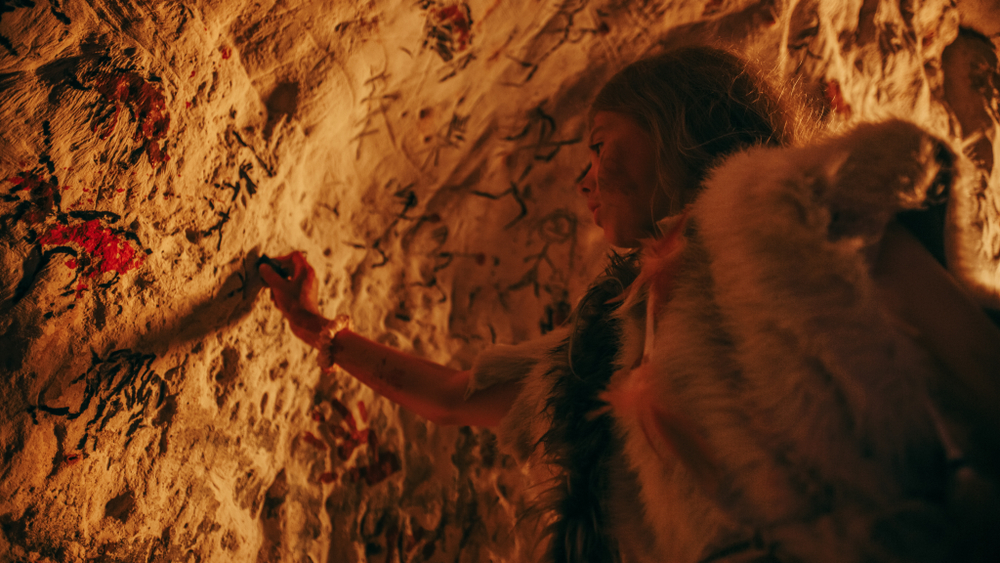
What if the way you see the world the patterns you notice, the way your brain processes visual detail, or how you navigate social situations was shaped in part by DNA inherited from a species that went extinct 40,000 years ago?
Roughly 2% of the genome in people of European or Asian ancestry comes from Neanderthals our closest ancient relatives. That might not sound like much, but new research suggests that some of those genetic fragments are doing more than lingering in the background. In fact, a specific set of Neanderthal-derived gene variants appears to be more common in autistic individuals, influencing how different parts of the brain connect and communicate.
These aren’t random leftovers from evolution. They’re fragments tied to how we perceive, think, and interact with the world and they may help explain why autism exists in every part of the world, across every culture.
What the New Study Found
A major new genetic study has identified a link between autism and a specific set of rare Neanderthal gene variants still found in some modern humans. But this isn’t about having “more Neanderthal DNA.” Most people regardless of autism diagnosis carry roughly the same amount: about 1–2% for those of European or Asian descent. What matters here is which fragments you carry.
The researchers, led by teams at Clemson University and Loyola University New Orleans, analyzed genome data from thousands of individuals, including autistic people, their non-autistic siblings, and unrelated controls. They found that autistic individuals were more likely to carry rare Neanderthal-derived genetic variants, especially in genes linked to brain development and function.

These variants were enriched across all three ethnic groups studied Black non-Hispanic, white Hispanic, and white non-Hispanic and were most pronounced in the rarest gene versions (those occurring in less than 1% of the population). The researchers also found that some of these same variants appeared, to a lesser extent, in unaffected siblings, suggesting that these genes influence traits along a spectrum rather than acting as a simple cause.
One especially important detail: the enriched Neanderthal variants were mostly found in regions of the genome tied to neural connectivity, or how different areas of the brain communicate with each other. The patterns matched what’s commonly seen in autism increased connectivity in visual processing regions, and reduced connectivity in areas involved in social interaction, like the default mode network.
Why Neanderthal DNA Still Matters Today

Neanderthals disappeared around 40,000 years ago, but traces of them live on in nearly every person alive today. When small groups of Homo sapiens migrated out of Africa about 50,000–60,000 years ago, they encountered and interbred with Neanderthals in Eurasia. That ancient gene exchange means people of non-African ancestry typically carry around 1–2% Neanderthal DNA. Even populations in Africa carry small amounts, due to back-migrations that reintroduced these gene variants.
What’s surprising is that some of these genetic leftovers still actively shape how our bodies and brains work.
In recent years, scientists have linked Neanderthal-derived genes to a wide range of modern traits from skin tone and immune response to metabolism and even vulnerability to certain illnesses. Some variants helped humans adapt to high altitudes or fight infections more effectively. Others appear to be less helpful and have gradually been filtered out by natural selection.
Brain-related genes, in particular, tend to be more sensitive to disruption. That’s why, until recently, scientists believed that most Neanderthal variants affecting brain function had likely been purged from the human genome. But the latest research challenges that assumption. A handful of neural gene variants from Neanderthals have persisted especially in regions tied to how we perceive the world, store information, and relate socially.
These surviving fragments may not have been weeded out because they weren’t always harmful. In some contexts, they may have offered subtle advantages boosting visual acuity, sharpening attention to detail, or supporting specialized cognitive skills. Now, researchers are beginning to connect the dots between these ancient traits and the modern neurodiversity we see today, including autism.
How These Ancient Variants Might Influence the Brain

One of the most striking findings from the study was that the Neanderthal-derived variants linked to autism tend to affect how the brain is wired particularly how different regions communicate with one another. These aren’t genes that code for basic structure or size. They’re involved in the networks that manage perception, attention, and social processing.
Researchers found that individuals carrying these variants, whether autistic or not, often show stronger connectivity in visual processing regions of the brain like the occipital cortex and fusiform gyrus and weaker connectivity in the default mode network, which is associated with social thinking, introspection, and daydreaming.
This connectivity pattern lines up closely with what’s commonly seen in people on the autism spectrum. Many autistic individuals report a strong ability to focus on visual detail, patterns, or systems, but often struggle with spontaneous social interaction or conversational flow. Functional MRI scans support this: the visual networks tend to be hyperactive, while the social and self-referential networks run quieter.
The study also drew a connection to enhanced brain activity in areas like the fusiform gyrus during math problem-solving tasks in autistic children. That’s the same region linked to visual expertise including face recognition and object categorization and one that appears to be influenced by Neanderthal-derived DNA in modern humans.
These findings suggest that the Neanderthal variants might shape a cognitive style that leans toward focused perception and visual reasoning, possibly at the expense of fluid social processing. It’s not a matter of better or worse it’s a different way of processing information, one that may have had advantages in ancient environments and still plays a role in how some people experience the world today.
What This Means for Autism and Neurodiversity

The link between Neanderthal DNA and autism doesn’t point to a single cause and it doesn’t imply that autism is a flaw or evolutionary mistake. What it highlights is that traits associated with autism may have deeper roots in human history than previously thought.
Autism is a complex condition influenced by hundreds, possibly thousands, of genetic variations, along with environmental factors. The discovery that some of these variations come from Neanderthals simply adds one more piece to the puzzle, a piece that helps explain why autism is found worldwide, across all cultures and populations.
It also supports what many families and advocates have long observed: that autism often runs in families that also have a high concentration of logical, visual, or analytical thinkers. Studies have noted that relatives of autistic individuals are more likely to work in fields like engineering, math, and computer science areas where detail-oriented thinking and pattern recognition are strengths. This study gives that observation biological weight, suggesting that the same ancient genes may be behind both the challenges and the cognitive strengths seen in autism.
This perspective reframes autism not just as a set of impairments but as part of natural human variation. Some of the very traits that made Neanderthals skilled toolmakers spatial planning, intense focus, visual reasoning may live on in modern humans through autistic minds.
Everyday Takeaways for Readers

So what does all this mean for everyday life? First, it reinforces something simple but important: autism is part of natural human variation, not a recent anomaly or a modern disorder. The traits associated with autism whether in cognition, communication, or behavior may reflect deeply rooted aspects of our shared genetic history.
If you or someone in your family is on the autism spectrum, this study offers a powerful shift in perspective. It suggests that some of the brain differences seen in autism may trace back to ancient adaptations, not deficiencies. Traits like heightened visual-spatial reasoning, intense focus, or strong memory for patterns may have once been survival strengths and they still matter today in fields that require precision, innovation, or unconventional thinking.
This research also speaks to something many families have long noticed: clusters of ability and interest that span both autistic and non-autistic relatives. You might see a family where one child is autistic, another is gifted in mathematics, and a parent is a highly visual thinker. These aren’t coincidences. They may reflect a shared set of inherited traits, shaped in part by genes that have been in circulation for tens of thousands of years.
Ancient Roots, Modern Minds
This study doesn’t claim that Neanderthal DNA causes autism. But it does show that certain rare gene variants inherited from our ancient relatives are more common in autistic individuals and may influence how their brains are wired. That alone is a powerful reminder that the human brain has never been one-size-fits-all.
As science continues to unravel the long-term impact of ancient interbreeding, findings like this encourage a more expansive view of neurodiversity. They suggest that traits we associate with autism sharper visual perception, analytical focus, and different social processing may not only be common but deeply woven into the story of what it means to be human.
In the end, the traits that made Neanderthals skilled hunters and craftspeople may still be present in many of us today, shaping how we think, learn, and create. Recognizing this evolutionary thread isn’t just fascinating it’s a step toward building a culture that values different ways of thinking, rather than pathologizing them.
The more we understand our past, the more clearly we can see the richness of human diversity today and begin to support it with insight, respect, and better tools for every kind of brain.
