
Plastic pollution remains one of the most pressing environmental challenges of our time, with millions of tons accumulating in landfills and oceans each year. Despite increasing global efforts to curb plastic waste, traditional recycling methods have struggled to keep pace with the sheer volume of plastic produced. As a result, scientists have been exploring alternative, nature-inspired solutions to break down plastics more efficiently.
A breakthrough discovery by researchers at Nanyang Technological University, Singapore (NTU Singapore) has introduced a promising method to accelerate plastic degradation. By studying the gut microbiomes of Zophobas atratus worms—commonly known as ‘superworms’—scientists have successfully developed an artificial ‘worm gut’ capable of breaking down plastics without the need for live worms. This pioneering technology offers a scalable, bioengineered solution to tackling waste in a more sustainable way.
Harnessing Nature’s Decomposition Process
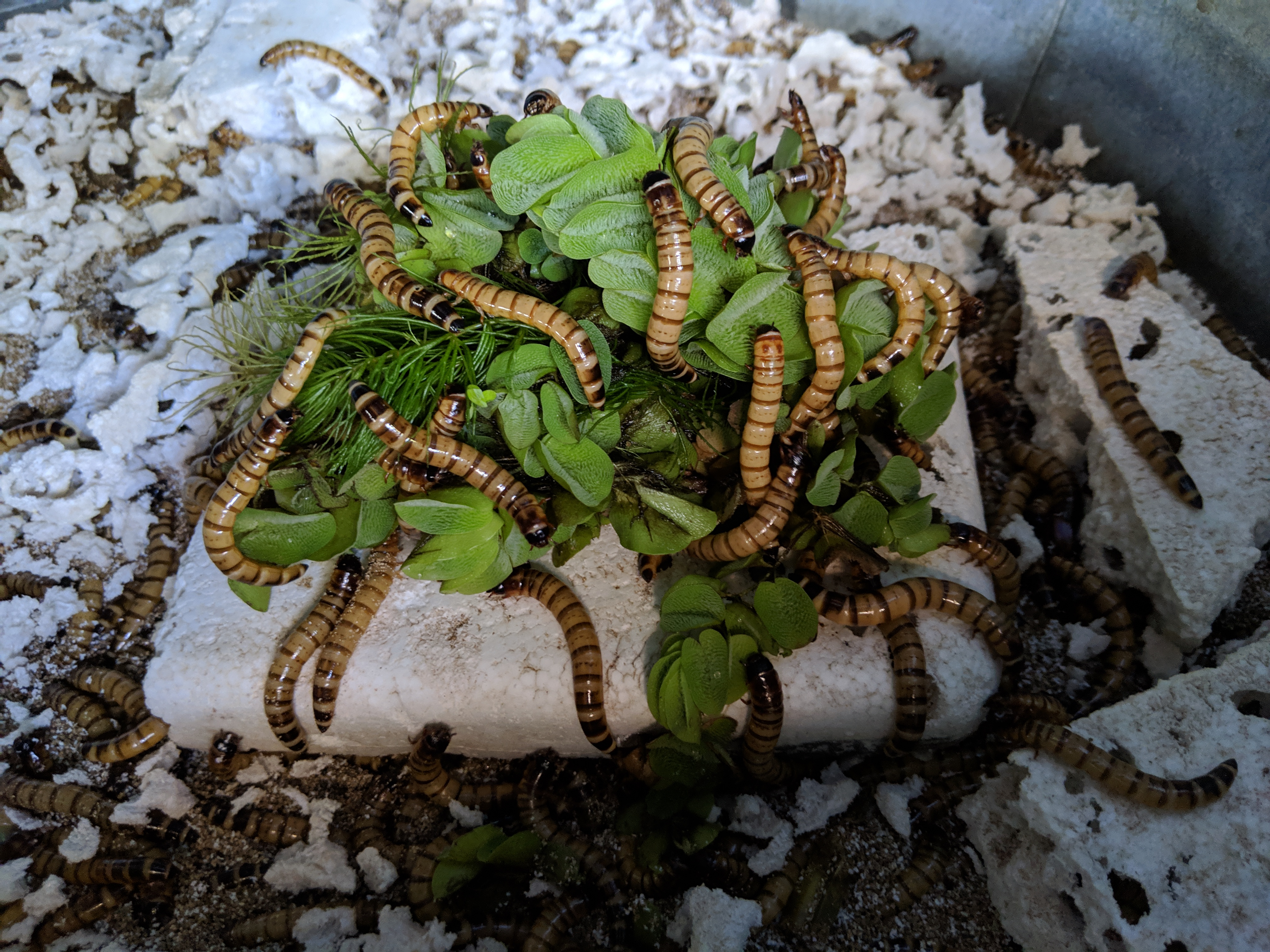
Nature has long provided solutions for breaking down organic materials, and researchers have turned to the digestive systems of Zophobas atratus worms—commonly known as superworms—for insights into plastic degradation. These worms can survive on a diet of plastic, thanks to specialized bacteria in their gut capable of breaking down common plastic polymers such as polystyrene and polyethylene.
However, using live worms for large-scale plastic waste processing presents significant challenges. The degradation process is slow, requiring an impractical number of worms to process substantial amounts of plastic. Additionally, maintaining worm colonies at scale is resource-intensive, making this approach inefficient for real-world waste management.
To overcome these obstacles, NTU scientists developed a method to isolate and cultivate the plastic-degrading bacteria found in the worms’ guts. By eliminating the need for live worms, researchers have taken a crucial step toward creating a scalable and controlled system for plastic breakdown—one that mimics nature’s efficiency without its limitations.
Creating the Artificial Worm Gut

To engineer their system, NTU scientists conducted controlled experiments with superworms, feeding them different types of plastic—high-density polyethylene (HDPE), polypropylene (PP), and polystyrene (PS)—over a period of 30 days. These plastics are among the most commonly used materials in everyday products, including food containers and detergent bottles, yet they are notoriously difficult to break down in natural environments. A control group of worms was fed a diet of oatmeal to provide a comparative baseline.
Following the feeding period, researchers extracted microbiomes from the worms’ guts and incubated them in flasks containing synthetic nutrients and plastic particles. Over six weeks, these microbiomes were left to grow under controlled conditions, simulating the gut environment of the worms. This process effectively recreated an artificial ‘worm gut’ that could facilitate plastic degradation without requiring live organisms.
Notably, the microbial communities that formed in the artificial gut were simpler and more specialized than those found in the live worms. This suggests that by isolating and cultivating specific plastic-degrading bacteria, scientists could create a highly targeted system capable of breaking down plastic more efficiently than nature itself.
A Step Toward Scalable Solutions

The findings from NTU’s research, published in Environment International, highlight a significant advancement in microbial-based plastic degradation. The artificial worm gut demonstrated a more efficient breakdown of plastic compared to direct digestion by worms, suggesting its potential for real-world applications.
One key advantage of this approach is its scalability. Unlike live worms, which have limited plastic consumption capacity, the artificial gut can be adapted and optimized for industrial use. By refining the bacterial communities to target specific plastic types, scientists could develop a highly efficient bioengineered system for plastic waste processing.
NTU Associate Professor Cao Bin, Principal Investigator at the Singapore Centre for Environmental Life Sciences Engineering, emphasized the significance of this innovation:
“A single worm can only consume a couple of milligrams of plastic in its lifetime, so imagine the number of worms required if we were to rely on them for waste processing. Our method eliminates this need by focusing on the microbes themselves, allowing for a more efficient and scalable approach to breaking down plastics.”
Dr. Liu Yinan, Research Fellow at NTU’s School of Civil and Environmental Engineering, added:
“Our study represents the first reported successful attempt to develop plastic-associated bacterial communities from gut microbiomes of plastic-fed worms. By exposing the gut microbiomes to specific conditions, we were able to boost the abundance of plastic-degrading bacteria in our artificial ‘worm gut,’ demonstrating that our method is stable and replicable at scale.”
With a more efficient, scalable method in place, this research marks a major step toward developing biotechnological solutions for reducing plastic waste on a global scale.
Real-World Application

The technology’s potential for integration into existing waste management systems is vast. Municipalities and industrial facilities could deploy artificial worm guts as part of their recycling or waste treatment processes, significantly enhancing the efficiency of plastic degradation. This would not only help in reducing the volume of plastic waste in landfills and oceans but also in recovering valuable materials that can be reused in the manufacturing cycle.
One of the key advantages of this technology is its adaptability to different types of plastics. By customizing the microbial communities within the artificial guts, scientists can target specific polymers that are common in consumer waste, such as packaging materials, disposable containers, and even more durable goods. This specificity allows for a more thorough and effective processing of plastic waste, tailored to the particular needs and outputs of various industries.
Scaling up this technology could lead to significant economic benefits. Reducing the reliance on traditional plastic disposal and recycling methods, which are often energy-intensive and costly, could decrease operational costs and improve the sustainability profiles of businesses and communities. Additionally, the byproducts of this microbial degradation process, such as biofuels or other valuable biochemicals, could be harvested and sold, creating new revenue streams for waste management facilities.
Bioengineering Against Plastic Pollution
The development of an artificial worm gut marks a significant step forward in tackling plastic pollution. By leveraging the natural plastic-degrading abilities of superworm gut bacteria, NTU scientists have created a scalable solution that eliminates the need for live organisms. This innovation offers a more efficient and sustainable alternative to traditional waste management methods, which often struggle to keep pace with the growing plastic crisis.
As research continues, refining this technology could lead to widespread applications in industrial recycling and environmental restoration. By tailoring microbial communities to target specific plastics, scientists may unlock new possibilities for large-scale plastic degradation. This approach could complement existing waste processing systems, making them more effective and less reliant on harmful disposal methods like incineration.
By bridging nature and biotechnology, this breakthrough highlights the power of scientific innovation in addressing environmental challenges. If successfully scaled, artificial worm gut systems could revolutionize plastic waste management, offering a cleaner and more sustainable future for the planet.
Source:
- Liu, Y., Bairoliya, S., Zaiden, N., & Cao, B. (2023). Establishment of plastic-associated microbial community from superworm gut microbiome. Environment International, 183, 108349. https://doi.org/10.1016/j.envint.2023.108349
