
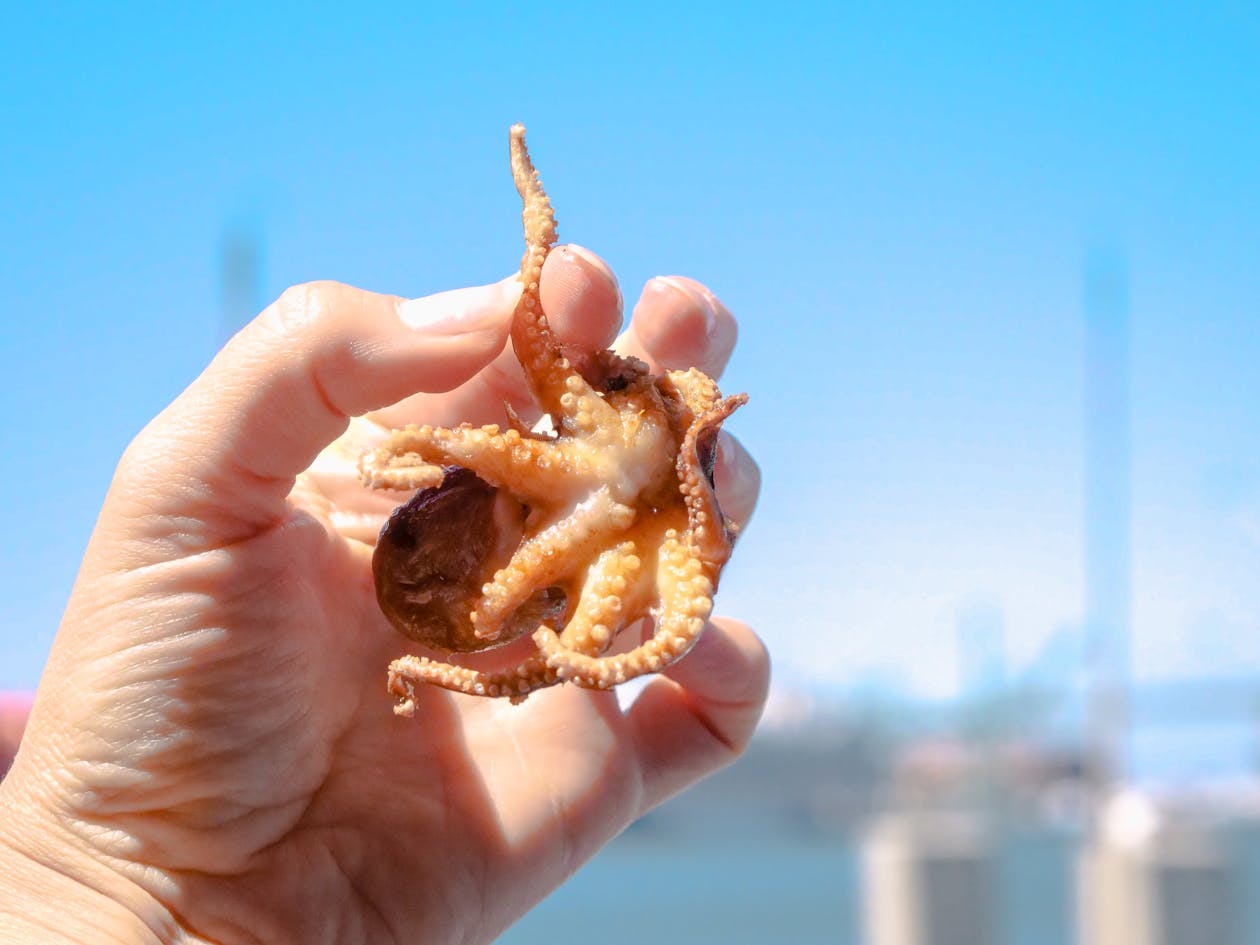
Mattias Krantz stood in a live fish market, staring at a tank full of octopuses destined for dinner plates. Most people would have walked away with seafood for the evening, but Krantz had something different in mind. As a Swedish musician known for eccentric experiments on YouTube, he saw potential where others saw appetizers, and what happened next would captivate millions of viewers around the world.
Krantz rescued one of the octopuses from the market that day, naming his new companion Tako after takoyaki, a popular Japanese street food made from octopus. What began as an impulsive decision quickly transformed into an obsession that would consume the next six months of his life. Could he teach an octopus to play piano? Most people would dismiss such an idea as absurd, yet Krantz became determined to find out whether a boneless, aquatic creature with tentacles could learn to make music.
His journey would involve countless failures, creative engineering solutions, and moments of genuine frustration where success seemed impossible. Along the way, Krantz discovered something unexpected about octopus intelligence, and viewers who followed his progress online found themselves emotionally invested in whether Tako would ever hit the right notes.
Why Octopuses Make Unlikely but Fascinating Students
Before attempting such an unusual experiment, Krantz needed to understand what made octopuses special candidates for learning complex tasks. Scientists have long recognized these creatures as some of the most intelligent invertebrates on Earth, with cognitive abilities that continue to surprise researchers who study them.
“I’ve always wanted to teach an animal piano,” Krantz explained on YouTube. “In theory, octopuses have incredible potential. They’re as smart as a three-year-old, amazing problem-solvers, and each of their eight arms has its own mini brain. It’s like having eight pianists in one body.”
Octopuses have demonstrated remarkable abilities in laboratory settings and aquariums worldwide, where they regularly open jars, solve puzzles, and escape from enclosures that their keepers thought were secure. Researchers have observed them using tools, recognizing individual human faces, and displaying what appears to be playful behavior when given objects to manipulate. A Brazilian study even suggests that octopuses may dream, which implies a level of cognitive processing that scientists are still working to understand.
Perhaps most surprising is that octopuses share similar intelligence genes with humans, despite our evolutionary paths diverging hundreds of millions of years ago. Such genetic similarities have led some scientists to view octopus brains as a window into understanding how intelligence can develop in radically different biological systems. Growing ethical concerns have also emerged about whether humans should continue eating creatures capable of such sophisticated thinking and behavior.
Engineering a Piano for Eight Arms

Even if Tako possessed the intelligence to learn piano, a standard keyboard would never work for an aquatic creature without fingers. Krantz faced an immediate engineering challenge that required him to rethink what a piano could be and how an octopus might interact with it.
His solution involved creating a custom waterproof keyboard where Tako could pull levers instead of pressing keys directly. Each lever connected to a mechanism that would push down a piano key when pulled, allowing the octopus to trigger notes using the gripping and pulling motions that came naturally to its tentacles. Krantz spent considerable time designing and building equipment that could function underwater while still producing recognizable musical sounds.
Another challenge emerged when Krantz realized that octopuses lack ears entirely, meaning Tako could not hear the music he was supposed to be learning. Sound travels differently underwater, and octopuses perceive their environment through other senses, so Krantz experimented with creating vibrations in the tank that might represent different notes. He hoped these vibrations would help Tako connect his actions with some form of sensory feedback, even if it wasn’t true hearing as humans experience it.
Months of Failure and Growing Frustration

With his custom octopus piano complete and installed in Tako’s tank, Krantz began the teaching process with optimism that quickly faded. Nothing he tried seemed to motivate Tako to interact with the instrument in any meaningful way, and weeks passed without progress.
Light-up keys represented his first approach, based on the idea that visual stimulation might guide Tako toward pressing specific notes. Octopuses have excellent eyesight and can perceive colors, so Krantz hoped that illuminated keys would attract attention and create associations between lights and actions. Tako showed minimal interest and largely ignored the glowing keyboard sitting in his tank.
Fake crabs hidden inside the piano represented another attempt to spark engagement, since octopuses naturally hunt crustaceans and might be motivated to investigate anything that resembled prey. Krantz placed artificial crabs near the keys, hoping Tako would reach for them and accidentally discover that pulling levers produced interesting results. Once again, the experiment failed to generate the response Krantz wanted.
Tank vibrations meant to represent sound also fell flat as a teaching tool, with Tako showing no clear connection between his actions and the sensory feedback Krantz tried to provide. At various points during these frustrating months, Tako would sit directly on the keys without pulling them, attempt to eat the equipment, or simply stare into space while ignoring the piano entirely. Krantz filmed these failures alongside his successes, and viewers watched him reach moments of genuine despair about whether his goal was achievable.
A Crab Elevator Changes Everything

A breakthrough came when Krantz stopped trying to make Tako understand music and instead focused on what octopuses care about most. Food motivation had worked for training countless other animals, and Krantz designed an ingenious contraption he called a “crab elevator” that would finally unlock Tako’s potential as a musician.
His crab elevator worked on a simple principle that rewarded correct behavior with tangible benefits Tako could understand. Each time Tako pulled the correct lever in sequence, a small food tube would lower a crab treat slightly closer to him. Only by completing an entire melody correctly would the crab descend within grabbing distance, creating a direct connection between playing the right notes and receiving food.
Results came almost immediately after implementing the crab elevator system, with Tako beginning to associate lever-pulling with getting fed. Repetition reinforced these connections over subsequent weeks, and Krantz spent hours each day working with Tako to build both skill and trust. Bonding sessions became part of the training routine, as Tako grew more comfortable with Krantz’s presence and more willing to engage with the musical equipment in his tank.
Musical Progress Beyond Expectations

Tako’s abilities developed steadily once food motivation entered the equation, and Krantz documented every milestone for his growing online audience. What had seemed impossible just weeks earlier became reality as Tako learned to hit specific notes by pulling the correct levers with his tentacles.
Simple sequences came next, with Tako learning to play multiple notes in the correct order to earn his crab reward. Krantz was astonished when Tako accidentally produced a chord at one point, pressing multiple levers simultaneously in a way that created harmony rather than random noise. While Tako almost certainly did not understand music in the way humans do, he had learned to associate specific physical actions with desired outcomes.
Impromptu jam sessions became possible as Tako grew more confident with his instrument, and Krantz would play guitar alongside his octopus companion during these musical moments. Whether Tako experienced anything resembling enjoyment during these sessions remains unknown, but he had clearly learned that pulling piano levers led to positive results in his environment.
Internet Fame Finds an Unlikely Star
Krantz’s documentation of his six-month journey attracted massive attention online, with his Instagram video alone reaching 22.7 million views as people around the world discovered Tako’s story. Thousands of comments poured in from viewers who marveled at both the dedication required for such a project and the delightful absurdity of watching an octopus learn piano.
His full 14-minute YouTube video documents every step of the process, from early trust-building exercises to tank escapes, to the infamous light-up keyboard that Tako absolutely refused to engage with. Viewers who watched the complete video experienced the same emotional journey Krantz went through, feeling frustration during failed experiments and genuine excitement when the crab elevator finally produced results.
Social media transformed Tako from a rescued market octopus into an internet celebrity, with fans following updates about his continued musical development and daily life in Krantz’s home. Comments sections filled with people expressing surprise at octopus intelligence and questioning their own assumptions about what these creatures can accomplish.
Scientific Interest in Octopus Cognition

Tako’s musical abilities reflect broader scientific interest in understanding how octopus brains work and what they might teach us about intelligence itself. Researchers around the world study octopus cognition, hoping to gain new perspectives on how nervous systems process information and learn new tasks.
“The octopus is a special invertebrate. By studying how the brain functions in octopuses, we can maybe learn new tools to interfere with our nervous systems or to understand our nervous system better,” explained Nikolaus Rajewsky, PhD, scientific director of Berlin Institute for Medical Systems Biology of Max Delbrück Center.
Such research carries implications beyond pure scientific curiosity, as understanding octopus brains might eventually help scientists develop new treatments for neurological conditions in humans. Octopuses evolved their intelligence independently from mammals, meaning their brains represent a completely different solution to the challenge of processing complex information about the world.
From Dinner Plate to Duet Partner
Krantz originally planned to release Tako back into the ocean once his experiment concluded, returning the octopus to a natural environment after their time together ended. Something changed during those six months of daily interaction, training sessions, and musical collaboration that made separation feel wrong.
“I almost forgot sometimes that Tako was destined to become someone’s dinner and now we’re making music together,” Krantz reflected on YouTube.
He decided to keep Tako as a permanent pet, companion, and occasional keyboardist for future musical projects. Whether the experiment proved anything scientifically meaningful matters less than the bond it created between a musician and a cephalopod who never should have met. Tako now lives peacefully in Krantz’s home, far from the fish market where his story began, occasionally pulling piano levers for treats while his human companion plays guitar alongside him.
