
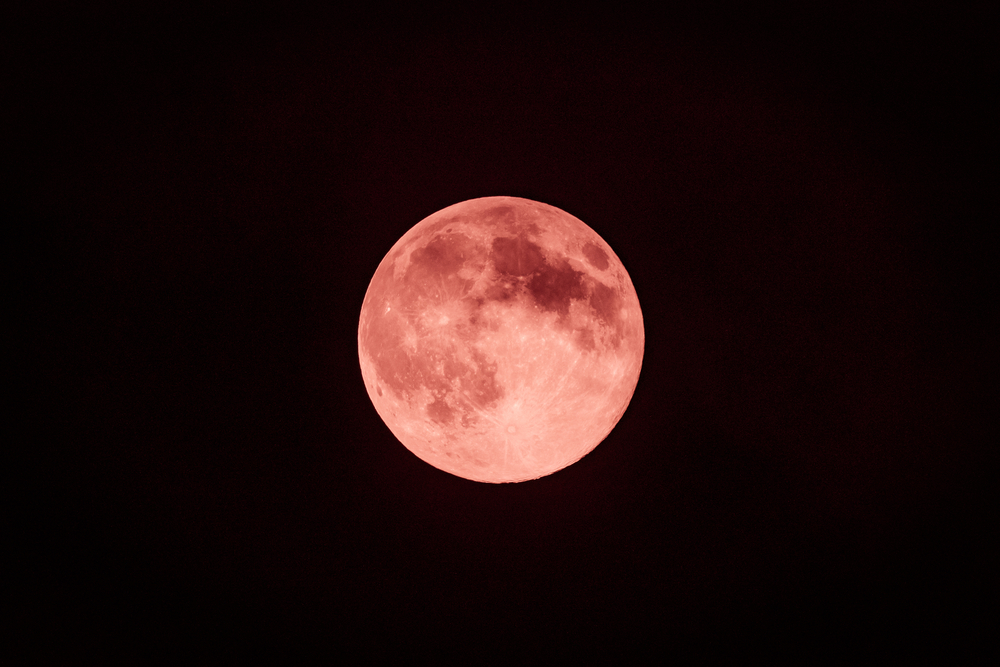
In the quiet hours before dawn on March 3, 2026, the Moon will slip into Earth’s shadow and emerge transformed. For 58 unforgettable minutes, the familiar silver disk will glow copper and crimson, suspended in the night like a living ember. Across the Pacific Rim, from western North America to East Asia and down through Australia and New Zealand, millions will look up and witness a total lunar eclipse that feels both ancient and deeply personal.
Astronomically, this event is precise and measurable. Astrologically, it is symbolic and catalytic. This is not just any Full Moon. It is the March Worm Moon, aligned in the constellation of Leo near Regulus, and it arrives in the heart of eclipse season, just weeks before the equinox resets the balance of light and dark. It is also the final total lunar eclipse the world will see until the threshold of 2029. Something is closing. Something else is preparing to rise.
To understand what this eclipse may stir in us, we first need to understand what is happening above us.
The Science of a Blood Moon
A lunar eclipse occurs when Earth passes directly between the Sun and the Moon, casting its shadow across the lunar surface. This alignment can only happen during a Full Moon, when the Moon stands opposite the Sun in the sky.
On March 3, 2026, the eclipse will begin subtly at 08:43 UTC when the Moon enters Earth’s penumbra, the faint outer portion of the shadow. The dimming at this stage is slight. Many casual observers will not notice much change. But at 09:49 UTC, the Moon begins to enter the umbra, the darker central shadow. Now the transformation becomes visible. A dark curve appears on the lunar edge, as if a cosmic bite has been taken.
At 11:03 UTC, totality begins. The entire Moon will be immersed in Earth’s umbra. Totality lasts 58 minutes and 59 seconds, reaching its deepest point at 11:33 UTC, which also coincides almost exactly with the precise moment of Full Moon. For one or two brief minutes, the Moon will be 100 percent illuminated and fully aligned, even as it glows red within the shadow.

Why red?
The answer lies in Rayleigh scattering, the same phenomenon that paints our sunrises and sunsets in orange and crimson. As sunlight passes through Earth’s atmosphere, shorter blue wavelengths scatter away. The longer red and orange wavelengths bend through the atmosphere and spill into the umbra, softly illuminating the Moon. In a poetic sense, the Moon during a total lunar eclipse is lit by every sunrise and sunset happening on Earth at that moment.
Atmospheric conditions influence the exact hue. If there is dust or volcanic material in the stratosphere, the Moon may appear deeper red. Under clearer conditions, it may glow copper or orange. This particular eclipse is expected to produce a rich gradient, because the Moon’s southern limb passes closest to the center of Earth’s shadow. The lower half of the lunar disk may appear darker and more crimson, while the northern portion glows brighter and more coppery.
From a scientific perspective, it is optics and orbital mechanics. From a symbolic perspective, it is the world’s light filtering through collective atmosphere, painting the Moon with the color of transformation.
Where and When to Witness the Transformation

The eclipse unfolds at the same universal time worldwide, though local clock times differ. Totality will be visible across western North America, Alaska, Hawaii, Australia, New Zealand, East Asia, and much of the Pacific. In eastern North America, observers will see totality in the pre dawn hours, with the Moon setting during or shortly after the red phase. Central and western Asia and parts of South America will see partial phases. Europe and much of Africa will miss this event entirely.
Only about two percent of the global population will see every phase from penumbral beginning to penumbral end. Yet nearly a third of humanity will witness at least part of totality. Billions will share the same moment of red lunar light.
The entire eclipse lasts more than five and a half hours, but the heart of it is the 58 minute immersion in shadow. In many western North American cities, totality occurs around 3:04 to 4:02 a.m. Pacific Time. In places like Tokyo and Seoul, it unfolds around 8:04 to 9:02 p.m. local time on March 3. In New Zealand, it peaks shortly after midnight on March 4.
Unlike a solar eclipse, no special equipment is needed. The event is safe to view with the naked eye. A dark location enhances the experience, and binoculars or a telescope reveal subtle shading and detail. Photographers may even capture a rare occultation of the galaxy NGC 3423 during totality from parts of North America, an unusual alignment made possible by the dimming of the Moon.
Yet beyond the technicalities, the invitation is simple. Step outside. Look up. Let the sky remind you that you are part of something vast.
The Worm Moon and the Turning of the Seasons

March’s Full Moon is traditionally called the Worm Moon, a name rooted in Indigenous North American traditions. As the ground thaws and earthworms begin to emerge, birds return and the first green shoots push through softened soil. Other names for this Moon include the Crow Moon, Sap Moon, Crust Moon, Wind Moon, and Plough Moon. Each reflects a culture observing the slow awakening of spring.
In 2026, the Worm Moon carries extra weight. It turns red just 17 days before the March equinox. Winter is loosening its grip. Light and dark are approaching balance. The eclipse becomes a threshold between dormancy and renewal.
Symbolically, worms aerate the soil, breaking up what has hardened, making space for new roots. They transform decay into nourishment. There is a quiet metaphor here. The eclipse invites us to examine what has been buried within us over the winter months. What emotional sediment needs turning? What old stories are ready to decompose into wisdom?
This Blood Moon does not arrive in isolation. It completes a sequence of three total lunar eclipses within one year, beginning in March 2025 and continuing in September 2025. After March 3, 2026, the next total lunar eclipse will not occur until December 31, 2028 into January 1, 2029. There is a sense of culmination, a closing of a cycle that has been building for months.
When celestial rhythms pause, we are given a rare still point. It is a chance to integrate what has shifted.
Eclipse Season and Cosmic Timing

Eclipses occur in seasons, windows of alignment that repeat roughly every six months. Each season typically contains a solar and a lunar eclipse. The first eclipse season of 2026 began with an annular solar eclipse on February 17 over Antarctica, a ring of fire witnessed by very few humans. The lunar eclipse of March 3 completes that energetic portal.
Astrologically, eclipse seasons are accelerators. They reveal what has been hidden and fast track change. Events that occur near eclipses often feel fated or catalytic. Emotions intensify. Decisions crystallize. Relationships shift.
This particular eclipse takes place with the Moon in Leo and the Sun in Pisces. Leo is the sign of creative self expression, courage, and the heart. Pisces is the sign of compassion, intuition, and spiritual dissolution. The axis between them asks a question. How do we express our unique light while remaining connected to the greater whole?
A lunar eclipse is a Full Moon amplified. Full Moons already illuminate what has been brewing beneath the surface. Add Earth’s shadow, and the illumination becomes dramatic. Something reaches culmination. Something else falls away.
Leo energy wants authenticity. It wants to be seen, to create, to lead from the heart. When eclipsed, it may reveal where we have dimmed ourselves to avoid judgment, or where ego has overshadowed humility. The Pisces Sun across the sky reminds us that we are not separate sparks but part of an ocean of consciousness.
This tension is not meant to divide us. It is meant to refine us.
The Symbolism of the Blood Moon

Across cultures and centuries, lunar eclipses have been regarded with awe. Some ancient societies feared them as omens. Others saw them as sacred reset points. In modern astrology, they are often framed as karmic checkpoints.
A Blood Moon carries the archetype of transformation. Red is the color of life force, of roots and survival, of the first chakra that anchors us to the Earth. When the Moon, ruler of emotion and intuition, turns red, it symbolizes a confrontation with our most instinctual patterns.
The shadow phase of the eclipse represents what is hidden or suppressed. As the Moon moves into darkness, we are invited to look at our own shadows. Not with judgment, but with awareness. During totality, when the Moon is fully immersed in the umbra, there is a strange stillness. It is not the obliteration of light but its mutation. Light filtered through atmosphere becomes something deeper, richer.
Then the Moon emerges. Gradually, the red fades. The silver returns.
The cycle mirrors our own process of growth. We enter shadow. We sit with it. We integrate what we learn. We reemerge changed.
Because this eclipse occurs in Leo, themes of identity, creativity, romance, and personal power may surface. Old narratives about worthiness could dissolve. Creative blocks might break open. Relationships that limit authentic expression may reach a turning point.
Yet Pisces reminds us that not all endings are dramatic. Some dissolve quietly. Forgiveness may be the medicine. Compassion may be the bridge between who we were and who we are becoming.
A Rare Pause Until 2029

Astronomically, this eclipse belongs to Lunar Saros 133, a series that began in 1557 and will continue for more than a millennium. This particular family of eclipses is still in its prime total phase, and the March 2026 event is one link in a long chain stretching across centuries.
After this night, there will be a deep partial lunar eclipse in August 2026, and then a gap before the next total lunar eclipse at the end of 2028. That rarity adds a layer of significance. The sky is not constantly offering this spectacle. When it does, it feels intentional.
Collectively, we are living in a time of rapid change. Social systems, technologies, and cultural narratives are shifting at high speed. The world can feel chaotic, polarized, overstimulated. A lunar eclipse asks us to pause. To step outside the noise. To remember cycles larger than headlines.
The Moon has orbited Earth for billions of years. Eclipses have come and gone long before our current moment. There is humility in that perspective.
How to Work with the Energy

You do not need elaborate rituals to honor a lunar eclipse. Presence is enough. But intention can deepen the experience.
In the days leading up to March 3, pay attention to what feels complete in your life. Notice emotional patterns that feel ready to be released. Because this eclipse aligns closely with the exact moment of Full Moon, the energy of culmination is especially concentrated.
On the night itself, if visible in your region, step outside during totality. Breathe slowly. Consider journaling about what you are ready to shed before the equinox. Leo energy favors creative acts, so you might draw, write, sing, or speak aloud a declaration of self acceptance. Pisces energy favors meditation and water rituals. A simple bowl of water under the eclipsed Moon can serve as a symbolic mirror for reflection.
It is often advised not to set major intentions during eclipses in the same way one might during a typical New Moon. Eclipses are less about manifesting and more about clearing. Let what surfaces be acknowledged. Let what falls away do so naturally.
As the red fades and the Moon returns to silver, imagine your own light recalibrating. Winter’s introspection gives way to spring’s movement. The soil has been turned. Seeds are ready.
From Shadow to Light
At 11:33 UTC on March 3, 2026, the Moon will reach both greatest eclipse and perfect fullness. For a fleeting moment, geometry and symbolism align. The Earth stands between Sun and Moon, yet the Moon shines red rather than disappearing. Light finds a way through the atmosphere, bending and refracting, proving that even in shadow there is illumination.
This is the quiet teaching of the Blood Moon.
We do not avoid shadow to grow. We pass through it. We allow it to tint us with deeper color. We recognize that endings are thresholds, not voids.
As the March equinox approaches on March 20, day and night will stand in balance. The Worm Moon eclipse prepares us for that equilibrium. It invites a personal reset in a chaotic world. It asks us to clear emotional debris so new growth can take root.
On March 3, for 58 minutes, the Moon will turn blood red. Billions may witness it. Billions may sleep through it. But its symbolism ripples through collective consciousness all the same.
When you look up at that crimson sphere, remember that it is lit by every sunrise and sunset happening across the planet. It is a reminder that we are interconnected, that our atmosphere shapes what we see, that even in darkness we participate in a greater light.
The shadow will pass. The silver glow will return. And somewhere within you, a quiet transformation will already be underway.
