
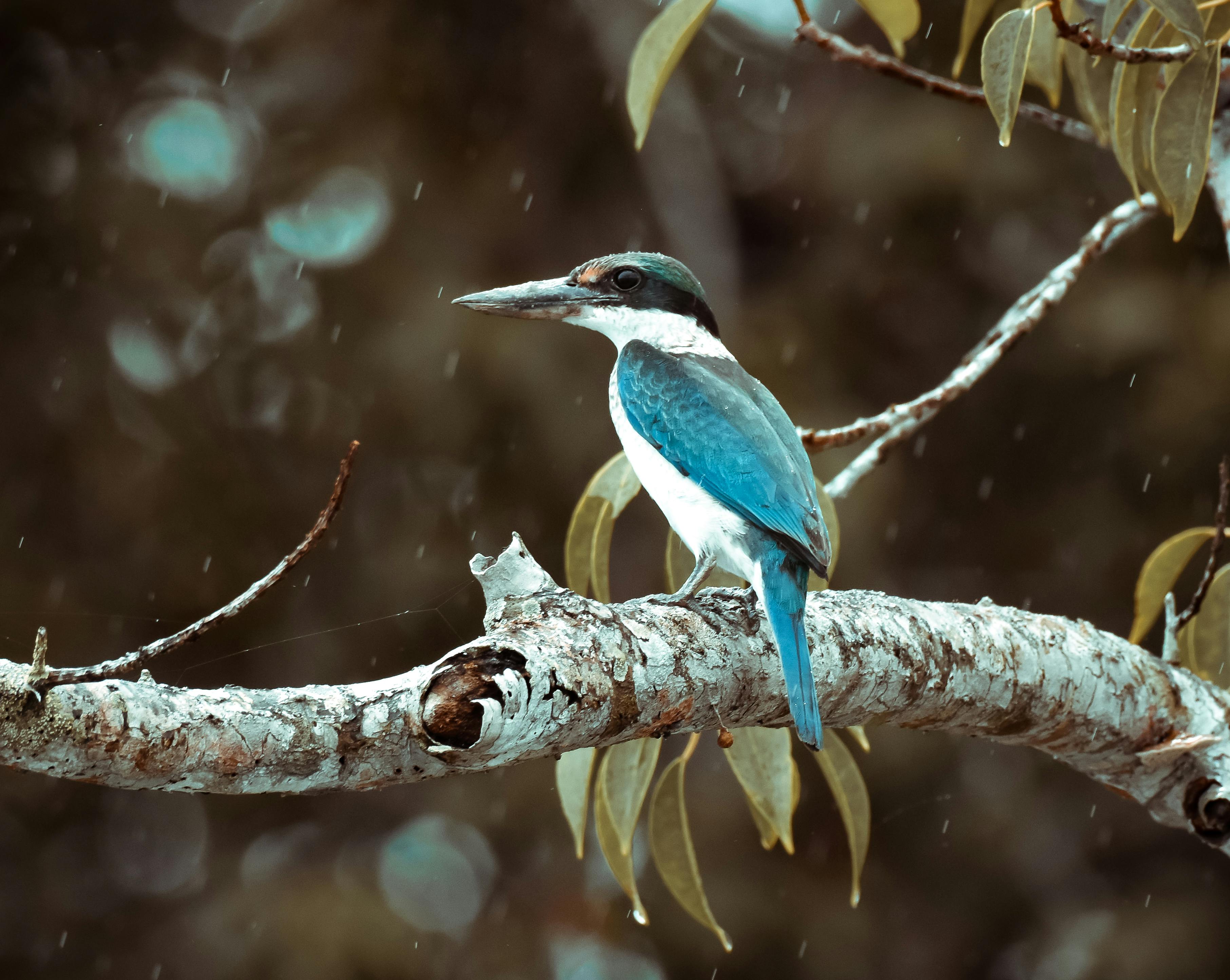
In a quiet suburban backyard outside San Antonio, a birdwatcher’s casual photograph sparked a scientific surprise. What looked at first glance like an unusually pale blue jay turned out to be something far rarer. After months of curiosity, careful fieldwork, and genetic analysis, biologists from the University of Texas at Austin confirmed that the bird was a natural hybrid of two species separated by millions of years of evolution.
This unexpected discovery has since become an important case study in how shifting climates are redrawing the map of the natural world. Researchers believe the bird, now unofficially nicknamed the grue jay, may be the first documented vertebrate hybrid created as a result of two species expanding into new territory at the same time due in part to climate change.
What began as a backyard mystery has grown into a story with much larger implications. It reveals how changing environments shape wildlife, how chance encounters can lead to scientific breakthroughs, and how the boundaries between species can blur in subtle but significant ways.
A Backyard Sighting That Changed Everything
The story began in May 2023 when an online birding group posted a grainy photo of a bird that did not quite match any known species. Its body appeared mostly blue, yet its face featured the black mask and white chest more commonly associated with a green jay. UT Austin ecologist and green jay specialist Brian Stokes noticed the post almost immediately. Although the photo resembled a blue jay at first glance, there were enough unusual details to make him wonder what he was really looking at.
The homeowner, intrigued by the buzz within the birding community, invited Stokes to investigate. On his first attempt, the bird proved elusive. Despite spending a full day with mist nets stretched between poles, Stokes caught and released other birds instead. Only on the second day did the mystery jay fly directly into the net.
Once in hand, the bird offered even more clues. Its coloration, its facial markings, and the faint traces of green around its feathers all hinted at its unusual heritage. Stokes took a small blood sample, banded the bird’s leg for future identification, and released it back into the yard.
Seven Million Years of Evolution Meet in One Backyard
Blue jays and green jays diverged roughly seven million years ago. Although they share a common ancestor, their evolutionary paths took them into very different environments. Green jays thrived in tropical forests and subtropical regions stretching throughout Central America, while blue jays adapted to the more temperate climates of the eastern and central United States.
Until recently, these two species rarely interacted. In the 1950s, green jays barely crossed into South Texas, and blue jays seldom flew farther west than the Houston area. Their ranges were separated by hundreds of miles. For most of the twentieth century, the possibility of a natural hybrid between the species was essentially nonexistent.

Over the last two decades, however, birders using platforms like eBird began to notice a shift. Green jays were appearing farther north than usual, and blue jays were showing up well beyond their typical territory. This gradual convergence puzzled researchers. Why were these movements happening now?
According to scientists studying the patterns, climate change played an important role. As temperatures rose and weather patterns shifted, the boundaries between habitat zones changed as well. Green jays moved northward into areas that were once too cool or too dry, while blue jays expanded westward as forests and urban environments became more hospitable.
Eventually, the two fronts met in the San Antonio region. And somewhere in that expanding overlap, a blue jay and a green jay crossed paths long enough to produce the bird now known as the grue jay.
A Rare Hybrid Confirmed Through Genetics

The initial field observations provided strong clues, but only genetic testing could confirm the bird’s true identity. After collecting the blood sample, Stokes and his colleagues conducted an analysis that pinpointed the hybrid’s exact parentage. The team discovered that the bird was a male born from a blue jay father and a green jay mother.
This parent pairing also matched a hybrid produced in captivity during the 1970s. In that earlier case, scientists intentionally crossbred the species. They documented the physical features and preserved a specimen, which now rests in a Texas museum collection. When researchers compared notes, they found striking similarities between that preserved hybrid and the new wild offspring.
The San Antonio grue jay represented something unique. It was the first known example of the hybrid occurring naturally and not within a controlled environment. More importantly, it did not appear because of direct human influence such as habitat manipulation or the introduction of one species into the range of another. Instead, both species naturally expanded into overlapping territory as a result of broader environmental changes.
A Second Appearance and a Stroke of Luck

After its release, the bird disappeared for nearly two years. Stokes and his colleagues wondered whether it had moved on, fallen prey to predators, or blended unnoticed into the surrounding region. Then, in June 2025, the grue jay suddenly returned to the same suburban yard where it had first been captured.
Thanks to the leg band placed during the original research visit, the team quickly confirmed the bird’s identity. Its reappearance underscored just how unlikely the entire discovery had been. Had the bird chosen a yard or two in a different direction, it might never have been reported at all.
Cases like this reveal how many similar hybrids might go unnoticed. Researchers believe hybridization happens far more often than documented, especially among species newly overlapping because of climate driven range shifts. In many instances, these hybrids remain unseen simply because no one is there to observe them.
Climate Change and the Shifting Map of Wildlife
Hybridization in animals is not new. Many species can interbreed when their territories overlap or when environmental pressures push them into new regions. However, the grue jay stands out because it was created by two species moving at the same time in response to warming temperatures and altered precipitation patterns.
This movement does not signify random wandering. Species tend to expand into new areas when the climate becomes more favorable or when their existing habitats grow less stable. Small changes accumulate over time until the ranges of once distant species begin to overlap.
Researchers believe that this pattern will likely continue. If climate trends persist at current rates, more hybrids could appear in the future. Some may pass unnoticed, while others might reshape local ecosystems.

Examples of Climate Driven Hybridization
Several other species exhibit similar patterns:
- Polar bears and grizzly bears have produced hybrids in regions where melting ice pushes polar bears inland and expanding forests draw grizzlies north.
- Certain types of fish have begun interbreeding as shifting water temperatures alter their migration routes.
- Insects such as butterflies and dragonflies are increasingly crossing paths with species they rarely encountered before.
In each example, climate driven movement changes the opportunities available for interbreeding. The grue jay offers a particularly clear illustration of this trend because it involves two birds that had been separated by millions of years.
How Citizen Scientists Helped Spot the Hybrid
One of the most interesting aspects of this discovery is that it relied heavily on everyday birdwatchers. Platforms like eBird and Facebook birding groups serve as real time monitoring systems for wildlife. When a curious photo appears, researchers can quickly investigate.
In the grue jay case, it was an amateur birder’s observant eye that started the entire chain of events. Without that original snapshot, the hybrid might never have been detected.
Citizen science provides several important benefits.
Advantages of Public Participation in Wildlife Research
- Widespread coverage: Birders operate across backyards, parks, and rural areas where researchers might not normally work.
- Rapid reporting: Online posts allow unusual sightings to circulate quickly.
- Volume of observations: Thousands of participants generate far more data than professional scientists could collect alone.
- Enhanced accuracy: Repeated sightings help confirm range expansions or unusual wildlife behavior.
In a warming world where species are constantly on the move, the support of citizen scientists becomes increasingly valuable.

What This Hybrid Means for the Future of Birds
Hybrids like the grue jay serve as natural experiments. Because they blend the traits of two distinct species, they offer insights into genetics, evolution, behavior, and reproductive boundaries. Scientists carefully study such hybrids to understand which traits pass from one lineage to another and how those traits influence survival.
In some cases, hybrids may struggle to find mates or may not reproduce. In others, they could carve out a small niche within a shifting ecosystem. The long term fate of the grue jay is unknown. It may remain a rare one off, appearing only under specific circumstances. Or it could be an early example of a broader trend.
Potential Outcomes of Range Overlap
- Increased hybridization: If blue jays and green jays continue expanding their territories, more hybrids may appear over time.
- Stability within species: If the overlap remains limited or temporary, the hybrid may remain an anomaly.
- Behavioral barriers: Even with overlapping ranges, differences in behavior, breeding schedules, or vocalizations could limit hybrid formation.
Researchers are watching closely to see how the ranges shift in the coming years. Climate patterns will play a major role in determining whether encounters between the species become more common.
The Human Element in a Changing Climate

Although the grue jay’s existence does not result from direct human interference, it represents the broader consequences of human driven climate change. Rising global temperatures, altered precipitation, and shifting weather systems have ripple effects that extend throughout ecosystems.
Birds in particular respond quickly to environmental cues. When habitats warm or food availability changes, many species must relocate to survive. As they move, they encounter new neighbors and sometimes, as the grue jay demonstrates, create unexpected offspring.
Lessons From the Discovery
The story of the grue jay provides several valuable insights.
- Small observations matter. A single photograph from a backyard birder prompted a scientific discovery with wide reaching implications.
- Climate change shapes wildlife in subtle ways. The movement of species is gradual but accumulative. Over time, new interactions emerge.
- Hybrids offer clues to ecological change. By studying these rare individuals, researchers learn how species adapt to new environments.
- Collaboration between scientists and the public is essential. Shared data accelerates research and reveals patterns that might otherwise remain hidden.

Reflecting on a Bird That Should Not Exist
The grue jay lives at the intersection of chance, climate, and curiosity. It is a bird that likely would not have existed without decades of environmental change reshaping the landscapes of Texas. Yet it is also a reminder that nature is constantly adapting.
Its discovery invites a broader reflection on the shifting relationships among species. As the climate continues to warm, new hybrids may emerge. Some may challenge long held assumptions about species boundaries. Others may quietly blend into ecosystems without ever being noticed.
But for now, the grue jay stands as a symbol of a world in motion. Through its presence, it tells a story about how even familiar backyard birds can reveal profound truths about the environment. And it shows how every observation, no matter how small, can help us better understand the changing planet around us.
The Science Behind Identifying a Rare Hybrid
The first known wild grue jay represents more than an unusual bird. It illustrates how climate driven range shifts can bring once distant species into contact. It highlights the importance of citizen scientists whose observations spark deeper investigations. And it underscores how quickly natural boundaries can change.
In the years to come, researchers will continue monitoring blue jays, green jays, and the zones where their territories overlap. Whether more hybrids appear or this remains a rare sighting, the grue jay has already made its mark. It reminds us that the natural world is constantly reshaping itself in response to our changing climate and that some of the most important scientific discoveries begin with a simple question. What am I looking at?
