
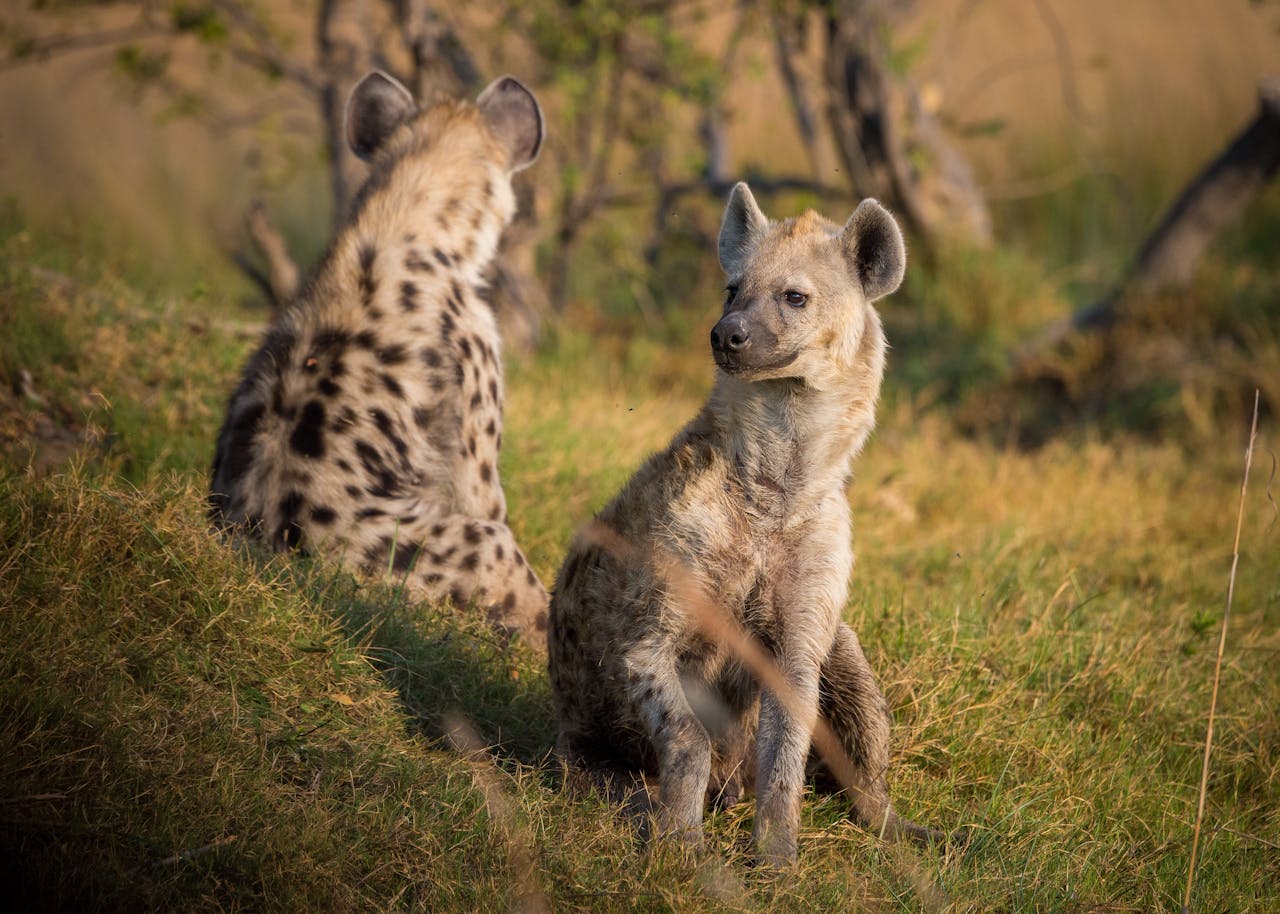
For more than a decade, staff at Maruyama Zoo in Sapporo puzzled over why their pair of spotted hyenas showed no signs of successful breeding. They tried pairing, separating, reintroducing, and even encouraging bonding through enrichment activities. But instead of romance, the two animals, Kami and Kamutori, often clashed, leaving zookeepers scratching their heads. The answer, it turns out, was hiding in plain sight: both hyenas are male.

A Discovery More Than a Decade in the Making
When Kami and Kamutori first arrived at Maruyama Zoo in 2010, staff believed they were welcoming a carefully selected male and female pair destined to become the foundation of a new breeding effort. In reality, the misunderstanding lingered for more than ten years. During that time the zoo not only monitored their behavior but also adjusted diets, provided new enclosures, and even sought external advice from veterinarians and specialists, hoping to spark the conditions for reproduction. Each attempt ended in puzzlement as the animals’ confrontations escalated and no pregnancies followed. The longer the situation persisted, the more it drew the attention of both zoo professionals and visitors, who wondered aloud why there were still no cubs.

Administrators eventually authorized a comprehensive review, which involved detailed medical procedures that went far beyond routine check‑ups. Ultrasounds, blood sampling, and hormone profiling under anesthesia left little room for doubt. The findings finally confirmed that the pair had been misclassified at the very beginning. As one spokesperson told Agence France‑Presse, the result was both embarrassing and enlightening, because it underscored just how easily even experienced handlers could be misled by this species’ anatomy.
Why Hyena Biology Makes Mistakes Common
Spotted hyenas possess one of the most unusual reproductive anatomies in the mammalian world, and this is the central reason why sex identification has been a challenge for decades. Female hyenas develop a pseudo-penis through which they urinate, copulate, and even give birth. This structure is so similar to the male organ that distinguishing between the sexes by simple visual inspection is highly unreliable. Unlike in most species where external features provide clear markers, here both sexes display nearly identical genital appearances.
Researchers point out that reliable identification usually requires a combination of long-term observation, hormonal profiling, and occasionally genetic testing. These methods are resource-intensive and not always performed when animals are transferred between institutions, which increases the likelihood of mistakes. Comparative studies published in zoological journals emphasize that misclassification is not unique to Maruyama Zoo and has occurred in other facilities across the globe. The problem persists because the biological adaptation that grants female hyenas their dominance in social hierarchies simultaneously obscures one of the most basic characteristics used by humans to categorize animals.
This complexity also influences behavior within groups, as dominance and mating dynamics in hyenas are driven heavily by female physiology. Without an accurate understanding of which animals are male or female, zookeepers can misinterpret interactions, further compounding confusion about why certain breeding programs fail. Reports by National Geographic stress that this trait is a product of evolutionary pressures unique to hyenas, which developed social systems where females maintain authority over males, a reversal of the pattern seen in many other mammals.

Global Context of Hyena Conservation
The circumstances at Maruyama Zoo highlight broader issues that affect spotted hyena populations worldwide. In their native African habitats, these animals play a critical ecological role as apex predators and scavengers, yet they face ongoing challenges linked to shrinking landscapes and growing human presence. Agricultural expansion, road development, and settlement encroachment have steadily fragmented the savannas and grasslands where hyenas thrive. This not only reduces the prey available to them but also increases contact with humans, often leading to lethal retaliation when hyenas are perceived as threats to livestock. Conservation groups report that such conflict is one of the leading drivers of decline in some regions.
Another dimension of the global context is the relative scarcity of hyenas in captive settings compared with more charismatic species such as lions or tigers. Because their numbers are limited in zoos, each individual becomes significant to genetic management programs that attempt to preserve diversity. The misclassification in Japan may seem like an isolated mistake, but when extrapolated across international efforts, repeated errors could compromise the effectiveness of these carefully balanced programs. The International Union for Conservation of Nature currently lists the species as of Least Concern, yet population estimates range between 27,000 and 47,000 individuals across Africa, with some regional populations declining at alarming rates. Reports indicate that numbers in West Africa are particularly fragile, with fragmented groups isolated by expanding human settlement. Regional zoo associations emphasize that collaboration, data sharing, and standardized veterinary checks are indispensable if spotted hyenas are to be maintained as a healthy, sustainable population both in captivity and in the wild.
Lessons From Years of Effort
The case at Maruyama Zoo demonstrates how long-term conservation projects can be derailed by factors that appear simple but are actually deeply complex. The institution invested years of resources into enclosure design, nutrition, and animal management with the expectation that these foundations would create the right environment for reproduction. Yet all of these efforts were undermined by a single misclassification at the outset. This highlights how conservation work depends as much on accurate scientific groundwork as it does on day-to-day animal care.
The episode also illustrates the importance of periodic reassessment in zoological programs. In many facilities, assumptions made at the point of animal transfer or acquisition can remain unquestioned for years. By the time suspicions arise, valuable opportunities for genetic management and population sustainability may have been lost. Scholars in zoo management argue that systematic health checks and genetic screenings should be integrated into long-term breeding strategies precisely to avoid such setbacks. When viewed through this lens, the Maruyama Zoo case functions as a reminder that even the most committed caretakers must continually test their assumptions against rigorous evidence.

The Role of Science Communication
The global attention surrounding Kami and Kamutori’s story demonstrates how communication shapes public understanding of science. Coverage by international outlets amplified a local incident into a narrative that sparked curiosity, humor, and reflection worldwide. This reach underscores how accessible reporting on complex topics can transform a technical zoological error into a meaningful conversation about biology, conservation, and the limits of human knowledge.
Effective communication also supports accountability in conservation institutions. By openly sharing the discovery, Maruyama Zoo reinforced trust with its audience, showing that transparency in science includes acknowledging mistakes as well as successes. Studies in science communication highlight that public engagement increases when stories are framed around relatable experiences, and the two hyenas provided exactly that. Their case demonstrates that even missteps can be leveraged as educational tools, motivating visitors to care more deeply about the species and the ecosystems they represent.

What Comes Next for Kami and Kamutori
With the discovery clarified, Maruyama Zoo has shifted focus toward building a viable breeding program grounded in accurate knowledge. Plans are underway to acquire a confirmed female hyena from another accredited institution, an effort that requires careful coordination to ensure genetic diversity and animal welfare. The process involves international cooperation among zoos, as the global population of spotted hyenas in captivity is limited and managed through studbooks to prevent inbreeding.
For Kami and Kamutori, their role will now be less about reproduction and more about education and public engagement. They remain popular with visitors, and zoo educators can use their story to explain the complexities of wildlife biology and the importance of scientific precision in conservation. Keeping them together also helps maintain their social enrichment, as hyenas are highly social animals that benefit from companionship even outside of breeding contexts.

Zoo officials have noted that the case has encouraged them to review protocols and strengthen veterinary collaborations, ensuring that any future breeding initiatives will begin with exhaustive checks. The renewed strategy reflects lessons learned and positions the zoo to play a more effective part in regional conservation networks. In this way, the next chapter for Kami and Kamutori extends beyond their individual lives, contributing to broader awareness and better practices in the management of vulnerable species.
A Reminder of Nature’s Surprises
The discovery at Maruyama Zoo underscores the unpredictable realities of working with wildlife and how easily human expectations can be overturned by nature’s complexity. For scientists, the case serves as a practical reminder that certainty in biology often requires evidence that goes beyond appearances. Each misstep becomes a chance to refine methods and prevent similar errors from occurring elsewhere. For the general public, stories like this emphasize that conservation is rarely straightforward, and that behind the exhibits seen in zoos lies a constant process of learning, adapting, and correcting course.
This reminder of unpredictability also carries value for the conservation community as a whole. It demonstrates how unexpected findings can foster collaboration, prompt new research questions, and strengthen transparency in animal care. Rather than being dismissed as a failure, the situation with Kami and Kamutori illustrates that surprises can be instructive, leading to greater resilience in how institutions manage animals. It is through acknowledging and analyzing such surprises that zoos and researchers advance their understanding of species and reinforce the trust of the audiences they serve.

