
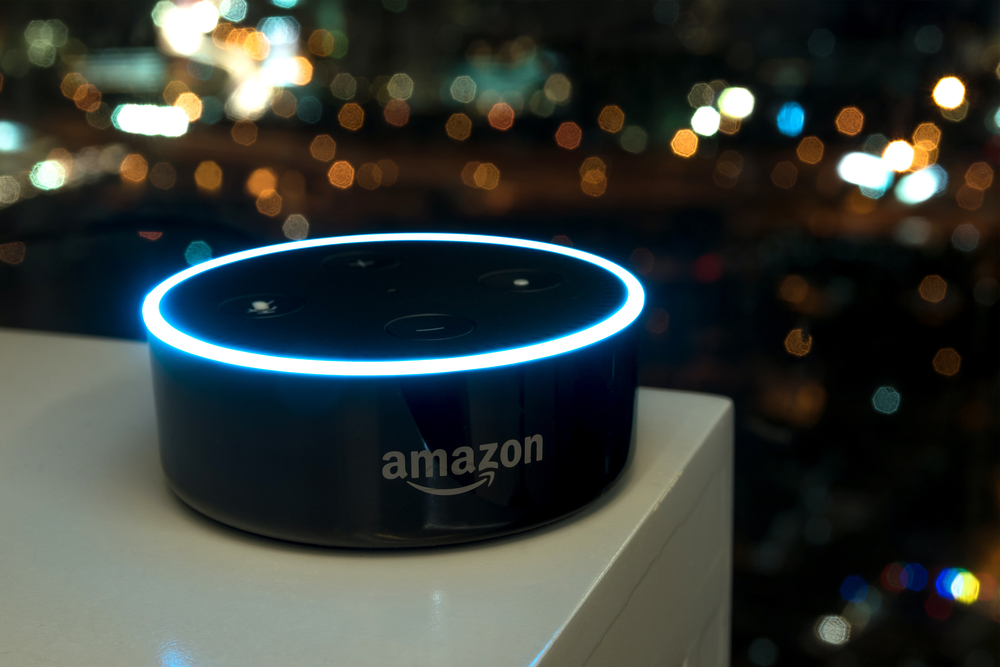
If you own an Amazon Echo, there’s a quiet change happening in your home—and it’s not just a software update. It’s a shift that affects every conversation, every command, and every casual comment you’ve ever made within earshot of Alexa.
Amazon has made a decision that fundamentally changes how its smart assistant handles your voice. And no, you don’t get to opt out.
What’s really happening behind the scenes? Why are some longtime users calling it a betrayal—and what does it mean for your privacy going forward? Let’s just say, once you read the fine print, you might never speak to Alexa the same way again.
From Smart to Surveillance? A Setting Disappears Overnight
For years, Echo users had at least one small comfort: a setting buried deep in the Alexa app that let them say, “No thanks” to having their voice recordings shipped off to Amazon’s cloud. It wasn’t easy to find, and barely anyone used it—less than 0.03% of Echo owners, according to Amazon—but it was there. A digital nod to personal boundaries in a smart home era. As of March 28, that choice has vanished.
Amazon quietly pulled the plug on the “Do Not Send Voice Recordings” option, effectively forcing all Echo devices to funnel every spoken word triggered by Alexa’s wake word directly to the company’s servers. Not just for processing, but also—let’s be honest here—for machine learning fuel. Even if you don’t plan on subscribing to Alexa’s flashy new upgrade, Alexa Plus, your voice is still part of the package now.
What’s more unsettling is that this wasn’t some dramatic announcement. Users found out through emails, tucked-away support articles, or by stumbling into a privacy menu that suddenly looked a lot emptier. And just like that, your voice assistant went from a convenient digital butler to a cloud-connected eavesdropper—by design.
What’s Now Mandatory for All Echo Devices

So what exactly has changed? In short: every Echo device is now required to send your voice recordings to Amazon’s servers, whether you like it or not. And no, disabling a few settings won’t stop it.
Previously, there were two key privacy options buried in the Alexa settings: “Do Not Send Voice Recordings” and “Do Not Save Voice Recordings.” The former was a rare gem—it stopped your device from sending your commands to Amazon’s cloud in the first place. That option is now gone. Kaput. Archived into the digital graveyard.
What’s left is the “Don’t Save Recordings” setting, which sounds promising until you realize its limits. Yes, you can stop Amazon from keeping your audio long-term—but every single command still makes a pit stop in the cloud before it’s deleted. That means Amazon still hears everything, even if it promises not to keep it on file.
And it doesn’t matter whether you use Alexa to play music, check the weather, or just joke around—once you say the wake word, that moment becomes company property, at least for a little while. You might not see it, you might not hear it, but the data is moving in real time to servers designed to listen, learn, and—let’s be honest—monetize.
Why Amazon Made the Change

Amazon didn’t just wake up one day and decide to be nosier for fun. This shift is all about preparing the digital stage for Alexa Plus, a subscription-based, AI-powered upgrade that’s supposed to take your virtual assistant from basic to borderline clairvoyant.
With Alexa Plus, Amazon is betting big on generative AI. This new version promises to hold natural conversations, better understand requests, and even anticipate your needs. But all of that intelligence needs one thing: massive amounts of voice data—real voices, in real homes, with all the messy, unpredictable nuance that comes with them.
In Amazon’s own words, the company wants to “expand Alexa’s capabilities with generative AI features that rely on the processing power of Amazon’s secure cloud.” Translation: local processing on your Echo just isn’t cutting it anymore, and to make Alexa Plus work, they need your voice sent straight to the servers—no detours, no exceptions.
Of course, there’s a business angle too. Alexa has struggled to be profitable for years. Alexa Plus, at $20/month (or free for Prime members—for now), is a hail Mary play to turn the assistant into a revenue stream. And when profit and privacy go head-to-head in Silicon Valley, well… privacy rarely comes out on top.
What Happens to Your Voice Data?

Let’s get one thing straight: the moment Alexa hears its wake word—your voice is no longer just yours. From that point, everything you say is whisked away to Amazon’s cloud, where it’s analyzed, processed, and (hopefully) deleted. But what actually happens in that mysterious in-between?
Amazon claims that all recordings are encrypted “in transit”—meaning your voice is protected while it’s traveling to their servers. Once it arrives, though, it’s decrypted so that Alexa (or more accurately, Amazon’s AI) can make sense of what you said. The company promises that if you enable the “Don’t Save Recordings” setting, your voice commands are deleted after processing. Sounds reassuring… until you ask the obvious question: How long is “after”?
Then there’s the track record. In 2019, Amazon admitted to employing human reviewers to listen to selected Alexa recordings—sometimes thousands per shift—to “improve accuracy.” That effort, reportedly, picked up everything from mundane commands to private moments, including disturbing content. Fast forward to 2023, and Amazon was hit with a $25 million penalty for illegally retaining children’s voice recordings on Echo devices. So when Amazon says “trust us,” the record speaks for itself.
And while Amazon emphasizes that these practices are meant to “train” Alexa to be smarter, it’s hard to ignore that these recordings—your recordings—are being used to shape a product you’re paying for… possibly at the cost of your own privacy.
What You Lose If You Say No

The most immediate casualty? Voice ID—the feature that lets Alexa recognize who’s speaking and personalize responses accordingly. Want Alexa to play your playlists, pull up your calendar, or remind you to take your vitamins instead of your roommate? That convenience depends on letting Amazon keep your recordings.
Turn off voice saving, and suddenly Alexa acts like it doesn’t know you anymore. Personalized features stop working. The assistant gets more generic, less useful. And with the incoming Alexa Plus upgrade—which relies even more on tailoring responses to individual voices—saying no to recording storage effectively bricks a big chunk of what Echo devices can do.
In other words, Amazon has designed a setup where privacy comes at the price of functionality. You can still technically use your Echo, sure—but the experience becomes frustratingly limited, nudging you toward giving in. It’s not just about options being taken away—it’s about the deliberate inconvenience of resisting.
The Backlash: Users Push Back

It didn’t take long for the internet to light up. From Reddit threads to Facebook posts, longtime Echo users made their frustration known—and they weren’t mincing words. Some called it a violation of trust. Others saw it as bait-and-switch tactics, accusing Amazon of rewriting the deal after people had already bought in. “So glad I jumped ship five years ago,” one Reddit user wrote. Another put it bluntly: “You may want to get rid of your Amazon Echo.”
Many pointed out that Amazon isn’t just removing a feature—it’s removing a choice. And that’s what stings most. In a time when tech companies are under the microscope for how they handle personal data, Amazon’s move feels like it’s swimming against the tide of transparency and user empowerment.
Critics also raised a larger concern: if privacy settings can be stripped away retroactively, what’s stopping other companies from following suit? Smart homes are built on trust—that these devices are helpful, not intrusive. But this change, in many users’ eyes, shattered that illusion.
For a company that has already been hit with fines over mishandling children’s data and secretly sending recordings to human reviewers, the timing couldn’t be worse. Instead of winning back public confidence, Amazon has handed skeptics more ammo—and pushed privacy-conscious users one step closer to ditching Alexa for good.
Minimizing Alexa’s Data Footprint

If giving up your Echo isn’t an option yet, there are still practical steps to minimize Amazon’s access to your personal life. Here’s how to protect your privacy while using Alexa:
- Enable “Don’t Save Recordings”
This setting ensures your recordings are deleted shortly after processing, reducing long-term storage of your voice data, though it won’t prevent them from being sent to the cloud initially. - Set Up Automatic Deletion Cycles
Go to the Alexa Privacy Dashboard and set up automatic deletion of voice recordings every 3 or 18 months. While this isn’t immediate, it limits how long Amazon can store and use your voice data for AI training. - Mute the Microphone When Not in Use
Every Echo device has a microphone button. Use it to ensure the device isn’t listening when you don’t need it to—nothing gets recorded or sent to the cloud when the mic is off. - Turn Off Voice Purchasing
Disable voice purchasing in the Alexa app or add a confirmation code to prevent accidental or unauthorized purchases, especially if Alexa misinterprets your commands. - Review and Limit Skill Permissions
Third-party Alexa skills can access some of your data. Regularly check which skills you’ve enabled and review their permissions. If you’re not using a skill, disable it to limit exposure.
By taking these steps, you can continue enjoying the convenience of Alexa while keeping your privacy in check. Regularly review your settings to stay in control of your data.
When Convenience Comes at a Cost
Once hailed as the helpful digital roommate, Alexa is starting to feel more like a nosy neighbor with a direct line to corporate HQ. Amazon’s quiet decision to remove key privacy controls isn’t just a technical update—it’s a cultural moment, one that forces us to rethink the trade-offs we’ve made in the name of convenience.
Sure, Alexa can still play your favorite playlist or tell you the weather. But now, every interaction feeds a much larger machine—one that listens, learns, and evolves from the private corners of your home. And while the tech might be impressive, the ethics are murky. When privacy becomes a premium feature rather than a default right, something fundamental is lost.
In the end, this story isn’t just about Echo devices or smart assistants. It’s about control—who has it, who’s giving it up, and whether we’re okay with that exchange. Because in a world where your voice is data, what you say now matters more than ever.
