
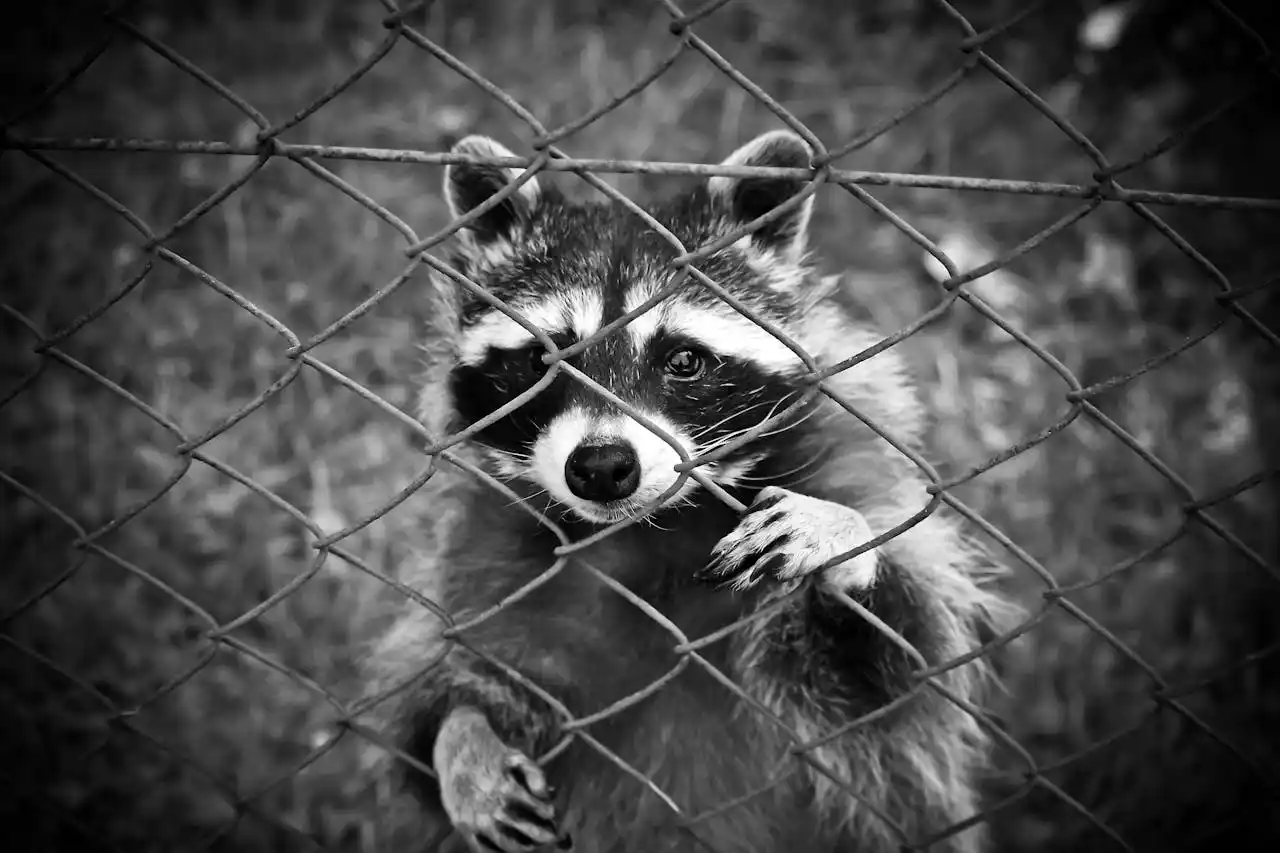
Raccoons might seem like the same mischievous creatures that rummage through trash bins at night, but new research suggests that the ones living in American cities are changing in ways that set them apart from their rural relatives. Scientists studying the physical features of raccoons across the United States have discovered that city raccoons have noticeably shorter snouts. This shift is not a small cosmetic tweak but a clue that urban raccoons may be experiencing a set of biological and behavioral changes that resemble domestication. These changes appear to be happening without intentional human involvement, and instead reflect how raccoons adapt to the environments created by people. As cities continue to expand and wildlife adapts to human presence, the traits that help animals survive in these environments can gradually reshape their appearance and behavior.
Many people assume domestication only happens when humans intentionally breed animals for specific traits, but the latest research challenges that assumption. In this study, biologists from the University of Arkansas at Little Rock examined thousands of raccoon images captured between 2000 and 2024. These images allowed researchers to measure skull and snout dimensions with computer software and then compare raccoons living in cities to those in rural habitats. Their findings were striking. According to lead author Dr. Raffaela Lesch, “I wanted to know if living in a city environment would kickstart domestication processes in animals that are currently not domesticated,” and she wondered, “Would raccoons be on the pathway to domestication just by hanging out in close proximity to humans?” The study revealed a 3.56 percent reduction in snout length among urban raccoons, a pattern that aligns with known traits in animals undergoing domestication. This discovery suggests that city raccoons are shifting toward traits that make them more tolerant, less aggressive, and in some cases noticeably more pet-like.

How Scientists Discovered This Evolutionary Shift
To understand these changes, the research team conducted a broad analysis of raccoon photographs taken over a 24-year period across various US locations. Because raccoons in different regions encounter different environmental pressures, analyzing such a wide dataset helped scientists identify trends that were not limited to one city. Their software-driven measurements reduced subjective bias and allowed for large-scale comparisons across thousands of individuals. The consistent pattern of shorter snouts among city raccoons stood out repeatedly in the data, confirming that physical differences were not random or anecdotal but measurable and widespread.
Dr. Lesch interpreted these results as evidence of domestication syndrome, a term describing a set of traits that appear when animals adapt to life near humans. Domestication syndrome typically includes features like reduced aggression, smaller brains, shorter muzzles, more varied coat colors, and sometimes floppier ears or smaller teeth. These traits appear in many domesticated species, including dogs, pigs, cats, and cattle. What makes the raccoon findings interesting is that no one is intentionally breeding raccoons. Instead, the animals seem to be responding naturally to the unique conditions of urban environments. According to the study, city raccoons benefit from being calmer around humans because it allows them to access food sources more easily and avoid unnecessary danger, creating a subtle selective pressure in favor of more tolerant animals.
Scientists pointed out that city raccoons encounter different risks and rewards than rural raccoons. Rural raccoons must avoid predators and compete for food in forests and fields, but urban raccoons face far fewer predators and have easy access to human food waste. Over time, raccoons best suited to these conditions may produce offspring with similar advantages. These changes can accumulate across generations, eventually leading to noticeable physical or behavioral differences. Although a 3.56 percent reduction in snout length may sound minor, this measurement indicates a consistent pattern that is unlikely to occur randomly and suggests gradual evolutionary change. Such subtle shifts often mark the early stages of larger transformations.

Understanding What Domestication Syndrome Means in This Context
Domestication syndrome helps explain why animals living close to humans often change in predictable ways. When animals adapt to environments with reduced danger and steady access to food, they may require less physical aggression or survival-driven toughness. Shorter snouts, for example, are often associated with reduced stress responses, juvenile-like features, or a shift toward less aggressive behavior. The raccoon data fits this pattern, suggesting that raccoons living in cities do not need the same level of defensive capabilities that their rural cousins rely on in the wild.
A good comparison can be drawn from the differences between wolves and domestic dogs. Dogs have shorter muzzles, smaller teeth, and more varied coat patterns, all of which are associated with domestication syndrome. The same pattern appears in other domesticated species, such as pigs and horses. While raccoons are far from becoming pets, the changes documented in this study mirror some of the earliest stages seen in animals that eventually became domesticated. The key distinction is that these changes are not being guided by humans but are occurring naturally as animals adjust to living in cities.
Domestication is often viewed as a process that requires human intervention, but the research emphasizes that it can also occur spontaneously. As Dr. Lesch explained, “Trash is really the kickstarter. Wherever humans go, there is trash. Animals love our trash. It’s an easy source of food. All they have to do is endure our presence, not be aggressive, and then they can feast on anything we throw away.” This quote captures the heart of why raccoons are changing. They are not being bred by people, but they are taking advantage of resources that humans create. Over time, animals that are more comfortable living near people may have a better chance of thriving, reproducing, and passing along traits aligned with tolerance and curiosity rather than fear or aggression.
The Urban Factors Driving These Changes in Raccoons
Cities create a unique environment that rewards adaptability and resourcefulness. Raccoons thriving in these spaces show an impressive ability to solve problems, access food sources, and navigate human-made structures. The ready availability of trash, compost, pet food, and discarded leftovers provides consistent nourishment that would be much harder to obtain in natural environments. Raccoons that are less fearful of humans are able to make use of these resources more efficiently. As these behaviors support survival and reproductive success, traits linked to them may gradually spread across generations.
Another factor shaping raccoon evolution in cities is the relative absence of large predators. In many forests and rural habitats, raccoons must watch out for coyotes, bobcats, or other carnivores. These threats keep raccoons alert and influence their behavior, favoring traits linked to caution and avoidance. In urban environments, these predators are less common, removing a major source of selective pressure. Without the need to stay hyper-vigilant, raccoons may evolve toward traits that reflect curiosity, tolerance of humans, and reduced fear responses. This can also help explain why city raccoons often appear bolder or more persistent than those found in natural settings.
Urban landscapes also present raccoons with different physical challenges. Navigating streets, fences, dumpsters, and tight spaces encourages animals to develop problem-solving skills and dexterity. These adjustments may affect both behavior and physical structure over time. While the study focused on snout length, the researchers suggested that other changes may emerge in future generations if the same conditions persist. In this way, raccoons become a clear example of how wildlife adapts in real time to environments shaped by humans. Over years or decades, such adaptations can lead to noticeable divergence between urban and rural populations.

Are We Watching the Beginning of a New Raccoon Subspecies?
As scientists observe these patterns, some have wondered whether urban raccoons could eventually diverge enough to form a distinct subspecies. This idea is not as far-fetched as it might sound. Evolution does not always require thousands of years. When animals face dramatically different environmental pressures, change can occur more rapidly. The raccoons living in cities today encounter a lifestyle that is fundamentally different from those in rural or forested regions. If these conditions continue to influence how raccoons grow, behave, and reproduce, it is possible that more pronounced differences may develop in the future.
The idea of a new raccoon subspecies has inspired some humorous speculation among researchers. According to the study, some scientists joked about calling this hypothetical future raccoon “Procyon trashicus,” a nod to the animal’s heavy reliance on urban waste. One comment from Dr. Lesch captures this lighthearted perspective: “It would be fitting and funny if our next domesticated species was raccoons. I feel like it would be funny if we called the domesticated version of the raccoon the trash panda.” While this is meant playfully, it reflects the genuine scientific curiosity about what continued urban adaptation could mean for raccoons in the long term.
Urban foxes provide useful context for imagining how far these changes might go. Previous research has shown that foxes living in cities have developed thinner and longer snouts that help them reach into trash cans or access food sources in tight spaces. These foxes have also become more tolerant of people and more skilled at navigating urban terrain. The parallels between foxes and raccoons suggest that animals living around people may undergo similar transformations as they adapt to the opportunities and challenges of city life.
For now, researchers emphasize that raccoons are not domesticated animals and are not becoming pets. However, the evidence suggests that they are shifting in subtle ways that align with animals undergoing the earliest phases of domestication. What happens next depends on how human environments continue to evolve and how raccoons respond to these changes over future generations.

Natural Ways to Coexist Safely With Urban Raccoons
Coexisting with raccoons requires thoughtful habits that respect wildlife while keeping homes and neighborhoods safe. Many people enjoy seeing raccoons from a distance, but frequent close interactions can create problems. Preventing raccoon dependency on human food is one of the most effective ways to ensure that raccoons maintain their natural behaviors. Securing trash bins, storing food scraps properly, and keeping pet food indoors can all reduce the likelihood of raccoons frequenting residential areas. These simple measures help support a healthier relationship between people and wildlife.
Natural deterrents are another option for homeowners who want to discourage raccoons from entering certain areas. Scents such as vinegar, citrus, lavender, peppermint, or eucalyptus are sometimes disliked by raccoons and can be used around entry points. These substances are gentle and environmentally friendly, offering a more mindful approach than harsh chemical repellents. By creating a space that raccoons find unappealing, homeowners can reduce unwanted encounters while minimizing harm to wildlife.
Maintaining a clean backyard or garden also limits raccoon attraction. Fallen fruits, compost piles, small ponds, and accessible outdoor food sources invite raccoons to return repeatedly. Using secure compost bins, harvesting ripe produce promptly, and removing clutter keeps the yard less appealing. These natural practices focus on reducing temptations rather than harming animals or disrupting ecosystems. When communities adopt similar habits, raccoons learn to rely less on human spaces and more on natural food sources.
Finally, wildlife education plays a valuable part in coexistence. Many conflicts with animals arise from misunderstandings about their behavior or ecological role. Sharing knowledge about raccoon adaptation, their dietary needs, and the importance of maintaining distance can help neighborhoods respond more responsibly to urban wildlife. When residents recognize what attracts raccoons to their properties and how simple changes can reduce these visits, interactions become less stressful for both people and animals. These mindful adjustments support a balanced approach to living alongside raccoons as they continue to adapt to modern urban environments.

Where Urban Raccoon Evolution May Lead
Urban raccoons represent a fascinating example of how wildlife adapts when living alongside humans, and their evolving traits highlight the influence of city environments on animal behavior and biology. As raccoons adjust to the abundance of food, reduced predator threats, and constant human presence, their bodies and habits may continue to shift in ways similar to domestication. These changes are not intentional or controlled by humans but arise naturally as raccoons take advantage of the conditions we create. The idea of raccoons becoming more pet-like is intriguing, and though they remain wild animals, the evidence suggests that urban living is shaping them in new and unexpected ways.
Their evolution invites broader reflection on how cities transform not only human lifestyles but also the animals that share these spaces. Urban ecosystems form a complex network of relationships where plants, animals, and people influence one another. Raccoons remind us that wildlife is constantly adapting and finding creative solutions to survive in environments dominated by human activity. As researchers continue studying these changes, we may gain deeper insight into how animals evolve in response to modern landscapes and how future generations of raccoons might differ from those living today.
The future of urban raccoons depends on how cities grow and how communities interact with local wildlife. When people adopt thoughtful habits that limit raccoon dependency on trash and encourage safe coexistence, raccoons can maintain healthier natural behaviors. By understanding the scientific findings and making small daily adjustments, residents can contribute to an environment where both humans and raccoons coexist with fewer conflicts. Through mindful practices and awareness, cities can support wildlife in ways that keep animals wild while still allowing them to thrive in shared spaces.
