
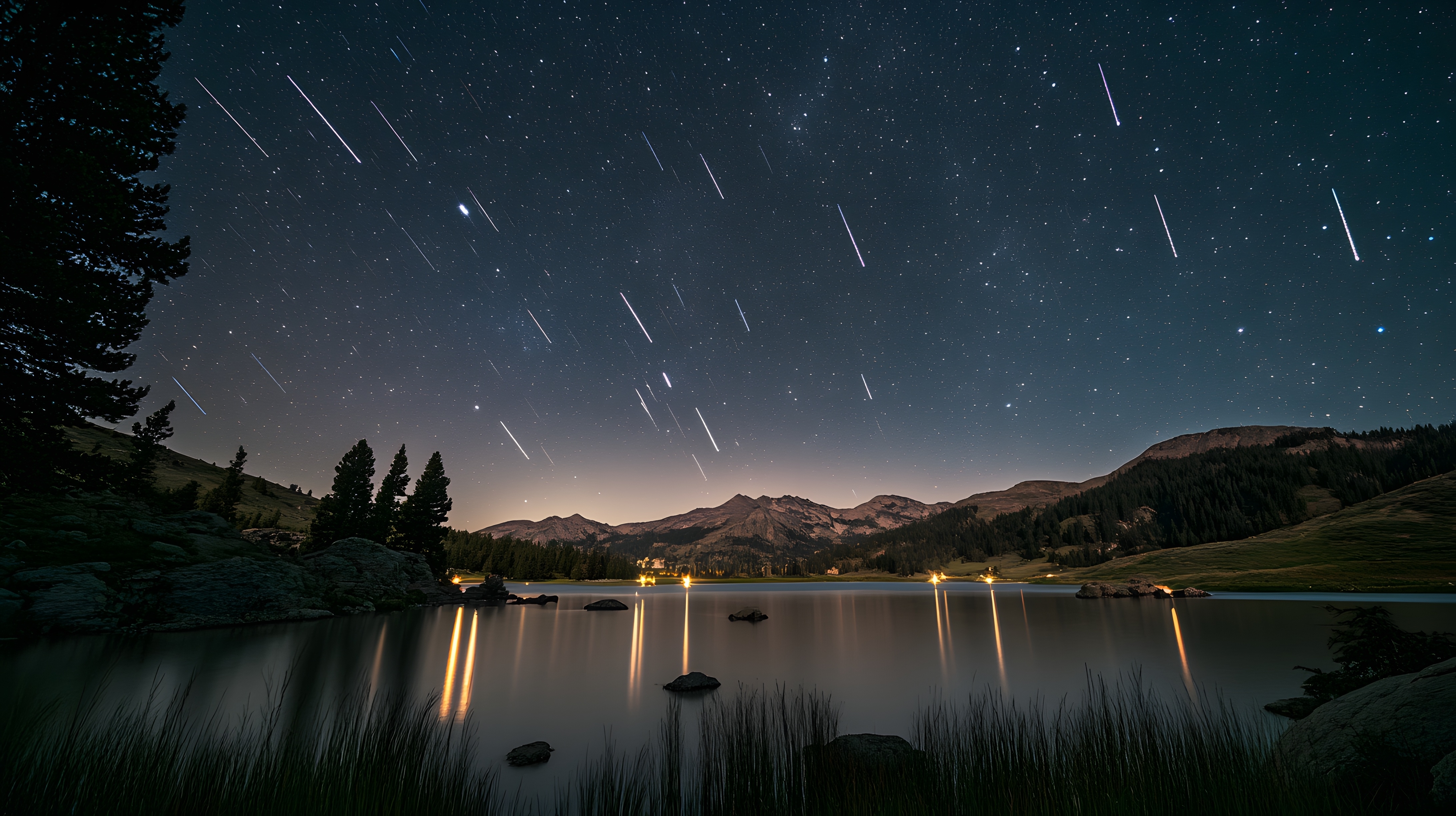
Something extraordinary happens this July. While most people focus on summer barbecues and beach trips, the cosmos prepares to deliver one of the year’s most spectacular celestial performances. Three major meteor showers converge in the night sky, creating viewing opportunities that won’t repeat exactly like this again.
July 2025 offers a rare astronomical alignment that seasoned stargazers dream about. Perfect timing, favorable moon phases, and warm summer nights combine to create ideal conditions for witnessing nature’s fireworks. No tickets required, no special equipment needed – just you, a comfortable spot under dark skies, and patience to watch the universe put on a show.
However, what makes this month truly special is that each shower brings its unique personality. Some deliver quality over quantity with brilliant, slow-moving fireballs. Others flood the sky with rapid-fire streaks. One has already surprised astronomers twice with unexpected performances that left even experts speechless.
Summer Sky Show Like No Other Begins
July transforms into the ultimate stargazing month as Earth’s orbital path intersects with multiple comet debris trails simultaneously. While individual meteor showers occur throughout the year, having three major displays peak within weeks of each other creates extraordinary viewing opportunities.
Summer timing provides perfect conditions for comfortable outdoor viewing. Warm nights eliminate the need for heavy winter gear, making stargazing more comfortable. Longer periods of darkness in the Southern Hemisphere extend viewing windows, while Northern Hemisphere observers enjoy mild temperatures that encourage spending hours under the stars.
Moon phases align favorably for 2025, with several showers peaking during darker periods when celestial light won’t wash out fainter meteors. Atmospheric conditions typically stabilize during summer months, reducing the turbulence that can blur or diminish meteor visibility.
Experienced astronomers recognize this convergence as a notable phenomenon. Multiple active radiants mean viewers might see meteors from different showers simultaneously, each with distinct characteristics and flight patterns. Knowing which shower produced each streak adds excitement to the viewing experience.
Alpha Capricornids: Quality Over Quantity
Starting mid-July and reaching peak intensity July 29-30, Alpha Capricornids kick off the summer meteor festival. These meteors come from comet 169/NEAT, which orbits the Sun every 4.2 years, leaving behind a trail of debris that Earth encounters annually.
Don’t expect overwhelming numbers from this shower. Peak rates reach only about five meteors per hour, making Alpha Capricornids seem modest compared to more prolific displays. However, what they lack in quantity, they compensate for in pure visual impact.
Alpha Capricornids produce some of the brightest, most impressive meteors visible to amateur observers. They move slowly across the sky, giving viewers time to appreciate their brilliance and often spectacular colors. Even urban observers dealing with significant light pollution can spot these luminous streaks.
“You won’t see a huge number of meteors, maybe five an hour, but the ones that show up are worth the wait. They’re slow, bright, and tend to stand out, even if you’re watching from a place with some light pollution,” according to astronomical observations.
Best viewing begins around 10 PM local time when the constellation Capricorn climbs high enough above the horizon. Unlike showers that require pre-dawn viewing, the Alpha Capricornids accommodate evening stargazers who prefer reasonable bedtimes.
Southern Delta Aquariids: Hidden Gems of Summer

Overlapping with Alpha Capricornids, Southern Delta Aquariids start on July 18 and peak on July 29-30. Originating from comet 96P/Machholz, which completes its solar orbit every 5.27 years, this shower radiates from the constellation Aquarius.
Southern Delta Aquariids typically produce 20-25 meteors per hour during their 48-hour peak window. However, these meteors often appear fainter than other showers and rarely leave persistent trails, making them challenging for casual observers.
Conditions in 2025 favor exceptional viewing for this often-overlooked shower. Peak activity occurs during a waxing crescent moon that sets before the radiant reaches optimal height, creating darker skies perfect for spotting fainter meteors.
History suggests Southern Delta Aquariids might deliver surprises. In 1977 and 2003, this shower exceeded expectations dramatically, producing meteor rates far above normal levels. These unexpected outbursts caught even experienced astronomers off guard, demonstrating that seemingly predictable showers can still astonish.
Best viewing occurs between midnight and dawn when Aquarius reaches its highest point in the sky. Southern Hemisphere observers enjoy particularly favorable positioning for this shower, though Northern Hemisphere viewers can still catch excellent displays.
Perseids: Superstars Everyone Waits For
Beginning July 17 and building toward their August 12-13 peak, Perseids represent the year’s most anticipated meteor shower. Generated by debris from comet Swift-Tuttle, which returns every 133 years, the Perseids consistently deliver spectacular performances that justify their stellar reputation.
Perseids combine impressive numbers with dramatic visual appeal. Under dark sky conditions, observers can expect 50-75 meteors per hour during peak activity. These fast-moving meteors often produce brilliant fireballs that illuminate landscapes and create lasting memories.
“They’re easily the most famous of the bunch, mostly because they show up in big numbers, move fast, and occasionally drop a fireball that makes everyone gasp and point,” notes meteor shower documentation.
Comet Swift-Tuttle’s massive nucleus – approximately 16 miles wide – generates substantial debris clouds that create consistent annual displays. Perseids radiate from the constellation Perseus, which rises in the northeast during evening hours and climbs overhead before dawn.
A waxing gibbous moon may challenge viewing in 2025, potentially washing out fainter meteors. However, Perseids typically produce enough bright meteors to punch through moderate moonlight. Extended activity throughout August provides multiple viewing opportunities beyond the main peak.
Science Behind the Summer Spectacle

Understanding the mechanics of meteor showers enhances appreciation for these celestial displays. Meteor showers occur when Earth’s orbital path intersects debris trails left by comets and asteroids traveling through the solar system.
Comets shed material continuously as solar radiation vaporizes surface ice and rock. This debris spreads along the comet’s orbital path, creating invisible highways of particles scattered through space. When Earth encounters these debris streams, gravitational forces pull particles into our atmosphere.
Atmospheric entry transforms tiny comet fragments into spectacular light shows. Particles typically no larger than grains of sand burn up completely between 50 and 75 miles above Earth’s surface. Friction with atmospheric molecules heats these fragments to thousands of degrees, creating the bright streaks we observe as meteors.
Meteor showers happen when Earth plows through clouds of debris left behind by comets. Those particles hit our atmosphere and burn up, creating brief flashes of light. No telescope required summarizes the basic process.
Different comets produce meteors with distinct characteristics. Comet composition, particle size distribution, and encounter velocity all influence the appearance, duration, and brightness patterns of meteors.
Best Viewing Strategies for Each Shower
Successfully observing meteor showers requires understanding optimal timing and positioning for each display. Alpha Capricornids favor evening viewing starting around 10 PM when Capricorn rises sufficiently above the horizon. Their slow movement and brightness make them ideal for newcomers to meteor watching.
The Southern Delta Aquariids require a greater commitment, with the best viewing occurring between midnight and dawn. Aquarius reaches optimal height during pre-dawn hours, maximizing meteor visibility. Observers should focus on darker sky regions away from the radiant point to catch meteors with longer trails.
Perseids offer flexibility with extended activity throughout August. While peak rates occur August 12-13, excellent viewing continues for weeks. The early morning hours, between midnight and dawn, typically produce the highest meteor counts, although evening viewing can still yield impressive results.
Radiant points indicate where meteors appear to originate, but observers should scan broader sky areas. Meteors can appear anywhere, often displaying longer trails when viewed from a distance away from their radiant point. Avoid staring directly at constellation positions; instead, use peripheral vision to catch movement across wider sky regions.
What Makes 2025 Special for Meteor Watching

Several factors combine to make 2025 exceptional for meteor observation. Moon phases align favorably with shower peaks, providing darker skies that reveal fainter meteors typically washed out by lunar brightness.
Alpha Capricornids peak during a dim waxing crescent moon, maximizing visibility for their bright displays. Southern Delta Aquariids benefit from similar dark-sky conditions when the crescent moon sets before optimal viewing hours. Even Perseids, despite facing a brighter waxing gibbous moon, remain active throughout August with multiple viewing opportunities.
Historical patterns suggest potential surprises. Southern Delta Aquariids have exceeded expectations twice in recent decades, and unpredictable outbursts could occur again. Comet debris streams sometimes contain denser concentrations that produce enhanced meteor rates.
Summer weather patterns typically provide stable atmospheric conditions ideal for stargazing. Clear skies occur more frequently during summer months in many regions, while reduced atmospheric turbulence improves meteor visibility and photographic opportunities.
Your Meteor-Watching Toolkit
Successful meteor watching requires minimal equipment but benefits from proper preparation. Comfortable seating or reclining options prevent neck strain during extended viewing sessions. Blankets or sleeping bags provide warmth during pre-dawn observations when temperatures drop.
Red flashlights preserve night vision while allowing map reading or note-taking. White light destroys dark adaptation, which takes 20-30 minutes to develop. Snacks and beverages help maintain energy during long viewing sessions, but avoid alcohol, which can impair observation abilities.
Photography enthusiasts should bring cameras capable of long exposures, sturdy tripods, and spare batteries. However, visual observation often proves more rewarding than attempting to capture meteors on camera.
Finding Your Perfect Dark Sky Spot

Light pollution significantly impacts meteor visibility, particularly for fainter showers like the Southern Delta Aquariids. Urban observers may spot only the brightest meteors, while dark-sky locations reveal the full spectacle of meteor shower activity.
Ideal viewing locations offer unobstructed horizons, free from buildings, trees, or hills that block the sky view. Rural areas typically provide darker skies, but even suburban observers can find acceptable viewing spots by traveling short distances from city centers.
Allow 20-30 minutes for eyes to adjust to the darkness. Avoid looking at phones, flashlights, or other bright light sources during this adaptation period. Once dark-adapted, the human eye can detect meteors that are invisible under normal lighting conditions.
Summer Sky Magic Worth the Wait
Meteor showers connect observers to cosmic processes spanning millions of years. Each streak represents ancient comet material finally reaching journey’s end in Earth’s atmosphere. Watching meteors provides direct visual evidence of our planet’s movement through space and interaction with debris from distant solar system wanderers.
Beyond scientific appreciation, meteor watching offers profound emotional experiences. Unexpected fireballs create moments of wonder that linger long after the light fades. Sharing these experiences with friends or family strengthens bonds while creating lasting memories.
July 2025 presents exceptional opportunities to witness these cosmic connections. Three distinct meteor showers, each with unique characteristics and viewing requirements, offer something for every level of interest and commitment.
Don’t miss this summer’s celestial celebration. Find a dark spot, bring comfortable seating, and prepare to be reminded by the universe of its fantastic beauty. Some experiences can’t be captured in photos or videos – they must be witnessed firsthand under the infinite canopy of stars.
