
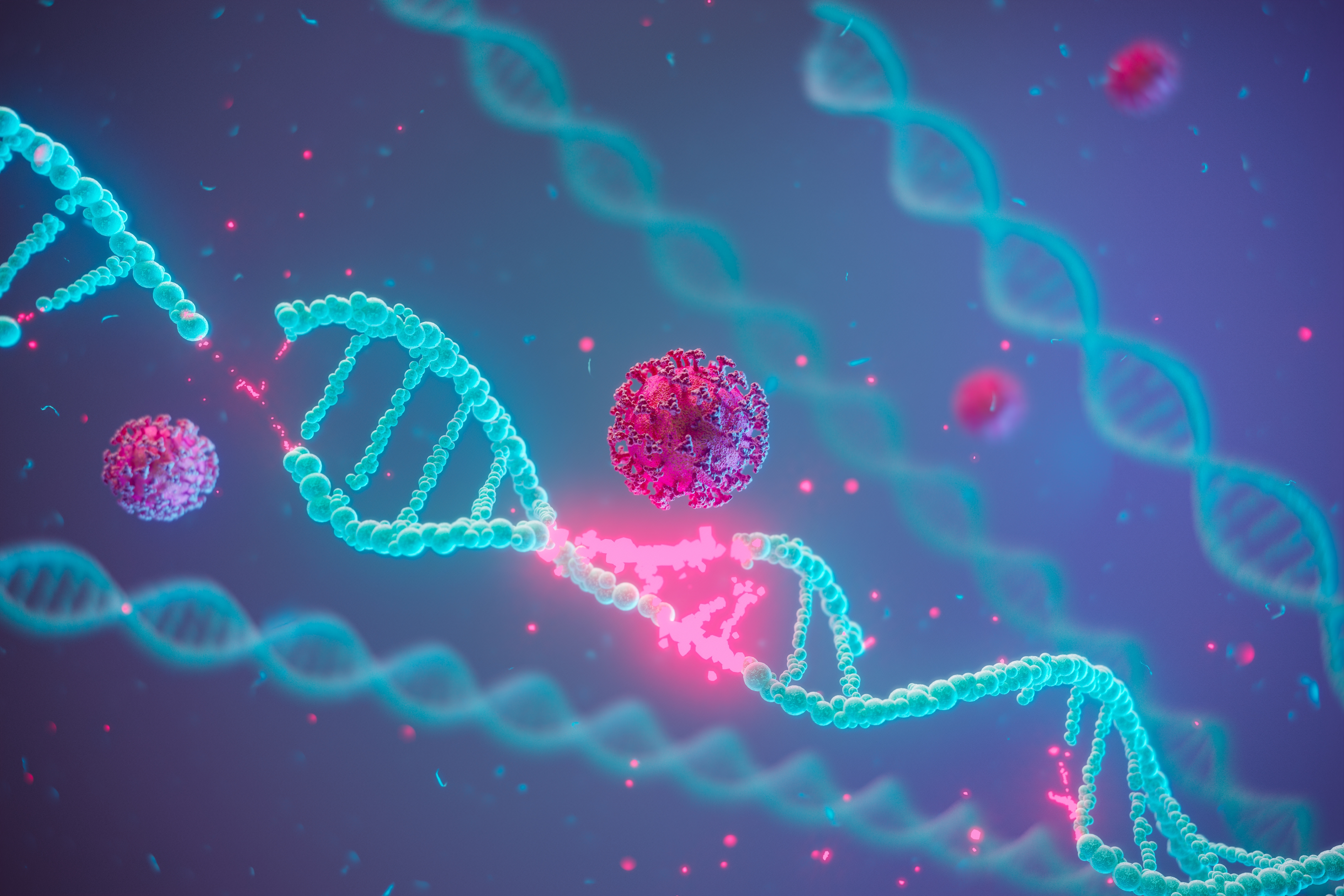
For decades, an HIV diagnosis meant a lifetime of daily medication. While modern drugs keep the virus under control, they can’t eliminate it. That reality might be changing. Scientists have achieved a remarkable breakthrough: they’ve successfully removed an HIV-like virus from infected cells in monkeys using a revolutionary gene-editing technique called CRISPR.
This isn’t just another incremental improvement in HIV treatment. We’re talking about actually removing the virus from cells where it hides, offering a one-time cure instead of lifelong medication. The breakthrough comes from researchers at Temple University, who have spent over a decade perfecting this approach. Their experimental therapy, known as EBT-101, has now moved from laboratory studies to the first human trials.
What makes this development so exciting is its precision. Unlike current treatments that suppress the virus, this new approach targets and removes HIV’s genetic material from infected cells. Think of it as the difference between constantly mopping up water from a leaky pipe versus actually fixing the pipe itself.
How HIV Hides in Your Body Like a Sleeper Cell

Understanding why HIV is so hard to cure requires looking at its sneaky survival strategy. When HIV infects a cell, it doesn’t just float around in your bloodstream. Instead, it inserts its genetic instructions directly into your DNA, like a computer virus that embeds itself in your operating system.
These infected cells become what scientists refer to as “viral reservoirs.” Picture them as secret bunkers where HIV can hide indefinitely. Some of these cells enter a resting state, essentially falling asleep with the virus safely tucked away in their genetic code. They sit quietly in your lymph nodes, spleen, gut, and even your brain, completely invisible to both your immune system and current HIV medications.
Here’s the frustrating part: antiretroviral drugs work brilliantly at stopping HIV from making copies of itself. They’ve transformed HIV from a death sentence into a manageable condition. But these medications can only target the active virus. They’re powerless against the sleeping virus hidden in cellular DNA. Stop taking the drugs, and within weeks, these reservoir cells wake up and start producing new virus, causing the infection to roar back.
This hidden reservoir is why people with HIV need daily medication for life. Scientists have tried everything to flush out these hidden viruses – from “shock and kill” strategies that wake up dormant cells to intensive drug combinations. Nothing has worked reliably. Until now, eliminating these reservoirs seemed impossible. Gene editing offers an entirely different approach: instead of trying to coax the virus out, why not cut it out directly?
CRISPR: The Molecular Scissors That Cut Out HIV

CRISPR-Cas9 works like molecular scissors programmed to find and cut specific genetic sequences. Scientists can design it to hunt down HIV’s genetic material wherever it’s hiding in cellular DNA and snip it out. Imagine having a word processor that could search through every document on your computer and delete a specific paragraph wherever it appears – that’s essentially what CRISPR does with HIV genes.
The therapy developed by Temple University researchers, called EBT-101, builds upon this concept and amplifies it. Instead of making just one cut, it uses dual guide RNAs – think of them as two sets of coordinates – to target three different locations on the integrated HIV genome. By cutting in multiple places, the therapy can remove large chunks of viral DNA, ensuring the virus can’t repair itself or continue functioning.
Getting these molecular scissors into cells throughout the body requires a delivery vehicle. Scientists package the CRISPR components inside a modified virus called AAV9 (adeno-associated virus 9). Don’t worry – this delivery virus is harmless and quite clever. It can travel throughout the body, entering various tissues and organs where HIV might be hiding. Once inside cells, it releases the CRISPR machinery to begin its search-and-destroy mission.
The entire treatment involves just a single intravenous injection. No daily pills, no complex regimens – just one treatment that spreads throughout the body to hunt down and eliminate HIV wherever it’s integrated into cellular DNA. It’s an elegant solution to a complex problem that has long stymied researchers.
From Lab Mice to Monkeys: The Journey to Human Trials

The path to this breakthrough began in 2014 when Temple University researchers first demonstrated that CRISPR could delete HIV genes from infected cells in a laboratory dish. It was a proof of concept that sparked years of painstaking development and testing.
By 2019, the team had advanced to testing in “humanized” mice—laboratory mice engineered with human immune cells. The results were encouraging: the CRISPR treatment successfully removed HIV from infected cells throughout the animals’ bodies. However, mice aren’t humans, and many promising treatments fail when they are tested in larger animals.
That’s why the recent monkey studies are so significant. Rhesus macaque monkeys infected with SIV (simian immunodeficiency virus, HIV’s close cousin) provide a much more realistic model of human HIV infection. Their immune systems work similarly to ours, and SIV behaves much like HIV in their bodies.
The research team tested their therapy, adapted for SIV and called EBT-001, in twelve monkeys. Like humans with HIV, these animals received standard antiretroviral therapy to suppress the virus. Then came the crucial test: could a single injection of the CRISPR therapy reach and edit out SIV throughout their bodies? The results exceeded expectations, showing successful virus removal from all major reservoir sites, including lymph nodes, spleen, and other tissues where HIV typically hides.
Promising Results from Preclinical Trials

The monkey study results read like a researcher’s wish list. Not only did the CRISPR therapy reach all the critical viral reservoir tissues, but it also demonstrated remarkable safety. “Animals treated with CRISPR seemed healthier in appearance, and some gained weight,” noted Dr. Kamel Khalili, the senior investigator on the study.
Three different dose levels were tested, with the best results coming from the higher doses. Monkeys receiving the highest doses showed improved lymphocyte counts—a key marker of immune system health. This was particularly striking when compared to animals receiving only standard antiretroviral drugs, some of which continued losing weight during the study period.
Most importantly, extensive safety testing revealed no “off-target” effects. This was a significant concern with CRISPR technology – would the molecular scissors accidentally cut human DNA in unintended places? Comprehensive genetic analysis found no evidence of unwanted edits. “The long timeframe of the study and the use of high doses of the gene-editing construct help confirm the safety of EBT-001,” said Dr. Tricia Burdo, who led the animal studies.
The treatment caused temporary increases in liver enzymes in animals receiving the highest dose, but these levels returned to normal within a few weeks. No lasting damage or concerning side effects appeared even after six months of follow-up. The therapy had successfully edited out SIV from reservoir tissues while leaving the animals’ DNA untouched.
The First Human Takes the Leap

In July 2022, the first human received an injection of EBT-101 in a carefully monitored clinical trial. This Phase I/II study represents the culmination of nearly a decade of research and the first time an HIV-specific CRISPR therapy has been tested in people.
Participants in the trial continue taking their regular antiretroviral medications while receiving the one-time CRISPR injection. Researchers monitor them closely for any side effects while testing their blood and tissues for evidence of successful HIV removal. If the treatment proves safe and shows signs of working, participants will face the ultimate test: a carefully supervised treatment interruption.
This analytical treatment interruption is the gold standard for proving an HIV cure. Under close medical supervision, participants stop taking their antiretroviral drugs. If HIV doesn’t rebound – if the virus stays undetectable without medication – it would suggest the CRISPR therapy has successfully eliminated the viral reservoirs. Any sign of a returning virus means immediately restarting medications.
The trial design reflects lessons learned from the monkey studies. “Our study supports safety and demonstrates evidence of in vivo SIV editing of a CRISPR gene-editing technology aimed at the permanent inactivation of virus in a broad range of tissues in a large, preclinical animal model, using a one-time injection of the treatment,” Khalili explained. This evidence gave regulators confidence to approve human testing.
What This Means for the Future of HIV Treatment

If EBT-101 proves successful in humans, it could fundamentally transform HIV treatment. Instead of daily pills for life, people might receive a single injection that permanently removes the virus. The economic and quality-of-life implications are staggering.
Consider the current burden of HIV treatment. Even with modern medications, people living with HIV face daily pill-taking, regular medical appointments, potential drug side effects, and the constant worry about maintaining their treatment regimen. In many parts of the world, consistent access to antiretroviral drugs remains challenging. A one-time cure would eliminate these ongoing challenges.
Beyond individual benefits, a functional cure could reshape the global fight against HIV. Current efforts focus on getting people tested, started on treatment, and keeping their virus suppressed. A cure would simplify this dramatically – test, treat once, done. The resources currently spent on lifelong treatment could be redirected to finding and curing more people.
Several hurdles remain before this becomes reality. Human trials must demonstrate both safety and efficacy. Manufacturing must scale up to produce treatments for millions of people. Regulatory approval processes in different countries will take time. Cost and accessibility questions need answers. Realistically, even if current trials succeed, widespread availability is still years away. But for the first time, we’re talking about when, not if, an HIV cure might become available.
Hope on the Horizon
After four decades of fighting HIV, we may finally be approaching an actual cure. The successful removal of an HIV-like virus from monkeys using CRISPR gene editing represents more than just another research advance—it’s proof that eliminating viral reservoirs is possible.
From the initial laboratory experiments in 2014 to the current human trials, this journey demonstrates how persistent scientific effort can tackle seemingly insurmountable challenges. The Temple University team’s work indicates that HIV’s ability to hide in our DNA, long considered its greatest strength, might be its vulnerability. By targeting integrated viral genes with precision gene editing, we can potentially remove HIV permanently rather than just suppressing it.
While challenges remain, the transition from lifelong treatment to a one-time cure no longer seems like science fiction. The success in monkeys, the safety profile, and the initiation of human trials all point toward a future where HIV infection doesn’t mean a lifetime of medication. For the 38 million people living with HIV worldwide, and for future generations at risk, this research offers something that’s been in short supply: genuine hope for a cure.
Source:
- Novel Treatment Based on Gene Editing Safely and Effectively Removes HIV-Like Virus from Genomes of Non-Human Primates. (n.d.). Lewis Katz School of Medicine. https://medicine.temple.edu/news/2024/08/novel-treatment-based-gene-editing-safely-effectively-removes-hiv-virus-genomes-non-human-primates
