
Every strand of hair carries a story—of youth, identity, confidence. So it’s no surprise that when hair begins to thin or vanish altogether, it often leaves more than just a bare scalp in its wake. Around 85% of men and 40% of women experience some form of hair loss in their lifetime, and yet, effective solutions remain frustratingly out of reach. Most treatments stall the process at best, or come with caveats—side effects, high costs, limited results.
But what if the key to reversing hair loss wasn’t a pharmaceutical pill or a transplant, but something far simpler? Something that mimics the very environment our hair thrives in?
That’s what scientists at China’s Nanjing University may have unlocked. Their creation—a gel inspired by the body’s natural scaffolding—has triggered striking hair regrowth in mice, without the need for drugs or surgery. And unlike past fads, this one isn’t built on hype—it’s rooted in regenerative science, with promising implications for one of the most personal and persistent concerns we face.

Hair Loss Isn’t Just Cosmetic—It’s Deeply Personal
Hair is often a quiet but powerful expression of identity. It shapes how people feel about themselves, how they present to the world, and how they are perceived by others. When someone begins to lose their hair, it’s rarely a simple cosmetic concern—it can be an emotional experience marked by anxiety, insecurity, and a shift in self-image. For many, the loss becomes a slow erosion of confidence, often internalized and rarely discussed. The mirror no longer reflects who they feel they are inside, and that disconnect can weigh heavily on mental and emotional well-being.
Statistically, hair loss is incredibly common. Around 85% of men experience significant thinning by age 50, and the problem often starts much earlier—sometimes in their twenties or thirties. Women aren’t immune either; roughly 40% of women show signs of hair thinning by the same age, though the patterns may differ. The social stigma around hair loss, especially for women, can amplify the psychological toll. It can feel like a betrayal by one’s own body—an unwelcome reminder of aging, illness, or genetics—and often triggers desperate searches for solutions, from over-the-counter products to expensive medical procedures.
Yet, despite its prevalence, the treatment options available today offer limited relief. Medications such as minoxidil and finasteride are widely used but come with limitations: they often only slow the process, require long-term use, and may cause undesirable side effects. Hair transplant surgery offers more immediate results but is prohibitively expensive for many and involves a lengthy recovery. In this environment, new research that addresses the root of the issue—not just the symptoms—has the potential to bring a meaningful shift in how hair loss is understood and treated.

The Unexpected Breakthrough: A Simple Gel with Surprising Results
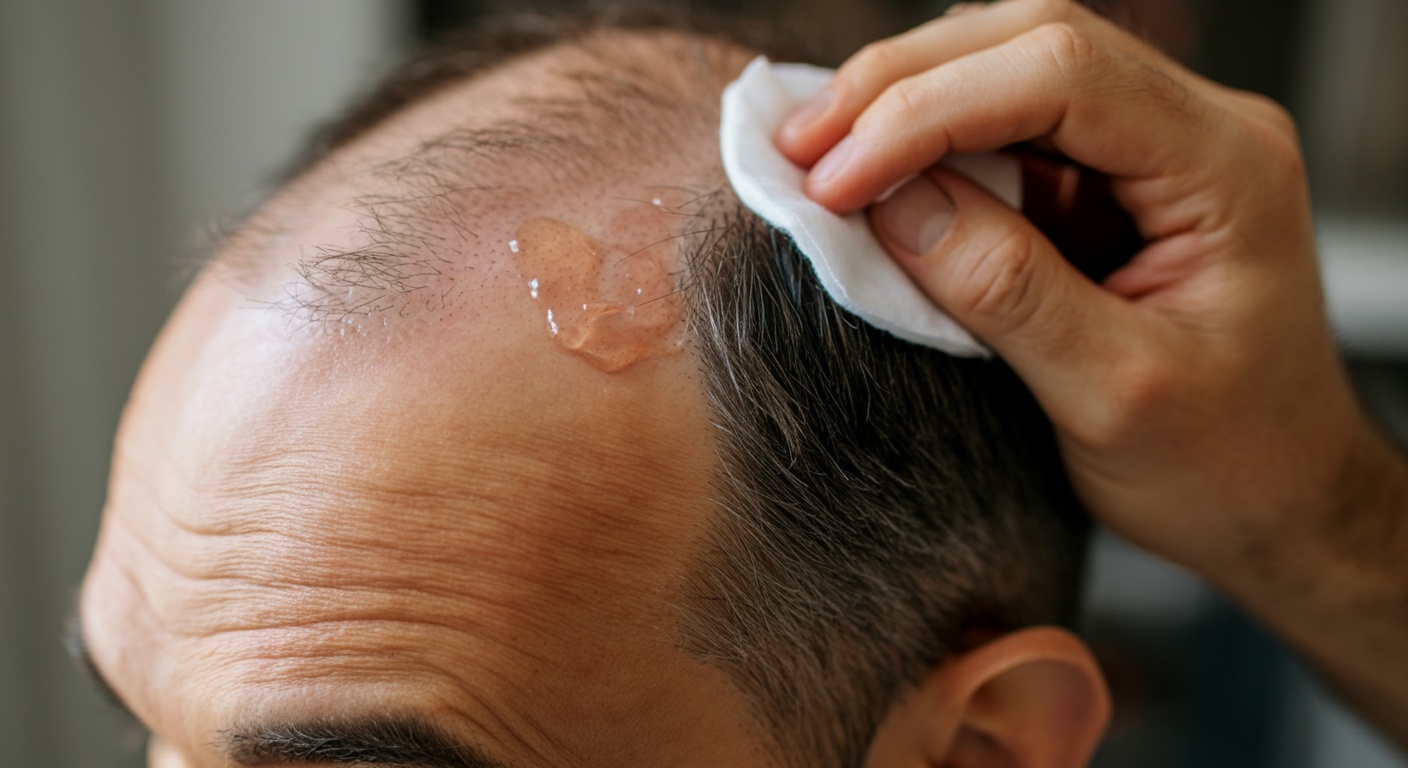
The discovery of a gel capable of regrowing hair without pharmaceutical ingredients or surgical intervention has sparked real curiosity in the scientific community. Developed by researchers at Nanjing University in China, this new gel is made from a sugar-derived substance called succinoglycan. The gel functions by mimicking the body’s extracellular matrix, the scaffolding that supports cells and tissues. This structural imitation allows it to interact with dormant hair follicles in a way that stimulates them to re-enter the growth cycle, reigniting the natural process of hair regeneration.
What sets this approach apart is its elegant simplicity. Rather than delivering a cocktail of active drugs or interfering with hormonal pathways, the gel creates a nurturing microenvironment. It does not force follicles to grow; instead, it provides the ideal conditions for them to resume activity. In animal trials, the results were dramatic: mice treated with the gel began to sprout dense, pigmented hair within just a few days. The growth was not only rapid but also long-lasting. The mice maintained high levels of hair density even after the application stopped, suggesting that the effects may be more sustainable than those offered by conventional treatments.
From a safety and feasibility standpoint, the material also appears promising. Because succinoglycan is derived from naturally occurring sugars and has already been studied for biocompatibility in other biomedical applications, it reduces the typical concerns around toxicity or adverse immune responses. If these findings hold true in human trials, the gel could present a practical, cost-effective, and side-effect-free alternative to the products currently on the market. It’s a reminder that innovation doesn’t always have to be complex—sometimes, the most profound breakthroughs come from returning to nature and understanding the systems that already work within us.

The Science Behind It: Triggering Dormant Hair Follicles
Hair growth is governed by a tightly regulated cycle, including phases of growth (anagen), regression (catagen), and rest (telogen). In people experiencing hair loss, many follicles remain stuck in the resting phase, no longer producing visible strands despite being technically alive. The challenge has long been how to safely reactivate these dormant follicles without overstimulating the body or disrupting other biological systems. The gel developed by the Chinese researchers addresses this problem by creating an ideal microenvironment that gently nudges the follicles out of dormancy and into renewed activity.
The key mechanism behind this transition involves a family of proteins called fibroblast growth factors (FGFs). These proteins help regulate various biological processes, including hair follicle development and cycling. The study found that the gel increased expression of several important FGFs, including FGF7 and FGF10, which are known to promote hair growth, as well as FGF5 and FGF18, which play roles in ending the growth phase and managing the transition between phases. This balance is crucial—stimulating growth without regulating the cycle could result in abnormal or unsustainable hair patterns. The gel appears to support this balance effectively, promoting robust and healthy follicular activity.
Beyond just stimulating growth, the gel also seemed to support the health of surrounding tissues. Researchers observed improved vascularization in the treated areas—meaning there was an increase in tiny blood vessels that bring nutrients and oxygen to the follicles. This is particularly important because poor circulation has been associated with weakened or miniaturized hair follicles. By restoring not just the follicle activity but the overall biological environment around them, the gel doesn’t just induce growth—it fosters the conditions necessary for sustained, long-term regeneration. This systems-based approach marks an important step forward in regenerative medicine for hair loss.
Why This Matters in a Sea of Hair Loss Products
The hair care industry is filled with products that promise results, often with little scientific backing. Consumers spend billions annually on topical serums, supplements, shampoos, and devices designed to stimulate regrowth. And while some of these may offer marginal benefits, few can claim clinically significant results—especially without side effects or ongoing maintenance. Most users are left cycling through products, hoping for a breakthrough that rarely arrives. In this context, a treatment that genuinely reactivates hair follicles—rather than temporarily thickening existing strands—offers something very different.
What makes this gel unique isn’t just that it works—it’s how it works. It doesn’t contain hormones or drugs that disrupt the body’s chemistry. It doesn’t require surgical intervention. Instead, it creates an environment where the body’s own systems, long thought dormant or beyond repair, begin to work again. This is a fundamentally different approach that shifts the focus from intervention to regeneration. Instead of manipulating the body, it encourages biological cooperation. That distinction could be especially important for individuals wary of taking long-term medications or undergoing invasive procedures.
The study’s lead author, Dr. Fang-Yuan Gong, emphasized that the gel represents a paradigm shift toward regenerative biomaterials in therapeutic use. This is about more than hair—it’s about building smarter solutions that integrate with the body’s natural processes. That philosophy aligns with a broader trend in modern medicine: moving away from symptom management toward root-cause resolution. If this gel can be refined and scaled for human use, it could reshape not only how we treat baldness but how we think about healing and regeneration as a whole.

What’s Next—And How Close Are We to a Real-World Treatment?
Although the results are promising, the journey from laboratory success to real-world application is always more complex than it seems. All current testing has been conducted on mice, which—while a common model for hair research—do not fully replicate the complexity of human scalp biology. Human follicles are deeper, influenced by a broader range of hormones and environmental factors, and vary widely by individual. To translate this gel into a safe and effective treatment, researchers will need to undergo several rounds of preclinical testing followed by carefully structured human clinical trials.
Despite these challenges, the foundation is solid. The materials used in the gel are biocompatible and have shown no signs of toxicity in the mouse models. That’s a major hurdle cleared early, as many potential treatments fail due to inflammatory or immune responses. Succinoglycan, the primary polymer in the gel, has already been explored in other biomedical contexts, including drug delivery systems and wound healing applications. This prior knowledge could streamline the regulatory approval process by reducing the need for foundational safety testing. Still, even with a fast track, it could be several years before this product becomes available to consumers.
That said, every major leap in medicine begins with a single, replicable result. This study offers just that—a repeatable, observable regeneration of hair without the need for medication or surgery. For the millions seeking solutions for hair loss, this represents more than hope; it’s a shift in direction. Instead of fighting biology with force, we may be entering a phase where we work alongside it—nudging dormant systems back into function with the right cues, the right structures, and a deep understanding of how the body heals.
The Bigger Picture: Could We One Day Cure Baldness?
The idea of curing baldness has long captured the imagination—often viewed as a vanity project or a pipe dream. But beneath the surface lies a more profound question: what does it mean to truly regenerate something the body has stopped producing? Hair loss is just one visible symptom of a broader aging process, one in which the body slowly stops renewing itself as effectively. If we can understand how to reverse that in a localized, controlled way, we open the door to a wider field of restorative medicine that could benefit millions far beyond aesthetics.
This gel isn’t just about growing hair—it’s a case study in the power of biomimicry and regenerative scaffolding. Similar methods are being developed for cartilage repair, skin regeneration, and even nerve recovery. The same principles—creating environments that support natural healing—can be applied to other tissues and systems. The fact that something as emotionally charged and personal as baldness might lead the way in this new wave of medicine is both fitting and inspiring. It reminds us that the most personal problems often drive the most universal solutions.
So, could we one day cure baldness entirely? It’s too early to say. But the science is moving in a direction that makes the question feel less like fantasy and more like a matter of time. As researchers continue to refine treatments that work with the body rather than against it, the future of hair restoration—and regenerative health in general—looks far less distant than it once did. For now, this gel offers a small but significant glimpse into what that future might hold.
