
For years, Pokémon fans have joked that the franchise has everything except one thing: a real museum. Not a pop up shop. Not a limited event. Not a traveling installation that disappears after a few months. A proper museum where Pokémon is treated not just as entertainment, but as culture, history, and inspiration.
In a surprising and genuinely exciting move, Japan has come closer to making that dream a reality. A wildly popular Pokémon Fossil Museum, originally created and hosted in Japan, is officially heading to the United States. And it is not landing just anywhere. It is coming to one of the most respected natural history museums in the country.
Starting in May 2026, the Pokémon Fossil Museum will open in Illinois, at Chicago’s Field Museum. The announcement has sparked immediate excitement online, not just among longtime fans, but also among parents, educators, and science enthusiasts who see this as something more than a novelty.
This is not just about Pokémon nostalgia. It is about curiosity, learning, and the clever way fantasy can help people reconnect with the real world.
What the Pokémon Fossil Museum Actually Is
At first glance, the idea sounds almost too playful to be true. A Pokémon Fossil Museum sounds like a fan exhibition filled with statues and references. But the reality is far more thoughtful.
The Pokémon Fossil Museum is a collaborative exhibition created by Japan’s National Museum of Nature and Science and The Pokémon Company. It first opened in Japan in 2021 and has since toured several museums across the country. Each stop has drawn strong attendance and positive feedback, especially from families and schools.
The central concept is simple but clever. The exhibition displays skeletal models of fossil Pokémon side by side with real fossils of ancient animals. The goal is to show how Pokémon designs are inspired by real world biology, paleontology, and evolutionary history.
Instead of treating Pokémon as pure fantasy, the museum uses it as a bridge. Visitors are encouraged to look closely at bone structures, body shapes, and adaptations. The fictional creatures become a starting point for learning about real extinct species.
Why Illinois Was Chosen for the U.S. Debut

The decision to bring the exhibition to Illinois is not random. The Field Museum in Chicago is one of the most respected natural history museums in the world, known for its fossil collection and scientific research.
The museum is home to SUE, one of the most complete Tyrannosaurus rex skeletons ever discovered. It also houses the Chicago Archaeopteryx, a rare fossil that plays a key role in understanding the evolution of birds.
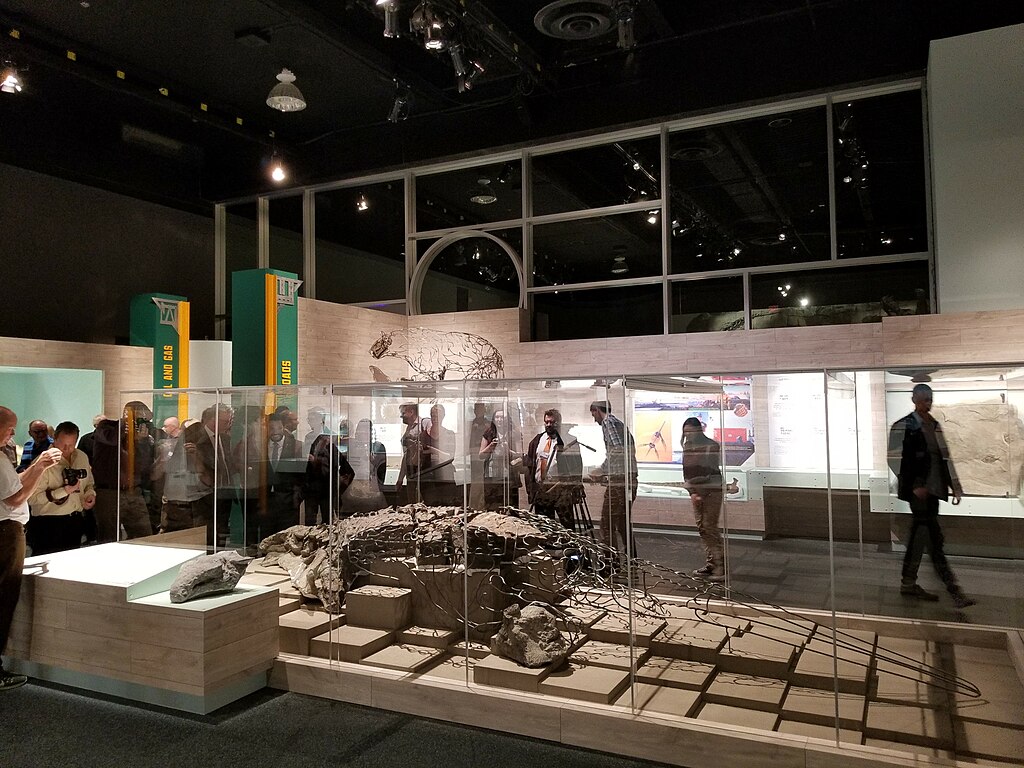
By placing the Pokémon Fossil Museum inside the Field Museum, the exhibition gains instant credibility. It is not tucked into a convention hall or entertainment venue. It is placed directly among real fossils that scientists study and preserve.
This setting reinforces the message that learning and imagination are not opposites. They can exist together, and sometimes they make each other stronger.
The Pokémon and Fossils Visitors Will See

One of the biggest draws of the exhibition is the way specific Pokémon are paired with real fossils. These comparisons are not random. They are carefully chosen to highlight similarities in design and inspiration.
Visitors can expect to see:
• Tyrantrum displayed alongside a Tyrannosaurus rex skeleton, inviting comparisons between posture, skull shape, and overall structure
• Archeops placed next to Archaeopteryx fossils, showing how Pokémon draws from real evolutionary history
• Kabutops and Omanyte shown alongside ancient marine fossils that inspired their designs
• Aerodactyl compared with pterosaur fossils, highlighting wing structure and flight adaptations
These displays encourage visitors to slow down and observe details. The exhibition asks simple but powerful questions. Why does this Pokémon look this way? What real animal might have inspired it? What does that tell us about life on Earth millions of years ago?
Learning Through Play Without Feeling Like a Lesson

One of the reasons the Pokémon Fossil Museum has been so successful in Japan is that it does not feel like a lecture. The tone is inviting and playful, but the information is accurate and grounded in real science.
Throughout the exhibition, visitors are guided by Pokémon Professors who explain how fossils are discovered, studied, and reconstructed. These explanations are presented in language that children can understand, without talking down to adults.
There are also interactive elements that explain fossil excavation techniques, how scientists determine the age of fossils, and how incomplete remains are used to reconstruct ancient creatures.
By framing these lessons through Pokémon, the museum lowers the barrier to entry. Visitors who might normally feel intimidated by scientific topics are more willing to engage.
Why This Matters for Younger Audiences

Museums across the world are facing a common challenge. How do you attract younger visitors who are growing up with constant digital entertainment?
The Pokémon Fossil Museum offers one answer. It meets younger audiences where they already are, emotionally and culturally. Pokémon is familiar. It is comforting. It sparks curiosity.
Once that curiosity is activated, the museum gently guides visitors toward real scientific concepts. Children learn about extinction, evolution, and deep time without feeling overwhelmed.
For some visitors, this may be the first time they seriously engage with paleontology. For others, it may plant the seed for a future interest in science.
The Cultural Significance of Pokémon in a Museum Setting

Pokémon is more than a game or a cartoon. Since its debut in the 1990s, it has become one of the most influential entertainment franchises in the world.
It has shaped childhoods, inspired creativity, and introduced millions of people to ideas about nature, habitats, and discovery. Placing Pokémon inside a museum acknowledges that cultural impact.
This exhibition treats Pokémon with respect, not as a gimmick, but as a tool for education and connection. It recognizes that modern culture deserves a place alongside traditional academic subjects.
In doing so, it also challenges outdated ideas about what belongs in a museum.
The Exhibition’s Journey From Japan to America

Before arriving in Illinois, the Pokémon Fossil Museum spent years touring Japan. It appeared in several regional museums, including locations known for their own fossil collections.
At each stop, the exhibition was adapted to fit the local museum, incorporating regional fossils and scientific context. This flexibility is part of what made it successful.
The move to the United States marks the first time the exhibition has traveled outside Japan. It is being marketed as the North American debut, suggesting that future stops may follow if the Chicago run is successful.
While no end date has been announced yet, interest is already high, and museum officials are encouraging fans to sign up for email updates.
Anticipation and Concerns Around Ticket Demand

Previous Pokémon exhibitions around the world have drawn massive crowds. Some events have even faced problems with scalpers reselling exclusive merchandise at inflated prices.
Because of that history, many fans are already planning ahead. While ticket sales have not yet been announced, demand is expected to be strong.
Museum officials have acknowledged the enthusiasm and emphasized their commitment to making the exhibition accessible to families and local visitors. Discounted days and timed entry systems are likely to be part of the strategy.
Still, those hoping to attend would be wise to plan early.
Why This Is More Than a Fan Event

It would be easy to dismiss the Pokémon Fossil Museum as a novelty designed purely to attract crowds. But doing so would miss the point.
This exhibition reflects a growing trend in education and cultural institutions. Storytelling, pop culture, and science are increasingly being woven together to create meaningful experiences.
The Pokémon Fossil Museum does not replace traditional science education. It complements it. It opens doors for conversations that might not otherwise happen.
For parents, it is an opportunity to share something familiar with their children while learning alongside them. For educators, it is a reminder that engagement matters.
The Broader Conversation About Museums and Modern Culture
Museums are no longer just places to quietly observe objects behind glass. They are evolving into spaces for interaction, reflection, and dialogue.
By hosting the Pokémon Fossil Museum, the Field Museum is signaling a willingness to experiment. It shows confidence in its mission and an understanding of its audience.
Rather than fearing that pop culture will dilute scientific credibility, the museum is embracing it as a tool.
That decision may influence how other institutions approach similar opportunities in the future.

The Emotional Pull of Seeing Fantasy and Reality Together
For many visitors, the most powerful part of the exhibition will not be the facts or explanations. It will be the feeling.
Standing in front of a massive real dinosaur fossil is already awe inspiring. Seeing a Pokémon fossil displayed nearby adds a layer of emotional connection.
It reminds visitors of childhood curiosity and imagination. It also reinforces the idea that science itself is driven by wonder.
That emotional resonance is difficult to manufacture, but when it happens naturally, it leaves a lasting impression.
What This Could Mean for Future Pokémon Exhibitions

The success of the Pokémon Fossil Museum in Illinois could have wider implications.
If attendance is strong and feedback is positive, it may encourage The Pokémon Company and other cultural institutions to explore similar collaborations.
This could include exhibitions focused on ecology, art, or even technology within the Pokémon universe, always anchored by real world learning.
It also raises the question of whether a more permanent Pokémon focused museum experience could exist someday.
A Reflection on Why This Moment Matters
At its core, the Pokémon Fossil Museum is about connection. Connection between generations. Connection between fantasy and reality. Connection between curiosity and knowledge.
In a time when attention is fragmented and learning often feels transactional, experiences like this matter. They remind us that discovery can be joyful.
For some visitors, the exhibition will be a fun afternoon. For others, it may spark a lifelong interest in science.
And for many, it will simply be a reminder that imagination and learning have always gone hand in hand.
A Full Circle Moment for Pokémon Fans
Japan’s Pokémon Fossil Museum making its debut in the United States is more than just exciting news for fans. It is a thoughtful experiment in how we share knowledge, culture, and curiosity.
By choosing Illinois and the Field Museum as its first American home, the exhibition places itself at the intersection of play and scholarship.
Whether visitors come for the Pokémon, the fossils, or both, they are likely to leave with something more than they expected.
Sometimes, the best way to learn about the real world is through a little bit of fantasy.
