
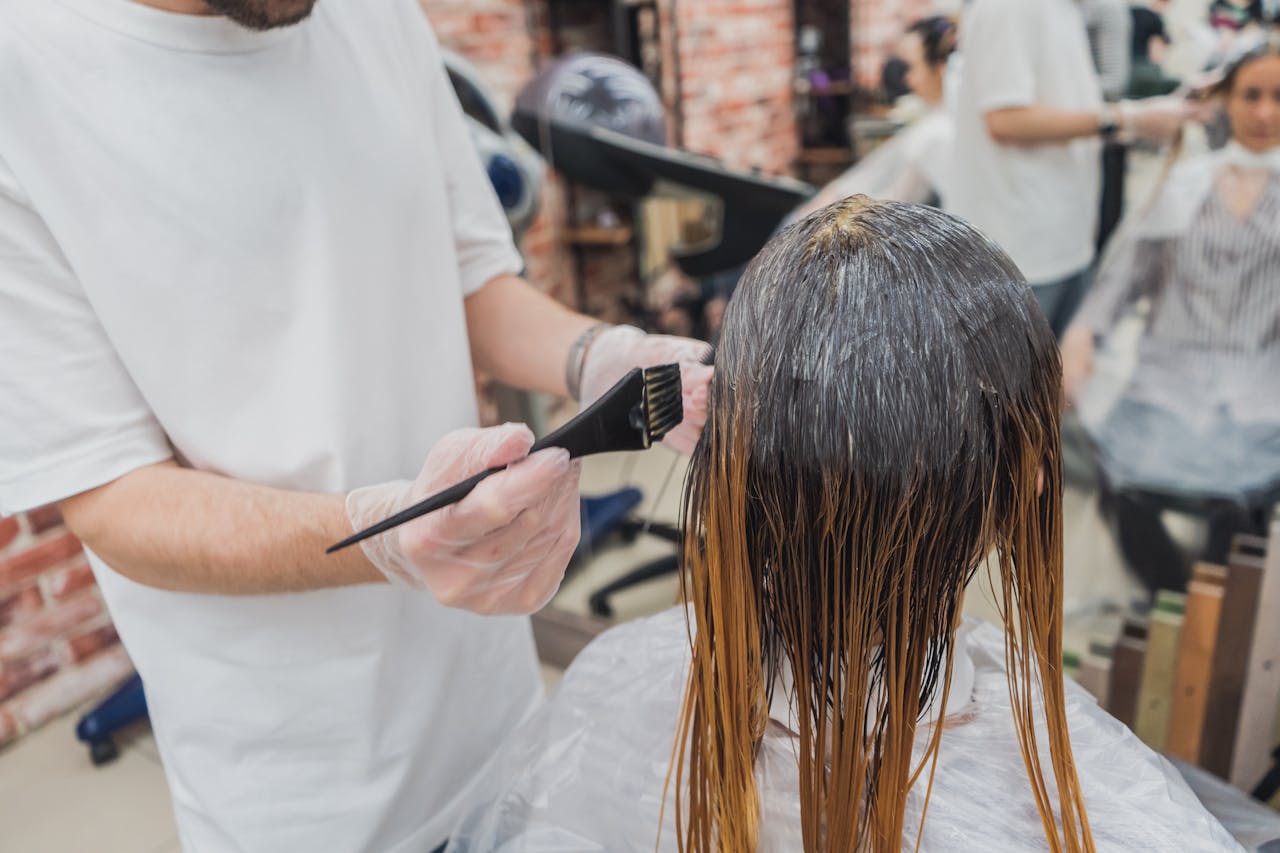
Have you ever stopped to think about what’s in your hair dye? For many women, coloring hair is more than a routine — it’s a ritual of self-expression, a way to reclaim confidence, or simply cover the gray. But behind those glossy results lies a growing question scientists are beginning to take seriously: could the chemicals in common dyes and straighteners be affecting more than just your style?
For decades, researchers have examined the possible health risks of beauty products, and the results have been mixed. Some studies dismissed the concern, while others found troubling links. Now, new evidence is pointing to a stronger connection than ever before — especially when it comes to breast cancer.

Why Scientists Are Looking at Hair Dye and Breast Cancer
For years, researchers tracked health issues among salon workers who handled dyes daily, paying special attention to bladder cancer. As dermatologist David J. Goldberg explains, “Much of the research on hair dye has focused on its possible connection to bladder cancer — particularly among hairdressers exposed at work to permanent dyes made before the 1980s.”
As formulations changed and consumer use soared outside professional settings, attention expanded from occupational exposure to what routine, at-home coloring might mean for long-term health—especially for breast tissue, which can be sensitive to endocrine-disrupting and carcinogenic compounds present in some products. This shift set the stage for large, modern cohort studies to examine real-world usage patterns across different communities without jumping ahead to specific risk numbers.

What the Research Says About Risk
One of the largest investigations into this issue comes from the NIH Sister Study, which followed more than 46,000 women in the U.S. and Puerto Rico. The findings showed that women who regularly used permanent hair dye had a slightly higher chance of developing breast cancer compared to those who didn’t. For white women, frequent use (every five to eight weeks) translated into about an 8–9% increase in risk. But for Black women, the increase was far greater—about 60% higher when used with the same frequency.
Chemical straighteners were also linked with higher risk. Women who used them at least every five to eight weeks had about a 30% greater chance of developing breast cancer than those who did not. Temporary dyes, on the other hand, did not show the same associations.
As study author Alexandra J. White, PhD of the National Institute of Environmental Health Sciences explained, “We found black women have a higher risk associated with the use of permanent hair dye compared to the risk for white women.”
To put these numbers in perspective, Dr. White added that for most women, the increase remains relatively small. A woman’s lifetime risk of breast cancer averages about 13%. Frequent permanent dye use may raise that to roughly 14% for white women, while the lifetime risk for Black women could rise closer to 21%.
Why the Risk May Differ by Race
The numbers aren’t uniform—and part of the picture is exposure. In the NIH Sister Study, hair straighteners were used by about 74% of Black women, versus roughly 10% in the overall cohort, indicating more frequent contact with these products among Black participants . The analysis also found that for Black women, risk was similar regardless of dye color, while for white women, light-colored permanent dye showed a stronger association than dark shades.

Representation matters for detecting these patterns. As epidemiologist Mia M. Gaudet, PhD, noted, “this study includes more than 4000 African American women who have been understudied in previous studies.” Dermatologist Nada Elbuluk, MD, adds needed caution: “This link between permanent hair dye and breast cancer risk in Black women has been shown in other studies, too. Though it’s unclear what may be driving these racial and ethnic differences.”
What might contribute? The reporting points to product mixes commonly used in Black hair care—for example, chemical straighteners, relaxers, and certain leave-in products—as possible contributors, though more research is needed to identify which ingredients, combinations, or usage patterns matter most.
The Problem With Permanent Dyes
Permanent color relies on chemical reactions inside the hair shaft. That lasting effect typically involves precursors (often aromatic amines) and other compounds (including phenols) that research has associated with carcinogenic effects—one reason scientists differentiate permanent dyes from semi-permanent and temporary options that don’t penetrate the shaft in the same way.
Regulation is another concern. As epidemiologist Alexandra J. White, PhD, notes: “Unlike pharmaceuticals, hair products are not strictly regulated. Manufacturers don’t need to prove that their products are safe before sale, and because their formulations are often proprietary, it can be difficult to know what’s in them.”

Because permanent dyes bond within the hair, users are more likely to rely on repeated applications to manage roots and fading. That pattern increases cumulative exposure over time—especially compared with semi-permanent or temporary products, which wash out and are considered gentler by comparison.
Safer Alternatives and Smarter Habits
You don’t have to give up coloring your hair altogether to be mindful of your health. Small changes in the products you choose and how you use them can make a meaningful difference. Here are some safer approaches that are practical for everyday life:

- Choose gentler color options. Temporary and semi-permanent dyes that gradually wash out don’t penetrate the hair shaft the way permanent dyes do, and studies suggest they carry less risk. Plant-based colors like henna or herbal blends are another option if you’re looking for something natural.
- Space out your coloring sessions. Coloring every few weeks raises your overall exposure. Stretching the time between touch-ups can lower risk while still keeping your look fresh.
- Take extra care during pregnancy. Experts recommend avoiding permanent dye, especially in the first trimester, to reduce any possible risk to the developing baby.
- Follow safe-at-home habits. If you color at home, simple steps like wearing gloves, opening a window for ventilation, rinsing thoroughly, and sticking to the recommended processing time can reduce how much of the product your skin absorbs.
These adjustments don’t require giving up color—they’re about making the process safer and more balanced for your long-term health.
Embracing Your Natural Look
There’s a growing shift toward styles that work with your texture instead of against it. As epidemiologist Mia M. Gaudet, PhD notes, “These results, if replicated, lend support to the ongoing efforts to celebrate natural hair among all women, and especially those of African ancestry.”
If you’re easing away from harsh chemicals, consider approaches that keep your routine simple and protective:

- Lean into your texture. Twist-outs, braid-outs, wash-and-go, and other low-manipulation styles reduce the need for chemical treatments.
- Minimize heat. Air-dry when possible or use low settings to protect the hair cuticle.
- Protect at night. A satin or silk bonnet/pillowcase cuts friction and breakage.
- Moisture first. Regular conditioning and lightweight oils can help with definition and frizz control.
- Go gradual with gray. If coverage is the goal, try non-dye options like root touch-up powders or mascaras while you transition.
- Ask for transparency. If you visit a salon, request ingredient lists and discuss non-permanent options that align with your comfort level.
Choosing styles that honor your natural pattern can reduce exposure over time—without sacrificing a polished look.
Beauty That Doesn’t Compromise Health
Color can be part of your routine without sidelining your well-being. The evidence points to higher risk with frequent, permanent dyes and certain straighteners—especially for Black women—so the smartest move is to reduce unnecessary exposure and choose gentler options when you can.
If you color, favor products that don’t penetrate the hair shaft, stretch the time between sessions, and keep application careful and brief. If you’re open to it, plant-based color or embracing more of your natural texture can cut down exposure even further. The goal isn’t perfection; it’s making informed choices that keep your look—and your long-term health—in mind.
