
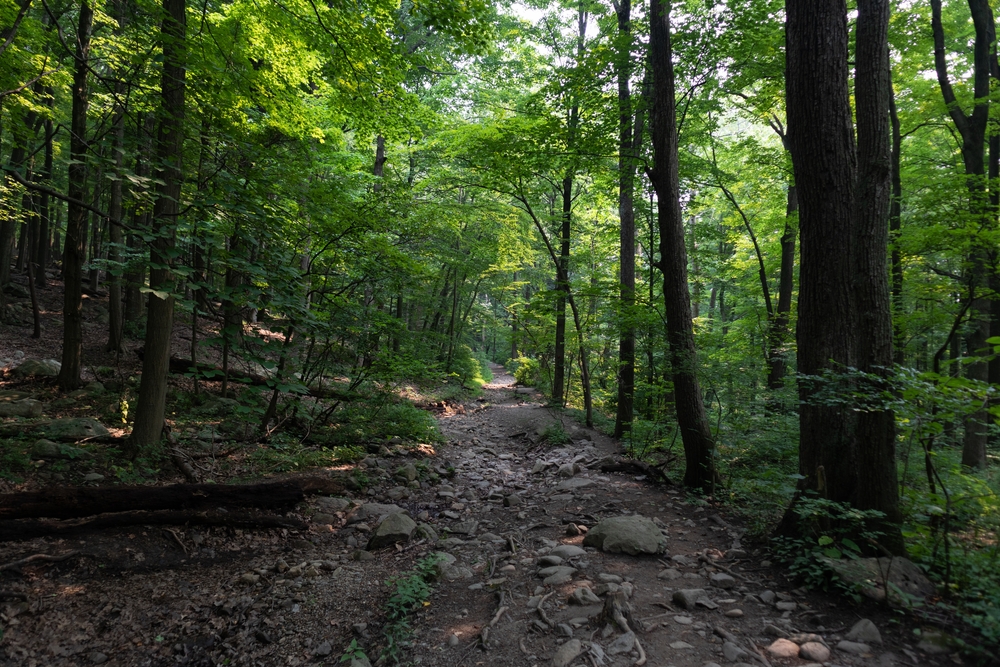
In a world where deforestation headlines often paint a bleak picture, one country has quietly flipped the script. Against the odds—and ahead of schedule—Pakistan has pulled off a feat that’s captured global attention. It’s not just about planting trees. It’s about reshaping landscapes, restoring hope, and redefining what’s possible when nature becomes a national priority.
But how did a country battling climate extremes, political unrest, and economic struggles manage to plant over one billion trees in just a few years? And more importantly, what made this movement stick when so many others wilted? The answers lie in a story that blends vision, community power, environmental urgency—and a bit of unexpected boldness.
How the Billion Tree Tsunami Took Root

The idea began in the rugged hills of Khyber Pakhtunkhwa (KPK)—a province known as much for its breathtaking mountains as for the deforestation that had ravaged them over the decades. Years of unchecked logging, natural disasters, and poor land management had left large stretches of land barren and vulnerable to floods and landslides. Forest cover had dropped to critical levels, contributing to erosion, habitat loss, and declining biodiversity. But in 2014, the tide began to turn.
Enter Imran Khan, the cricket legend turned political leader, whose party had just come to power in the province. Rather than launch a typical infrastructure scheme or short-lived green PR campaign, Khan’s administration unveiled a bold plan: plant one billion trees. The project—soon nicknamed the Billion Tree Tsunami—was ambitious to the point of skepticism. Could a region grappling with economic instability and bureaucratic red tape really pull off such a massive ecological effort?
What made the plan different was how it blended top-down vision with grassroots execution. Local nurseries were funded and built from scratch. Community members were trained and hired to grow, plant, and protect saplings. Forest guards were mobilized. And a digital monitoring system was created to track planting locations, species, and survival rates. This wasn’t a political photo-op—it was a full-blown ecological movement with deep roots in the soil and the people.
Where Pakistan’s New Forests Took Hold

The scale of the Billion Tree Tsunami wasn’t just impressive—it was sweeping. The campaign targeted some of Pakistan’s most ecologically fragile regions, from the high-altitude terrain of the Hindu Kush mountains to the dry, eroded lowlands and riverbanks prone to seasonal floods. Over 350,000 hectares of land were reforested, with a mix of natural regeneration and planned afforestation breathing new life into once-degraded areas.
In Khyber Pakhtunkhwa alone, forests that had been stripped bare by decades of illegal logging began to return. Riverbanks, often the first casualties during flash floods, were reinforced with tree plantations that helped stabilize soil and reduce the risk of water overflow. In former farmlands and barren fields, community forests were planted to supply wood, fruits, and fodder—restoring not just the land but local livelihoods. From pine and walnut trees in the cooler northern areas to acacia and moringa species in the warmer, arid regions, the selection of tree types was tailored to local climate and soil conditions.
What’s more, Google Maps was used to mark and verify planting sites, offering the kind of visual proof that even skeptics had a hard time dismissing. The initiative became a patchwork of green stretching across valleys, foothills, and floodplains—each cluster of trees telling its own story of rebirth.
Jobs, Nurseries, and Local Heroes

What made the Billion Tree Tsunami more than just a top-down campaign was its deep reliance on local communities—not just as beneficiaries, but as the driving force. At its heart, this was a people-powered movement that created opportunity where there had been scarcity, and purpose where there had been none.
To support the massive planting effort, the government helped set up over 13,000 private nurseries across Khyber Pakhtunkhwa. These nurseries weren’t outsourced to big corporations—they were run by villagers, women, and young people who were given small loans, training, and a guaranteed market for their saplings. Each nursery, often producing up to 25,000 trees, became its own micro-economy. It was a rare win-win: locals earned a steady income while contributing to an environmental revival.
As the project scaled up, it began employing tens of thousands of people as forest protection guards, planters, and caretakers. Even during the COVID-19 pandemic, when economic activity ground to a halt, the tree-planting program tripled its workforce to provide emergency green jobs to those left unemployed. In rural areas especially, where options were limited, this initiative provided a dignified livelihood and a shared mission.
Then there were the forest guards—the unsung heroes of the effort. Tasked with protecting the newly planted saplings, many faced real threats from entrenched logging mafias. Some were injured, a few lost their lives, but they stood their ground to protect what they believed was worth defending. Their sacrifice added a layer of urgency and pride to the project, transforming it from a job into a cause.
The Dangerous Fight to Save Pakistan’s Trees

For decades, Pakistan’s forests were quietly under siege—not just by climate change or neglect, but by a well-organized, deeply entrenched timber mafia. This shadowy network of illegal loggers thrived on weak enforcement and political loopholes, clearing entire stretches of forest for profit with little regard for the environmental toll. Any attempt to restore forests meant eventually running into this brick wall of corruption and criminality. And when the Billion Tree Tsunami took root, it declared war on that very system.
The reforestation campaign didn’t just aim to plant trees—it sought to protect them, which meant confronting the illegal sawmills and logging syndicates that had long operated unchecked. Forest protection guards were deployed across newly planted zones, tasked with monitoring growth, reporting illegal activity, and in some cases, physically defending the trees. This wasn’t always a symbolic role. Encounters turned violent, with several forest guards injured and at least two losing their lives in the line of duty. The message was clear: planting a tree in Pakistan was not without risk.
The provincial government in Khyber Pakhtunkhwa took further steps to disrupt these networks. Hundreds of illegal sawmills were shut down, and new legislation tightened forest conservation rules. But perhaps the most powerful tool was public support. With more communities now involved in the forests’ restoration—and benefiting economically from it—there was a grassroots resistance to logging that hadn’t existed before. Locals who once turned a blind eye were now the ones calling out illicit tree cutting.
Why This Project Matters Now More Than Ever

Pakistan sits at a dangerous crossroads when it comes to climate change. Despite contributing less than 1% to global greenhouse gas emissions, the country consistently ranks among the top 10 most climate-vulnerable nations. From deadly heatwaves and erratic monsoons to flash floods and fast-melting glaciers, the environmental threats facing Pakistan aren’t distant—they’re already here, and they’re getting worse.
The Billion Tree Tsunami wasn’t just a feel-good green initiative—it was a lifeline. Reforestation plays a crucial role in carbon sequestration, soil stabilization, water conservation, and biodiversity restoration. In Pakistan’s case, trees became a direct defense mechanism. By reinforcing riverbanks and anchoring mountain slopes, the newly planted forests helped reduce the severity of floods and landslides—two of the most devastating effects of climate disruption in the region.
More trees also meant cleaner air in cities like Lahore and Karachi, where pollution has reached hazardous levels. They contributed to cooling local microclimates, slowing the rise of extreme temperatures in urban heat islands. And as Pakistan faces longer dry spells and erratic weather patterns, forests act as natural buffers—trapping moisture, regulating water cycles, and preventing desertification.
The urgency of the climate crisis gave the Billion Tree initiative a kind of moral clarity. It wasn’t optional—it was necessary. And its success helped position Pakistan as a green leader on the global stage, inspiring similar programs in other countries and opening doors for international climate financing.
How Pakistan’s Tree Revolution Went National

After the unexpected success of the Billion Tree Tsunami in Khyber Pakhtunkhwa, the question was no longer whether mass reforestation was possible—it was how far it could go. With one billion trees planted ahead of schedule, Pakistan’s leadership decided to dream even bigger. In 2018, the government launched the Ten Billion Tree Tsunami, scaling the project from a provincial triumph to a national mission.
This wasn’t just a case of copying and pasting the original model. The new initiative aimed to restore one million hectares of degraded land across the country, stretching from the salt flats of Sindh to the mountainous terrain of Gilgit-Baltistan. The same grassroots approach remained at the core: local nurseries, community jobs, and GPS-tracked planting. But now, the ambition was tenfold—and so were the logistical challenges.
Despite a global pandemic that temporarily slowed down operations, the campaign rebounded quickly. By 2021, over 1.5 billion trees had already been planted, and the project had expanded to include urban forests, mangrove restoration in coastal areas, and the revival of historical green belts in major cities. It wasn’t just about planting trees anymore—it was about reimagining entire ecosystems, restoring biodiversity, and weaving green infrastructure into the country’s long-term development.
The initiative’s visibility also grew, drawing international attention and support. The project was featured in Pakistan’s climate commitments under the Paris Agreement, with projections to sequester 500 million tonnes of CO₂ by 2040 if fully implemented. Funding discussions with the World Bank and other global institutions followed, placing Pakistan in a new light—not as a passive victim of climate change, but as an active agent of restoration.
What the World Can Learn from Pakistan’s Forest Revolution
For a country long associated with political instability and climate vulnerability, Pakistan’s forest revolution has reshaped its global image in a surprising way. The Billion and Ten Billion Tree Tsunami projects weren’t just environmental milestones—they became tools of green diplomacy, signaling a bold shift in how Pakistan wanted to be seen on the world stage: not as a victim of climate chaos, but as a leader in climate action.
This transformation didn’t go unnoticed. International organizations like the IUCN, the World Bank, and the Bonn Challenge all recognized the scale and sincerity of Pakistan’s efforts. Even countries like Saudi Arabia and the United States reached out for collaboration, citing Pakistan’s model as an example worth learning from. When the government started linking tree-planting efforts to green financing opportunities, it opened a path for climate-related investment and funding that previously seemed out of reach.
More importantly, Pakistan’s success story showed the world that reforestation doesn’t have to wait for perfection—not for a booming economy, not for complete political consensus, and certainly not for decades. It can begin with limited resources, a clear vision, and a lot of determination. The project also underscored the importance of local ownership and transparency, making it clear that sustainable environmental change is not about planting trees for headlines—it’s about building systems that last beyond political terms.
As the global climate crisis accelerates, countries everywhere are searching for scalable, affordable, and effective solutions. Pakistan’s model has proven that with the right mix of policy, community involvement, and accountability, even the most ambitious green goals are within reach. It’s a reminder that environmental leadership isn’t the exclusive domain of wealthy nations—it can emerge anywhere, even in the most unexpected places.
Ensuring Pakistan’s Trees Outlive the Headlines
Planting a billion trees is no small feat. But keeping them alive—nurturing them, protecting them, and ensuring they grow into thriving forests—is the real test of commitment. Pakistan’s tree-planting revolution has already transformed barren landscapes, revived damaged ecosystems, and created jobs for thousands. More than that, it has sparked a sense of environmental ownership in people who once felt powerless against climate change.
Yet, this is just the beginning. The trees are young. The soil is still settling. And the momentum—fragile but full of potential—needs careful tending. As political winds shift and funding cycles fluctuate, the danger now lies not in failure, but in neglect. A green revolution doesn’t end with a milestone; it evolves with every sapling that survives and every community that refuses to let it all be undone.
Pakistan has shown what’s possible when vision meets action. The challenge now is to protect that progress—not just for the country’s future, but as a model for the world. Because in the end, planting a tree is never just about shade or scenery. It’s about hope, regeneration, and a commitment to life that extends far beyond the people who first dug the hole.
