
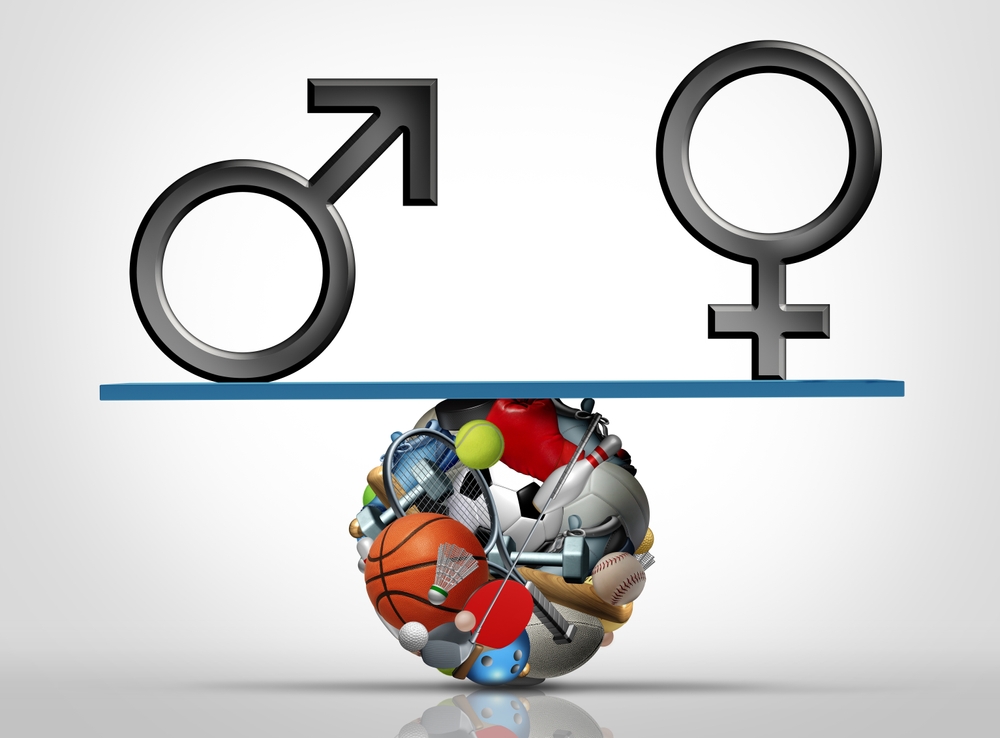
The Olympic movement is approaching one of its most significant eligibility decisions in modern history. Multiple reports, scientific reviews and political developments now point toward a forthcoming policy that would bar transgender women from competing in female categories at the 2028 Los Angeles Games. While the International Olympic Committee has not issued a formal ruling, the direction of its internal discussions, working group analyses and public statements indicates that an announcement is expected in the near future.
The issue sits at a complex intersection of science, law, fairness, inclusion and global politics. Any policy shift of this scale has the potential to influence not only elite international sport but also national federations, domestic competitions and youth sports systems around the world. A closer look at how the IOC reached this moment helps illuminate why the debate has intensified, what scientific evaluations have revealed so far and how political developments may be affecting the environment in which the IOC now operates.
As global attention turns toward the Los Angeles Games, the conversation continues to unfold with increasing urgency. Stakeholders across sport, advocacy groups and legal communities are watching closely to understand how a new policy might reshape competition, athlete rights and long standing Olympic principles of inclusion and non discrimination.
The Road Toward a New IOC Policy
The IOC’s evolution on eligibility for transgender athletes has been gradual, shaped by advances in sports science and shifts in leadership. In 2021, shortly after the Tokyo Games, the IOC approved its Framework on Fairness, Inclusion and Non Discrimination on the Basis of Gender Identity and Sex Variations. This framework set aside the previous testosterone threshold model and instead handed authority to individual sports federations to determine their own rules.
While the approach aimed to give flexibility, it also produced inconsistent outcomes across sports. Some federations banned transgender women who had experienced male puberty, while others continued to rely only on testosterone criteria. The resulting fragmentation made it difficult for athletes to plan their careers and created uncertainty for national committees tasked with enforcing different sets of rules for each sport.
A shift occurred when Kirsty Coventry took office as IOC president. Coventry, a former Olympic swimmer, suggested that the protection of the female category required a more centralized and scientifically grounded approach. She established the Protection of the Female Category working group, composed of experts from medicine, regulatory law and international federations. This group was tasked with examining whether a universal policy was necessary to maintain competitive integrity.
Reports indicate that support among IOC members for a unified policy grew significantly over the following months. According to sources familiar with internal discussions, many members advocated for clarity ahead of the 2028 Olympics to ensure that disputes did not overshadow competition.
Understanding the Scientific Review

At the center of the IOC’s deliberations is a confidential scientific review compiled by researchers and presented by Dr Jane Thornton, the IOC’s medical and scientific director. A former elite rower and specialist in sports medicine, Thornton reportedly outlined evidence suggesting that certain physiological advantages derived from male puberty persist even after testosterone suppression.
The review examined factors such as muscle mass retention, bone density, oxygen carrying capacity, limb length, cardiac output and force production. While hormone therapy can reduce some attributes, others appear to remain at levels that may influence competitive outcomes in sports that rely heavily on strength, speed or endurance. As more federations began consolidating their own findings, the IOC initiated a more comprehensive evaluation.
The review also included discussion of athletes with differences of sexual development. These athletes are not transgender but may have chromosomal or hormonal characteristics outside typical female ranges. Their participation has sparked debate in events such as boxing and athletics. The scientific considerations, especially regarding endogenous testosterone levels, overlap in some ways with discussions about transgender participation.
While the IOC has not publicly released the review, sources across international media describe it as factual and data driven, without advocacy. Its findings appear to have played a major role in influencing the direction of the IOC working group and the positive reception reported among IOC members.
Political and Global Context

The ongoing policy review is occurring at a time when national politics are shaping global debates about transgender participation in sport. In early 2025, United States President Donald Trump signed an executive order banning transgender women from competing in female sports categories at all school and university levels. In public statements, he announced that the same policy would apply to the 2028 Olympics in Los Angeles, including the possibility of visa restrictions for transgender athletes seeking to compete.
The IOC is not bound by national policies, but hosting an Olympic Games in a country with domestic restrictions introduces legal, diplomatic and logistical complications. Some analysts suggest that the IOC may be moving toward a comprehensive policy in part to prevent jurisdictional conflicts ahead of 2028. Others argue that the IOC is acting independently and that scientific review, not political pressure, is driving the impending decision.
Beyond the United States, several countries have tightened regulations around transgender participation in national sports. These policy shifts reflect broader cultural discussions, which influence but do not directly dictate the IOC’s scientific and legal evaluations. The international nature of the Olympics requires policies that function consistently across diverse political environments.
Legal Considerations and Human Rights Factors

Any new IOC policy must be defensible under international sports law and human rights frameworks. The shift from nonbinding guidelines to enforceable regulations raises complex legal questions. Historically, the IOC allowed federations to interpret eligibility guidelines in ways that suited their sport specific needs. A universal ban would change that dynamic, placing the IOC at the center of any challenges that arise.
Legal experts point to four central considerations that the IOC must address. First, proportionality must be upheld. Under the Olympic Charter, discrimination based on sex or gender identity is prohibited unless it serves a legitimate sporting objective and uses the least restrictive means. Second, scientific validity must be well established, with evidence that is robust and peer reviewed. Third, procedural fairness must be guaranteed, meaning athletes must have access to transparent rules, testing pathways and appeal mechanisms. Fourth, any measure must comply with international human rights standards.
The Court of Arbitration for Sport is expected to be the first venue for any challenges. Domestic courts could also become involved if national laws conflict with IOC regulations. This creates a landscape in which federations must align their own policies with both the centralized IOC rules and the legal requirements of the countries in which they operate.
Questions also surround privacy and medical ethics. If genetic testing or chromosomal verification is implemented, athletes would be subject to procedures that raise sensitive issues about consent, confidentiality and stigma. The IOC’s history in this area is complex. Earlier policies from the 1960s through the 1990s used invasive sex verification methods that were eventually abandoned due to concerns about their scientific basis and ethical implications. Any new policy must therefore avoid repeating past mistakes.
Rising Pressure Following High Profile Cases

The debate around transgender and DSD athlete participation intensified following events at several recent Olympic Games. At the Paris 2024 Olympics, Algerian boxer Imane Khelif and Taiwanese boxer Lin Yu Ting won gold medals after earlier eligibility disputes involving separate federation testing criteria. Neither athlete is transgender, but the controversy prompted wider discussions about how governing bodies define eligibility for female categories.
This followed earlier moments such as the participation of New Zealand weightlifter Laurel Hubbard at the Tokyo 2020 Olympics. Hubbard became the first openly transgender woman to compete at the Games. Her participation sparked extensive debate across athletes, commentators and policymakers. While she did not medal, the situation highlighted the need for clearer, more consistent rules.
International federations have reacted in different ways. World Athletics and World Aquatics have already introduced restrictions preventing transgender women who experienced male puberty from competing in elite female events. World Boxing has introduced genetic sex testing following controversies at recent competitions. Other federations remain in the process of updating or assessing their rules.
These cases increased the call for the IOC to step in with a unified approach to prevent conflicting standards across sports and competitions. With public attention growing, the pressure on the IOC to deliver a comprehensive, evidence based policy has intensified.
Anticipated Features of the Policy

Although the IOC has not released final guidelines, multiple reports suggest several features that are likely to be included. Foremost is a ban on transgender women who experienced male puberty, regardless of current testosterone levels. This would align the IOC with policies already implemented by some major federations.
The treatment of athletes with differences of sexual development remains uncertain. Some sources suggest that the IOC may introduce stricter criteria for DSD athletes, potentially involving testosterone thresholds or genetic testing. Others expect the IOC to differentiate transgender participation policies from DSD regulations, given the distinct scientific and ethical considerations involved.
Implementation timelines vary according to different reports. Some indications point to the policy being finalized ahead of the 2026 Winter Olympics in Milan and Cortina. Others suggest a complete rollout between early 2026 and late 2027 to ensure enforcement is in place well before the Los Angeles Games.
What remains clear is that any final policy will require collaboration with international federations and national Olympic committees. Implementation will also require educational materials, testing standards, appeals procedures and coordination with independent medical and legal bodies.
Athlete and Federation Reactions
Reactions from athletes have been mixed. Some female athletes support a ban on the grounds of competitive fairness, arguing that the physiological differences between those who experienced male puberty and those who did not create conditions that cannot be effectively equalized. These athletes say that consistent rules would help restore confidence in competition.
Other athletes, along with advocacy groups for transgender rights, voice concern that a ban could marginalize transgender competitors and reinforce stigma. They argue that sport should strive for inclusion and that a universal prohibition may overlook differences between sports or individual physiological variation. Some groups have suggested open categories or additional pathways for participation.
Federations are also responding cautiously. Sports such as athletics, swimming and boxing have already moved toward more restrictive policies. Other sports argue that performance determinants vary significantly across their events and that sport specific analysis is necessary. The IOC will need to address these differing viewpoints while maintaining policy consistency.

The Broader Impact on Global Sport
The IOC’s decision is likely to influence sport beyond the Olympic Games. National and local sports organizations often model their regulations on Olympic standards. A universal ban may lead to policy adjustments in schools, community leagues and collegiate athletics around the world.
It could also reshape the development of youth sports programs, influencing how young athletes understand eligibility, fairness and participation. Debates about inclusivity and safety may intensify as federations adjust to new expectations.
At the same time, research in sports science will continue to evolve. Future studies may offer new insights into physiological differentiation, performance variables and alternatives to existing eligibility categories. The IOC will need to remain responsive to emerging evidence, legal rulings and ethical considerations.
What Happens Next

The IOC has stated publicly that no final decision has been reached. Its working group is continuing discussions, and further updates are expected during upcoming IOC sessions. Reports suggest that a formal announcement could come in early 2026, although the precise timing remains uncertain.
Observers expect three primary outcomes. First, a full ban on transgender women in female categories appears increasingly likely, with implementation ahead of the 2028 Games. Second, DSD related guidelines may be addressed separately, potentially leading to distinct eligibility criteria. Third, new testing and verification procedures may be introduced, although these remain subject to significant ethical and legal debate.
The coming months will be pivotal. As the Olympic movement prepares for the Los Angeles Games, clarity on eligibility will be essential to ensure that athletes, coaches and federations can plan effectively.
The Evolving Landscape of Olympic Policy
The anticipated IOC policy represents a moment of transition in global sport. Fairness, inclusion, scientific evidence and legal principles all intersect in complex ways, making simple answers unattainable. The ongoing discussions acknowledge that athletic competition depends on a level playing field, yet elite sport must also strive to uphold human dignity and offer opportunities for diverse athletes to participate.
As the IOC finalizes its approach, the sporting community is invited to reflect on the broader purpose of competition. Questions about who gets to participate, what defines fairness and how to respect both individual identity and collective integrity will continue to shape the conversation long after the 2028 Games. The decisions made now will influence not only the Olympic stage but the global sporting landscape for years to come, leaving a lasting legacy of how sport defines and protects its categories while remaining committed to principles of respect, transparency and fairness.
