
For centuries, death has been seen as an unyielding line—a point of no return. The moment a heart stops beating, we lower our voices, step back, and begin to grieve. But what if that line isn’t as permanent as we’ve been taught to believe? What if death, at least in its early stages, is more like a dimmer switch than an off switch?
Studies have shown that even several minutes after the heart flatlines, traces of brain activity can still be detected. In some rare cases, patients have been revived after being declared clinically dead for 30 minutes or more. And at the center of this growing body of research is Dr. Sam Parnia, a critical care physician at NYU Langone, who argues that death is not a single moment—it’s a process. One that may be reversible under the right conditions.
Who Is Dr. Sam Parnia?
Dr. Sam Parnia isn’t a fringe thinker or media personality making outlandish claims—he’s a respected critical care physician at NYU Langone Medical Center, where he serves as Director of Critical Care and Resuscitation Research. He specializes in what most would call the outer edge of life: cardiac arrest, coma, and the brief window where life hangs in the balance. His focus is on reversing death, not in the abstract, but in the ER, in the ICU, and in operating rooms. While much of medicine is centered on preserving health, Parnia’s mission is different—he wants to understand the precise moment death begins and how long, realistically, it can be held off or even reversed. This isn’t about reanimating the dead in science fiction terms; it’s about extending our understanding of when biological death truly occurs.
Parnia gained global recognition for leading the AWARE study (AWAreness during REsuscitation), one of the largest and most rigorous attempts to explore consciousness during cardiac arrest. The study wasn’t designed to entertain spiritual theories, but to probe, with measurable data, what happens to brain activity and awareness during periods of apparent death. With patients in hospital settings being monitored closely during resuscitation efforts, his team was able to gather credible, peer-reviewed data suggesting that consciousness may not end the moment the heart stops beating. The implications of these findings stretch beyond science—they reach into how we define death legally, ethically, and emotionally.
He’s published extensively in respected journals, lectures at academic conferences, and continues to train medical professionals on resuscitation protocols that treat death not as a point of no return, but as a process with potential reversibility. What separates Parnia from sensationalists is his clinical rigor. He doesn’t make claims he can’t back up with data. And what the data is starting to show—however quietly and cautiously—is that our modern understanding of death may be built on outdated assumptions, and it’s time for a serious reevaluation.
The Medical Definition of Death Is Shifting

For most of history, death was a visible event. A person stopped breathing, their body went cold, and that was that. In modern hospitals, the line between life and death has become far less visible. Machines now sustain breathing, restart hearts, and cool bodies to preserve brain function. As a result, the long-standing definition of death—the irreversible cessation of heartbeat and breathing—is no longer sufficient. Parnia and other researchers now argue that the moment the heart stops is only the start of a complex biological cascade, not the final act. With the right tools and techniques, this cascade can be interrupted, paused, or even reversed, sometimes minutes—or in extreme cases, hours—after the traditional threshold of death.
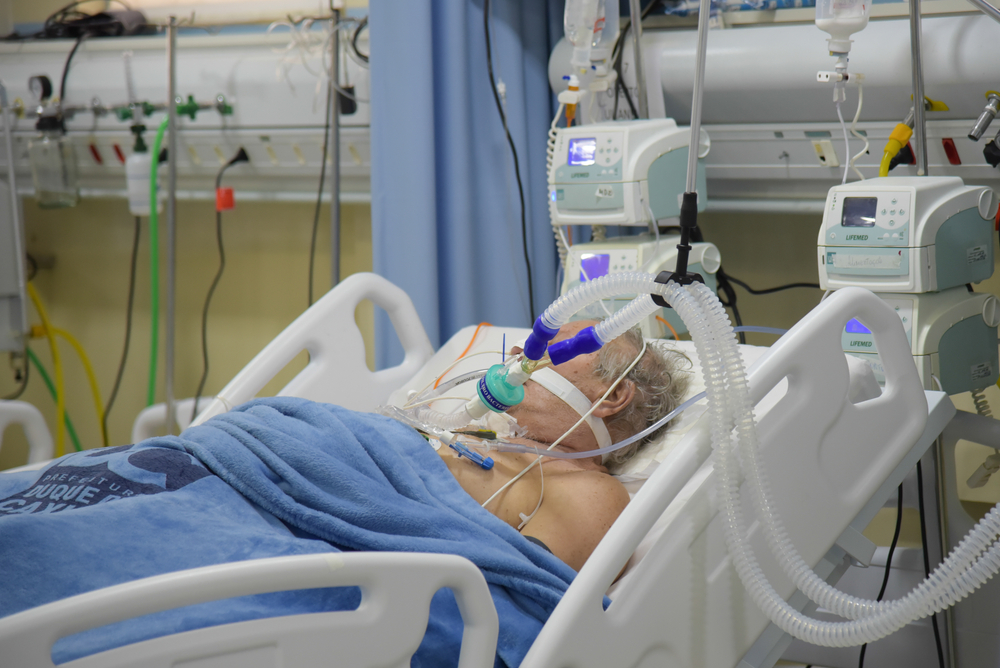
Interventions like extracorporeal membrane oxygenation (ECMO), mechanical CPR, and therapeutic hypothermia are already expanding what’s possible. Cooling the body can slow cellular metabolism and protect the brain while doctors work to restore circulation. ECMO, meanwhile, functions like an external heart and lungs, buying time during cardiac arrest that would have been unthinkable even 20 years ago. The success of these approaches is not theoretical—hospitals across the world are now reporting cases of people revived after 30, 40, even 60 minutes without a detectable pulse. This forces a reckoning with the idea that death is not an absolute line, but a zone—a state that may be entered but not always finalized.
This medical shift has broader consequences. It raises thorny questions about when resuscitation efforts should be abandoned, how we handle organ donation protocols, and what families should be told when a loved one “dies.” If a person declared dead in one hospital might be saved in another with more advanced protocols, what does that say about our system’s consistency—or fairness? For Parnia, these aren’t just abstract dilemmas. They are urgent calls to reframe our assumptions, update our practices, and treat the boundary between life and death as more nuanced than we’ve allowed.
The Science of Revival: What’s Actually Happening in the Brain?
For decades, we’ve accepted that the brain begins to irreversibly shut down within minutes of the heart stopping. This assumption has shaped everything from emergency response times to hospital protocols. But recent evidence is painting a far more resilient picture of the human brain. In Parnia’s studies and others like it, organized brain activity—specifically delta, beta, and alpha waves associated with conscious thought—has been recorded up to an hour after cardiac arrest. That doesn’t mean a person is awake or aware, but it strongly suggests that tWhen Does the Brain Eat Itself?he brain retains some capacity for function longer than we thought, especially if interventions are applied swiftly.
One reason this is possible lies in how cells die—not instantly, but over time. Neurons don’t explode or vanish when oxygen cuts off; they begin a slow breakdown process that can be interrupted. Cooling the brain slows this decay. Mechanical CPR can maintain a minimal level of circulation to delay tissue death. And new drugs are being developed to further extend this protective window. This knowledge shifts resuscitation from a matter of chance to a matter of timing and technique. It turns what used to be passive observation into proactive possibility. The science of dying is revealing, ironically, how much life persists in the face of apparent stillness.
This research also casts doubt on how we define “brain death,” especially in emergency settings. It encourages a reevaluation of terms like “irreversible” when describing cardiac arrest. Parnia points out that people once believed going without oxygen for four minutes meant certain brain death—but today, children pulled from frozen lakes after 30 minutes under water have recovered fully. It’s not about rewriting biological law. It’s about acknowledging that with the right conditions—cold, compression, circulation—the window for saving a brain is much wider than we imagined. This isn’t miracle work. It’s physiology we’re only beginning to grasp.
Near-Death Experiences: Hallucination or Glimpse of Consciousness?

Few subjects provoke as much intrigue—and skepticism—as near-death experiences. Patients brought back from the brink often describe strange and vivid sensations: floating above their bodies, passing through tunnels, encountering deceased loved ones, or observing hospital scenes with eerie accuracy. For many years, these accounts were dismissed outright as the brain’s final flickers or the effects of drugs and trauma. But Parnia approaches them differently. He treats them as data points. And through structured interviews and follow-ups, he’s collecting them in a way that’s never been done before.
In his studies, participants’ accounts are often cross-referenced with hospital staff recollections and medical logs. In some cases, patients described the actions of doctors and nurses during their own resuscitation—at a time when their brains should have been offline by every clinical measure. These stories aren’t proof of life after death, but they do raise questions about what parts of consciousness survive during cardiac arrest. And if even one of these cases is verifiably accurate, it calls for deeper study—not dismissal.
Parnia is clear: he’s not claiming people are traveling to another realm. He’s saying that our understanding of human awareness—especially during periods of clinical death—is incomplete. His research opens the door to new conversations about consciousness, memory formation, and perception under duress. For now, near-death experiences remain one of the most mysterious elements of this field, but with more structured research, they may become less about mysticism and more about understanding the durability of the mind under extreme conditions.
What’s Next for This Field?

Dr. Parnia’s current work with AWARE II, spanning multiple hospitals across North America and Europe, seeks to map consciousness during cardiac arrest in unprecedented detail. This includes real-time brain monitoring and controlled interviews with patients who are revived. The study’s goal is to identify patterns: When does awareness stop? When does it return? What are the physiological markers that define the brain’s ability to bounce back? Already, early findings show more coherence than expected, giving further credibility to the idea that life and consciousness can linger beyond clinical death.
Technological innovation is accelerating this frontier. With AI-enhanced EEG readings, better portable scanners, and more responsive cooling systems, doctors are increasingly equipped to act quickly and effectively in those early, chaotic minutes after a cardiac arrest. These tools don’t just help in survival—they help preserve cognition, reduce brain injury, and provide better patient outcomes. The ability to map real-time brain activity during death events is allowing researchers to ask better questions—and get clearer answers.
But perhaps the most important shift is philosophical. Parnia’s vision isn’t about cheating death or extending life at all costs. It’s about informed, compassionate medicine that gives people the best chance to survive and recover with dignity. His ultimate hope is not to delay death indefinitely, but to ensure that when revival is possible, it’s meaningful—not just in a clinical sense, but in terms of quality of life. It’s a future where we treat the dying with the same precision and humanity as we do the living—because, scientifically speaking, they may not be as different as we once believed.
Death May Be More of a Transition Than an Endpoint

The idea that death could be reversible feels unsettling, even jarring. But the work being done by scientists like Dr. Sam Parnia suggests that we’ve been drawing the line too soon—and perhaps too boldly. With each patient brought back after extended cardiac arrest, with each brain wave detected long after a pulse disappears, the story grows more complicated. Death, it turns out, may be more like a door slowly closing than a switch being flipped.
This doesn’t mean immortality is on the horizon. Nor does it mean every life can—or should—be extended indefinitely. What it does suggest is that we’ve underestimated the body’s ability to recover, and the mind’s resilience in the face of extreme trauma. And it challenges us, not only as scientists or doctors, but as human beings, to reconsider what we owe to those at the edge of life.
In the end, perhaps the most important shift isn’t scientific—it’s existential. If death is no longer an immediate ending, we may need to rethink not just how we treat the dying, but how we value the living. Because the line we thought we understood is moving. And with it, so might our sense of what it means to truly be alive.
Sources:
- Parnia, S., Post, S. G., Lee, M. T., Lyubomirsky, S., Aufderheide, T. P., Deakin, C. D., Greyson, B., Long, J., Gonzales, A. M., Huppert, E. L., Dickinson, A., Mayer, S., Locicero, B., Levin, J., Bossis, A., Worthington, E., Fenwick, P., & Shirazi, T. K. (2022). Guidelines and standards for the study of death and recalled experiences of death––a multidisciplinary consensus statement and proposed future directions. Annals of the New York Academy of Sciences, 1511(1), 5–21. https://doi.org/10.1111/nyas.14740
- Parnia, S., Shirazi, T. K., Patel, J., Tran, L., Sinha, N., O’Neill, C., Roellke, E., Mengotto, A., Findlay, S., McBrine, M., Spiegel, R., Tarpey, T., Huppert, E., Jaffe, I., Gonzales, A. M., Xu, J., Koopman, E., Perkins, G. D., Vuylsteke, A., . . . Deakin, C. D. (2023). AWAreness during REsuscitation – II: A multi-center study of consciousness and awareness in cardiac arrest. Resuscitation, 191, 109903. https://doi.org/10.1016/j.resuscitation.2023.109903
