
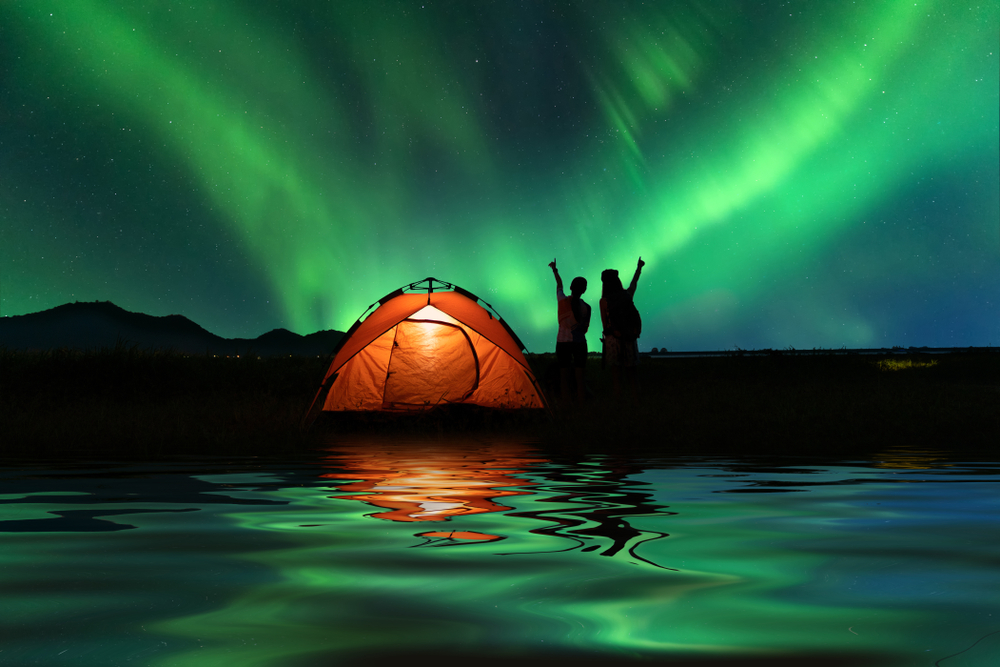
This week, a rare and spectacular event will light up the skies of the United States: the Northern Lights. Usually reserved for the polar regions, this celestial phenomenon is making an unusually far-reaching appearance thanks to a significant surge in solar activity. Triggered by a powerful geomagnetic storm, the aurora borealis—those mesmerizing bands of color—will stretch much further south than usual, offering a rare chance for many across the country to witness this stunning display of nature’s beauty.
From vibrant greens to subtle purples, the night sky will transform into a dynamic canvas of shifting colors. But where can you see this breathtaking spectacle? And how can you make the most of this rare opportunity?
What Triggers the Northern Lights
The sudden appearance of the Northern Lights across much of the United States can be traced back to a dramatic surge in solar activity—an event known as a geomagnetic storm. But what exactly sparks this impressive display far from its usual polar stage? The phenomenon begins with the sun itself, which emits a continuous flow of charged particles known as the solar wind. Occasionally, this wind carries with it a significant disruption in the form of a coronal mass ejection (CME), a massive burst of solar plasma and magnetic fields hurled into space.
When these charged particles collide with Earth’s magnetic field, they travel along the field lines toward the poles. Here, they interact with molecules in our atmosphere, releasing energy in the form of light. This process creates the beautiful auroras, or Northern Lights, primarily seen in high-latitude regions near the Arctic and Antarctic.
The strength and reach of an auroral display depend significantly on the intensity of the geomagnetic storm. The recent outburst from the sun has been particularly powerful, resulting in a G2 to G3 level storm, which is considered strong by the standards of the NOAA Space Weather Prediction Center. Such storms not only enhance the usual light show near the poles but also push the aurora’s visibility much farther south than usual, allowing a broader audience across the United States to experience this natural wonder.
This week’s solar event is not just a rare occurrence; it’s a reminder of the dynamic and interconnected nature of our solar system. The sun’s activity peaks in cycles approximately every 11 years, and we are currently nearing what scientists call the Solar Maximum, a phase characterized by increased solar flares and CMEs.
Where to See the Northern Lights in the USA

Thanks to the intensity of this week’s solar event, the Northern Lights will be visible much farther south than usual, offering a unique opportunity for many across the United States. While the aurora borealis is typically confined to higher-latitude regions near the Arctic, the current geomagnetic storm is expanding its reach, bringing the stunning light show to areas much further south.
States like Montana, North Dakota, Minnesota, and Michigan, which are along the Canadian border, are often the best places to see the Northern Lights. However, this week’s event could make the aurora visible in places further south, including Wisconsin, parts of South Dakota, and even the Northeast. If you’re in Maine, Vermont, or New Hampshire, you may be lucky enough to catch a faint but captivating glow in the sky.
If the geomagnetic storm intensifies, even more surprising locations could see the lights, such as Iowa, Pennsylvania, and Nebraska. In these states, residents should look toward the northern horizon to spot the aurora’s glow. The farther south you are, the more likely the lights will appear closer to the horizon, forming a colorful edge to the sky instead of the usual overhead ribbons.
Keep in mind that weather and light pollution will significantly affect visibility. For the best chance to see the aurora, head to rural areas with dark skies away from city lights.
Viewing Tips for the Best Experience

Witnessing the Northern Lights is an unforgettable experience, but it requires a bit of preparation to make sure you get the most out of it. Here are some tips to help you maximize your chances of seeing this incredible display:
- Time Your Viewing: The best time to catch the Northern Lights is usually between 10 PM and 2 AM local time. This is when geomagnetic activity is at its peak, which increases the aurora’s visibility. While the lights can appear outside of this window, your chances are significantly higher during these hours.
- Seek Darkness: Light pollution can easily obscure the aurora, so it’s essential to find a dark spot away from city lights. Rural areas, state parks, or even places near bodies of water are ideal for optimal viewing. The darker the environment, the more vibrant the lights will appear.
- Monitor Weather and Geomagnetic Activity: Clear skies are crucial for the best experience, as clouds can block the aurora. Check the weather forecast to ensure conditions are favorable, and keep an eye on real-time geomagnetic activity using resources like NOAA’s aurora forecast or dedicated aurora apps. These tools will help you determine the best night to head out.
- Prepare for the Cold: Many of the best Northern Lights viewing times occur in chilly conditions, so make sure to bundle up. Bring extra layers, gloves, and a hat to stay warm, especially if you plan to stay outside for extended periods.
- Be Patient: The Northern Lights can be unpredictable. They may take several hours to appear or might flicker in and out of view. Patience is key! Bring a warm drink, get comfortable, and keep your eyes on the sky—you’ll be rewarded when the lights finally appear.
- Give Your Eyes Time to Adjust: It takes about 20-30 minutes for your eyes to fully adjust to the darkness. During this time, avoid looking at your phone or any bright light sources. If you need to use a flashlight, choose a red one, as it’s less likely to interfere with your night vision.
With these tips in mind, you’ll be better prepared to enjoy the Northern Lights in all their glory. Remember, patience and the right conditions are key to witnessing this incredible natural spectacle.
How to Photograph the Northern Lights
Capturing the Northern Lights is a memorable experience, and you don’t need professional equipment to get great photos. Whether you have a smartphone or a camera, here are some easy tips:
- Use What You Have: A smartphone with night mode works well for most people. If you have a camera, just make sure you can adjust the settings.
- Keep It Steady: Use a tripod if you have one, or place your device on a stable surface to avoid blurry pictures.
- Focus on the Lights: Tap your phone screen to focus, or manually adjust the focus on your camera to get the best shot.
- Take Multiple Shots: The aurora can be unpredictable, so take several photos and check them to make sure you’re capturing the lights at their best.
With these simple tips, you’ll be ready to capture the magic of the Northern Lights. Whether you’re using a phone or a camera, your photos will be a lasting memory of this incredible event.

Why This Northern Lights Event Is So Extraordinary
The Northern Lights are always a breathtaking sight, but this week’s display is particularly unique. Not only is it visible much further south than usual, but it also highlights the incredible forces at work in our solar system. This event is a reminder of the sun’s power and the interconnectedness of our universe.
Normally, the aurora borealis is seen only in the far northern and southern regions of the world, but thanks to a strong geomagnetic storm, it’s now visible to millions of people across the United States. This is a rare opportunity to experience one of nature’s most spectacular phenomena.
This event also offers a glimpse into the Sun’s 11-year solar cycle, which is nearing its peak, called Solar Maximum. During this time, solar flares and coronal mass ejections increase, leading to more frequent and intense geomagnetic storms, meaning displays like this may become more common in the near future.
For many, seeing the Northern Lights is a once-in-a-lifetime experience, one that not only connects us to the beauty of our planet but also reminds us of the vastness and wonder of the cosmos. Whether you’re a casual observer or a science enthusiast, this event is sure to leave a lasting impression.
A Sky Alive with Wonder
This extraordinary display of the Northern Lights, reaching far beyond its usual boundaries, offers a rare opportunity to witness nature’s power and beauty on a grand scale. Whether you’re in the Upper Midwest, the Northeast, or even farther south, this event brings the magic of the aurora to new audiences across the United States. It’s a reminder that the wonders of our world can surprise us at any moment, connecting us to the greater forces of nature that are constantly at work above us.
Experiencing the Northern Lights, whether through the lens of a camera or with your own eyes, is a profoundly moving experience. The mesmerizing colors, the shifting patterns, and the sheer magnitude of the display remind us of the beauty and mystery that still exist in the natural world. So as the night falls this week, take a moment to step outside, look to the skies, and let the celestial dance of lights inspire awe and wonder in your heart.
