
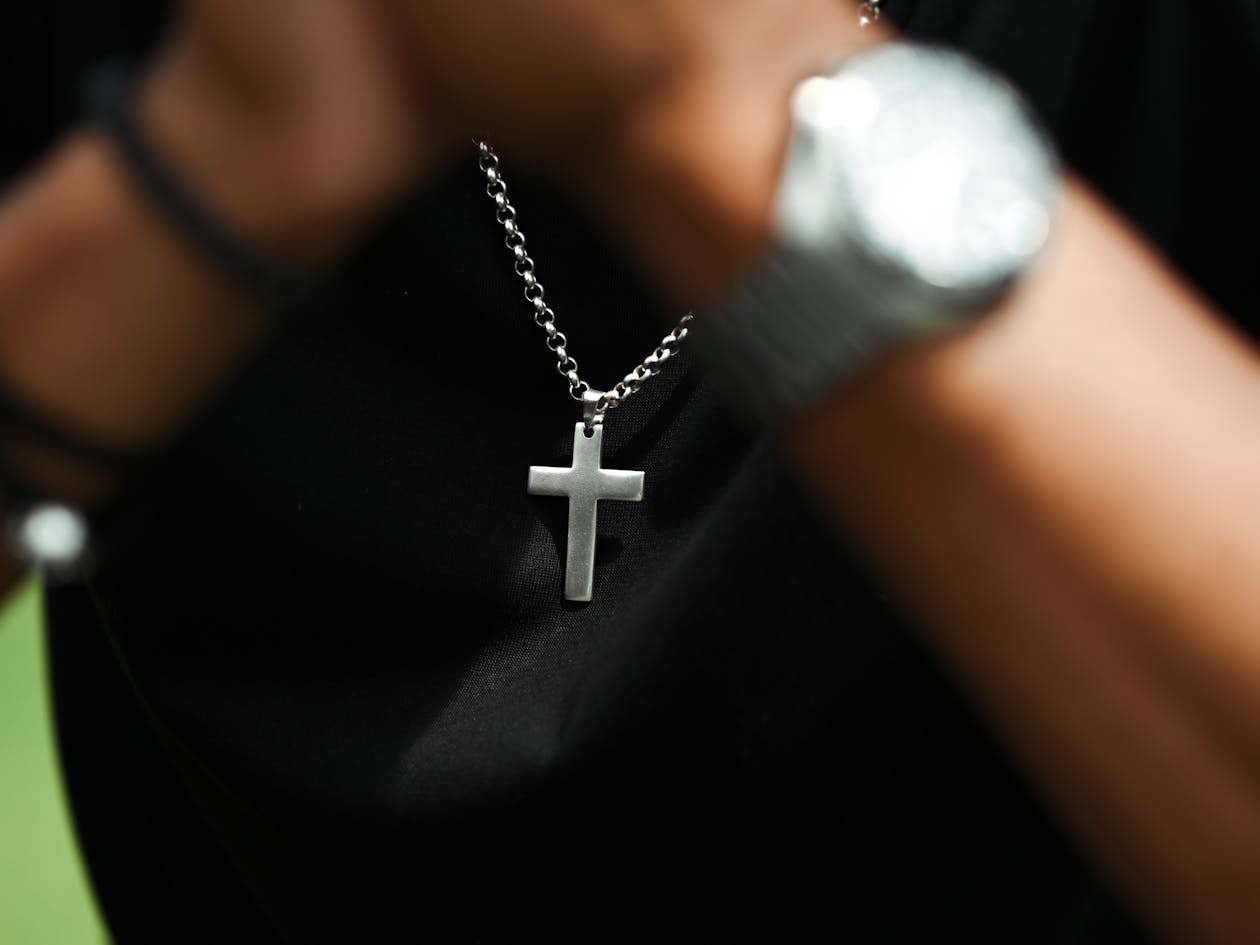
A gold cross necklace stopped a bullet from killing Aidan Perry. Sound impossible? Doctors who treated the 20-year-old after an accidental shooting in Ocala, Florida, can prove it happened. Perry walked away from what should have been a fatal chest wound because his Christmas gift from dad split a .40-caliber bullet in half.
Emergency room physicians see gunshot victims daily. Most cases follow predictable patterns of tissue damage and organ failure. Perry’s case broke every rule. His cross pendant created a barrier that changed ballistics, altered bullet trajectory, and turned certain death into a survival story that has strengthened his faith while baffling medical experts.
Blood loss convinced Perry he was dying as paramedics raced him to HCA Florida Ocala Hospital. Trauma surgeons prepared for the worst. Instead, they discovered something that challenged their understanding of how bullets behave when they meet small metal objects. Perry lived because physics worked in his favor at exactly the right moment.
Casual Visit Turns Deadly When Gun Fires
Perry visited his friend’s residence in Ocala during what appeared to be an unremarkable summer day. Friends gathered at the home, likely expecting nothing more serious than conversation and relaxation. However, circumstances would shift dramatically when a .40-caliber pistol discharged accidentally.
Firearms accidents occur with tragic frequency across America, often resulting in serious injuries or fatalities. Perry found himself facing exactly this scenario when the weapon fired at close range, sending a bullet directly toward his chest. Split seconds would determine whether he survived or became another statistic in accidental shooting data.
Witnesses to the incident immediately recognized the severity of Perry’s situation. A .40-caliber round carries substantial stopping power, designed to incapacitate targets effectively. At close range, such ammunition typically creates devastating tissue damage and organ trauma that challenges even skilled trauma teams.
Perry’s location on his friend’s property meant emergency responders would need time to reach him and transport him to medical facilities. Every moment counted as his body processed the impact and damage from the gunshot wound.
Race to Save a Life Begins

Emergency medical services responded quickly to transport Perry from the shooting scene to HCA Florida Ocala Hospital. Paramedics likely began assessing his injuries during transport, preparing hospital staff for what they expected to encounter upon arrival.
Hospital teams prepared for typical gunshot wound protocols, anticipating severe chest trauma requiring immediate surgical intervention. Perry’s vital signs and consciousness level during transport would have provided initial indicators about his condition and survival prospects.
Medical staff at HCA Florida Ocala Hospital moved Perry directly to the operating room upon arrival. Trauma teams accustomed to gunshot victims began their assessment, expecting to find the devastating internal injuries that typically accompany close-range chest wounds from high-caliber ammunition.
Perry remained conscious enough to comprehend his situation during these critical moments. Looking down at his chest, he saw massive amounts of blood that convinced him his survival was unlikely. His fear reflected the gravity that medical professionals also recognized in his condition.
Gold Jewelry Becomes Life-Saving Shield

Perry wore a gold necklace featuring a cross pendant during the shooting incident. Medical examination revealed that the bullet had struck this piece of jewelry directly, creating an unexpected barrier between the projectile and Perry’s vital organs.
Ballistics experts understand that bullets typically maintain their trajectory and destructive power when encountering small metal objects. However, Perry’s cross pendant managed to split the bullet, altering its path and reducing its penetrating capability significantly.
Physical evidence from the incident showed the cross pendant split cleanly into two pieces where the bullet struck. Photography documented the damaged jewelry, providing visual proof of the impact that medical professionals believe saved Perry’s life.
Perry’s father had given him the gold cross necklace as a Christmas gift just months before the shooting occurred. A present intended to represent faith and protection had provided physical protection during a life-threatening emergency.
Projectile Takes Unexpected Route Through Body

Despite striking the cross pendant, the bullet continued its journey through Perry’s body following an unusual trajectory. After hitting the necklace, the projectile entered his chest area but avoided penetrating deeply into his torso cavity, where vital organs could have sustained fatal damage.
Medical examination traced the bullet’s path as it exited Perry’s body near his armpit after traveling along his chest wall. However, the projectile’s journey did not end there, as it reentered his body through his arm, causing significant bone damage.
Impact with Perry’s arm resulted in a broken humerus, the large bone connecting the shoulder to the elbow. While painful and requiring treatment, this fracture represented far less serious trauma than the chest injuries that medical professionals typically encounter with similar gunshot wounds.
Perry’s survival depended on the bullet missing his heart, lungs, and major blood vessels in his chest cavity. Trajectory analysis suggested that without the cross pendant’s intervention, the bullet would have traveled directly into these vital organs with almost certainly fatal results.
Doctor Reveals How Necklace Saved Patient
Dr. Khafra Garcia Henry, the trauma surgeon who operated on Perry, provided a medical analysis of his unusual case. Her expertise in treating gunshot victims gave her a professional perspective on why Perry’s survival qualified as extraordinary rather than routine.
“When we normally see these injuries, they’re usually devastating injuries,” Henry explained. “In Aidan’s case, he was fortunate enough [in that] the bullet did not enter his chest wall – it ricocheted off the chain he was wearing.”
Henry’s experience treating similar cases provided context for understanding Perry’s remarkable outcome. Chest wounds from .40-caliber ammunition typically create massive tissue damage and organ trauma that challenge even experienced trauma teams working under optimal conditions.
Medical professionals understand that small metal objects rarely provide effective protection against high-velocity ammunition. Perry’s case represented a statistical anomaly that defied conventional expectations about ballistics and protective equipment.
Perry’s Moment of Truth

Perry’s immediate reaction to being shot included looking down and seeing substantial blood loss that convinced him he might not survive. His fear reflected the natural human response to recognizing life-threatening trauma and uncertain survival prospects.
“It’s just kind of a reminder now – to never stop believing,” Perry reflected on his experience. “Keep believing and God’s definitely real.”
Medical teams worked to stabilize Perry’s condition and address his injuries while he processed the reality of his situation. Chest wounds typically create significant bleeding that can lead to shock and cardiovascular collapse without rapid medical intervention.
Perry’s consciousness during initial treatment allowed him to experience the full gravity of his situation. Many gunshot victims lose consciousness due to blood loss or shock, but Perry remained aware of his condition and the medical response around him.
Faith Grows Stronger After Near-Death Experience
Perry described himself as religious before the shooting incident, but his near-death experience significantly strengthened his spiritual beliefs. Surviving what medical professionals considered potentially fatal trauma reinforced his conviction about divine protection and intervention.
His testimony about the incident consistently references faith and belief as central elements of his survival story. Perry views his experience as evidence of divine protection that goes beyond medical explanation or random chance.
Religious communities often interpret survival from life-threatening situations as examples of divine intervention or protection. Perry’s case provides what believers consider physical evidence of spiritual protection through the cross pendant that deflected the bullet.
Perry has shared his story publicly, hoping to encourage others to maintain faith during difficult circumstances. His survival serves as inspiration for those facing challenges that seem insurmountable or hopeless.
Legal Consequences for an Accidental Shooter

Law enforcement arrested the individual responsible for Perry’s shooting in Sumter County following an investigation of the incident. Accidental discharge of firearms carries legal consequences even when shooters lack the intent to cause harm.
Criminal charges of culpable negligence causing injury were filed against the person who shot Perry. Legal systems recognize that firearm owners bear responsibility for preventing accidental discharges that injure others, regardless of intent.
Firearms safety protocols exist specifically to prevent incidents like Perry’s shooting. Proper handling, storage, and safety practices reduce the risks of accidental discharge that can cause serious injuries or fatalities.
Perry’s case demonstrates how quickly social gatherings can transform into legal and medical emergencies when firearms safety protocols are ignored or violated. Criminal justice responses aim to hold gun owners accountable for preventable injuries.
Christmas Gift Becomes Divine Intervention
Perry’s gold cross necklace represented more than decorative jewelry when his father gave it to him during Christmas celebrations. Family gifts often carry sentimental value, but few provide literal life-saving protection during emergencies.
Religious symbolism of cross pendants includes protection and faith, concepts that gained literal meaning during Perry’s shooting incident. Spiritual beliefs about divine protection found physical manifestation through jewelry that deflected deadly ammunition.
Perry’s family likely views the Christmas gift as divinely inspired, providing protection that no one anticipated when the present was given. Religious families often interpret such coincidences as evidence of divine providence and protection.
Father-son relationships carry special significance when gifts provide unexpected protection. Perry’s survival allows him to share his gratitude with the father whose Christmas present helped save his life.
Medical Community Weighs In on Rare Survival

Dr. Henry emphasized Perry’s fortunate outcome by noting he was “a very fortunate young individual because if his chain was not there, the outcome would have been completely different.”
Trauma surgeons regularly treat gunshot wounds and understand the typical damage patterns created by different ammunition types. Perry’s case challenged conventional expectations about protective equipment and survival odds.
Medical literature documents a few cases where small jewelry items successfully deflect high-caliber ammunition. Perry’s survival represents a statistical anomaly that medical professionals struggle to explain through conventional ballistics understanding.
Emergency medicine training prepares doctors for typical gunshot wound presentations, not cases where jewelry provides effective protection against deadly ammunition. Perry’s case may influence how medical professionals consider unusual protective factors.
Trauma Becomes Source of Hope
Perry turned his near-death experience into a powerful message for anyone facing impossible odds. His story proves that hope can come from the most unexpected places, even when death seems certain.
“Never stop believing,” Perry tells people who hear his story. “Keep believing and God’s real.” Simple words, but they carry the weight of someone who looked death in the face and lived to tell about it.
Doctors still struggle to explain how a small piece of jewelry stopped a bullet designed to kill. Perry doesn’t need their explanations. He wears the broken cross as a reminder that protection can come in forms we never expect.
Six months later, Perry’s arm has healed, but his faith has grown stronger. He speaks to church groups and shares his story online, hoping to reach people who need to hear that miracles still happen. His message resonates with those who feel overwhelmed by life’s challenges.
