
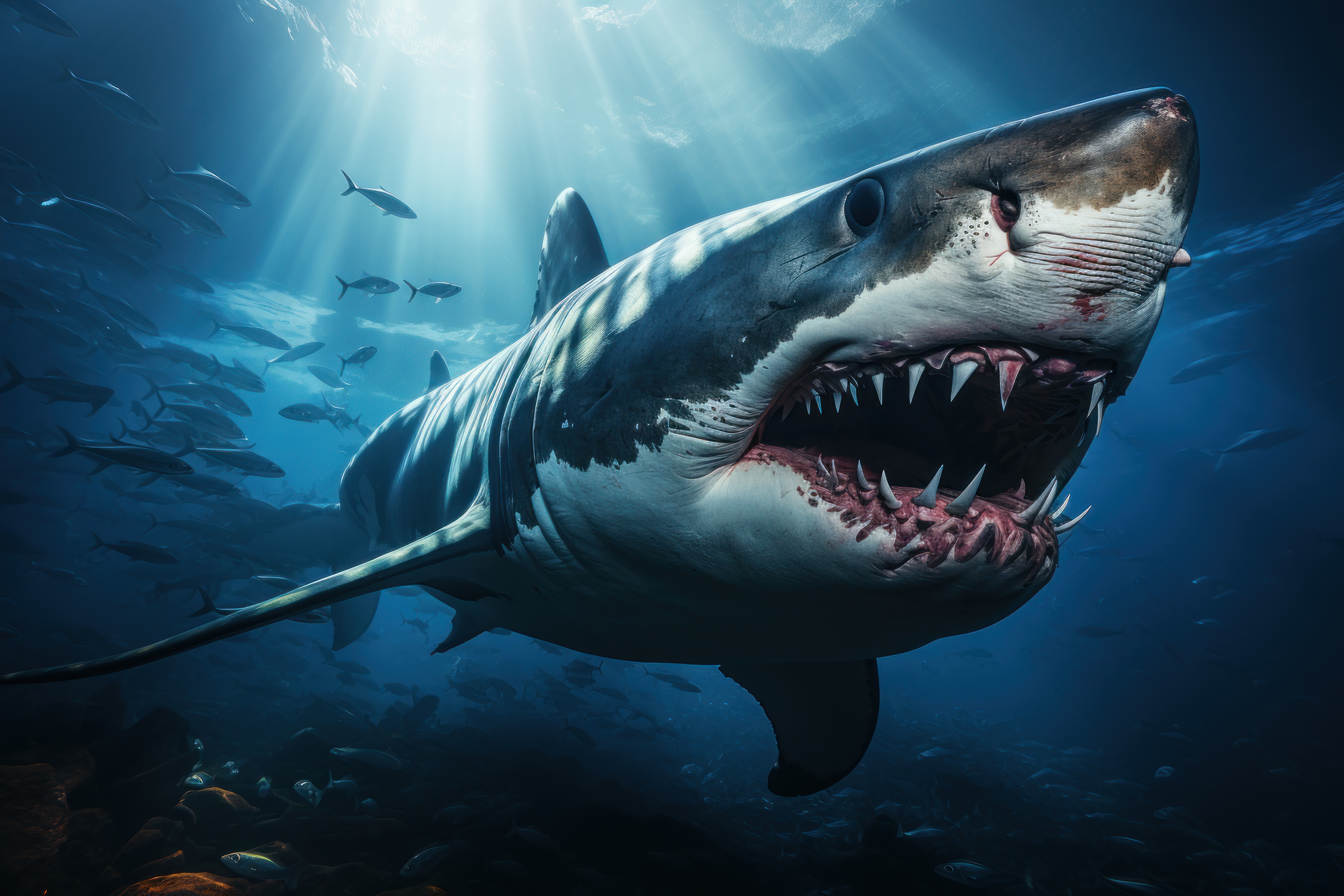
A 14-foot, 1,653-pound great white shark is currently cruising near North Carolina’s Outer Banks—a place better known for summer vacations than apex predators. Nicknamed Contender, this massive shark isn’t an anomaly; he’s part of a larger, predictable migration pattern that brings great whites up the Atlantic coast each year. But thanks to satellite tagging and near real-time tracking, the public now has a front-row seat to movements that were once invisible.
His presence near crowded beaches has sparked headlines and anxiety, but the science tells a more grounded story. Sharks like Contender aren’t targeting swimmers—they’re navigating environmental shifts, feeding zones, and centuries-old migratory routes that increasingly overlap with human recreation. Understanding what brings them close to shore, and what that says about the state of the ocean, is essential—not just for safety, but for conservation.
A Giant in Shallow Waters – What We Know About Contender
Contender, the largest great white shark ever recorded in the Atlantic, is currently making his way through waters just off North Carolina’s coast—waters where tourists are swimming, paddling, and kayaking. At 14 feet long and weighing over 1,650 pounds, he’s not lurking in deep, remote territory but cruising through Pamlico Sound, a popular summer destination. First tagged in January by the marine research organization OCEARCH near the Florida-Georgia line, Contender had dropped off the tracking radar for a few weeks, which is common for satellite-tagged sharks since their signals only activate when the dorsal fin breaks the surface. His recent reappearance aligns with known migration patterns for great whites, which travel north from their overwintering zones to feeding grounds along the northeastern U.S. and Atlantic Canada during late spring and early summer.
According to Dr. Harley Newton, chief scientist and veterinarian at OCEARCH, Contender’s presence near the Outer Banks is likely part of a deliberate feeding stop. Sharks often pause in this region to build energy reserves before continuing their long journey north—sometimes over 1,000 miles. At around 30 years old, Contender is considered a fully mature male, and his behavior fits what researchers expect from great whites at this stage in their life cycle. While the idea of a giant predator swimming near popular beaches naturally draws public attention, it’s important to understand this isn’t out of the ordinary or necessarily dangerous. The shark isn’t “hunting swimmers”; he’s following instinct, guided by seasonal patterns and the availability of prey.
Contender’s tagging is part of a broader effort by OCEARCH to track large marine species in real time and collect biological data to better understand their movement, health, and role in the ocean. This tracking gives researchers a rare, detailed view into how sharks like Contender navigate long distances, which areas they use to feed or rest, and how those behaviors may be shifting as climate change, overfishing, and habitat loss continue to pressure marine ecosystems. Each surface ping tells scientists more about how apex predators are adapting—or struggling to adapt—in an increasingly unstable ocean.
So while Contender might be brushing up against one of America’s busiest vacation spots, his presence isn’t just a curiosity—it’s a reminder that these waters are still wild. The technology that lets researchers track him in near real-time offers more than novelty; it’s part of a serious effort to gather the kind of data needed to make science-based decisions about marine conservation.
Why the Outer Banks Matter to Great White Sharks

The Outer Banks aren’t just a tourist hotspot—they’re a seasonal pit stop for migrating great white sharks like Contender. This stretch of coastline offers abundant food sources, including fish, rays, and seals, making it an ideal location for sharks to feed before continuing their journey north. According to marine biologists tracking these movements, sharks frequently linger in this region for days or even weeks to bulk up for the long migration toward colder waters off New England and Canada. This annual pattern isn’t new, but what’s changing is how close these sharks are coming to areas heavily used by people.
The coastal waters of North Carolina provide a perfect convergence of conditions: warm temperatures, rich biodiversity, and shallow feeding zones. These factors make it an attractive stopover not just for Contender, but for many great whites moving up the Atlantic seaboard. While people are boogie-boarding and swimming within sight of shore, apex predators are quietly navigating the same environment. These overlaps aren’t necessarily dangerous, but they do highlight the thin line between human activity and marine wildlife. Encounters remain rare, but the risk exists—especially when sharks are in active feeding mode, as they often are during this leg of their migration.

Understanding why great whites choose specific coastal areas is key for both safety and conservation. Tagging programs like OCEARCH’s help identify “hot zones” where sharks consistently return each year. That data is critical for managing human-shark interactions, especially in places with heavy recreational use. For instance, if researchers consistently detect shark activity in a certain area at a certain time of year, local authorities can issue informed advisories or adjust beach use without panic or speculation. This kind of evidence-based awareness makes it easier to balance the needs of both wildlife and public safety.
The takeaway is that the Outer Banks are not just beach towns—they’re part of a much larger migratory corridor that great whites have used for generations. The recent media attention on Contender underscores what marine scientists have been observing for years: these waters are biologically active zones that serve as critical waypoints for some of the ocean’s top predators. The more we understand their patterns, the better equipped we are to coexist with them.
Tracking Technology Is Changing What We Know About Sharks
The ability to track sharks like Contender in real time has transformed marine science. Thanks to satellite tagging, researchers can now follow individual sharks over months or years, watching how they migrate, where they feed, and how their patterns shift with changing ocean conditions. The tags, which are typically attached to the shark’s dorsal fin, transmit a location signal whenever the fin breaks the surface. While not constant—since sharks don’t always stay near the top—these signals offer reliable, repeated snapshots of their movement and behavior across long distances.
For Contender, each surface ping contributes to a growing dataset that tells scientists much more than just location. His route, speed, and timing help researchers understand where mature great whites go during different seasons and what might influence their decisions—factors like water temperature, prey availability, and ocean currents. OCEARCH, the organization behind the tagging, uses this data to map out key areas that support shark survival, from feeding zones to migratory corridors. This kind of insight wasn’t possible even a decade ago, and it’s giving scientists a far more detailed understanding of shark ecology.
What makes these tracking efforts especially valuable is that they go beyond academic research. The data is open-access, meaning local governments, conservationists, and even the public can view real-time shark movements online. That transparency builds awareness without resorting to fear. When people see a shark like Contender approaching the Outer Banks, they’re not relying on rumor—they’re looking at direct evidence. This kind of information has helped shift the narrative around sharks, moving away from the outdated “man-eater” myth and toward a science-based view of sharks as important, complex animals that play a vital role in ocean health.
Ultimately, this tracking is more than a tech story—it’s a tool for smarter decision-making. Whether it’s adjusting fishing practices, informing coastal development, or shaping marine protection zones, the real-time data from sharks like Contender helps guide policies that affect both marine life and human communities. It also shows that with the right tools, we can observe and learn from these top predators without interfering with their natural behavior.
How Climate and Human Activity Are Reshaping Shark Behavior

Contender’s presence near popular beaches isn’t just about seasonal migration—it’s part of a larger shift influenced by warming oceans, shrinking habitats, and human pressure on marine ecosystems. As ocean temperatures rise, the boundaries of where great white sharks hunt and travel are changing. Areas that were once too cold or less hospitable are now viable feeding zones. This means sharks are appearing in new places, sometimes closer to shore and more frequently near human activity. For researchers, this isn’t surprising—it’s part of an observed trend affecting many marine species, not just apex predators.
Human activity plays a major role in these shifts. Overfishing removes prey species like tuna and menhaden, pushing sharks to search farther and more aggressively for food. Coastal development and pollution degrade traditional habitats, reducing safe zones for both sharks and the species they rely on. Add in the unpredictable effects of climate change—such as altered currents, warming surface temperatures, and shifting seasonal cycles—and it’s clear that sharks like Contender aren’t just adapting to nature, but to a human-altered ocean.
These changes aren’t just biological—they have real consequences for coastal communities. When sharks move closer to shore or arrive earlier in the season than expected, it challenges safety protocols, fishing regulations, and public perceptions. Areas like the Outer Banks, which attract millions of visitors every summer, are now part of the active range for migrating great whites. That doesn’t mean shark attacks are likely, but it does mean risk management needs to evolve with the science. Understanding how sharks are reacting to environmental stressors helps explain why sightings may be increasing—and why those sightings should be treated as data points, not panic triggers.
The bigger picture here is about coexistence. Apex predators like great whites are essential to keeping marine ecosystems balanced. They control populations of other species, prevent overgrazing of marine vegetation, and signal the overall health of the ocean. When they’re pushed into new patterns by human impact, it’s a warning sign—not just about sharks, but about how much the ocean is changing and how urgently smarter, science-driven responses are needed.
Real-World Tips for Sharing the Water With Sharks

You don’t need to be a marine biologist—or pack up your beach plans—to coexist safely with sharks like Contender. These animals have been cruising past our coastlines for centuries. The difference now is that we’re more aware of them, thanks to tracking technology. That awareness should empower us, not scare us. Here are some practical, no-nonsense ways to stay safe and respectful in the water:
- Skip solo swims, especially early or late in the day: Sharks are most active at dawn and dusk, when prey is plentiful and visibility is low. Swimming in groups and in well-populated areas makes you less interesting to a curious shark.
- Watch the water—and the birds: If you see baitfish jumping or birds diving aggressively into the surf, that usually means predators (including sharks) might be feeding below. Take a break, grab a snack, and wait it out.
- Ditch the bling: Reflective jewelry and bright swimwear can mimic fish scales flashing in the sun. Keep it simple if you’re heading into the ocean—your beach style can shine on shore.
- Stick close to shore: Most shark sightings happen farther out, and lifeguards keep a closer eye on designated swim zones. You don’t need to hug the sand, but staying within a reasonable distance from the beach is smart.
- Check the app, not just the weather: Use shark-tracking tools like the OCEARCH website or app before heading out. If a tagged shark is pinged nearby, it’s not a reason to cancel plans—but it’s a cue to be more mindful.
- Know your beach’s protocol: Many coastal towns have flag systems or advisories for shark activity, just like they do for rip currents. Get familiar with the signs—often posted right near the lifeguard stand or parking lot.
- Don’t assume every fin is danger: Dolphins, rays, and even floating debris are often mistaken for sharks. Don’t panic at the first splash—assess calmly and, if in doubt, exit the water without drama.
Bottom line: sharks aren’t villains. They’re just part of a living, breathing ocean. A little awareness goes a long way—and being prepared beats being panicked. You can enjoy the waves and stay safe without losing the magic of the beach.
Sharks Aren’t the Problem—They’re a Signal

Contender’s journey along the East Coast isn’t a threat—it’s a sign of what’s shifting in the ocean. His movements, and those of other great whites, are giving researchers a clearer view of how marine ecosystems are responding to climate change, overfishing, and coastal development. These animals aren’t showing up near beaches because they’re becoming more aggressive; they’re showing up because their environment is changing. The real concern isn’t that sharks are getting closer to us—it’s that we’ve been encroaching on them for decades, and now the consequences are surfacing.
Great whites are apex predators, but they’re also vulnerable. Their populations are slow to recover from overfishing, they reproduce infrequently, and many of the ecosystems they rely on are under pressure. Tracking efforts like OCEARCH’s aren’t about spectacle—they’re about identifying how to better protect sharks and the oceans they inhabit. Every time a shark like Contender surfaces, it adds a piece to the puzzle. It’s not just a ping on a map—it’s a reminder of how deeply interconnected marine life is with human actions.
The takeaway here isn’t to fear the ocean—it’s to take responsibility for how we interact with it. That means supporting science-based conservation, paying attention to environmental policy, and recognizing that human activity—whether it’s what we fish, how we build, or how we manage pollution—has direct effects on the natural systems we often take for granted. Contender isn’t out there proving that sharks are dangerous. He’s proving that they’re still out there at all—and that’s only possible because of the work being done to study and protect them. The smarter our response, the better chance we have at keeping both people and predators safe in the waters we all share.
