
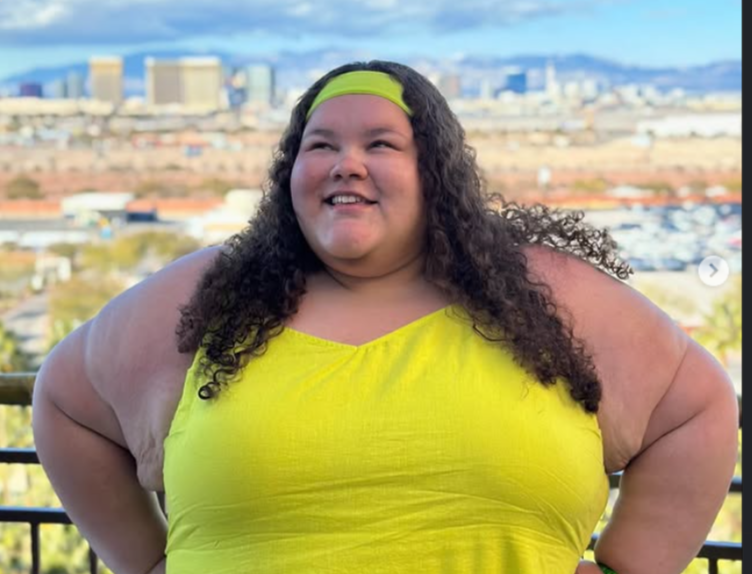
When plus-size travel influencer Jaelynn Chaney shared a TikTok describing how she got stuck inside a revolving door at Chicago O’Hare Airport, the video quickly made waves online. The 27-year-old, who has built her platform on advocating for body equality in travel, said she was left feeling “humiliated and dehumanized” after airport staff allegedly stood by while she struggled to free herself. The incident, which she described as both distressing and claustrophobic, added to a growing list of travel experiences she claims highlight the lack of accessibility for larger-bodied and disabled travelers.
But as with most viral moments involving Chaney, public reaction was deeply divided. Supporters praised her for shedding light on discrimination faced by plus-size passengers, while critics accused her of exaggerating her struggles and expecting special treatment. The debate has reignited a broader conversation about inclusivity, personal responsibility, and how the travel industry accommodates people of all sizes and abilities.
The Chicago O’Hare Incident
Chaney’s account of the Chicago O’Hare experience paints a vivid picture of panic and helplessness. She explained that although she typically does not require a wheelchair, she opted to use one that day due to the airport’s heavy traffic and long distances. Her only route to the baggage claim area, she said, was through a revolving door. There was a button designed to slow the door for passengers with disabilities or mobility devices, but something went wrong.
“We got stuck,” she recalled in her viral TikTok. “I panicked instantly. I waved to the staff for help, but they just stared at me. Nobody stepped in.” For someone who also suffers from claustrophobia, the moment turned from inconvenient to terrifying. Chaney described feeling trapped and ignored, her calls for assistance unanswered by the airport staff she expected to intervene.

The influencer later accused O’Hare personnel of being “unresponsive and dehumanizing,” describing the experience as the second such negative encounter she had endured at the airport during the same trip. While the incident did not result in injury, she said it underscored the everyday obstacles faced by plus-size travelers who depend on accessible spaces and attentive staff.
According to reports, O’Hare International Airport has not issued a formal statement on the matter, and it remains unclear whether staff on duty were aware of her distress. However, the story quickly spread beyond the TikTok sphere, drawing in commenters who debated whether the influencer’s complaints represented a genuine accessibility issue or a personal inconvenience blown out of proportion.
Social Media Divides Over Sympathy and Skepticism
Once Chaney’s story began circulating online, the reactions were swift, harsh, and deeply polarized. Some viewers expressed empathy, noting that no passenger should feel trapped or ignored in a public space, particularly one as regulated and monitored as a major U.S. airport. Others, however, viewed the incident as self-inflicted or indicative of unrealistic expectations.
Comments on her TikTok and reposts across platforms like X (formerly Twitter) and Instagram ranged from compassionate to cruel. “You’re not handicapped. Why request a wheelchair?” one commenter asked, while another quipped, “Getting stuck in doors designed for humans should be a wake-up call.” A third wrote, “If you can stand and pose, you can walk. Stop acting entitled.”
The intensity of the criticism wasn’t new for Chaney, who has faced waves of online backlash over her broader advocacy. For every person applauding her push for inclusivity, there are others who see her demands as unreasonable or unfair to average travelers. The latest backlash over the revolving door incident was no exception, fueling another round of debate about body politics, travel accessibility, and social media activism.
Past Complaints and Pattern of Allegations
The revolving door episode was only the most recent in a string of viral posts by Chaney criticizing airports and airlines. Just weeks before the O’Hare incident, she accused an employee at Seattle-Tacoma International Airport of refusing to push her wheelchair up a jet bridge because of her size. According to her, the staff member allegedly walked away with the chair while making comments about her weight, leaving Chaney to walk the long incline herself.
By the time she reached the top, Chaney said she was gasping for air, her oxygen levels had dropped, and she nearly fainted. She described the ordeal as “blatant discrimination,” emphasizing that all passengers deserve dignity and assistance regardless of body size or ability. In subsequent videos, she staged a protest at Sea-Tac, holding signs that read, “SeaTac Violates Our Rights” and “Wheelchair Access For All.”
Chaney’s message is clear: she believes that plus-size travelers face systemic discrimination within the travel industry. Critics, however, argue that her claims often overlook the physical realities and labor challenges of airline staff, particularly when it comes to assisting heavier passengers. Some online voices even accused her of weaponizing social justice language to mask entitlement.
Still, Chaney’s activism isn’t without precedent. In 2023, she launched a petition calling on the Federal Aviation Administration (FAA) to require airlines to provide additional free seats for plus-size passengers. The campaign, which garnered tens of thousands of signatures, also called for refunds for travelers who had to purchase extra seats on their own. The proposal reignited fierce debate about fairness, equity, and who should bear the financial cost of accommodating larger bodies.
The Broader Fight for Accessibility

At the heart of Chaney’s advocacy lies a legitimate and complex issue: the question of accessibility and comfort in modern travel. Airplane seats have grown smaller over the years as airlines maximize profit by increasing passenger capacity, leaving many travelers not just plus-size ones feeling cramped. For individuals with disabilities or medical needs, navigating airports can already be daunting. When weight stigma enters the mix, it adds another layer of vulnerability.
Disability rights advocates point out that accessibility laws, such as the Americans with Disabilities Act (ADA), do not explicitly address weight as a protected category. This legal gap leaves plus-size travelers dependent on corporate discretion and public goodwill. For those like Chaney, that means advocating loudly and publicly often through viral moments is one of the few tools available to push for change.
However, the line between advocacy and antagonism is thin in the online era. Critics argue that Chaney’s confrontational approach risks alienating potential allies and undermines the broader movement for accessibility. “Activism that starts with empathy should not end in outrage,” one commentator noted under a reposted video of her protest. Supporters counter that without outrage, nothing changes and Chaney’s visibility, however controversial, keeps these issues in public conversation.
A Career Built on Controversy
View this post on Instagram
Chaney’s rise to prominence on TikTok has been as much about her confrontations as her content. With over 135,000 followers, she has positioned herself as a voice for “body equality in travel.” Yet her advocacy often courts controversy. Earlier this year, she was criticized for calling on hotels to redesign their amenities to be more size-inclusive, suggesting that hallways, elevators, and bathroom spaces should be made more spacious.
She has also been accused of hypocrisy and inconsistency by detractors who point out that she alternates between framing herself as disabled and as simply plus-size, depending on the issue at hand. Chaney has said she uses mobility aids when necessary, particularly after a 2019 health scare involving a suspected stroke that affected her mobility and oxygen levels. Her supporters view this flexibility as a reflection of her lived experience that disability can be situational, not static. Her critics see it as opportunistic.
In a digital environment where nuance often vanishes beneath viral soundbites, Chaney has become both a symbol and a lightning rod. To her fans, she is a brave advocate confronting systemic fatphobia. To her detractors, she is a provocateur exploiting outrage for attention. The truth, as is often the case, lies somewhere between those extremes.
The Internet’s Cruel Mirror

The online response to Chaney’s videos reveals as much about society’s attitudes toward body size as it does about her specific grievances. The internet’s tendency to dehumanize public figures, especially women in marginalized bodies, is well documented. Social media platforms amplify both empathy and cruelty in equal measure, rewarding sensationalism and hot takes more than measured discussion.
Chaney’s experience illustrates how difficult it can be to have a genuine dialogue about accessibility and discrimination when the discourse is driven by viral outrage. For every thoughtful comment about disability rights or airline policy, there are dozens mocking her appearance or questioning her worthiness of empathy. The public sphere, for all its democratic promise, often acts as a funhouse mirror reflecting society’s deepest insecurities and biases.
This cycle of sharing, backlash, and counter-backlash has become the rhythm of modern online activism. Whether Chaney’s tactics are productive or polarizing, they succeed in forcing uncomfortable questions into the spotlight. How do we balance inclusivity with practicality? Who decides what “reasonable accommodation” means? And what responsibility do we have, as individuals and as a society, to ensure dignity for all travelers?

Between Advocacy and Accountability
Jaelynn Chaney’s experiences at airports, from getting stuck in a revolving door to being refused wheelchair assistance, have become more than personal anecdotes. They serve as flashpoints in the ongoing cultural negotiation between accessibility, body image, and public empathy. Her story is as much about infrastructure as it is about attitude about how institutions, employees, and even bystanders respond to bodies that challenge the norm.
Whether one sees Chaney as a tireless advocate or a lightning rod for controversy, her activism touches on something larger than her individual experiences. It reflects the contradictions of a digital age where social justice meets virality, and where every act of protest risks being consumed by its own publicity. What remains undeniable is that conversations about inclusivity in travel are not going away and neither, it seems, is Jaelynn Chaney.
Her message may be polarizing, but it keeps forcing the question: how accessible is the world, really, when so many still find themselves stuck sometimes literally in doors that were never built for them.
Featured Image from Instagram @jaebaeproductions
