
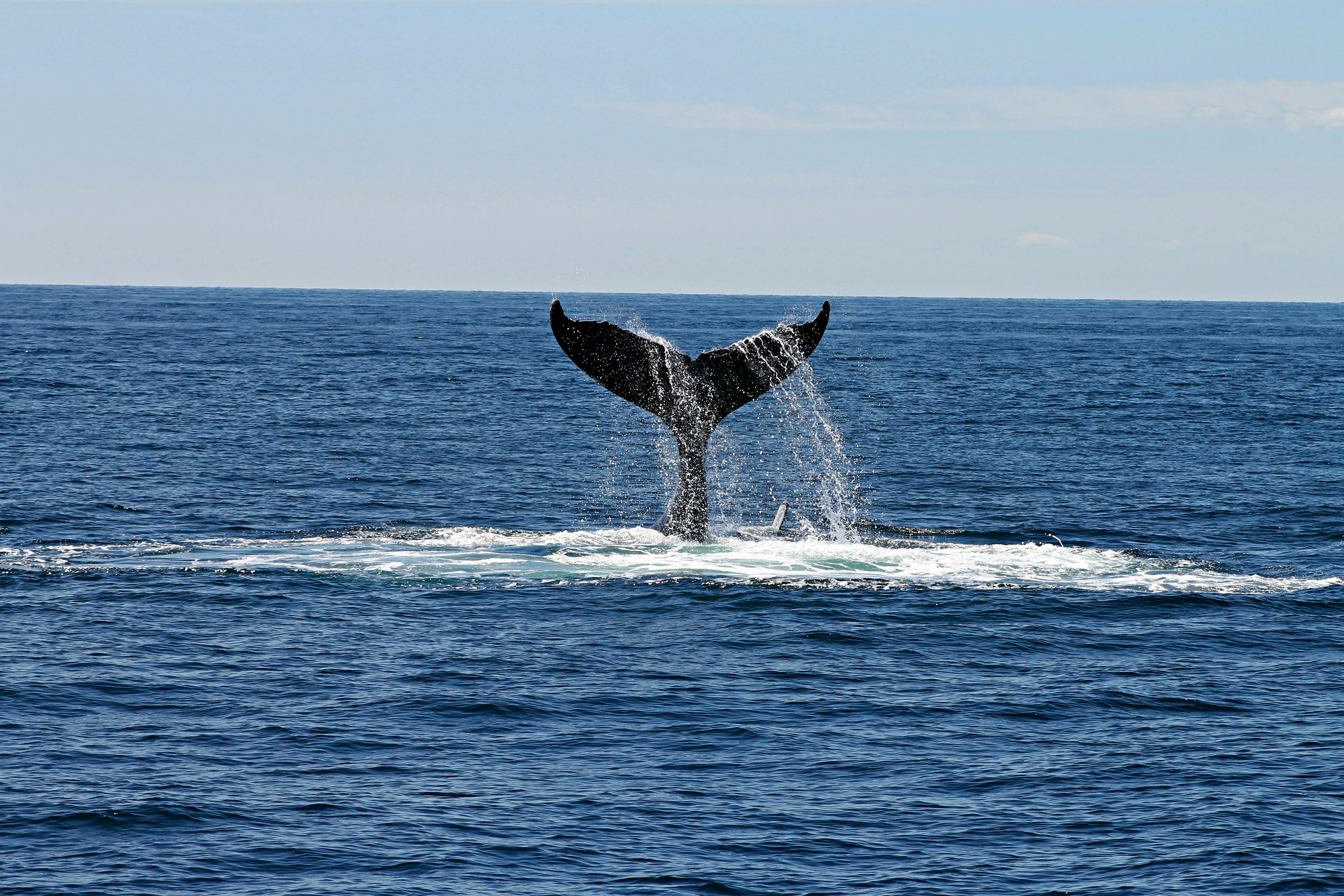
For the second year in a row, Iceland’s icy summer waters will be free of harpoons. The nation’s only active whaling company, Hvalur hf., has confirmed it will not hunt fin whales in 2025 a decision that could mark a historic turning point in the long and controversial saga of commercial whaling. The announcement reverberated far beyond Iceland’s shores, sending waves of relief through conservationists who have long fought to end the practice. But within Iceland itself, the decision has sparked complex emotions, from celebration among environmental advocates to deep concern within local fishing communities who depend on whaling for work.
While the decision appears driven by economics rather than environmental awakening, the outcome is nonetheless the same: hundreds of endangered fin whales will live to glide through the North Atlantic this summer. It is a rare moment of reprieve in a centuries-old industry that has faced mounting moral, ecological, and financial pressure. As Japan and Norway resume their own hunts, Iceland’s pause places it on a knife edge caught between tradition and transition, and perhaps, on the cusp of finally closing a chapter in its whaling history.
A Historic Pause
Hvalur hf., run by the aging but resolute billionaire Kristján Loftsson, has dominated Iceland’s whaling industry for decades. The company’s license, renewed in December 2024 by then-Prime Minister Bjarni Benediktsson, permitted the killing of up to 209 fin whales annually between 2025 and 2029. Yet only a few months later, Loftsson told Icelandic media that the economic situation made the hunt impossible this year. Japan, the company’s primary export market, has been mired in economic stagnation and inflation, driving down prices for whale meat and leaving warehouses full of unsold stock.
“The price of our products is now so low that it is not justifiable to hunt,” Loftsson admitted, conceding that Hvalur would remain docked for the season. It is a stunning admission from a man who has spent years defending whaling as a patriotic and economically necessary enterprise.
Hvalur’s cancellation follows a turbulent few years marked by government-imposed suspensions, late-issued permits, and mounting international scrutiny. In 2023, the company’s operations were temporarily halted after a report by Iceland’s Food and Veterinary Authority revealed that 40 percent of fin whales suffered prolonged, painful deaths after being harpooned.
For now, no fin whales will die by Icelandic hands. Yet this pause comes not from newfound compassion but from cold commercial logic the realization that killing whales no longer pays. Still, to environmentalists, it is a victory worth savoring.
The Shrinking Market That Sank the Industry

The roots of Iceland’s retreat from whaling are buried in economics. For decades, Hvalur hf. shipped nearly all of its meat to Japan, where whale meat once carried nostalgic value as a delicacy linked to post-war scarcity. But those days are gone. Today, younger generations in Japan largely reject the idea of eating whale, viewing it as an outdated and morally dubious custom. According to the International Fund for Animal Welfare (IFAW), the Japanese market has been “struggling for years” under the weight of declining demand and an enormous surplus of frozen whale meat.
In fact, much of Japan’s whale meat now ends up as pet food or discarded at sea. Government attempts to revive consumption through whale burgers, vending machines, and supermarket promotions have failed spectacularly. Even as Japan and Norway resumed their hunts in 2025 killing fin and minke whales for dwindling consumers Iceland quietly stepped back, its industry rendered unsustainable by the same forces.
Sue Fisher, senior policy advisor for the Animal Welfare Institute, captured the moment bluntly: “The whaling industrial complex is a sinking ship.” Without Japanese buyers, Hvalur’s freezers are useless; the profits have evaporated, and with them, the justification for the hunt. The once-profitable trade that kept Iceland’s whaling ships at sea is now little more than an expensive anachronism.
A Divided Nation: Between Pride and Progress

Within Iceland, the end of the 2025 whaling season has exposed a deep cultural rift. For some, particularly in coastal communities like Akranes where Hvalur is based, whaling remains tied to local identity and livelihoods. Vilhjálmur Birgisson, head of the Verkalýðsfélag Akraness labor union, called the decision “a big blow” for workers who depend on seasonal whaling income. The loss, he said, ripples through families and small businesses alike.
But across much of Iceland, attitudes toward whaling have shifted dramatically. A 2024 poll by the Iceland Nature Conservation Association found that more Icelanders now believe whaling damages the nation’s reputation than enhances it. This marks a striking reversal from the early 2000s, when national pride in whaling was tied to defiance of foreign pressure. The image of Iceland as a land of pristine nature and progressive values has clashed increasingly with the bloody optics of harpoon ships and slaughtered whales.
The issue has divided political circles too. Former Minister of Fisheries Svandís Svavarsdóttir, who briefly suspended Hvalur’s operations in 2023, argued that the industry had “no economic advantage” left. Her critics accused her of playing politics with rural livelihoods. The whaling debate, in short, has become a mirror reflecting Iceland’s struggle to balance heritage with modern ethics and international image. While older generations view whaling as part of national sovereignty, younger Icelanders tend to see it as an outdated practice at odds with the country’s eco-conscious identity.
Japan and Norway Sail the Opposite Way

While Iceland’s ships remain moored, Japan and Norway have pressed forward into controversial waters. Both nations resumed commercial whaling this year, ignoring the 1986 International Whaling Commission (IWC) moratorium that most of the world still upholds. Japan’s sole whaling company, Kyodo Senpaku, plans to kill up to 269 whales in 2025, including 60 fin whales a species officially listed as vulnerable by the International Union for Conservation of Nature. In Norway, up to 1,406 minke whales are authorized for slaughter, though the actual numbers may fall short due to waning public demand.
The contrast is stark. In Iceland, public opinion and market realities are converging toward conservation. In Japan and Norway, government subsidies continue to prop up an industry that would otherwise collapse. Both countries justify their hunts under cultural and scientific pretenses, but critics argue that these rationales are thin veils for anachronistic nationalism. Studies revealing high levels of toxic contaminants in whale meat including carcinogenic chemicals have further weakened public appetite for it.
By stepping back, Iceland has positioned itself as an unexpected counterpoint to these stubborn holdouts. Its decision could help shift global momentum further toward ending commercial whaling entirely. As Sharon Livermore of IFAW put it, “Fin and minke whales offer so much more to the marine environment and to sustainable whale watching than they do on a dinner plate.” Iceland’s flourishing whale-watching industry, which now generates millions annually, underscores that sentiment vividly.
The Rise of Whale Watching

The decline of whaling has run parallel to the rise of a new national pastime watching, rather than killing, whales. In towns like Húsavík and Reykjavík, whale-watching tours draw tourists from around the world, eager to glimpse the same majestic species once hunted for their blubber. The industry has grown into one of Iceland’s most lucrative eco-tourism sectors, contributing far more to the national economy than whaling ever did in the modern era.
The economic contrast is telling. While Hvalur hf. struggled to turn a profit even with government permits, whale-watching companies have thrived on the same seas. Each fin whale spared this summer could instead become a star attraction, generating income through photography, storytelling, and conservation awareness. Icelanders have begun to see that living whales are worth far more alive than dead.
Ecologically, the shift carries even greater weight. Fin whales, the second-largest animals on Earth after blue whales, play a vital role in maintaining marine ecosystems. Their massive migrations help circulate nutrients across ocean layers, supporting plankton growth and fish populations. Protecting them isn’t just a moral choice it’s an ecological necessity for a healthy ocean.
Is This the End of Whaling?

Conservationists are cautiously optimistic that Hvalur’s 2025 hiatus could mark the beginning of the end for Icelandic whaling. But many remain wary. The government’s five-year license still allows the company to resume hunting through 2029, and unused quotas can be carried forward. In theory, if markets recover, the harpoons could return.
For now, though, the momentum is against it. Global sentiment, economic logic, and environmental ethics all point toward a future without commercial whaling. Even Loftsson’s pragmatic pause hints at resignation rather than temporary retreat. As his company’s ships rust quietly in harbor, the symbolism is unmistakable: Iceland is drifting away from the bloody traditions of its past.
Animal welfare organizations continue to urge the government to revoke all remaining whaling permits and invest instead in ocean conservation and sustainable tourism. The International Fund for Animal Welfare, Whale and Dolphin Conservation, and countless Icelandic NGOs have hailed the 2025 decision as a turning point. Yet they also warn against complacency, noting that minke whaling remains technically legal, and political winds can shift quickly.
A Fragile Victory, A Hopeful Horizon
The cancellation of Iceland’s 2025 whaling season is a story of unintended progress a triumph born not from compassion but from commerce, and yet a triumph nonetheless. It spares hundreds of fin whales from suffering and signals that the old economics of whaling are crumbling beyond repair. It also reveals something more profound about the global conscience: that values evolve, and traditions once justified by survival can be reexamined in the light of ethics, science, and sustainability.
For now, Iceland stands as a reluctant hero in the story of marine conservation. Its harpoons are silent, its whaling ships still, and its seas a little safer. The challenge ahead is to ensure this silence becomes permanent that whales need never again flee from Icelandic waters in fear. If the 2025 season proves to be the last, history may remember this pause not as an economic decision, but as the moment when a nation finally listened to the ocean and chose to let it speak for itself.
