
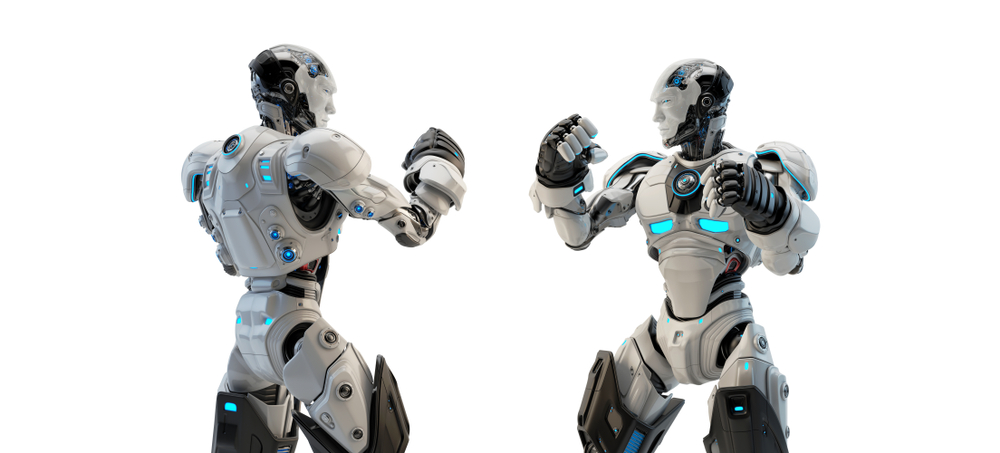
Just when you thought you’d seen it all, along comes a boxing match that doesn’t feature humans, celebrities, or even influencers—but robots. Actual humanoid machines, duking it out in a ring like some bizarre crossover between Rocky and The Jetsons. It’s the kind of headline that makes you pause, reread, and then check if it’s April Fool’s Day.
But this isn’t a gimmick or a viral prank. A Chinese robotics company has announced a livestreamed showdown between two of its most advanced humanoid creations. It’s flashy, futuristic, and oddly captivating. And while the robots are still far from throwing uppercuts like Tyson, there’s something strangely profound about watching them try.
So, what’s really going on here? Why now? And what does a robot boxing match say about where we’re headed as a species—or at least as an audience? Let’s step into the ring and find out.
The Face-Off: Who Are G1 and H1?
Unitree Iron Fist King: Awakening!💪
— Unitree (@UnitreeRobotics) April 10, 2025
Let's step into a new era of Sci-Fi, join the fun together! Unitree will be livestreaming robot combat in about a month, stay tuned!#Unitree #Fighting #Boxing #HumanoidRobot #Robot #AI #IronFist #Game pic.twitter.com/IsAB35pdW0
In one corner, we’ve got the Unitree H1, a lean, agile humanoid who’s already been catching attention with eerily human-like movements. Think: robotic parkour, smooth sidesteps, and the kind of coordination that makes most of us look clumsy on an escalator. H1 has been making the rounds in tech circles as a symbol of precision and mobility—less brute strength, more finesse and flow.
In the opposite corner stands the newly introduced Unitree G1, a compact but punchy figure built like the younger cousin of a cyborg action figure. The G1 isn’t just a novelty; it’s Unitree’s newest humanoid prototype designed to showcase dexterity, balance, and a shockingly fast response rate for something made of circuits and servos. While not as tall as the H1, what G1 lacks in size, it seems to make up for in stability and speed.
The contrast is striking—and that’s by design. It’s not just a match of machine versus machine; it’s a test of different design philosophies. One robot is taller, more fluid, and more established. The other is newer, scrappier, and engineered to surprise. Whether this is clever product marketing or a genuine leap toward robotic athletics (or both), there’s no denying that the G1 vs. H1 showdown has all the makings of a tech-age spectacle.
Who’s Pulling the Wires at Unitree?

Behind the robot choreography and metallic jabs is Unitree Robotics, a Chinese tech company that has steadily carved out its place in the world of bipedal machines. Based in Hangzhou, Unitree might not have the instant brand recognition of Boston Dynamics, but it’s quietly becoming one of the most interesting players in the humanoid robotics game. And instead of flashy tech expos, Unitree prefers to let its robots do the talking—or in this case, the sparring.
Founded by Wang Xingxing, a robotics prodigy with a passion for pushing boundaries, Unitree has focused on making advanced robotics both affordable and functional. Their quadrupeds—robotic dogs like the Aliengo and B1—have already found a niche in industries ranging from logistics to security. But with the rise of the H1 humanoid, Unitree stepped into a bigger spotlight, showing the world that China, too, could produce humanoid robots that move with speed, grace, and a surprising amount of swagger.
The upcoming fight is more than a one-off stunt. It’s Unitree’s clever way of turning complex engineering into digestible entertainment. By putting their robots in a boxing match, they’re humanizing the tech—showing that robots can engage in playful, competitive behaviors we usually associate with us. Whether it’s a PR move, a field test, or a bit of both, Unitree is making sure the world pays attention. And so far? It’s working.
Robot Rules? What This Match Actually Looks Like
If you’re picturing high-speed, AI-fueled battle bots throwing haymakers with the precision of a UFC fighter, you might want to manage expectations—just a little. This isn’t Terminator meets Rocky. It’s more like two toddlers in sci-fi cosplay trying their best not to fall over while play-punching each other. And that’s exactly what makes it so entertaining.
Unitree hasn’t revealed a detailed rulebook (and honestly, the absence of one might be part of the charm). What we do know is that the event will be livestreamed under the title “Iron Fist King: Awakening!”—which sounds more like an anime finale than a product showcase, but we’re not complaining. The robots will be placed in a small boxing-style ring with padded gloves strapped to their mechanical hands, squaring off in a test of balance, speed, and coordination.
Rather than brute-force knockouts, expect exaggerated arm swings, shuffled footwork, and a few glorious slow-motion stumbles. There may be a referee or commentator adding color to the chaos, but the real attraction is the absurdity of it all: seeing humanoid machines struggle—and occasionally succeed—at mimicking one of the most instinctual human behaviors: the fight.

Whether the match ends in a dramatic TKO or a gentle tumble, what we’re really watching is a test. Not of violence, but of how far robotics has come in imitating something as dynamic and unpredictable as physical combat. And oddly enough, the clumsier the robots are, the more human they seem.
Why the Internet Can’t Look Away
At first glance, it’s easy to dismiss the robot boxing match as a high-tech gimmick—just another quirky headline in a scroll of viral weirdness. But then, you find yourself watching the clip again. And again. There’s something hypnotic about it: the wobbly footwork, the slow-motion jabs, the sheer absurdity of two machines trying to reenact a very human showdown. It’s entertaining, sure—but it also pokes at something deeper.

We’re living in a time where the line between reality and simulation gets blurrier by the day. AI writes essays. Deepfakes speak for politicians. And now, robots are stepping into the ring—not just as tools, but as performers. It’s not just that the match is funny or fascinating—it’s that it makes us wonder: what happens when the things we’ve built start copying us, not just in function, but in form and drama?
The internet is eating it up because this event isn’t just a boxing match. It’s a moment. One that signals how close we are to a world where humanoid machines aren’t confined to labs or YouTube demos, but instead become part of everyday spectacle. Whether you’re here for the comedy, the innovation, or just to see who falls over first, one thing is clear: this isn’t just tech news—it’s cultural theater.
What It Says About Us
Movement creates intelligence – Unitree's G1 humanoid robot nails the world's first kip-up!😘
— Unitree (@UnitreeRobotics) March 21, 2025
This fresh, newly captured video from Unitree's testing grounds showcases the breakneck speed of humanoid intelligence advancement. Every day brings something thrilling!#Unitree #Combat… pic.twitter.com/Q9102fw0x1
It’s tempting to treat the whole robot boxing match as a harmless novelty—an amusing detour on our way to a more automated future. But if you zoom out just a bit, you start to see the layers. There’s something quietly revealing about our fascination with machines performing our rituals. Fighting, competing, winning—these aren’t just activities. They’re deeply human stories. And now, we’re teaching our creations to mimic them, glitchy footwork and all.
We could have programmed robots to solve puzzles or perform ballet. But no—Unitree put them in a ring and gave them gloves. That choice says something. Maybe it’s about drama. Maybe it’s about control. Or maybe it’s our way of testing the boundary between “us” and “them.” Watching robots mimic one of the most primal forms of human expression—combat—says less about the machines and more about what we value: spectacle, struggle, and the thrill of competition.
In a way, these clunky little fighters are holding up a mirror. They show us how obsessed we are with dominance, performance, and the idea of watching something—anything—go viral. We’re not just programming movement; we’re encoding meaning. And as the robots throw slow-motion punches, we’re the ones knocked off balance, wondering if the joke’s on them… or on us.
When the Gloves Come Off—What Are We Really Watching?
Kung Fu BOT GAME😘
— Unitree (@UnitreeRobotics) March 4, 2025
720° Spin Kick – Hear the Impact! Kung Fu BOT Gameplay RAW. (No Speed-Up)
(Do not imitate, please keep a safe distance from the machine)#Unitree #Kungfu #EmbodiedAI #SpringFestivalGalaRobot #AI #Humanoid #Bipedal #WorldModel #Robot pic.twitter.com/0CCAyvKdKV
At first glance, it’s just two robots clumsily swinging padded fists in a makeshift ring. No blood, no bruises, no real stakes. But beneath the surface, the Unitree boxing match is something far more interesting: a strange, funny, and slightly uncanny sign of what’s coming. Not just in robotics, but in how we interact with machines—how we project our behaviors, instincts, and even our entertainment onto them.
We cheer for balance, flinch at a misstep, laugh when one stumbles. In doing so, we give these bots a strange kind of life, a narrative arc. It’s no longer about functionality—it’s about performance. And in that shift, we’re not just spectators to a tech demo. We’re co-authors in a new kind of story where the roles of human and machine get blurrier by the day.
So yes, it’s weird. But it’s also kind of beautiful. Because even when the punches are slow and the footwork clunky, what we’re really watching is a reflection of ourselves—curious, flawed, fascinated, and always ready for the next round.
