
Acts of honesty rarely make headlines, but sometimes a simple choice can spark a story that resonates far beyond the moment. In New Haven, Connecticut, a homeless man named Elmer Alvarez found a $10,000 check on the street. Instead of keeping it, he tracked down its owner, real estate broker Roberta Hoskie. What followed was not just a reward for doing the right thing, but a series of events that transformed Alvarez’s life and set him on a path to help others facing homelessness.
This story matters because it exposes two truths. First, homelessness is far more widespread and complex than many realize, with structural causes that go beyond individual choices. Second, when opportunity and compassion intersect, lives can change in ways that challenge the stereotypes and assumptions often tied to homelessness. Alvarez’s journey is not just about personal character—it’s about what happens when someone is given a chance to rebuild.

Elmer Alvarez’s Choice and a Life-Changing Encounter
Elmer Alvarez was living on the streets of New Haven when he stumbled across something that could have completely changed his life in an instant: a lost $10,000 check. For someone without a home, steady work, or financial security, this was not just a piece of paper but the kind of money that could pay rent for months, buy food, or even provide a way off the streets. Still, Alvarez did not see it that way. Instead of treating the check as a lifeline to pocket, he immediately began looking for its rightful owner. Speaking to CBS News, he explained his thinking simply: “It never crossed my mind because I made a decision to turn my life over. I’ve been clean for three years.” His choice reflected the quiet discipline of someone who had worked hard to rebuild his sense of integrity and self-worth, even when circumstances had stripped him of nearly everything else.
The check turned out to belong to Roberta Hoskie, a Connecticut real estate broker and entrepreneur. When she met Alvarez, she expected to see the kind of sharply dressed professional she was used to in her own industry. Instead, she found herself face-to-face with a man who had been surviving without a home. The encounter shattered her assumptions about who could be capable of such honesty and character. Hoskie initially offered Alvarez a reward, but when he began to cry, overwhelmed by the moment, she realized that a token gesture was not enough. She decided to use her own resources to help him stabilize his life. Hoskie paid for seven months of his rent, helped him move into an apartment, and went a step further by sponsoring him to attend real estate school so that he could begin building a career for himself.
That one encounter grew into something larger than either of them expected. Alvarez and Hoskie formed a partnership to launch a nonprofit real estate project aimed at creating transitional housing for homeless teenagers and young adults. Alvarez, who knows firsthand the daily challenges of being unhoused, will serve as an advisor to ensure the program reflects real needs rather than distant assumptions. Hoskie’s decision to step in was shaped by her own past—before becoming a successful business owner, she had been a homeless teenage mother. Instead of leaving that history behind, she chose to use it as a foundation for change. Their shared experiences turned a lost check into the beginning of a mission: to provide the kind of support and opportunity that can help people rebuild their lives with dignity and stability.

The Reality of Homelessness Today
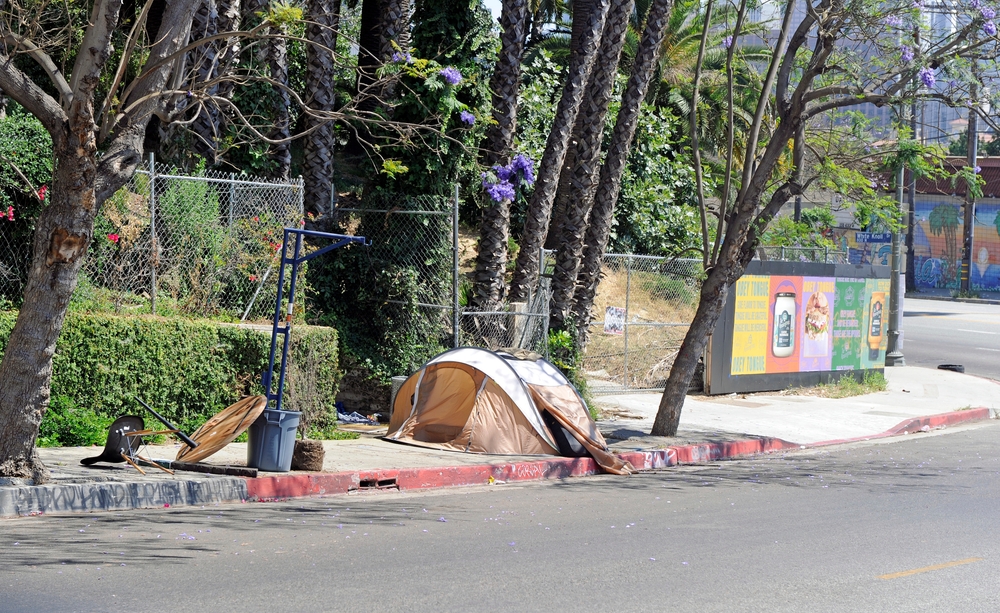
Stories like Alvarez’s resonate because they stand out against the harsh reality of homelessness, which is a widespread and persistent issue. In the UK alone, Shelter England estimates that at least 35,400 people are currently homeless, while the number in the United States is over half a million according to the U.S. Department of Housing and Urban Development’s 2023 count. These figures are likely underestimates, since they often miss people living in cars, abandoned buildings, or moving between temporary shelters. Homelessness is not a fringe problem—it cuts across countries and communities, revealing deep cracks in social and economic systems.
The reasons people lose their homes are complex and often layered. Rising costs of living, unemployment, and housing shortages can quickly destabilize someone who is already living paycheck to paycheck. Add in factors like untreated mental illness, addiction, domestic violence, or the absence of a family support network, and the risk compounds. In many cases, it is not a single catastrophic event that leads to homelessness but a series of setbacks that pile up until recovery seems almost impossible without outside support. That’s why experts emphasize that homelessness is not merely about lacking shelter—it’s about lacking access to stability, resources, and safety nets that most people take for granted.
Public perception of homelessness is another barrier. Too often, stereotypes paint homeless individuals as lazy, dangerous, or beyond help. Yet the truth is that many people who are homeless want to work, want stability, and want the chance to rebuild their lives. Stories like Alvarez’s challenge these assumptions by showing that character and integrity are not erased by circumstance. When a person is given opportunity, the potential to regain stability is real. His story mirrors many accounts from people who fell on hard times but thrived once someone extended a hand instead of looking away. These examples highlight how important it is to see homelessness as a social issue that requires compassion and systemic solutions rather than judgment and neglect.

The Power of Opportunity and Support
What turned Alvarez’s act of honesty into lasting change was not just his decision to return the check, but the support that followed. Hoskie could have thanked him, rewarded him with cash, and gone back to her life, but she chose a different path. By paying for his housing and sponsoring his education, she created a bridge for him to cross from instability to possibility. This demonstrates a crucial point: people experiencing homelessness do not simply need charity, they need sustained opportunity. Temporary relief can keep someone afloat, but meaningful recovery requires access to housing, employment, healthcare, and community support.
Research consistently shows that stable housing is the foundation for improving other areas of life. A person who has an address can apply for jobs, access social services, and take steps toward recovery from addiction or mental health challenges. Programs like “Housing First,” which prioritize providing shelter before tackling other issues, have proven more effective than approaches that require people to meet certain conditions before receiving help. Alvarez’s experience illustrates this principle on a personal scale. Once he had a roof over his head and support for his education, he was able to redirect his energy into building a future instead of struggling for survival day to day.
There are countless stories of people who have rebuilt their lives once given the chance. Online discussions sparked by Alvarez’s story show this clearly: one commenter recalled a man who lived secretly in his workplace when homeless, was caught and fired, but eventually given another chance—he went on to become a district manager and thrive. Another wrote, “I think you’d be surprised how many homeless people could achieve some success with opportunity and support.” These stories point to the same truth: potential exists in abundance, but opportunity is too often withheld. Alvarez’s journey with Hoskie shows what happens when that gap is closed.

What We Can Learn About Human Character
One striking part of Alvarez’s decision to return the check is how instinctive it was. He did not debate whether to keep the money or question if honesty was worth it when he had so little. He simply acted on the principle that it was not his to take. This challenges the often cynical assumption that people in desperate circumstances will do whatever it takes to benefit themselves. As one Reddit commenter summarized, “Proof that doing the right thing doesn’t require wealth, just character.” Alvarez’s choice underscores that moral decisions are not dictated by financial standing but by values.
This story also highlights how stereotypes about homelessness can blind people to the humanity and dignity of those experiencing it. Hoskie admitted that she expected the person who returned the check to be “a guy all nice, clean shaven and blue suit.” When she realized the reality, it “shattered the stereotypes.” That moment of recognition speaks to a broader cultural issue—people often carry unconscious biases that equate homelessness with dishonesty, weakness, or failure. Alvarez’s story is a direct counterexample: integrity and compassion do not vanish because someone is unhoused.
Beyond individual character, this story raises questions about collective character. How a society treats its most vulnerable members is a reflection of its values. When large numbers of people are left without shelter, it indicates gaps in empathy and social responsibility. On the other hand, when individuals and communities step up to provide housing, opportunity, or even simple recognition of dignity, it strengthens social trust. Alvarez’s honesty and Hoskie’s generosity converged into a story that restored many people’s “faith in humanity,” as one commenter put it. But for that faith to last, it needs to be reflected in more than exceptional anecdotes—it needs to shape everyday action and policy.
Back in 2017, a homeless guy in the U.S. stumbled upon a check for $10,000 while wandering the streets.
— Mr Commonsense (@fopminui) December 20, 2024
Instead of keeping it, he decided to return it to the owner. The check had a phone number on it, so he hopped into a phone booth and called. To his surprise, the check… pic.twitter.com/llWarhsRR6
Practical Ways to Support Change
For readers who want to help but don’t know where to start, there are concrete steps that can make a real difference. Volunteering at shelters or food banks provides immediate relief to people who need it, while donating directly to organizations that specialize in transitional housing or mental health services helps create longer-term solutions. Many cities also have outreach programs that rely on volunteers to distribute essentials like hygiene kits, blankets, and clothing. Even small contributions of time or resources can provide comfort in a moment of need.
Another powerful step is supporting policies and programs that address the root causes of homelessness. Advocating for affordable housing initiatives, better access to healthcare, and job training programs helps create structural change. On an individual level, offering employment opportunities to people with unstable housing or supporting businesses that hire from vulnerable populations can provide pathways out of poverty. For those in positions of influence—landlords, employers, or educators—choosing inclusion over exclusion can transform someone’s trajectory.
Equally important is changing how we interact with homeless individuals in daily life. Simple acts of acknowledgment—making eye contact, saying hello, treating someone with respect—may not solve systemic problems, but they restore a sense of dignity. Too often, people living on the streets are treated as invisible. Recognizing their humanity costs nothing, yet it can be the foundation for rebuilding confidence and connection. Alvarez’s story reminds us that people are not defined solely by their circumstances, and everyone has the capacity for honesty, integrity, and growth when given a chance.
A Call to See and Act Differently
Elmer Alvarez’s story is uplifting not just because he did the right thing, but because it shows how lives can change when compassion and opportunity meet. It is a reminder that homelessness is not an identity but a condition—and conditions can change. For Alvarez, stability and purpose became possible when someone saw his potential instead of his situation. That shift in perspective is what made all the difference.
As a society, we cannot wait for extraordinary moments like a lost check to prompt action. The same energy that celebrates rare stories of honesty and kindness should fuel consistent efforts to provide housing, resources, and second chances. Restoring “faith in humanity” should not be an occasional surprise—it should be an everyday expectation. The fact that this story went viral shows how hungry people are for reminders of goodness, but lasting impact requires building systems that normalize support and opportunity.
The takeaway is clear: honesty, compassion, and generosity are powerful, but they need to be matched with structures that sustain them. Everyone has a role to play, whether through policy, community involvement, or personal action. Alvarez’s journey from homelessness to partnership in building housing for others is proof that transformation is possible. The challenge now is to replicate that possibility on a larger scale so that no one has to wait for luck and chance to rewrite their story.
