
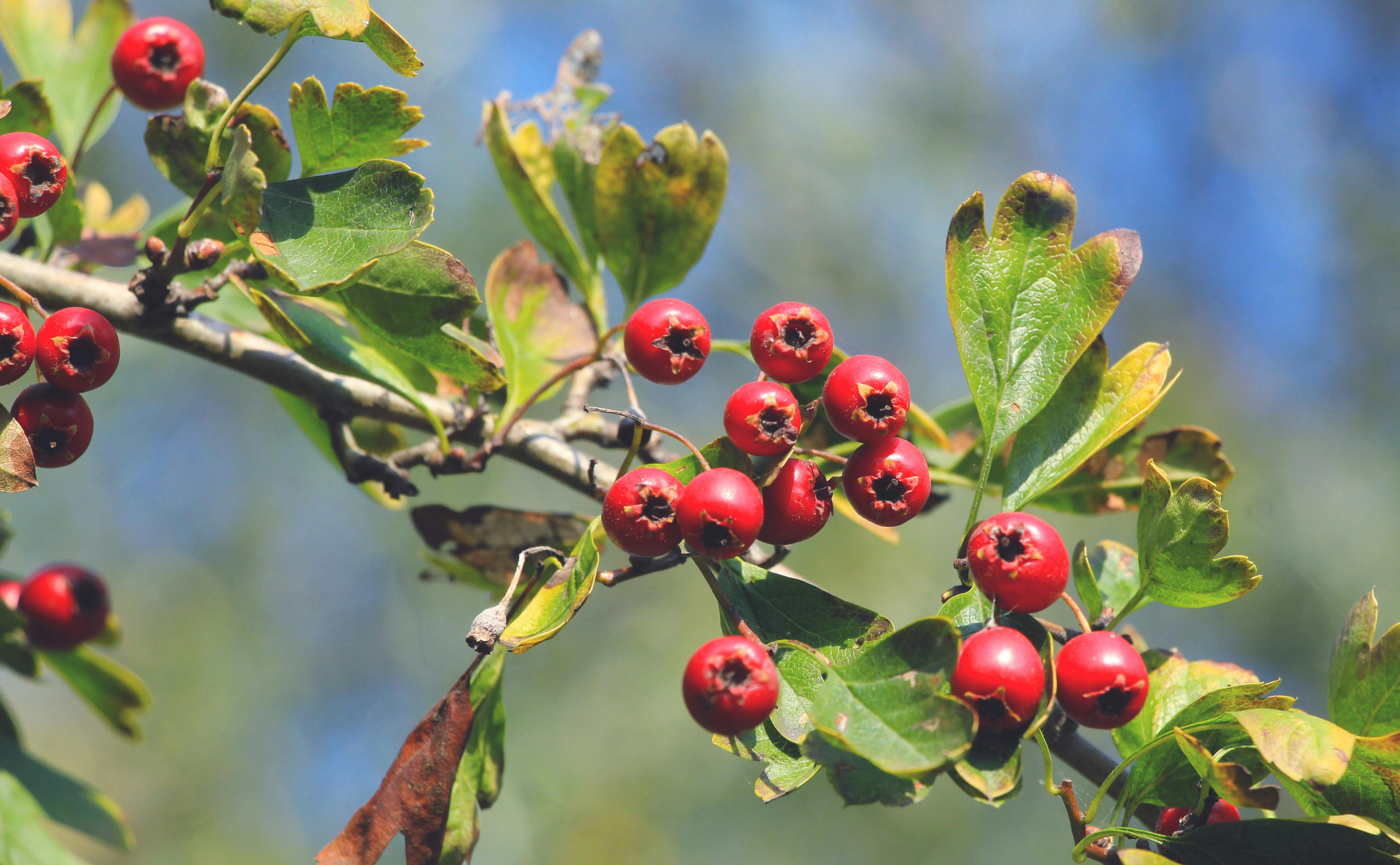
Grown on shrubs and trees that are a cousin to the popular rose, hawthorn berries have been used for their medicinal properties in several herbal concoctions. Their tart, tangy taste, and mild sweetness lend themselves well to being to added salads, stewed to make jam, blended into smoothies or juices, or even set with a bit of agar to make jelly. Here are all the health benefits you could reap by adding hawthorn berries to your diet.
1. Aids Digestion
Hawthorn berries have long been recognized in traditional medicine for their ability to support digestive health. These berries and their extracts are known to ease common issues like indigestion and stomach discomfort. A significant part of their digestive benefits comes from their prebiotic content, which nourishes healthy gut bacteria essential for reducing constipation and maintaining overall gut health.
Scientific studies highlight hawthorn’s effectiveness in promoting digestive efficiency. In individuals with slow digestion, increased dietary fiber—such as that found in hawthorn berries—was shown to reduce the time between bowel movements by about 30 minutes per gram of fiber consumed. Additionally, hawthorn extract has been found to significantly accelerate the movement of food through the digestive system, alleviating symptoms of indigestion. Beyond this, research suggests that hawthorn extract may protect against stomach ulcers, functioning in a way similar to anti-ulcer medications.
Incorporating hawthorn berries into your diet can be a natural and effective way to enhance your digestive health, making it an excellent addition for those looking to support their gastrointestinal system holistically.
2. Boosts Immune System Function
For those who frequently find themselves battling illness, hawthorn berries could provide a natural boost to the immune system. Packed with antibacterial and anti-inflammatory properties, these berries help strengthen the body’s defenses against harmful pathogens.
Research highlights hawthorn’s potential to combat various bacteria. In laboratory studies, hawthorn extract was shown to protect against harmful strains like Streptococcus aureus and Klebsiella pneumoniae, even eliminating some of these bacteria entirely. Additionally, other studies revealed that hawthorn extract exhibited moderate antibacterial activity against pathogens such as Listeria monocytogenes, a common cause of foodborne illnesses.
By incorporating hawthorn berries into your diet, you not only enjoy their tangy flavor but also equip your body with a natural ally in maintaining robust immune function. This makes them a valuable addition to any wellness routine, particularly during cold and flu seasons.
3. Lowers Inflammation

Inflammation is the body’s way of responding to injury or infection, but when it becomes chronic, it can set the stage for serious health issues like type 2 diabetes, asthma, and even certain cancers. Hawthorn berries might help keep inflammation in check, offering a natural way to support long-term health.
Studies in animals have shown promising results. In mice with liver disease, hawthorn berry extract was found to lower levels of inflammatory compounds, pointing to its potential as a natural anti-inflammatory. Similarly, in mice with asthma, the extract helped reduce inflammation so effectively that it eased asthma symptoms.
While more research is needed to fully understand these effects in humans, hawthorn berries could be a simple and tasty addition to your diet to help calm chronic inflammation and protect your body from its long-term effects.
4. May Halt Hair Loss
If you’re struggling with hair fall, hawthorn berries might offer a natural remedy worth exploring. Research in animals has shown that hawthorn berry extract can stimulate hair growth and even increase the size of hair follicles, leading to healthier, more resilient hair. These benefits are thought to come from the berry’s high polyphenol content—powerful antioxidants that protect and nourish cells.
This connection to hair health has made hawthorn berry a popular ingredient in many commercial hair growth products. While these findings are promising, it’s important to note that studies in humans are still needed to confirm the extent of these effects.
Incorporating hawthorn berries into your diet or exploring products that feature its extract could be a gentle, natural way to support your hair health while reaping the berry’s other wellness benefits.
5. May Lower Cholesterol and Triglyceride Levels

Hawthorn berries might play a key role in managing cholesterol and triglyceride levels, both of which are critical to heart health. Imbalanced blood fat levels—marked by high triglycerides and low HDL (good) cholesterol—can lead to plaque buildup in blood vessels, a condition known as atherosclerosis. Left unchecked, this buildup can block blood flow, potentially causing heart attacks or strokes.
Research in animals offers promising insights. In one study, mice given hawthorn extract showed significant improvements in blood fat levels, including lower total cholesterol and LDL (bad) cholesterol, along with a 28–47% reduction in liver triglycerides compared to mice not receiving the extract. Another study revealed that hawthorn extract reduced cholesterol and triglyceride levels in mice fed a high-cholesterol diet, delivering effects comparable to the cholesterol-lowering drug simvastatin.
While these findings highlight hawthorn’s potential as a natural ally in heart health, more research is needed to confirm these benefits in humans. Even so, adding hawthorn berries to your diet may be a proactive step toward improving your overall lipid profile.
6. May Lower Blood Pressure
Hawthorn berries have been a staple in traditional Chinese medicine for managing high blood pressure, and modern research supports their potential to benefit cardiovascular health. These berries and their extracts are believed to help relax constricted blood vessels, which can reduce blood pressure levels.
Clinical studies highlight hawthorn’s promise as a natural remedy for hypertension. In one study, 36 individuals with mildly elevated blood pressure who took 500 mg of hawthorn extract daily experienced a reduction in diastolic blood pressure, while those who didn’t take the extract saw no improvement. Another study involving 79 people with type 2 diabetes and high blood pressure found that those consuming 1,200 mg of hawthorn extract daily had greater improvements in blood pressure compared to those not taking the extract.
Although these findings are encouraging, further research is necessary to validate hawthorn’s full potential in managing blood pressure. Even so, its long history in traditional medicine, coupled with promising early studies, makes it an intriguing natural option for those seeking to support their heart health.
7. May Aid In The Treatment Of Heart Failure
Hawthorn berries have long been used in traditional medicine to support heart health, particularly in the treatment of heart failure. By lowering cholesterol, triglycerides, and blood pressure, these berries contribute to improved cardiovascular function. Beyond these benefits, research suggests that hawthorn extract may directly enhance outcomes for those living with heart failure.
A review of 14 studies involving over 850 participants revealed that combining hawthorn extract with conventional heart failure medications improved heart function and exercise tolerance. Additionally, a two-year study of 952 individuals with heart failure found that those who supplemented with hawthorn extract reported less fatigue, fewer heart palpitations, and improved breathing compared to those who didn’t. Remarkably, participants taking hawthorn also required fewer medications to manage their condition.
Further evidence from a large study of over 2,600 individuals suggests that hawthorn supplementation may even reduce the risk of sudden cardiac death in heart failure patients. With its minimal side effects and promising results, hawthorn berry is often recommended as a safe and supportive supplement for managing heart failure.
8. May Relieve the Symptoms of Anxiety

Hawthorn berries may offer a natural way to ease anxiety, providing a gentle alternative to traditional anti-anxiety medications. Known for their calming properties, these berries have been linked to reduced anxiety levels in several studies.
Research highlights multiple ways hawthorn can help. In studies examining its effect on blood pressure, participants also reported feeling less anxious. A separate study involving 264 individuals with anxiety found that a combination of hawthorn extract, magnesium, and California poppy flower significantly reduced anxiety symptoms. Additionally, hawthorn’s polyphenol content may play a role in supporting central nervous system health, further aiding in stress reduction.
With fewer side effects than many conventional medications, hawthorn continues to be a focus of research for its potential to treat anxiety and related disorders. Whether used on its own or as part of a combination therapy, this medicinal fruit shows promise as a natural way to promote a sense of calm and well-being.
Sources:
- Yoo, J., Liu, Y., & Kim, H. (2016). Hawthorn fruit extract elevates expression of NRF2/HO-1 and improves lipid profiles in ovariectomized rats. Nutrients, 8(5), 283. https://doi.org/10.3390/nu8050283
- Xu, H., Xu, H., & Ryan, D. (2009). A study of the comparative effects of hawthorn fruit compound and simvastatin on lowering blood lipid levels. The American Journal of Chinese Medicine, 37(05), 903–908. https://doi.org/10.1142/s0192415x09007302
- Walker, A. F., Marakis, G., Morris, A. P., & Robinson, P. A. (2002). Promising hypotensive effect of hawthorn extract: A randomized double‐blind pilot study of mild, essential hypertension. Phytotherapy Research, 16(1), 48–54. https://doi.org/10.1002/ptr.947
- Pittler, M., Schmidt, S., & Ernst, E. (2003). Hawthorn extract for treating chronic heart failure: meta-analysis of randomized trials. ACC Current Journal Review, 12(5), 47–48. https://doi.org/10.1016/j.accreview.2003.08.076
- Bourin, M., Bougerol, T., Guitton, B., & Broutin, E. (1997). A combination of plant extracts in the treatment of outpatients with adjustment disorder with anxious mood: controlled study versus placebo. Fundamental and Clinical Pharmacology, 11(2), 127–132. https://doi.org/10.1111/j.1472-8206.1997.tb00179.x
