
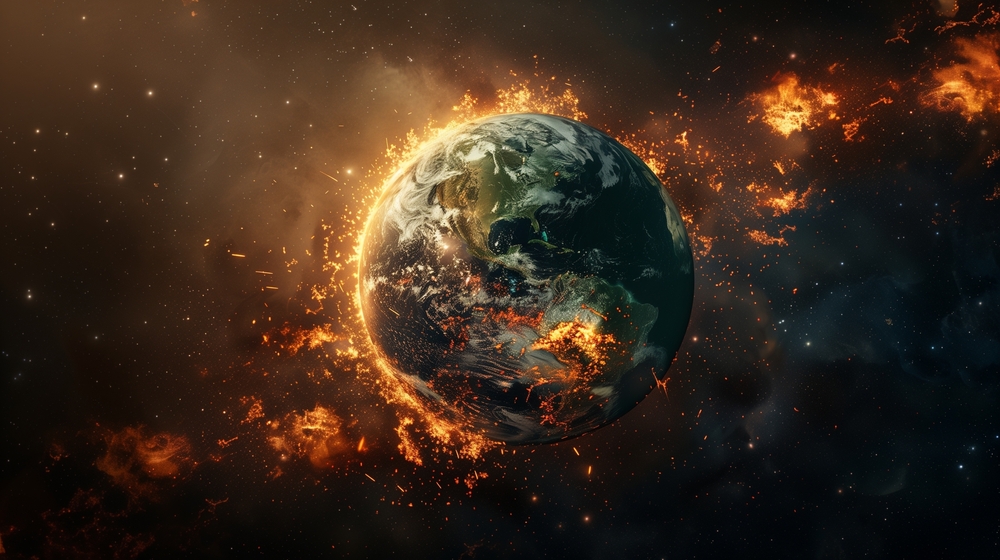
For decades, scientists have warned that Earth is inching closer to a breaking point. Now, a major new report confirms the fears many hoped were still far in the future: humanity has officially crossed its first climate tipping point. This means that parts of our planet have reached a state of irreversible change. The implications extend beyond the environment; they are intertwined with the health, stability, and very survival of life on Earth.
The report’s authors caution that what lies ahead is not just a question of environmental science but of societal endurance. Global economies, agricultural systems, and coastal populations will all face strain as temperatures rise and weather extremes intensify. These changes may spark mass migrations, increase global inequality, and disrupt essential health and food systems, reminding us that climate change is not a distant event but a direct threat to our way of life.
What Exactly Is a Climate Tipping Point?
A climate tipping point refers to a threshold within the Earth’s systems where small changes can trigger massive, often irreversible transformations. Think of it like a domino effect: once one piece falls, the rest follow, setting off a chain reaction that’s difficult or impossible to reverse. Scientists describe these tipping points as self-perpetuating processes that continue even if human emissions are reduced afterward.
Some well-known examples include the melting of the Greenland and Antarctic ice sheets, the collapse of the Amazon rainforest, the bleaching of coral reefs, and the thawing of Arctic permafrost. Once these processes pass a certain limit, they accelerate on their own, amplifying global warming and destabilizing ecosystems.
The recent findings highlight that Earth has already crossed the first of these points, as global coral reef systems have entered irreversible decline due to ocean warming and acidification. This marks the beginning of what scientists call a domino cascade of planetary breakdowns.
The Coral Reefs: Earth’s First Tipping Point Reached
The new report, drawing on data from the “Global Tipping Points 2025” report, and dozens of global climate institutes, concludes that coral reefs have reached a state of near-total collapse in many regions. Even if global temperatures stabilize, the bleaching and acidification processes will continue for decades, threatening to erase entire reef systems.

Coral reefs are vital ecosystems that support nearly a quarter of all marine life. Their decline endangers not just biodiversity but also human populations that depend on them for food, tourism, and coastal protection. The loss of reefs allows waves and storms to reach shores with greater force, increasing erosion and threatening the homes of millions of people in coastal areas.
Scientists warn that coral reefs serve as the “canary in the coal mine” for climate change. Their destruction signals a broader planetary imbalance. If reefs continue to vanish, the ocean’s ability to absorb carbon and support marine life will deteriorate, accelerating the global climate crisis.
The Domino Effect: From Reefs to Rainforests and Ice Sheets
Crossing one tipping point increases the likelihood of crossing others. The Earth’s climate operates as a complex network where disruption in one system can cascade through others. For instance, as Arctic permafrost thaws, it releases methane, a potent greenhouse gas that warms the planet faster than carbon dioxide. This added heat can accelerate ice loss in Greenland and Antarctica, influencing ocean currents and global weather patterns.

Image Credit: Jet Propulsion Laboratory-CalTech/NASA
Similarly, the collapse of the Amazon rainforest, often referred to as the “lungs of the planet,” would mean the loss of one of Earth’s most vital carbon sinks. Instead of absorbing carbon, the dying forest would release it, worsening the greenhouse effect. These changes, combined with the death of coral reefs, create a dangerous feedback loop that threatens the planet’s equilibrium.

The report warns that we are edging toward a convergence of multiple tipping points that could create a cycle of warming, ecological collapse, and uninhabitable regions. Scientists call this the path toward a “Hothouse Earth,” where global temperatures could rise by more than 3 degrees Celsius, triggering droughts, food shortages, and mass extinction events.
How Climate Collapse Affects Human Health
While the environmental consequences of crossing tipping points are devastating, their effects on human health are equally alarming. The stability of our climate underpins everything from food and water security to mental well-being and global disease patterns.
Air Quality and Respiratory Health
As ecosystems destabilize, wildfires become more frequent and severe. The smoke and particulate matter from these fires lead to widespread respiratory illnesses such as asthma, bronchitis, and chronic obstructive pulmonary disease. Air pollution is already responsible for over seven million premature deaths each year, and climate-induced fires could dramatically increase that toll.

Food and Nutrition
Rising temperatures and shifting rainfall patterns are reducing crop yields and nutritional quality. Droughts and floods disrupt agricultural systems, while soil degradation limits the planet’s ability to grow food. This leads to higher food prices, malnutrition, and famine, particularly in developing nations that rely heavily on small-scale farming.
At the same time, climate-driven changes are affecting the nutritional value of staple crops. Studies show that elevated carbon dioxide levels can lower protein, iron, and zinc content in grains and vegetables. As a result, even when food is available, it may no longer provide the nutrients required for healthy growth and immune function. This crisis threatens vulnerable communities first, but ultimately, it places global food systems under stress and jeopardizes the health and development of future generations.

Water Scarcity and Contamination
As glaciers disappear, many regions are facing water scarcity. Simultaneously, sea level rise causes saltwater intrusion into freshwater supplies, making them unsafe for drinking or irrigation. Contaminated water sources become breeding grounds for waterborne diseases like cholera and dysentery.
Climate change also disrupts seasonal rainfall cycles, causing prolonged droughts followed by sudden, intense storms. This instability damages reservoirs, overburdens drainage systems, and reduces groundwater recharge. Communities that once relied on predictable monsoon or snowmelt patterns are now struggling to maintain stable water supplies. In urban areas, aging infrastructure and overwhelmed treatment facilities increase the risk of contamination, while rural populations, lacking purification and sanitation systems, face even greater vulnerability. As safe water becomes harder to secure, conflicts over access are likely to intensify, underscoring how deeply water security is tied to social stability and public health.

Vector-Borne Diseases
Climate change alters the habitats of disease-carrying insects such as mosquitoes and ticks. Warmer temperatures allow these species to expand their range, introducing diseases like malaria, dengue, and Lyme disease into previously unaffected areas. The World Health Organization estimates that by 2050, climate-related illnesses could cost millions of lives annually.
In addition, shifting climate patterns influence the timing and duration of transmission seasons, meaning disease outbreaks may occur earlier, last longer, and affect larger populations. Warmer winters fail to kill off insect populations, while extreme weather events like floods create stagnant water pools that serve as breeding grounds. Health systems, particularly in low-income regions, may struggle to cope with sudden surges in infections, placing tremendous pressure on medical infrastructure and leaving communities more vulnerable to widespread illness.

Mental Health and Eco-Anxiety
Beyond physical health, the psychological toll of environmental collapse is mounting. People are experiencing rising rates of anxiety, depression, and post-traumatic stress related to extreme weather events, displacement, and the existential fear of an uncertain future. This growing phenomenon, often called eco-anxiety, particularly affects younger generations who feel powerless to reverse the crisis.
The emotional impact is compounded by constant exposure to alarming climate news and the visible degradation of natural environments that once offered comfort and identity. Communities forced to leave ancestral lands due to rising seas or failing crops grapple with grief, loss, and disconnection. As climate pressures intensify, mental health services face increasing demand, making it crucial to integrate emotional resilience, community support networks, and climate-aware mental healthcare into broader adaptation strategies.

The Earth’s Health Is Our Health
In many ways, the Earth itself can be viewed as a living organism, a system that thrives on balance and interconnectedness. Just like the human body, when one organ fails, the entire system suffers. The dying coral reefs, melting ice, and burning forests are the planet’s symptoms of distress, signaling that its natural immune system is breaking down.
When scientists speak of planetary tipping points, they are not only describing environmental changes but also the onset of a global health emergency. The air we breathe, the water we drink, and the food we eat all depend on stable planetary systems. As these systems falter, human health crises multiply.
If we imagine Earth as a patient, it is clear that the vital signs are deteriorating. Fever represents rising temperatures. Inflammation mirrors wildfires. Organ failure equates to ecosystem collapse. Humanity’s task now is to act as healers, not further harm the body we depend on.
Healing the Earth, Healing Ourselves
While some tipping points, such as coral reef decline, may already be irreversible, there is still a window to prevent others from being crossed. The next decade is critical. Reducing greenhouse gas emissions, accelerating renewable energy adoption, restoring forests, and limiting industrial pollution remain the most effective strategies. Real progress demands cooperation across governments, industries, communities, and individuals.
Personal and collective choices play a crucial role. Reducing meat consumption, supporting sustainable agriculture, conserving water and energy, and minimizing waste can create meaningful impact. Communities that invest in green infrastructure, nature-based solutions, and climate education strengthen their resilience and foster a culture of care. These efforts reflect a central truth: Earth’s health is our health, and the stability of natural systems directly determines human well-being.
This transition also requires a fundamental shift in our relationship with the natural world. Overconsumption and disconnection from nature have fueled planetary harm. Healing begins with treating Earth as a living home rather than a resource bank. Reconnecting with nature through outdoor activity, growing food, and mindful engagement supports both ecological recovery and human mental and physical health. By nurturing the planet and ourselves simultaneously, we build a cycle of restoration that keeps hope alive and strengthens the foundations of a livable future.

A Final Word: Listening to the Planet’s Pulse
Earth’s heartbeat is growing faint, but it still beats. The dying reefs, the rising seas, and the choking skies are cries for help. Whether we respond with indifference or intention will define our legacy. Humanity stands at a crossroads between destruction and renewal. By treating the planet as the living organism it is, there remains hope for recovery. But time is running out.
Our shared health depends on restoring balance to the systems that support life. The urgency is not only scientific but deeply human. We are not separate from the air, oceans, forests, and reefs that sustain us. When the planet suffers, humanity suffers. When ecosystems fall silent, so do future possibilities. That truth is no longer abstract theory but a lived reality shaping economies, communities, and lives across the world.
We now face a profound question: do we act as stewards of a living world or spectators to its decline? The answer will define whether future generations inherit a home or a warning. Protecting Earth is not about saving a distant wilderness or defending a cause outside ourselves. It is about safeguarding the foundations of health, dignity, and hope. The next steps we take can either deepen the wounds or begin the healing. The choice is still ours, but the window is narrowing, and history will remember how we responded.
