
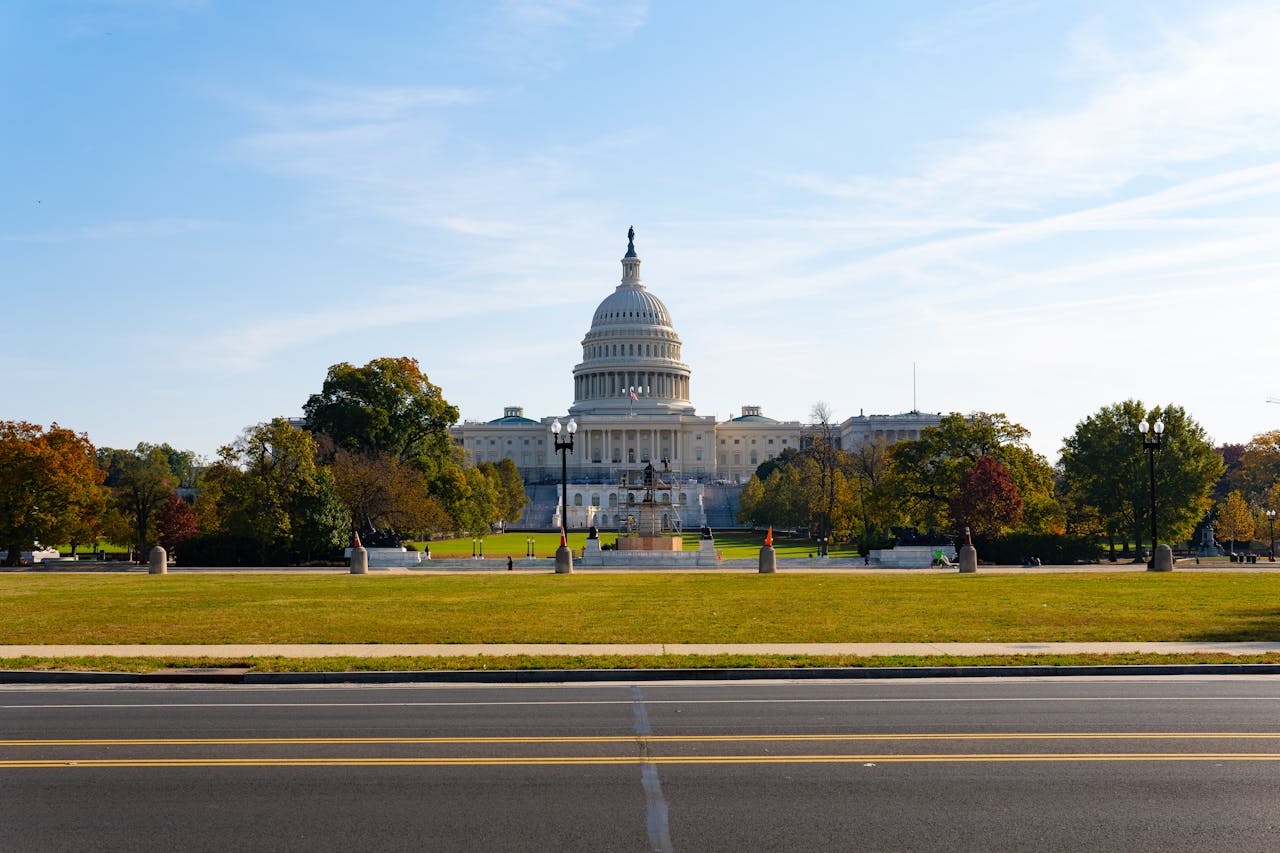
Each time the U.S. government shuts down, life for millions shifts overnight. Paychecks are paused, services stop, and anxiety spreads quickly across households. This year, the concern moved far beyond missed salaries and stalled programs. As October began, social media users started asking a different question: What if this shutdown was not about budgets at all? Rumors linked it to the unreleased Jeffrey Epstein case files, hinting that the timing was more than political coincidence.
The idea may sound far-fetched, yet it reveals something larger. When facts are slow to surface, uncertainty fills the gap. In moments like this, public trust becomes as fragile as the systems meant to protect it.

Understanding the Shutdown and Why It Hit Harder This Time
On September 30, the federal government reached the end of its fiscal year without a new funding agreement in place. The House of Representatives passed a temporary spending measure meant to keep operations running, but the Senate rejected it, leaving the government without legal authority to spend. According to Reuters, this failure followed months of tense negotiations that exposed deep divisions in Congress.
When no appropriations are approved, the Antideficiency Act requires most agencies to stop work that is not considered essential. Offices are forced to furlough staff, delay contracts, and suspend services. The Office of Management and Budget had already asked departments to create contingency plans, which helped reduce confusion on the first day but could not prevent widespread disruption once the funding lapse took effect.
The timing amplified the strain. Because the shutdown began on the first day of the new fiscal year, agencies had no remaining funds to draw from. The Congressional Research Service notes that each day without funding increases pressure on agencies, leading to delayed paychecks, interrupted grants, and long recovery times even after operations resume. These interruptions ripple through families, small businesses, and local economies that depend on federal support.
Unlike previous shutdowns that focused on a single policy disagreement, this one was shaped by several unresolved disputes. Analysts observed that the conflicts spanned from spending limits to procedural fights over amendments, which made compromise almost impossible. Instead of one clear issue to solve, lawmakers faced a web of competing demands that stalled progress and deepened frustration both inside and outside Washington.
How Politics Became a Test of Control
As the government shutdown stretched into its first week, the fight inside Washington was no longer about how to fund essential services. It had become a power struggle over who would shoulder the blame. President Trump and his allies accused Senate Democrats of refusing to support a temporary funding extension that could have kept federal programs open. In public remarks, he claimed Democrats were intentionally prolonging the standoff to weaken the administration before the upcoming election. Republicans presented the gridlock as proof that Democrats valued obstruction over fiscal responsibility.
Behind closed doors, negotiations showed how fractured both parties had become. Democrats insisted that the White House had tied unrelated policy demands to the funding bill, knowing they would fail in the Senate. NBC News reported that they had offered a short-term solution to maintain government operations, while Republican leaders pushed for deep budget cuts and new restrictions that went far beyond the issue of spending. Even within the Republican caucus, disagreements were sharp. Moderates warned of financial harm to families and small businesses, while hardline members pressed for ideological victories on education and immigration.

Trump used the moment to demonstrate control. Rather than treating the shutdown as an administrative failure, he reframed it as a leadership test. Publicly, he spoke of discipline and loyalty within the party.
Outside Washington, the mood was different. Most Americans viewed the shutdown as a failure of leadership across both parties. Many were less concerned with political narratives and more worried about paychecks, rent, and the uncertainty that comes with a stalled government.
This moment revealed more than a budget crisis. It showed how political identity has overtaken problem-solving as the currency of power in Congress. The longer the stalemate continues, the more it reinforces a public perception that government has become reactive instead of responsible. For citizens, that uncertainty does not just undermine confidence in elected officials; it chips away at the belief that leadership still means serving the people who feel its impact most.
How One Signature Sparked a Wave of Suspicion
When the government shutdown began, an unexpected theory quickly took hold online. Some claimed it was not about budget disputes at all but about the unreleased files tied to Jeffrey Epstein. The idea started with investigative journalist Amber Woods, who posted on X, “For the record, we are one signature away from exposing Epstein’s network… cue the government shutdown.”
For the record, we are one signature away from exposing Epstein’s network…cue the government shutdown.
— Amber Speaks Up (@AmberWoods100) September 30, 2025
Her comment referred to Arizona Representative elect Adelita Grijalva, who had just won a special election and was expected to become the final, 218th signature on a congressional petition that could force the Department of Justice to release remaining Epstein documents. Yet Speaker Mike Johnson delayed her swearing in, saying the House was not in full session. Grijalva wrote that the delay left Southern Arizonans “without a voice in Congress,” questioning the timing.
That delay fueled speculation that the shutdown was designed to prevent her vote. One viral post read, “It’s because they don’t want you to be the deciding vote on the discharge petition to release the Epstein Files. Right @SpeakerJohnson?” The claim spread fast, tapping into long-standing frustration over transparency.
While no evidence proves the theory, Two Republicans were sworn in during shorter sessions earlier in the year. The delay kept the petition frozen until mid-October, when Congress was expected to resume.
Public distrust made the story stick. Epstein’s death and the redacted case files have long fueled doubts about government openness. NBC News reported that only a third of the documents have been released, many heavily censored. In that context, a delayed oath and a stalled petition were enough to look like more than coincidence.

While no evidence proves the theory, Two Republicans were sworn in during shorter sessions earlier in the year. The delay kept the petition frozen until mid-October, when Congress was expected to resume.
How Political Chaos Affects Mental Health and How to Stay Steady
When government shutdowns or political clashes dominate the news, stress rises far beyond Capitol Hill. The American Psychological Association reports that more than two thirds of Americans consider politics a major source of stress. Prolonged uncertainty activates the body’s stress response, increasing cortisol and disrupting mood, sleep, and concentration.
For federal workers and families who depend on public programs, the strain is often financial as well as emotional. Research from the Urban Institute shows that workers affected by furloughs experience higher rates of anxiety and short-term depression. Unstable income also influences physical health, contributing to changes in blood pressure, eating habits, and immune function.

Digital exposure magnifies this tension. Studies in Nature Human Behaviour describe “news fatigue,” where nonstop political updates cause emotional exhaustion and hopelessness. The more people read, the more anxious they become, reinforcing the cycle.
Psychologists suggest simple, evidence-based ways to interrupt it. Limit news checks to set times each day, follow verified outlets instead of social feeds, and practice basic information hygiene: checking sources, muting inflammatory content, and taking regular screen breaks. Physical activity and time outdoors help the nervous system reset.
Staying informed should not come at the cost of well-being. Choosing when and how to engage with political news allows space for perspective, helping restore calm and clarity even in uncertain times.
The Health of Trust
Trust is one of the most powerful stabilizers in public life. When it falters, uncertainty spreads quickly, fueling anxiety and tension across entire communities. People begin to question not only institutions but each other, creating a quiet strain that seeps into daily routines and relationships.
The absence of trust feels like living in constant defense mode. It affects how people process news, form opinions, and even how they care for their health. When confidence in leadership fades, so does the sense of control, leading to frustration, fatigue, and emotional burnout.

Rebuilding that confidence starts with small, steady acts of honesty and consistency. Clear communication, transparency, and genuine listening restore connection in ways that statistics cannot. When people feel informed and included, the collective stress eases.
Trust does not depend on perfection but on reliability. The more consistently people see accountability in action, the easier it becomes to replace fear with focus and uncertainty with calm.
Finding Calm in a Noisy World
The noise of constant crisis can make even small moments feel uncertain. Yet calm does not depend on silence. It begins with how we manage attention, what we choose to absorb, and what we allow to pass.
Stepping back from endless updates does not mean ignoring reality. It means creating space to think clearly. Read what matters, rest when needed, and speak about concerns instead of scrolling through them. Small choices like these rebuild clarity and protect focus.

When the world feels unstable, grounding yourself in what is real and immediate restores balance. Calm is not an escape from chaos but a return to control over how we meet it.
