
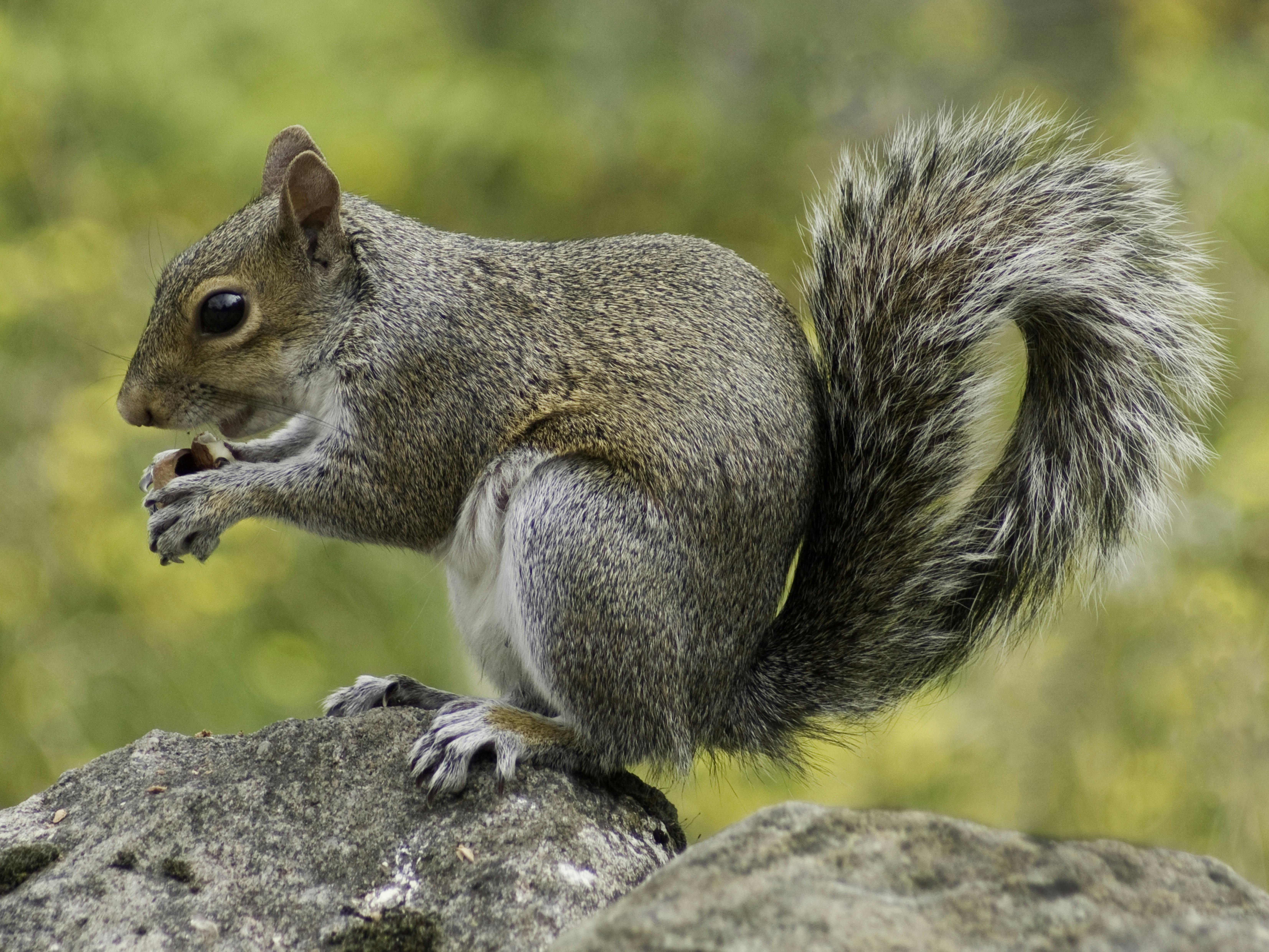
In San Rafael’s Lucas Valley, a suburban neighborhood known more for its leafy streets and family-friendly atmosphere than for wildlife drama, life has taken a bizarre turn. A caramel-colored squirrel, described by many as golden, has begun terrorizing residents in ways few could have imagined. What at first seemed like an amusing anecdote a squirrel behaving a little too boldly quickly escalated into a genuine community crisis as multiple residents ended up in the emergency room with bloody wounds. The squirrel, now infamous across news outlets and social media platforms, has become both a local villain and an unlikely viral phenomenon. But behind the humor and horror lies a sobering reality about human relationships with wildlife, one that speaks to a much larger ecological truth: when we blur the boundary between human generosity and animal independence, the consequences can be painful, frightening, and, for the animal itself, often fatal.
The tale of this squirrel has all the elements of a story built for virality a small creature suddenly behaving like a horror-movie antagonist, neighbors plastering “THIS IS NOT A JOKE” flyers on lampposts, and residents torn between laughter and fear as they look over their shoulders on otherwise ordinary walks. Yet, beneath the sensationalism, the squirrel saga raises questions of responsibility and coexistence. Wildlife officials stress that the cause of this aggression is most likely not rabies or disease but something far more mundane: human feeding. In conditioning wild animals to see humans as a source of food, people inadvertently erase the natural fear that keeps both sides safe. The golden squirrel’s story, then, is more than a quirky news item it is a mirror held up to our casual habits, reminding us that well-meaning kindness can spiral into chaos, fear, and tragedy.
The Attacks: What Actually Happened
The incidents began in mid-September, when Marin Humane, the county’s main animal care organization, logged multiple reports from Lucas Valley residents. At least two attacks were officially reported to their agency on Sept. 13 and Sept. 14, with both victims women out for ordinary walks requiring emergency medical attention. While neither case required extended hospitalization, the injuries were serious enough to demand prompt treatment. Local news reports expanded the tally further, with ABC7 and People magazine documenting at least five separate attacks believed to involve the same golden-colored squirrel.

The descriptions are startlingly consistent. Victims say the animal “came out of nowhere,” launching itself at legs or, in some cases, lunging toward faces. Joan Heblack, one of the first documented victims, recounted the moment the squirrel clamped onto her leg: “Its tail was flying everywhere. I was shouting, ‘Get it off me!’ but I didn’t want to touch it.” The attack left her with bloody scratches that required medical care. Isabel Campoy’s encounter was even more severe. Walking with her niece, Carmen, she was startled when the squirrel leapt toward her face. She raised her arm to shield herself, only to suffer deep gashes that covered her in blood and sent her running to the emergency room. Flyers soon appeared across the neighborhood warning residents that “THIS IS NOT A JOKE,” urging vigilance and making clear the situation had gone beyond neighborhood gossip.
Who’s To Blame? Habituation, Not Rabies

When stories like this emerge, the first assumption is often rabies. It’s a natural leap rabid animals are known to behave erratically and aggressively. Yet wildlife experts have consistently ruled out rabies as the likely explanation in this case. In fact, squirrels in the United States are not common carriers of the rabies virus, and there has never been a documented case of squirrel-to-human rabies transmission. Instead, the consensus among Marin Humane and WildCare experts is that the golden squirrel has become dangerously habituated to people.
Habituation occurs when an animal loses its natural fear of humans, often because it has been repeatedly fed. This conditioning alters behavior in profound ways. Instead of avoiding people, the animal approaches them, expecting food. When food isn’t forthcoming, the result can be frustration, territoriality, and even aggression. Lisa Bloch, communications director for Marin Humane, emphasized that the unique caramel coloring and the clustering of incidents strongly suggest one squirrel is responsible. Vanessa Potter of WildCare added that feeding likely shaped the animal’s behavior, leading it to seek food from every passerby. When denied, it lashed out.
This explanation shifts responsibility subtly but powerfully. The squirrel is not a rogue villain so much as a product of human choices. While the immediate consequences bloody scratches, community fear, and possible euthanasia for the animal feel extreme, they stem directly from human habits that blur the line between wild and tame. It is an uncomfortable reminder that even small, everyday acts, like tossing peanuts to a squirrel, can reshape ecosystems at the neighborhood level.
Why Feeding Wildlife Backfires
Feeding wildlife is one of those actions that feels instinctively generous. Parents hand crumbs of bread to ducks in ponds. Children squeal with delight at squirrels accepting peanuts from their hands. But biologists have long warned that these practices create fragile, unsustainable relationships. There’s even a blunt motto among conservationists: “Fed wildlife is dead wildlife.” It may sound dramatic, but its truth becomes painfully clear in situations like San Rafael’s.
When an animal becomes accustomed to human handouts, its behavior changes in four key ways. First, it loses the wariness that typically protects it from predators and unsafe situations. A squirrel unafraid of people is also less cautious around cars, dogs, or other dangers. Second, it develops dependence on a food supply that may vanish at any moment, leaving it vulnerable. Third, frustration emerges when humans fail to deliver. This frustration can morph into aggression, as seems to be the case in Lucas Valley. Finally, habituated animals often face grim ends. Once they pose risks to humans, capture and euthanasia become the only viable management strategies.
The golden squirrel, then, is not behaving irrationally but predictably. Its boldness is the product of conditioning. Its aggression is the logical endpoint of unmet expectations. And its likely fate, euthanasia, is the tragic conclusion of a cycle begun by someone’s well-intentioned handful of nuts. It’s a sobering reminder that compassion without foresight can create harm where none was intended.
When Small Things Cause Big Fear

Despite its diminutive size, the golden squirrel has cast a long shadow over Lucas Valley. The psychological impact of the attacks has transformed the neighborhood’s daily rhythms. Flyers warn residents. Nextdoor forums buzz with anxious posts and memes. Parents hesitate to let their children play outside. Dog walkers scan trees with wary eyes. Humor mixes with dread, creating a surreal atmosphere in which a creature barely larger than a loaf of bread dictates community behavior.
The sociology of fear provides an interesting lens here. Small, unpredictable threats often provoke outsized anxiety because they disrupt ordinary routines in unexpected ways. People expect to fear mountain lions in the hills or rattlesnakes on trails, but not squirrels on sidewalks. This mismatch magnifies the emotional response. Viral amplification adds another layer. Once the story hit local broadcasts and national outlets like People, the feedback loop of news, jokes, and online commentary deepened the sense of crisis.
Yet amid the tension, there is resilience. Neighbors have united to share information, support victims, and coordinate with wildlife authorities. Humor including inevitable references to Monty Python’s “killer rabbit” has provided a pressure valve, letting people laugh even as they remain cautious. And importantly, the ordeal has sparked deeper conversations about coexistence with wildlife, a topic that might otherwise have remained abstract.
What Wildlife Authorities Can And Will Do

Wildlife agencies like Marin Humane and the California Department of Fish and Wildlife follow a fairly standard playbook for cases like this. The first step is monitoring reports to confirm patterns. Once confirmed, officials may attempt nonlethal capture, using traps or nets. The captured animal is then assessed. In rare cases, habituated animals can be placed in rehabilitation or educational facilities, but the bar for safety is high. Animals that have demonstrated aggression toward humans are rarely deemed safe enough for such roles. That leaves euthanasia as the most probable outcome.
Lisa Bloch acknowledged this grim likelihood, explaining that the squirrel’s habituation to people makes safe release or ambassador placement almost impossible. The calculus is stark: protecting community safety requires eliminating the threat, even if the threat is a creature conditioned by human hands. This is why prevention public education campaigns urging people never to feed wildlife is such a central part of agency responses.
Alongside capture plans, officials stress immediate safety advice. Residents are urged to make noise and appear threatening if squirrels approach stomping, clapping, or yelling can usually drive them away. Seeking prompt medical care for bites and scratches is also critical, as infections from bacteria can be dangerous even if rabies is not a concern. The combined strategy, then, is one of vigilance, prevention, and, if necessary, removal.
A Wider Pattern: Not The First Squirrel Scandal

Though the golden squirrel of San Rafael has captured headlines, it is far from unique. In 2021, residents of Buckley, Wales, endured two days of chaos when a grey squirrel nicknamed “Stripe” attacked more than a dozen people before being captured and euthanized. Stripe became a folk legend of sorts, complete with memes and exaggerated retellings, but the injuries were real, and the community was left shaken. A year earlier in Queens, New York, a string of squirrel attacks forced residents to improvise homemade pepper spray for protection. These cases show that habituated or aggressive squirrels can become local crises far beyond California.
Science reinforces the point. While squirrels are generally granivores seed and nut eaters studies show surprising dietary flexibility. Recent research documented ground squirrels hunting and eating voles, suggesting opportunistic omnivory. In other words, squirrels are not always the harmless nut-collectors of cartoons. Their sharp teeth and claws are tools for survival that, under the wrong conditions, can inflict painful wounds on humans.
The San Rafael squirrel, then, fits into a larger narrative: wild animals are not toys, pets, or entertainment. They are adaptive, unpredictable, and fully capable of disrupting human spaces when conditions encourage it. Each case is a cautionary tale, reminding communities that coexistence requires boundaries.
How To Stay Safe (And Keep Wildlife Wild)
The Lucas Valley ordeal has produced clear, practical lessons. Wildlife experts and public health officials alike emphasize prevention and preparedness. Here are some key tips:
- Do not feed wild animals. It may feel kind, but feeding erodes the instincts that keep both humans and wildlife safe.
- Keep your distance. If a squirrel approaches, back away slowly. Do not run, as sudden motion may trigger pursuit.
- Be assertive. Making noise, raising arms, and stomping feet can intimidate most squirrels enough to make them retreat.
- Protect children and pets. Keep kids close during outdoor play and walk dogs on short leashes, especially in areas where the aggressive squirrel has been sighted.
- Seek medical attention if bitten or scratched. Clean wounds thoroughly and report incidents to animal control so infections are prevented and authorities can track the animal’s behavior.
Keep Your Snacks To Yourself For Everyone’s Sake
If there is one lesson to carry forward, it is this: the best way to love wildlife is to leave it alone. Feeding wild animals may feel rewarding, but it strips them of their independence and often condemns them to tragic fates. For humans, it brings risks of bites, scratches, infections, and neighborhood scares. For animals, it brings capture, exile, or euthanasia. The cycle is as predictable as it is avoidable.
The golden squirrel of Lucas Valley will eventually fade from the headlines. The animal may be captured, disappear on its own, or become a cautionary story told over backyard fences. But the principle it illustrates will endure. Compassion without foresight can be cruelty in disguise. If we want to coexist peacefully with wildlife, the rule is simple: keep your snacks to yourself, and let wild creatures remain wild.
